Find Screen Stretching Machine for Garment, Packaging, and Printing
Source 30 screen stretching machines from verified suppliers in China. Compare models like Macrokun and GWW with ISO and CE certifications for garment shops, manufacturing plants, and packaging printing applications.
Key considerations
Products List


$2000.00 - $6000.00
MOQ: 1 Pieces




Comprehensive Sourcing Guide
Strategic Sourcing Guide for Screen Stretching Machines
The global demand for precision textile and packaging printing solutions has elevated the importance of high-performance screen stretching machines. For procurement professionals, navigating the market for these specialized industrial assets requires a disciplined approach that separates marketing claims from verifiable operational facts. This guide synthesizes observed market data and technical specifications to provide a framework for evaluating suppliers, ensuring compliance, and securing equipment that aligns with specific production needs. The following analysis focuses on the critical dimensions of technical capability, regulatory adherence, cost structures, and long-term operational viability.
Technical Specifications and Operational Capabilities
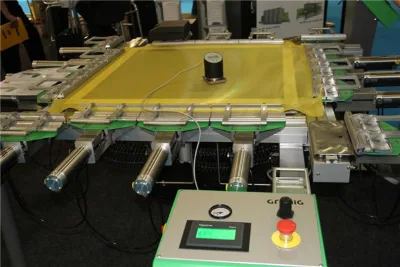
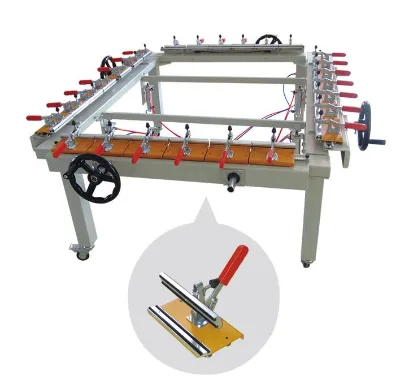
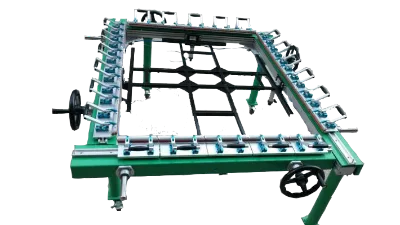
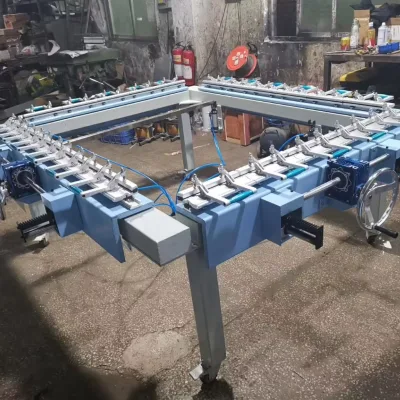
When evaluating a Screen Stretching Machine, the primary focus must be on the mechanical specifications that directly influence print quality and throughput. The market presents a diverse range of configurations, from manual to fully automatic systems. Buyers must verify the "Automatic Grade" of the equipment, as observed listings indicate a spectrum ranging from Manual to Semi-Automatic and fully Automatic grades. The choice of driven type is equally critical; data suggests options include Pneumatic, Manual, and Electric drives. A pneumatic system, for instance, often offers specific tension control benefits, while electric drives may provide different automation levels.
The physical dimensions and working area are fundamental constraints for any production line. Specifications such as a maximum working area of 1200x1500mm are common benchmarks, but buyers must confirm if the machine supports customized dimensions (LWH) to fit their specific screen sizes. The tensioning capability is another non-negotiable metric; observed data points to a maximum tension of 45N, a figure that must be sufficient for the specific mesh types used in the facility. Furthermore, the air pressure requirements, noted in some listings as 0.40-7MPa, dictate the necessary infrastructure support within the factory.
Power consumption and voltage compatibility are essential for integration. Units with a gross power of 50W and a voltage requirement of 220V are standard observations, yet these figures must be cross-referenced with local electrical standards. The structural design also varies, with some models identified as "Rotary Printing Press" structures or "Screen-process Printing Press" styles. Understanding whether the machine is designed for offset printing, textiles printing, or packaging printing is vital, as the application dictates the necessary precision and speed.
Compliance, Certification, and Regulatory Standards
In the B2B industrial sector, certification is not merely a formality but a prerequisite for risk management and market access. A robust sourcing strategy requires verifying that the equipment meets international safety and quality standards. The observed market data frequently cites ISO, CE, and ISO9001 certifications. These designations suggest adherence to specific management and safety protocols, but buyers must demand valid, current certificates rather than relying on general claims.
The origin of the machinery plays a significant role in compliance. Many units are manufactured in China, with specific regions like Hebei noted as production hubs. While this geographic data is useful for logistics planning, it necessitates a deeper check into local regulatory compliance and export standards. The "prod_standard" field in supplier listings often references specific model codes like GWW1818 or EGW1020, which serve as internal identifiers. However, these should not be confused with international safety standards. Buyers must explicitly verify that the machine's design complies with the safety regulations of the destination country, particularly regarding electrical safety and mechanical guarding.
Additionally, the "Usage" field often indicates specific applications such as offset printing or textiles printing. Ensuring that the machine's certified capabilities match the intended usage is crucial. A machine certified for offset printing may not necessarily meet the safety or performance requirements for high-tension textile stretching. Therefore, the certification documentation must be reviewed line-by-line to confirm that the specific model number and configuration are covered under the valid certification scope.
Cost Drivers and Pricing Structures
Understanding the cost drivers for screen stretching machines is essential for budgeting and total cost of ownership (TCO) analysis. The observed price range in the market spans from $500 to $200,000, a variance that reflects differences in automation levels, build quality, and brand positioning. This wide range indicates that price alone is a poor indicator of value; a lower-cost manual unit may be suitable for a small print shop, while a large-scale manufacturer requires a high-end automatic system.
Several factors influence the final price. The "Automatic Grade" is a primary driver, with automatic systems commanding a premium over manual or semi-automatic counterparts. The complexity of the driven type, whether pneumatic or electric, also impacts cost. Customization is a significant variable; while "Available" customization is a common feature, the extent of this customization—such as unique dimensions or specialized tensioning mechanisms—will directly affect the price.
Packaging and logistics are often overlooked cost components. The "prod_packing" specifications frequently mention "Pallet and Wooden" or "Export Wooden Case" configurations. These robust packaging methods are necessary for protecting heavy machinery during international transit but add to the overall shipping cost. The net weight of 230kg and gross weight of 250kg for certain models highlight the substantial freight requirements. Buyers should factor in not just the unit price but also the cost of specialized shipping, insurance, and potential customs duties.
Typical Applications and Industry Fit
Screen stretching machines are versatile assets designed to serve multiple sectors within the printing and manufacturing industries. The observed "Applicable Industries" list includes Garment Shops, Manufacturing Plants, Retail, and Printing facilities. This diversity underscores the need for buyers to align the machine's capabilities with their specific production environment.
For garment shops and textile manufacturers, the machine's ability to handle specific mesh types and tension requirements is paramount. The "Application" field often highlights "Textiles Printing," indicating that these machines are optimized for fabric stretching where precision and consistency are critical to avoid print defects. In contrast, packaging printing applications may require different tension profiles and speed capabilities, as suggested by the "Application: Packaging Printing" designation found in some listings.
The "Printing Type" is another key indicator of application fit. Units classified as "Screen Printing Machine" are designed for the specific mechanics of screen printing, which involves transferring ink through a mesh stencil. The distinction between "Single-Colour Printing Press" and multi-color capabilities is also relevant, as it affects the machine's suitability for complex print jobs. Buyers must ensure that the machine's design supports the specific workflow of their industry, whether it involves high-volume retail production or specialized garment manufacturing.
Supplier Evaluation and Operational Support
Selecting the right supplier is as important as selecting the right machine. The market data indicates that suppliers often provide "OEM: Offer" services, allowing for branding and customization. However, the true value of a supplier lies in their after-sales support and technical expertise. A critical observation is the provision of "Engineers Available to Service Machinery Overseas." This service level is a significant differentiator, particularly for international buyers who may face language barriers or logistical challenges in getting technical support.
The "Condition" of the machine is another evaluation point. Listings consistently state "NEW," which is a baseline expectation for new equipment purchases. However, buyers should verify the manufacturing date and warranty terms to ensure the equipment is not a refurbished unit sold as new. The "Warranty" period, observed as 2 Years in some cases, provides a safety net for early-life failures. Buyers must scrutinize the warranty terms to understand what is covered, including parts, labor, and travel expenses for overseas engineers.
Lead time is a critical factor in procurement planning. The observed "Lead Time" ranges from 1-5 sets with a 15-day production time, with larger orders requiring negotiation. This variability suggests that production capacity can fluctuate based on order volume. Buyers should establish clear timelines and contingency plans to avoid production delays. Additionally, the "prod_packing" method, such as "Export Wooden Case," should be verified to ensure it meets the specific shipping requirements of the destination.
Quality Control and Long-Term Procurement Considerations
Implementing a rigorous quality control (QC) process is essential to mitigate the risks associated with industrial machinery procurement. Buyers should establish clear acceptance criteria based on the technical specifications provided, such as the maximum working area, tension limits, and air pressure requirements. The "Dimensions" should be measured upon arrival to ensure they match the "Available for Customized" claims.
Long-term procurement considerations extend beyond the initial purchase. The "Net Weight" and "Gross Weight" of the equipment influence floor loading and facility layout. Buyers must ensure their facility can support the weight of the machine, which can be substantial. The "System Supported" and "Print Interface" specifications, such as USB2 connectivity, indicate the machine's compatibility with existing digital workflows. Ensuring these interfaces are compatible with current software and hardware is vital for seamless integration.
Maintenance and lifecycle management are also key. The "Driven Type" and "Automatic Grade" determine the frequency and complexity of maintenance required. Electric and automatic systems may require more specialized maintenance than manual units. Buyers should plan for the long-term availability of spare parts and the expertise required to maintain the machine. The "After-Sales Service Provided" by the supplier is a critical component of this strategy, ensuring that the machine remains operational throughout its lifecycle.
Summary of Key Specifications for Comparison
To facilitate a structured comparison of potential suppliers, the following table summarizes the key technical and operational attributes observed in the market. This table serves as a checklist for buyers to verify against supplier data sheets.
| Attribute | Observed Range / Options | Verification Requirement |
|---|---|---|
| Automatic Grade | Manual, Semi-Automatic, Automatic | Confirm alignment with production speed needs. |
| Driven Type | Pneumatic, Manual, Electric | Verify compatibility with factory power/air supply. |
| Max Working Area | 1200x1500mm (Customizable) | Ensure dimensions match screen inventory. |
| Max Tension | 45N (Observed) | Confirm suitability for specific mesh types. |
| Voltage | 220V | Check against local electrical standards. |
| Certification | CE, ISO, ISO9001 | Request valid, current certificates. |
| Warranty | 2 Years (Observed) | Review terms for parts, labor, and travel. |
| Origin | China (e.g., Hebei) | Verify export compliance and shipping logistics. |
| Packing | Wooden Case, Pallet | Ensure packaging meets shipping requirements. |
| Lead Time | 15 Days (Negotiable) | Confirm production schedule and delivery date. |
By adhering to these guidelines and rigorously verifying each specification against the supplied data, procurement professionals can make informed decisions that balance cost, quality, and operational efficiency. The Screen Stretching Machine market offers a wide array of options, but success lies in the disciplined application of these sourcing principles.
FAQs
What automatic grades are available for screen stretching machines?
Available automatic grades include Manual, Semi-Automatic, and Automatic configurations. Buyers must verify the specific grade required for their production line, as options range from manual operation to fully automatic systems driven by pneumatic or electric types.
Which certifications do these machines typically hold?
Common certifications observed in the market include ISO, CE, and ISO9001. These designations indicate adherence to safety and quality management protocols, but buyers must verify that the specific model and usage match the valid certification scope.
How is the working area dimension defined for these units?
The maximum working area is often 1200x1500mm, but dimensions are available for customization. Buyers should confirm if the machine supports specific L*W*H requirements to ensure it fits their screen sizes and production needs.
Can suppliers offer customization for these machines?
Yes, customization is available for specifications such as dimensions and tensioning mechanisms. This feature allows buyers to tailor the equipment to specific mesh types and production workflows, though the extent of customization will directly affect the final price.
What is the typical lead time for production?
The lead time ranges from 15 days for production with 1-5 sets, while larger orders require negotiation. Buyers should establish clear timelines and contingency plans to avoid delays, as production capacity can fluctuate based on order volume.
Which driven types are used in these machines?
Driven types include Pneumatic, Manual, and Electric systems. A pneumatic system often offers specific tension control benefits, while electric drives may provide different automation levels, so the choice depends on the required precision and speed.
What after-sales services are provided by suppliers?
Suppliers often provide engineers available to service machinery overseas. This support is critical for international buyers, ensuring that technical expertise is accessible to maintain the machine throughout its lifecycle and resolve any operational issues.