Source self-dumping heavy duty wrecker for towing, recovery, and transport
Compare 30 self-dumping heavy duty wrecker models from Chinese manufacturers with varying GVW, dimensions, and chassis options. Buyers can evaluate specifications like axle load, wheelbase, and fuel type to select the right unit for recovery operations.
Key considerations
Products List

Ultimate Road Wrecker: Designed for Heavy Load Recovery and Assistance
$40000.00 - $42000.00
MOQ: 1 Pieces

Heavy Duty Wrecker Truck for Ultimate Towing and Recovery Solutions
$76000.00 - $78000.00
MOQ: 1 Pieces


Heavy Duty Wrecker Truck Tow Truck for Reliable Vehicle Recovery Anytime
$40000.00 - $42000.00
MOQ: 1 Pieces

Heavy Duty Wrecker Truck for Efficient Heavy Load Recovery Solutions
$48000.00 - $50000.00
MOQ: 1 Pieces


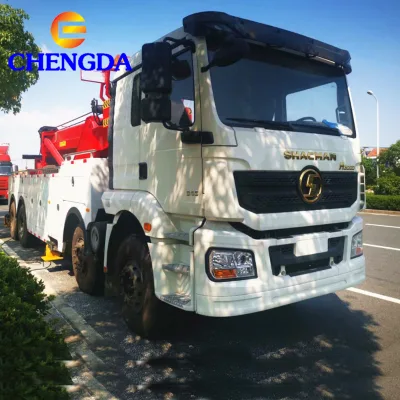


Low Price One Tow 2 Heavy Trucks 4*2 Recover Road Wrecker with Ladders
$9500.00 - $21500.00
MOQ: 1 Pieces

5 Ton 6 Ton 8 Ton Wrecker Tow Truck Wrecker Equipment China Wrecker Towing Truck
$15000.00 - $18900.00
MOQ: 1 Pieces


Rescue Wrecker Truck Heavy Duty Wrecker Equipment Towing Truck Prices
$19000.00 - $22000.00
MOQ: 1 Pieces


Comprehensive Sourcing Guide
Strategic Sourcing Guide for Self-Dumping Heavy Duty Wreckers
Procuring a self-dumping heavy duty wrecker requires a disciplined approach that balances technical capability with regulatory compliance and total cost of ownership. These specialized vehicles are engineered for the recovery and transport of disabled or damaged heavy vehicles, often operating in demanding environments where reliability is paramount. The market presents a diverse range of configurations, from wheel-lift and boom systems to tilt-tray mechanisms, each serving distinct operational needs. Buyers must navigate a landscape where specifications vary significantly based on chassis selection, payload capacity, and intended application. This guide outlines the critical factors for sourcing these assets, ensuring that procurement decisions are grounded in verified data and industry best practices.
Technical Architecture and Chassis Configuration
The foundation of any heavy-duty wrecker lies in its chassis selection and the integration of the towing mechanism. The available market data indicates a strong reliance on robust commercial truck platforms, with specific chassis models such as the Ca1140p40K42L5be6a85 and Zz1257n464GF1 representing high-capacity options. These chassis are designed to support the substantial loads associated with heavy recovery operations. The gross vehicle weight (GVW) for these units spans a wide range, with observed configurations reaching up to 25,000 kg, while lighter variants operate around 4,495 kg. This variance dictates the operational scope; a 25,000 kg unit is suitable for heavy industrial recovery, whereas a 4,495 kg unit may be better suited for municipal or light commercial towing.
The physical dimensions and axle configurations are equally critical. Heavy-duty models often feature a wheelbase extending to 4,100 mm or utilizing dual-axle setups with a combined length of over 10,500 mm. The axle load distribution is a key technical parameter, with some units rated for 7,000 kg on the front axle and 18,000 kg on the rear, ensuring stability during the lifting and transport of heavy loads. In contrast, lighter models may have a GVW of 4,495 kg with axle loads around 1,575 kg and 2,920 kg respectively. The number of tires also varies, with heavy-duty configurations typically utilizing 10 tires to distribute weight, while smaller units may operate on 6 tires.
The towing mechanism itself is a defining characteristic. The product attributes highlight several distinct types: Wheel-Lift, Boom, and Tilt Tray. A Wheel-Lift system is often preferred for its ability to lift the front or rear wheels of a vehicle off the ground, minimizing damage to the drivetrain. Boom systems provide vertical and horizontal reach, essential for recovering vehicles from ditches or off-road locations. Tilt-tray configurations offer a flatbed approach, allowing for the complete loading of a vehicle, which is ideal for transporting damaged cars that cannot be towed on wheels. The choice between these mechanisms depends heavily on the specific fleet requirements and the types of vehicles the wrecker is expected to service.
Compliance, Certification, and Regulatory Standards
Navigating the regulatory landscape is a non-negotiable aspect of sourcing heavy-duty wreckers. In the markets where these vehicles are manufactured, such as Hubei, China, compliance with local and international standards is mandatory. The observed data confirms the presence of CCC (China Compulsory Certification) marks on several units, indicating that the vehicles meet specific safety and quality requirements for the domestic market. However, buyers importing these units must verify if the CCC certification is sufficient for their local jurisdiction or if additional homologation is required.
Beyond certification, the vehicle's design must adhere to strict dimensional and weight standards. The product specifications list various dimensional ranges, with lengths extending from approximately 5,995 mm to over 10,730 mm. Widths are consistently observed around 2,550 mm, a standard dimension that aligns with many international road regulations. Height variations, ranging from 2,500 mm to 3,120 mm, must be checked against local bridge clearance and tunnel restrictions. The approach and departure angles, typically ranging from 19 to 20 degrees for approach and 11 to 18 degrees for departure, are critical for off-road recovery capabilities. Buyers should verify these angles against the specific terrain their fleet will encounter to ensure the vehicle can navigate recovery sites without getting high-centered.
Furthermore, the gross vehicle weight ratings must align with the licensing requirements of the operators. Units with a GVW of 25,000 kg will require specialized commercial driver licenses and may be subject to different road tax and weight restrictions compared to the 4,495 kg variants. The standard production specifications, such as the 14,060 kg and 25,000 kg ratings, serve as benchmarks, but buyers must confirm the actual certified weight for the specific configuration they purchase, as modifications to the towing equipment can alter the final weight distribution and legal classification.
Cost Drivers and Pricing Dynamics
The pricing for self-dumping heavy duty wreckers is influenced by a complex interplay of factors, primarily driven by chassis cost, towing mechanism complexity, and customization levels. The observed price range in the market spans from $1,300 to $120,000, a significant variance that reflects the difference between light-duty and heavy-duty configurations. The lower end of this spectrum likely corresponds to smaller, single-axle units with basic towing capabilities, while the upper end encompasses heavy-duty, multi-axle trucks with advanced boom systems and high payload capacities.
Customization is a major cost driver. The product attributes indicate that customization is available, allowing buyers to tailor the wrecker to specific operational needs. This can include modifying the boom length, adjusting the winch capacity, or integrating specialized lighting and safety equipment. Each customization adds to the base cost of the vehicle. Additionally, the choice of chassis brand, such as Foton or other manufacturers, impacts the price. Premium chassis brands often command higher prices due to their reputation for reliability and parts availability.
The minimum order quantity (MOQ) for these vehicles is observed to be 1 unit, suggesting that buyers can procure single units without needing to commit to a large fleet purchase. This flexibility is beneficial for small operators or those testing the market. However, buyers should be aware that while the MOQ is low, the lead time and logistics costs for a single unit may be higher per vehicle compared to bulk orders. Fuel type is another consideration; the observed data specifies Diesel as the standard fuel type, which is typical for heavy-duty applications due to its torque characteristics and fuel efficiency under load.
Operational Applications and Performance Metrics
Self-dumping heavy duty wreckers are deployed in a variety of scenarios, from highway breakdown assistance to industrial site recovery. The performance metrics of these vehicles, such as maximum speed and occupancy, play a crucial role in their operational efficiency. The observed maximum speeds range from 89 km/h to 110 km/h, with most heavy-duty units capable of speeds around 95 km/h. This speed range is generally sufficient for highway towing, where the primary constraint is the speed of the towed vehicle rather than the wrecker itself.
Occupancy is another key factor, with most units designed to carry 2 to 3 persons. This capacity allows for a driver and one or two recovery specialists, which is standard for heavy recovery operations. The cab configuration must be comfortable for long hours of operation, especially during emergency response situations. The approach and departure angles, as noted earlier, determine the vehicle's ability to access difficult recovery sites. A vehicle with a 20-degree approach angle can tackle steeper inclines than one with a 19-degree angle, providing a slight but significant advantage in off-road scenarios.
The curb weight of the vehicle also impacts its payload capacity. Heavy-duty units with a curb weight of 21,000 kg have a significantly higher payload capacity compared to lighter units with a curb weight of 2,800 kg. This difference is critical when determining the maximum weight of the vehicle that can be safely towed. Buyers must ensure that the wrecker's payload capacity exceeds the weight of the heaviest vehicle they expect to recover, with a safety margin to account for dynamic loads during lifting and transport.
Supplier Evaluation and Quality Assurance
Evaluating suppliers for heavy-duty wreckers requires a rigorous assessment of their manufacturing capabilities and quality control processes. The origin of the vehicles, often Hubei, China, provides a context for the manufacturing ecosystem, but buyers should not rely solely on location. Instead, they should verify the supplier's track record in producing similar heavy-duty vehicles. The availability of customization suggests that the supplier has the engineering flexibility to meet specific client requirements, but this must be backed by a robust quality assurance framework.
Quality control should extend beyond the final inspection to include the sourcing of key components. The chassis model, transmission type, and engine specifications are critical components that determine the vehicle's longevity. Buyers should request documentation regarding the origin and certification of these components. The condition of the vehicles is listed as "New," but buyers should verify the manufacturing date and ensure that the vehicles have not been stored for extended periods, which could lead to degradation of rubber components and batteries.
The presence of certifications like CCC is a positive indicator, but buyers should also inquire about other international standards that the supplier may adhere to, such as ISO certifications for quality management. The supplier's ability to provide after-sales support, including spare parts availability and technical assistance, is equally important. Heavy-duty wreckers are capital-intensive assets that require minimal downtime; therefore, a supplier with a strong support network is essential for maintaining operational continuity.
Long-Term Procurement and Maintenance Considerations
The long-term success of a wrecker fleet depends on the total cost of ownership, which includes maintenance, fuel consumption, and parts availability. The diesel engine configuration observed in the data is standard for heavy-duty applications, offering a balance of power and efficiency. However, buyers should evaluate the fuel consumption rates of different models, as this can significantly impact operating costs over the vehicle's lifespan. The transmission type, listed as Manual, is common in heavy-duty trucks, but buyers should consider whether an automatic transmission might offer better operational ease and reduced driver fatigue.
Maintenance schedules and parts availability are critical factors in long-term procurement. Buyers should ensure that the supplier provides a comprehensive maintenance manual and has a network of authorized service centers. The complexity of the towing mechanism, particularly in boom and wheel-lift systems, requires specialized maintenance. Regular inspections of the hydraulic systems, winches, and lifting arms are necessary to prevent catastrophic failures. The axle load and tire configuration also influence maintenance needs; heavier loads require more frequent tire replacements and brake inspections.
Finally, buyers should consider the resale value of the vehicles. Heavy-duty wreckers from reputable manufacturers with a history of reliability tend to hold their value better. The customization options, while adding initial cost, can also enhance the vehicle's utility and resale potential if they align with market demand. By focusing on these long-term considerations, buyers can make informed decisions that ensure their fleet remains productive and cost-effective for years to come.
FAQs
What certifications are available for these wreckers?
Some units carry CCC certification, indicating compliance with Chinese safety standards. Buyers must verify if this meets local import requirements or if additional homologation is needed for their specific jurisdiction before finalizing procurement.
Which chassis models are used for heavy-duty units?
Heavy-duty configurations utilize robust platforms like the Ca1140p40K42L5be6a85 and Zz1257n464GF1. These models support substantial loads, with gross vehicle weights reaching up to 25,000 kg for industrial recovery operations.
Can buyers request customization for these vehicles?
Customization is available to tailor the wrecker to specific operational needs. This includes modifying boom lengths, adjusting winch capacities, or integrating specialized lighting, though each modification adds to the base vehicle cost.
What is the minimum order quantity for these trucks?
The minimum order quantity is one unit, allowing single purchases without fleet commitments. This flexibility benefits small operators, though logistics costs per unit may be higher compared to bulk orders.
How does the wheelbase affect vehicle stability?
Wheelbases vary significantly, ranging from 2,800 mm to over 4,100 mm depending on the model. Longer wheelbases and dual-axle setups provide greater stability when lifting and transporting heavy loads during recovery operations.
What is the maximum speed for these heavy-duty trucks?
Maximum speeds range from 89 km/h to 110 km/h across different configurations. Most heavy-duty units operate around 95 km/h, which is generally sufficient for highway towing where the towed vehicle dictates the pace.