Source Self-Healing Microwave Film Capacitor for AC and Power
Find and compare 30 self-healing microwave film capacitor options from Chinese manufacturers. Evaluate specifications like capacitance, voltage ratings, and certifications to select the right components for air conditioning, power systems, and general purpose applications.
Key considerations
Products List


Ks Pinge High Quality Microwave Oven Capacitor CH85 High Voltage Film Capacitor
$1.42 - $1.78
MOQ: 200 Pieces





Comprehensive Sourcing Guide
Self-Healing Microwave Film Capacitor Sourcing Guide
Product Scope and Observed Listing Signals
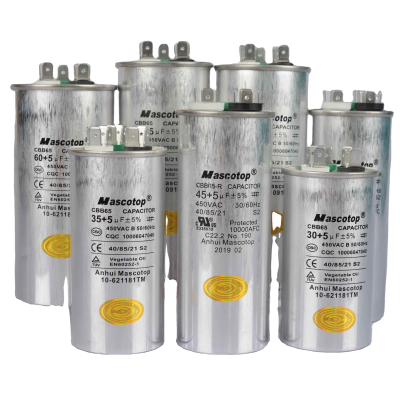
The market for self-healing microwave film capacitors presents a diverse array of components that serve distinct electrical roles, ranging from high-voltage microwave oven applications to general-purpose power factor correction. Buyers must carefully distinguish between these categories, as the physical form factors and electrical ratings vary significantly. For instance, listings frequently feature the CH85 model, which is specifically designed for microwave oven applications with a rated voltage of 2100V or 2500V and a capacitance range typically around 0.92uF to 1uF. These units often exhibit an oval shape and are constructed with polypropylene film insulation, a material choice that supports the self-healing characteristic essential for reliability in high-frequency environments. In contrast, other listings describe fixed capacitors with cylindrical aluminum cases, rated for AC380V or AC450V, and intended for air conditioner or power lighting applications. These units may carry different model identifiers, such as WBMJZ, and are often associated with higher reactive power standards, ranging from 5kvar to 40Kvar.
Observing the listing signals reveals a wide spectrum of commercial terms and product attributes that require rigorous filtering. The observed price range spans from $0.01 to $80, reflecting the disparity between low-cost general-purpose components and specialized high-voltage microwave capacitors. Minimum Order Quantities (MOQ) also vary drastically, from single units for sampling to 5000 pieces for bulk industrial procurement. Buyers should note that while some suppliers accept small orders, others may have stricter volume requirements. The packaging methods observed include carton packing, with specific configurations like 50 pieces per carton, and surface mount options for certain types. Additionally, the origin of these components is predominantly China, with specific manufacturing hubs like Shunde noted in some listings. Understanding these signals helps buyers align their procurement strategy with the specific technical and commercial needs of their project, ensuring they do not confuse a 2100V microwave capacitor with a 450V power correction unit.
Technical Specifications to Verify
When evaluating self-healing microwave film capacitors, the rated voltage and insulation characteristics are paramount for ensuring safe and effective operation. The CH85 series, for example, is specified with an insulation voltage from terminals to case of 2.4 times the rated voltage plus 1200V (VAC) for 1 second, and an AC test voltage from terminal to terminal of 4.3 times the rated voltage (VDC) for 10 seconds. These rigorous test parameters indicate the component's ability to withstand transient overvoltages common in microwave circuits. Buyers must verify that the selected capacitor matches the peak voltage demands of their specific application, as exceeding these limits can lead to dielectric breakdown. Furthermore, the operating temperature range is a critical specification, with observed units rated for -10°C to 85°C. This range ensures stability in varying environmental conditions, but buyers should confirm if their specific deployment requires extended temperature tolerance beyond these standard limits.
The dielectric material and dissipation factor are equally important indicators of performance and longevity. Polypropylene film is the preferred insulation medium for these capacitors due to its low loss tangent and self-healing properties. The dissipation factor (Tan δ) at 20°C is typically specified as ≤0.001 at 1kHz for high-quality units, indicating minimal energy loss and heat generation during operation. A low dissipation factor is crucial for maintaining efficiency in high-frequency applications, such as microwave ovens, where excessive heat can degrade the capacitor over time. Additionally, the tolerance of the capacitance value, often observed as -5% to +10%, should be verified against the circuit requirements. While some listings mention tuning characteristics associated with polystyrene capacitors, the core microwave units rely on polypropylene for superior stability. Buyers should request detailed datasheets that confirm these electrical parameters to ensure compatibility with their system design.
Compliance and Safety Documentation
Safety certifications are a non-negotiable aspect of sourcing electronic components, particularly those used in high-voltage or consumer-facing appliances. The supplied facts indicate that certain capacitors carry VDE, CQC, and UL certifications, which are critical for market access in various regions. VDE certification is particularly important for European markets, ensuring compliance with strict safety standards for electrical equipment. CQC certification is relevant for the Chinese domestic market, while UL certification is essential for products sold in North America. Buyers must verify that the specific model they intend to purchase holds the necessary certifications for their target market. It is also worth noting that while RoHS compliance is mentioned in background information, buyers should explicitly confirm that the components are free from restricted hazardous substances, especially if they are supplying to regulated industries or regions with strict environmental laws.
Beyond product-level certifications, buyers should inquire about the manufacturing standards and quality management systems employed by the supplier. The observed listings reference standards such as 5kvar to 40Kvar for power correction units and specific model standards like CH85 1uF 2100V AC for microwave capacitors. These standards provide a baseline for performance and safety but may not cover all aspects of quality assurance. Buyers should request documentation that demonstrates the supplier's adherence to international quality management standards, such as ISO 9001, if available. Additionally, the maximum allowable overvoltage, specified as 1.1 times the rated voltage for some units, should be clearly documented in the product specifications. This information is vital for engineers designing protection circuits and ensuring that the capacitor can handle transient spikes without failure. Clear and verifiable compliance documentation reduces the risk of regulatory non-compliance and product liability issues.
Cost Drivers and Commercial Terms
The cost of self-healing microwave film capacitors is influenced by several factors, including the rated voltage, capacitance value, and the complexity of the manufacturing process. High-voltage units, such as the 2100V or 2500V CH85 capacitors, typically command higher prices due to the stringent insulation requirements and specialized materials used. In contrast, general-purpose capacitors with lower voltage ratings, such as those rated for AC380V or AC450V, may be more cost-effective. The observed price range of $0.01 to $80 reflects this variability, with the lower end likely representing bulk-produced general-purpose components and the higher end corresponding to specialized, high-reliability units. Buyers should consider the total cost of ownership, which includes not only the unit price but also the potential costs associated with failures, returns, and warranty claims. Investing in higher-quality components with robust certifications can mitigate these risks and provide better long-term value.
Commercial terms, including MOQ and payment conditions, play a significant role in the procurement process. The observed MOQ range of 1 to 5000 pieces offers flexibility for buyers with varying volume needs. Suppliers that accept small orders are particularly useful for prototyping and initial testing phases, allowing buyers to validate the component's performance before committing to large-scale production. However, for bulk orders, buyers may be able to negotiate more favorable pricing and terms. It is also important to consider the shipping methods, with air and sea freight being the primary options. Air freight is faster but more expensive, making it suitable for urgent orders or samples, while sea freight is more cost-effective for large volumes but involves longer lead times. Buyers should align their procurement schedule with the supplier's lead times and shipping options to ensure timely delivery and avoid production delays.
Supplier Qualification and Quality Control
Selecting a reliable supplier is crucial for ensuring the consistent quality and availability of self-healing microwave film capacitors. Buyers should prioritize suppliers with a proven track record in manufacturing and exporting electronic components. The observed listings indicate that many suppliers are based in China, with specific regions like Shunde being noted as manufacturing hubs. While this provides access to a large pool of suppliers, it also necessitates thorough due diligence. Buyers should verify the supplier's business license, manufacturing capabilities, and export history. Requesting samples for testing is a critical step in the qualification process, allowing buyers to assess the physical quality, electrical performance, and packaging of the components. Additionally, buyers should inquire about the supplier's quality control processes, including incoming material inspection, in-process testing, and final product verification.
Quality control extends beyond the initial sample approval to include ongoing monitoring and audit capabilities. Buyers should ask for detailed quality reports, including test results for key parameters such as capacitance, dissipation factor, and insulation resistance. Suppliers that provide transparent and comprehensive quality documentation are more likely to maintain consistent product quality. Furthermore, buyers should consider the supplier's ability to handle custom orders, as indicated by the available customization options in some listings. This flexibility can be valuable for projects with specific requirements that deviate from standard specifications. However, customization may involve additional costs and longer lead times, so buyers should plan accordingly. Establishing a clear communication channel with the supplier and defining quality expectations in the purchase agreement can help prevent misunderstandings and ensure that the delivered components meet the required standards.
Long-Term Procurement Checks
Sourcing self-healing microwave film capacitors is not a one-time transaction but an ongoing process that requires continuous monitoring and evaluation. Buyers should establish key performance indicators (KPIs) to track supplier performance, including on-time delivery rates, defect rates, and responsiveness to issues. Regular audits, whether remote or on-site, can help verify that the supplier maintains the agreed-upon quality standards and manufacturing practices. Additionally, buyers should stay informed about changes in industry standards and regulations that may affect the procurement of these components. For example, updates to safety certifications or environmental regulations may require adjustments to the sourcing strategy. By maintaining a proactive approach to supplier management, buyers can mitigate risks and ensure a stable supply chain.
The technological landscape of electronic components is also evolving, with new materials and manufacturing techniques emerging regularly. Buyers should remain open to evaluating new products and suppliers that may offer improved performance or cost advantages. However, any changes to the supply chain should be carefully validated through rigorous testing and qualification processes. It is also important to maintain a buffer stock of critical components to protect against supply disruptions. This strategy can help ensure continuity of production in the event of unexpected shortages or delays. By combining diligent supplier management with strategic inventory planning, buyers can secure a reliable source of high-quality self-healing microwave film capacitors for their long-term procurement needs.
FAQs
What is the rated voltage for the CH85 microwave capacitor?
The rated voltage is 2100V or 2500V AC for the CH85 model. This high voltage class supports microwave oven applications and ensures reliable operation under standard AC frequencies of 50 or 60 Hz.
Can I order small quantities of these self-healing capacitors?
Yes, small orders are accepted for these polypropylene film capacitors. The minimum order quantity ranges from 1 to 5000 units, allowing flexibility for various procurement needs without requiring bulk commitments.
Which certifications do these capacitors hold for safety compliance?
These capacitors hold VDE, CQC, and UL certifications for safety compliance. These standards verify the product meets international requirements for electrical safety and performance in general purpose and air conditioning applications.
How is the dissipation factor measured for this film capacitor?
The dissipation factor is measured at 20 degrees Celsius and is less than or equal to 0.001 at 1kHz. This low loss characteristic ensures high efficiency and minimal heat generation during operation.
What is the operating temperature range for the CH85 capacitor?
The operating temperature range is from -10 degrees Celsius to 85 degrees Celsius. This wide range allows the capacitor to function reliably in diverse environmental conditions without performance degradation.
Which material is used for the case of this cylindrical capacitor?
The case material is aluminum, providing a robust cylindrical structure. This design protects the internal polypropylene film and ensures durability during installation in air conditioners, power systems, and lighting applications.
What is the maximum allowable overvoltage for this capacitor?
The maximum allowable overvoltage is 1.1 times the rated voltage. This tolerance allows the capacitor to handle temporary voltage spikes safely while maintaining its self-healing properties and structural integrity.