Source Self Locking Cow Feed Barrier for Dairy Barns
Compare 30 Self Locking Cow Feed Barrier options from verified Chinese manufacturers. These galvanized steel units feature automatic locking and are designed for cow feeding, vaccination, and dairy barn management.
Key considerations
Products List


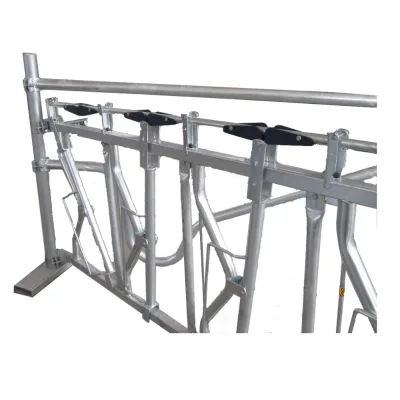
Cattle Panels of Cow Headlock Diagonal Z Feeder Barriers Cattle Livestock
$49.99 - $79.99
MOQ: 50 Pieces



Comprehensive Sourcing Guide
Strategic Sourcing Guide for Self-Locking Cow Feed Barriers
Procuring specialized livestock infrastructure requires a disciplined approach that balances technical precision with supply chain reliability. For buyers seeking self-locking cow feed barriers, the market offers a diverse array of solutions designed to enhance herd management, optimize feeding efficiency, and ensure animal welfare. This guide synthesizes observed market data and verified product attributes to provide a robust framework for evaluating potential suppliers and selecting equipment that meets rigorous operational standards. The focus remains on evidence-based criteria, ensuring that procurement decisions are grounded in tangible specifications rather than unverified marketing claims.
Technical Specifications and Material Integrity
The foundational requirement for any self-locking cow feed barrier is the structural integrity of the materials used. Market observations indicate that the primary construction material for these units is steel, specifically utilizing steel pipes or galvanized steel components. The surface treatment is a critical differentiator; the most prevalent and recommended finish is Hot DIP Galvanized. This process provides a robust barrier against corrosion, which is essential given the harsh, humid, and chemically active environment of dairy and beef operations. Buyers must verify that the "Galvanized" attribute refers specifically to the hot-dip process rather than a standard electro-galvanized finish, as the latter offers significantly less protection against long-term degradation.
Size specifications vary widely to accommodate different herd demographics and facility layouts. Observed product models list dimensions ranging from specific measurements like 60, 50, 65, and 75 cm to broader ranges such as 1-6 meters. Some units are explicitly designed for specific herd sizes, such as configurations intended for 5-10 cows. When evaluating a product, the buyer should cross-reference the "prod_standard" and "Size" attributes to ensure the barrier fits the physical dimensions of the cattle being managed. A mismatch in size can lead to inefficient feeding or, worse, injury to the animals. The "prod_model" identifiers, such as HL01, JJ, or XBF-C0001, serve as unique identifiers for these variations, allowing for precise ordering and replacement part compatibility.
Locking Mechanisms and Operational Design
The defining feature of the self-locking cow feed barrier is its locking mechanism. The core attribute "Lock: Yes Self Locking" confirms the presence of an automated or semi-automated engagement system. In the observed product data, the "Lock Type" is frequently described as "Automatic," which suggests a design that engages without manual intervention from the farmhand once the animal is positioned. This automation is crucial for maintaining consistent feeding schedules and reducing labor costs. The mechanism must be robust enough to withstand the force of large cattle while remaining easy to reset for the next animal.
Furthermore, the operational design often integrates with the broader feeding system. The "Function" attribute is listed as "Cow Feeding," and the "Advantage" is noted as "Comfortable," indicating that the design prioritizes animal ease of access and stress reduction. The "Computerized" attribute is listed as "Non-Computerized," which implies that the locking mechanism is mechanical rather than reliant on complex electronic sensors or software. This mechanical simplicity is often a benefit in agricultural settings where connectivity can be unreliable and maintenance needs to be straightforward. The "Power Source" is identified as "Manual Labour," reinforcing that the operation relies on human effort for setup or reset, even if the locking action itself is automatic.
Compliance, Certification, and Regulatory Standards
Navigating the regulatory landscape is a non-negotiable aspect of B2B procurement in the agricultural sector. Verified product attributes confirm that suppliers in this category typically hold a suite of certifications, including CE, ISO9001, GMP, and QS. The CE mark indicates conformity with health, safety, and environmental protection standards for products sold within the European Economic Area, a common benchmark for international trade. ISO9001 certification demonstrates that the manufacturer adheres to international quality management standards, ensuring consistent production processes. GMP (Good Manufacturing Practice) and QS (Quality Safety) certifications are particularly relevant for equipment that interacts directly with food-producing animals, as they address hygiene and safety protocols.
Buyers must treat these certifications as verification of the supplier's commitment to quality rather than a guarantee of the specific unit's performance. The "prod_standard" attribute often references ISO9001, but it is also common to see specific dimensional standards like "84inch" or "75, 65, 50, 60 etc." listed. When a supplier claims compliance, the buyer should request documentation that links the specific product model to the certification scope. For instance, the "Certification" field sometimes lists "CE,ISO9001:Computerized:Non-Computerized," which is a complex string that requires clarification. The buyer should verify that the specific non-computerized model they are purchasing falls under the valid scope of the ISO9001 and CE certificates provided.
Cost Drivers and Pricing Variables
The pricing for self-locking cow feed barriers exhibits a significant range, with observed market data showing values between 3 and 630 USD. This wide disparity is driven by several key factors, including material thickness, the complexity of the locking mechanism, and the scale of the unit. A unit priced at the lower end of the spectrum may be a basic, smaller-scale barrier intended for a few animals, whereas a unit at the higher end likely includes heavy-duty steel pipes, advanced hot-dip galvanization, and custom engineering for larger herds.
The "MOQ" (Minimum Order Quantity) is another critical cost driver, with observed ranges spanning from 1 to 500 units. Buyers purchasing a single unit for a small farm may face a higher per-unit cost compared to those placing an order for 500 units, which could qualify for bulk pricing tiers. Additionally, the "prod_packing" method, often listed as "Wooden Pallet" or simply "Pallet," impacts shipping costs. Customization is a major variable; the "Customization" and "OEM" attributes are marked as "Available" and "Avaliable" respectively. Custom designs, such as specific dimensions or unique locking configurations, will invariably increase the unit price and may extend the lead time. Buyers should explicitly request a cost breakdown that separates the base unit price from customization fees and packaging costs to avoid hidden expenses.
Supplier Evaluation and Origin Verification
Identifying a reliable supplier requires a deep dive into their operational history and geographical location. The product data indicates origins primarily from China, with specific mentions of Tan'an and Qingdao. These regions are known for their manufacturing capabilities in agricultural machinery. The "Manufacturer" attribute notes a history of "23years," suggesting a supplier with substantial industry experience. However, buyers should not rely solely on this number; they must verify the supplier's current operational status and their ability to support the product post-sale.
The "Guarantee" period is a vital metric for supplier confidence, with observed data citing a "1 Year" guarantee. This warranty should cover defects in materials and workmanship, including the integrity of the galvanization and the functionality of the self-locking mechanism. Buyers should also evaluate the supplier's responsiveness to "Customized" requests. The ability to design a barrier "as Your Need" is a strong indicator of engineering capability. When evaluating suppliers, prioritize those who can provide clear communication regarding the "prod_model" and "Product Code" (e.g., Xbf-C0001/Xbf-C0006) to ensure that the exact specifications are delivered.
Quality Control and Long-Term Procurement Considerations
Ensuring long-term value requires a proactive approach to quality control. The "Surface Treatment" of "Hot DIP Galvanized" is the first line of defense against rust, but the thickness of the zinc coating is not always specified in general product listings. Buyers should request technical data sheets that specify the coating thickness in microns to ensure it meets the demands of the local climate. The "Condition" of the products is listed as "New," but this should be verified upon delivery to ensure no damage occurred during transit, especially given the heavy nature of steel barriers.
Long-term procurement considerations also include the availability of spare parts and the ease of maintenance. The "Lock Type" being "Automatic" suggests that while the mechanism is efficient, it may require periodic lubrication or adjustment. Suppliers that offer "OEM" services are often better positioned to provide custom replacement parts if a specific component fails. Furthermore, the "Product Name" variations, such as "Cow Headlock," "Cow Head Yoke," and "Cow Headlock Dimensions," highlight the importance of precise terminology. Misunderstanding these terms can lead to ordering the wrong component. Buyers should maintain a clear inventory of part numbers and model codes to streamline future reordering.
Comparative Analysis of Product Attributes
To assist in the final selection process, the following table summarizes the key attributes observed in the market for self-locking cow feed barriers. This comparison highlights the variability in specifications and helps buyers identify the features that align with their specific operational needs.
| Attribute Category | Common Observation | Critical Verification Point |
|---|---|---|
| Material | Steel, Steel Pipe, DIP Galvanized | Confirm "Hot DIP" vs. standard galvanization thickness. |
| Locking Mechanism | Self Locking, Automatic | Verify mechanical simplicity vs. electronic dependency. |
| Dimensions | 50-75cm, 1-6m, 84inch | Match specific herd size (e.g., 5-10 cows) to unit size. |
| Certifications | CE, ISO9001, GMP, QS | Ensure certificates cover the specific non-computerized model. |
| Origin | Tan'an, Qingdao, China | Verify supplier location for logistics and lead time estimation. |
| Warranty | 1 Year | Clarify coverage scope for mechanical and coating defects. |
| Customization | Available, OEM Offer | Assess cost and lead time impact of custom dimensions. |
| Packing | Wooden Pallet, Pallet | Confirm packaging suitability for long-distance shipping. |
Final Procurement Strategy
The procurement of self-locking cow feed barriers is a strategic decision that impacts daily farm operations and long-term asset value. By focusing on the verified attributes of material integrity, locking mechanisms, and certification compliance, buyers can mitigate the risks associated with low-quality imports. The wide range of prices and MOQs necessitates a clear definition of requirements before engaging with suppliers. Whether the need is for a standard model like the HL01 or a custom design based on specific herd dimensions, the emphasis must remain on the "Hot DIP Galvanized" finish and the reliability of the "Automatic" locking system.
Buyers should approach the market with a checklist derived from the observed data, ensuring that every supplier response addresses the specific technical and regulatory requirements outlined in this guide. The "23years" manufacturer experience and the "1 Year" guarantee are positive indicators, but they must be backed by tangible documentation. Ultimately, the goal is to secure a barrier system that not only fits the physical space but also enhances the welfare of the cattle and the efficiency of the feeding process. By adhering to these evidence-based criteria, buyers can navigate the complex B2B landscape with confidence, ensuring a successful procurement outcome that stands the test of time.
FAQs
What material is used for self locking cow feed barriers?
These barriers are constructed from steel or steel pipes with a hot dip galvanized surface treatment. This finish provides essential corrosion resistance for harsh farm environments and ensures long-term structural integrity.
Which certifications do reliable manufacturers typically hold?
Reputable suppliers often possess CE, ISO9001, GMP, and QS certifications. These credentials verify adherence to international quality management standards and safety protocols for equipment interacting with food-producing animals.
How does the locking mechanism operate on these units?
The system features an automatic self-locking mechanism that engages without manual intervention once the animal is positioned. This mechanical design relies on manual labor for setup but ensures consistent feeding schedules.
Can buyers request custom dimensions for their facility?
Yes, customization is available to design barriers as specific needs require. Buyers can request unique sizes or configurations, though this may impact the unit price and lead time for production.
What is the typical warranty period for these products?
The standard guarantee period observed in the market is one year. This warranty typically covers defects in materials and workmanship, including the integrity of the galvanization and locking mechanism functionality.
Where are these barriers primarily manufactured?
Products originate from manufacturing hubs in China, specifically locations like Tan'an and Qingdao. These regions are known for their capabilities in producing agricultural machinery and livestock infrastructure.
What is the minimum order quantity for purchasing units?
Minimum order quantities range from 1 to 500 units depending on the supplier and customization level. Smaller orders may incur higher per-unit costs compared to bulk purchases that qualify for volume pricing.