Source Semi-Automatic Cryostat for Pathological Analysis in Labs
Find and compare 30 semi-automatic cryostat for pathological analysis models from verified Chinese manufacturers. Evaluate key specifications such as section thickness, chamber temperature, and portability to select the ideal unit for hospital, school, or laboratory diagnostic workflows.
Key considerations
Products List


Cryostat Microtome Rd-2260 Freezing Microtome Semi-Auto Microtome for Lab
$8900.00 - $9500.00
MOQ: 1 Pieces


Pathology Equipment Laboratory Cryostat HS-4000 Semi-Automatic for Hospital Use
$8800.00 - $9500.00
MOQ: 1 sets


Hisure Pathology Automatic Cryostat Microtome Tissue for Histology Lab
$8800.00 - $9500.00
MOQ: 1 sets


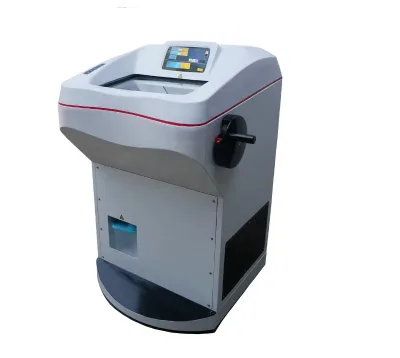

Semi Automatic Microtome Cryostat Microtome for Histology in Hospitals and Laboratory
$11000.00 - $12395.00
MOQ: 1 Pieces

Laboratory Histopathology Machine Frozen Microtome Cryostat Microtome Semi-Automated Microtome
$11000.00 - $12280.00
MOQ: 1 Pieces

Laboratory Cryostat Microtome Tissue Microtome Chemical Pathology Machine Analytical Instruments
$11000.00 - $12400.00
MOQ: 1 Pieces


Biobase Cryostat Microtome Tissue Pathology Medical Equipment Histology Automatic Freezing for Lab
$3000.00 - $10000.00
MOQ: 1 Unit

Biobase Cryostat Microtome Tissue Pathology Medical Equipment for Lab
$3000.00 - $10000.00
MOQ: 1 Unit


Biobase Microtome Semi Automatic Rotary Microtome Tissue Freezing Cryostat Microtome
$1998.00 - $2850.00
MOQ: 1 Unit

Biobase Pathology Equipment Cryostat Microtome Cryostat Microtome Use
$1588.00 - $2299.00
MOQ: 1 Pieces

Biobase Rapid Section Cryostat Microtome for Histopathology Laboratory
$7100.00 - $8200.00
MOQ: 1 Pieces
Comprehensive Sourcing Guide
Semi-Automatic Cryostat for Pathological Analysis Sourcing Guide
Procuring a semi-automatic cryostat for pathological analysis requires a careful balance between technical precision, regulatory compliance, and long-term operational reliability. These instruments are critical for frozen section diagnostics, allowing pathologists to rapidly freeze tissue specimens for immediate microscopic examination during surgical procedures. The decision to source a semi-automatic model often hinges on the need for consistent temperature control, ease of operation, and integration into existing laboratory workflows. Buyers must navigate a market where specifications vary significantly, from chamber capacity to sectioning thickness, ensuring the selected unit meets the specific throughput and diagnostic accuracy requirements of their facility.
This guide provides evidence-based procurement advice for sourcing these specialized medical devices. It focuses on interpreting product listings, verifying technical specifications, and understanding the commercial and compliance landscape. By adhering to the facts observed in current market listings and trusted industry knowledge, procurement teams can mitigate risks associated with equipment failure, non-compliance, and inadequate after-sales support. The following sections detail the critical steps for evaluating suppliers and selecting the right cryostat for pathological analysis.
Product Scope and Observed Listing Signals
The current market for semi-automatic cryostats presents a diverse range of models, with observed product counts indicating a robust supply base. Buyers will encounter listings with prices ranging from approximately $1,029 to $15,999 USD, reflecting variations in brand, technology, and included accessories. The minimum order quantity (MOQ) typically spans from 1 to 1,000 units, suggesting that most suppliers cater to individual institutional purchases as well as larger distributor orders. This wide price and volume range necessitates a thorough comparison of features rather than relying solely on cost as a primary selection criterion.
Product attributes observed in listings highlight key differentiators such as portability, power input, and specific model numbers like AMHS-4000, AM-4000, and the KH-LQ series. Many units are classified under "Biological Diagnostics" and are designed for use in labs, hospitals, and schools. The presence of "Customization" and "Customized" attributes indicates that suppliers may offer tailored solutions for specific institutional needs. Buyers should pay close attention to these attributes to ensure the equipment aligns with their specific workflow requirements, such as the need for electric power sources or specific structural designs.
Technical Specifications to Verify
Temperature control is the most critical technical parameter for any cryostat used in pathological analysis. Listings indicate chamber temperatures ranging from 0ºC to -45ºC, with some models specifying a minimum temperature of -55℃. Buyers must verify that the selected unit can maintain stable temperatures across this range to ensure consistent tissue freezing without ice crystal formation, which can compromise diagnostic accuracy. The refrigerating capacity, observed at 690 W in some listings, is a key indicator of the system's ability to recover temperature quickly after specimen insertion, a vital feature for high-throughput environments.
Sectioning precision and specimen handling capabilities are equally important. Specifications such as a section thickness range of 0.5μm to 999μm, adjustable trimming thickness, and maximum specimen sizes of 55mm×80mm define the instrument's versatility. Buyers should confirm that the semi-automatic mechanism provides smooth, vibration-free sectioning to produce high-quality slices for microscopic examination. Additionally, the defrost mechanism, whether manual or auto, impacts operational efficiency and maintenance requirements. Understanding these mechanical specifications ensures the selected cryostat can handle the variety of tissue types and thicknesses encountered in daily pathological practice.
Compliance and Safety Documentation
Regulatory compliance is non-negotiable for medical equipment used in clinical settings. Listings frequently cite certifications such as ISO, CE, and ISOCE, which are essential for market access and institutional procurement. The CE mark indicates conformity with health, safety, and environmental protection standards for products sold within the European Economic Area. Buyers must verify that the supplier provides valid certification documents and that the specific model number matches the certified configuration. Relying on generic certification claims without verifying the specific product model can lead to compliance gaps and potential legal or operational issues.
Safety standards and instrument classification further define the risk profile of the equipment. Some listings reference safety standards like GB/T18830-2009 and classify instruments as Class I, which generally implies lower risk and simpler regulatory requirements. Security types, such as L Category and B Type, may relate to electrical safety or operational safeguards. Buyers should ensure that the equipment meets the specific safety regulations of their local jurisdiction, not just the origin country's standards. Documentation regarding electrical safety, particularly given the 650 Va input power observed in some models, should be reviewed to ensure compatibility with local power infrastructure and safety codes.
Cost Drivers and Commercial Terms
The total cost of ownership extends beyond the initial purchase price, encompassing packaging, shipping, and after-sales support. Observed packing methods include carton, safety packing non-fumigation wooden boxes, and standard export wooden cases, which can significantly impact shipping costs and handling requirements. Buyers should clarify who bears the cost and responsibility for proper packaging to prevent damage during transit, especially for sensitive instruments like cryostats. The origin of the products, primarily from China and Jiangsu, may influence logistics planning and import duties, which should be factored into the budget.
Commercial terms such as warranty and after-sale service are critical components of the procurement decision. Listings commonly offer a 1-year warranty and online technical support, which are standard but essential for minimizing downtime. Buyers should negotiate for extended warranty options or comprehensive service contracts that include preventive maintenance and spare parts availability. The "Factory Price" attribute suggests direct manufacturing sources, which may offer cost advantages but requires careful vetting of the supplier's service infrastructure. Understanding the full scope of support ensures that the institution is not left without technical assistance when critical equipment failures occur.
Supplier Qualification and Quality Control
Evaluating supplier qualifications is essential to ensure the reliability and quality of the purchased cryostats. Buyers should verify the manufacturer's production capabilities, quality management systems, and track record in the medical device industry. The presence of "Manufacturer: Factory Price" indicates direct sourcing, which can reduce costs but requires due diligence to confirm that the supplier is the actual manufacturer and not a trading company. Requesting evidence of production facilities, quality control processes, and past performance with similar institutions can provide confidence in the supplier's ability to deliver consistent quality.
Quality control should extend to the pre-shipment inspection and post-delivery validation of the equipment. Buyers should establish clear acceptance criteria based on the technical specifications observed, such as temperature stability, sectioning accuracy, and mechanical functionality. Implementing a rigorous incoming inspection protocol, potentially involving third-party inspection services, can help identify defects early. Additionally, verifying the authenticity of certifications and ensuring that the delivered product matches the ordered specifications is crucial for maintaining compliance and operational readiness.
Long-Term Procurement Checks
Sustaining the performance of a semi-automatic cryostat requires ongoing attention to maintenance, calibration, and service support. Buyers should develop a preventive maintenance schedule that aligns with the manufacturer's recommendations, including regular defrosting, cleaning, and calibration of temperature sensors. The availability of spare parts, such as blades, compressors, and electronic components, should be confirmed to avoid prolonged downtime during repairs. Establishing a direct line of communication with the supplier's technical support team ensures that any operational issues can be addressed promptly.
Continuous monitoring of supplier performance and product reliability is vital for long-term procurement success. Buyers should track metrics such as mean time between failures, response time for technical support, and the effectiveness of warranty claims. Periodic reviews of the equipment's performance against initial specifications can help identify any degradation in quality over time. By maintaining a proactive approach to supplier management and equipment maintenance, institutions can ensure that their semi-automatic cryostats continue to support accurate and efficient pathological analysis for years to come.
FAQs
What certifications do the semi-automatic cryostats hold?
The products hold CE and ISO certifications as documented in the specifications. Some listings also reference Quality Certification CE and specific safety standards like GB/T18830-2009 for compliance in medical settings.
Which models are available for pathological analysis?
Available models include AMHS-4000, AM-4000, KH-LQ3300, KH-LQ3600, and KH-LQ3700. These units function as biochemistry analyzers or medical cryostats with adjustable section thickness ranges suitable for lab and hospital use.
Can the cryostats be customized for specific needs?
Yes, customization is available for these semi-automatic cryostats. Buyers can request specific configurations, and the products are described as portable with options for manual or auto defrosting depending on the model selected.
What is the typical packaging for these instruments?
Packaging varies by model but often includes standard export wooden cases or safety packing non-fumigation wooden boxes. Some items are shipped in plywood cases or cartons to ensure safe transport from the factory.
How long is the warranty period for these devices?
The warranty period is typically 1 year for the semi-automatic cryostats. This coverage applies to the medical equipment manufactured by the factory, ensuring support for the biochemistry analyzer or cryostat functions.
What is the minimum order quantity for these products?
The minimum order quantity ranges from 1 to 1000 units depending on the supplier and specific model. Buyers should verify the exact MOQ for their chosen product like the KH-LQ3500 or RD-2280 before ordering.
Where are these semi-automatic cryostats manufactured?
These products originate from China, specifically from locations like Jiangsu. The manufacturers provide factory prices for these medical devices used in labs, hospitals, and schools for pathological analysis.