Source Semi-Automatic Flat-Bed Cylinder UV Printer for Paper, Label, Card
Compare 30 Semi-Automatic Flat-Bed Cylinder UV Printer models from verified Chinese manufacturers. Evaluate specifications like XP600 printheads, UV ink types, and flat-bed cylinder press structures for paper, label, and card printing applications; compare the available evidence and request quotations based on your requirements.
Key considerations
Products List


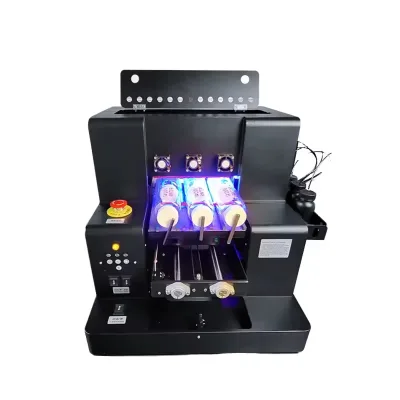

Factory Supply 360 UV Printer Cylinder Automatic High Cylinder UV Printer
$15000.00 - $25000.00
MOQ: 1


New Design 360 UV Printer Cylinder Automatic High Speed Cylinder UV Printer
$15000.00 - $25000.00
MOQ: 1


Automatic A3 L805 UV Flatbed Cylinder Printer UV Dtf Transfer Stickers Printing Machine
$1555.00 - $2385.00
MOQ: 1 Pieces


UV Flatbed Printer for Acrylic, MDF Wood, Glass, Leather and Plastic Printing
$2299.00 - $2499.00
MOQ: 1 Pieces

Comprehensive Sourcing Guide
Semi-Automatic Flat-Bed Cylinder UV Printer Sourcing Guide
Sourcing a semi-automatic flat bed cylinder UV printer requires careful evaluation of mechanical design and print head compatibility. The market offers various configurations, including models like the M-9060W and M-9060S, which feature flat-bed cylinder press structures. These machines are designed for versatility, supporting applications such as paper, label, and card printing. Buyers must distinguish between true semi-automatic operations and fully automated systems, as the latter often command significantly higher prices. The presence of automatic grade features suggests enhanced efficiency, but verification of the actual automation level is crucial for accurate budgeting.
Technical specifications vary widely across listings, with observed price ranges spanning from $1,350 to $65,000 USD. This disparity often reflects differences in printhead technology, such as the XP600, I3200, or CE4M, and the overall build quality. Minimum order quantities typically range from one to three units, indicating that these are often sold as individual industrial assets rather than bulk commodities. Buyers should prioritize models that explicitly state their printing interface, such as USB3, and verify the resolution capabilities, which may include 720x600dpi or higher settings. Understanding these technical nuances ensures alignment with specific production needs.
Product Scope and Observed Listing Signals
The product scope encompasses a diverse array of UV printing solutions, ranging from specialized crystal label transfer film printers to general-purpose flatbed units. Listings frequently highlight features like multi-colour printing capabilities and the use of UV ink, which cures instantly under LED lamps. Some models, such as the TECJET 6090G, specify dimensions like 600x900mm, while others, like the MT-UV 2513GX, offer larger formats up to 2500x1300mm. Buyers should note that "semi-automatic" may refer to manual loading or height adjustment mechanisms, which impact throughput and labor requirements.
Observed listing signals indicate a strong emphasis on customization availability and new condition products. Many suppliers offer optional RIP software such as Maintop or Photoprint, which is critical for color management and workflow integration. The packing methods vary, with wooden packages and plywood crates being common to protect the machinery during transit from origins like China, Ningbo, or Shanghai. Buyers must carefully review the standard dimensions provided, as some listings cite unusual measurements like 4090cm, which may indicate a typo or a specific industrial configuration requiring clarification.
Technical Specifications to Verify
Verifying technical specifications is paramount to ensuring the printer meets production demands. Key areas of focus include the printhead type, with options like XP600 offering a balance of speed and quality. Buyers should confirm the maximum printing height, which can reach up to 30cm in some models, allowing for thicker substrates. The drying system, typically consisting of LED UV lamps, must be compatible with the ink type, such as LED UV or UV curing ink, to ensure proper adhesion and durability. Additionally, the resolution settings, ranging from 720x600dpi to 720x1200dpi, directly impact the final print quality and should be matched to the intended application.
Other critical specifications include the power consumption and environmental operating conditions. Some models specify a drum heating power of 500W and equipment power of 650W, which affects energy costs and electrical infrastructure requirements. The operating temperature and humidity ranges, such as 20-28°C and 38-65% humidity, must be considered for facility planning. Buyers should also verify the paper device configuration, including pre-finished film receivers and post-protective films, as these components influence the workflow efficiency and the quality of the final output, particularly for label and card printing applications.
Compliance and Safety Documentation
Compliance and safety documentation are essential for legal operation and workplace safety. Buyers must ensure that the equipment carries relevant certifications, with RoHS being a common standard observed in listings. This certification indicates that the machine is manufactured without certain hazardous materials, which is crucial for environmental compliance and market access in many regions. Suppliers should provide detailed safety manuals that outline proper handling procedures, especially regarding the UV curing lamps and electrical components. These documents are vital for training operators and maintaining a safe working environment.
In addition to product certifications, buyers should request documentation related to electrical safety and machine guarding. The flat-bed cylinder press structure involves moving parts that require appropriate safety interlocks and emergency stop mechanisms. Suppliers must provide clear instructions on maintenance and troubleshooting to prevent operational hazards. It is also important to verify that the ink and consumables used with the printer comply with local regulations regarding volatile organic compounds (VOCs) and other chemical emissions. Proper documentation ensures that the procurement process is transparent and that the equipment can be legally and safely integrated into the production line.
Cost Drivers and Commercial Terms
Cost drivers for semi-automatic flat bed cylinder UV printers include the printhead technology, build quality, and included accessories. Models equipped with high-end printheads like the I3200 or CE4M typically command higher prices due to their superior speed and resolution capabilities. The size of the printing area, such as 2.44x1.22 meters or 2500x1300mm, also significantly impacts the cost. Buyers should consider the total cost of ownership, including ink consumption, maintenance, and potential downtime, rather than just the initial purchase price. The observed price range of $1,350 to $65,000 USD reflects these varying levels of sophistication and capability.
Commercial terms often include minimum order quantities of one to three units, which is standard for industrial equipment. Buyers should negotiate clear terms regarding shipping, insurance, and installation support. The origin of the product, whether from Ningbo, Shanghai, or other Chinese manufacturing hubs, can influence logistics costs and lead times. It is advisable to request a detailed quotation that breaks down the cost of the machine, optional software, and any additional accessories. Understanding these commercial terms helps in budgeting accurately and avoiding unexpected expenses during the procurement process.
Supplier Qualification and Quality Control
Supplier qualification is a critical step in ensuring the reliability of the purchased equipment. Buyers should verify the supplier's manufacturing capabilities, including their production facilities in locations like Shanghai or Ningbo. Requesting references from previous clients can provide insights into the supplier's after-sales support and product durability. Quality control processes should be transparent, with suppliers providing evidence of rigorous testing before shipment. This includes checks on print quality, mechanical stability, and software functionality. Buyers should also inquire about the warranty terms and the availability of spare parts.
Establishing a strong relationship with the supplier is essential for long-term success. Buyers should assess the supplier's responsiveness to technical queries and their ability to provide timely support. It is advisable to conduct a factory audit or request video tours of the production line to verify the supplier's claims. Clear communication regarding customization options, such as specific RIP software or unique packing requirements, ensures that the final product meets specific needs. By thoroughly evaluating supplier qualifications, buyers can mitigate risks and ensure a smooth procurement experience.
Long-Term Procurement Checks
Long-term procurement checks involve monitoring the performance and reliability of the equipment over time. Buyers should track key performance indicators such as print quality consistency, maintenance frequency, and ink consumption rates. Regular maintenance is crucial for extending the lifespan of the printheads and other critical components. Buyers should establish a preventive maintenance schedule and ensure that operators are properly trained to handle the equipment. Monitoring these metrics helps in identifying potential issues early and minimizing downtime.
Additionally, buyers should stay updated on technological advancements in UV printing technology. The market is evolving rapidly, with new printheads and software features becoming available. Regularly reviewing the supplier's product catalog can help in planning future upgrades or expansions. Building a relationship with the supplier for ongoing support and potential future purchases is beneficial. By conducting thorough long-term checks, buyers can maximize the return on investment and ensure that their printing operations remain competitive and efficient.
FAQs
What certifications do these printers have?
The listed printers carry RoHS certification to ensure compliance with environmental standards. This attribute is confirmed in the product specifications. Buyers should verify specific model compliance before ordering to ensure the equipment meets local regulatory requirements for electronic waste and hazardous substances.
Can I customize the printer specifications?
Customization is available for these semi automatic flat bed cylinder uv printers to meet specific production needs. Buyers can request adjustments to the printing interface or structure. This flexibility allows manufacturers to tailor the equipment for different media types like labels or cards without compromising the core flat-bed cylinder design.
What is the typical price range for these units?
The observed price range for these units spans from 1350 to 65000 USD depending on the model and configuration. Prices vary based on features like the printhead type or drying system. Buyers should expect significant cost differences between entry-level models and high-capacity industrial machines with advanced automation.
What is the minimum order quantity required?
The minimum order quantity ranges from 1 to 3 units for these printers. This low threshold allows small businesses to purchase single units for testing or immediate deployment. Buyers can negotiate based on volume, but the standard listing supports small batch acquisitions without requiring large initial commitments.
Which printhead types are supported by these models?
Supported printhead types include XP600, I3200, I1600, and CE4m for various printing applications. These heads enable high-resolution output on media such as crystal labels or transfer films. The specific model determines the available options, allowing users to select the best head for their desired print quality and speed requirements.
How are these printers packaged for shipping?
Packaging options include wooden crates or plywood packages to ensure safe transport of the heavy machinery. The standard arrangement protects the flat-bed cylinder structure during international shipping. Buyers should confirm the specific packing type for their order to ensure the equipment arrives without damage and is ready for immediate installation.
What are the operating temperature and humidity requirements?
The recommended operating environment requires a temperature between 20 and 28 degrees Celsius with humidity levels from 38 to 65 percent. Maintaining these conditions ensures optimal performance of the UV curing system and ink flow. Deviations from this range may affect print quality or cause mechanical issues in the automatic grade equipment.