Source semi-automatic flatbed eco solvent printer for Paper Label Card
Find 30 semi-automatic flatbed eco solvent printer options with varying print speeds, resolutions, and ink systems. Buyers can compare models like the MT-UV6090pro and Sj-740c for applications in paper, label, and card printing.
Key considerations
Products List


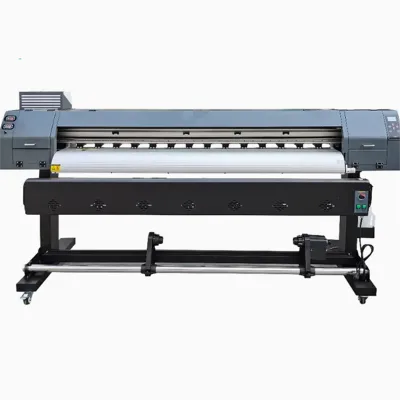


24 Inch 60cm Printer Small Size Eco Solvent Printer with Single Head
$1400.00 - $1450.00
MOQ: 1 Pieces





Comprehensive Sourcing Guide
Strategic Sourcing Guide for Semi-Automatic Flatbed Eco Solvent Printers
Understanding the Technical Landscape of Flatbed Eco Solvent Technology
When sourcing a semi-automatic flatbed eco solvent printer, buyers must first distinguish between the specific mechanical architectures and ink technologies available in the current market. The term "flatbed" indicates a machine where the media is stationary on a bed while the print head traverses above it, a configuration ideal for rigid or semi-rigid substrates. However, the "semi-automatic" designation often implies a hybrid workflow where media loading or unloading may require manual intervention, or where the machine combines flatbed capabilities with cylinder mechanisms for specific applications.
Based on observed market data, the technical specifications for these machines vary significantly. Some units feature a Print Head configuration utilizing the Epson I3200, which is known for high precision and is often paired with a Resolution of 1440*1440dpi. In contrast, other models in the semi-automatic category may utilize Dual Epson Dx5/Dx7 heads or 2 X Epson Dx8 configurations. The choice of print head directly influences the droplet size, with some systems supporting 1.5-21pl Variable ink droplets, allowing for smoother gradients and finer detail.
The Printing Interface is another critical technical variable. While many modern systems rely on USB2.0 connections for stability, some specifications list USB3 interfaces, which may offer faster data transfer rates for large graphic files. The Drying System is equally vital; effective models often include Pre and Post Heater systems to ensure rapid ink curing, which is essential for eco-solvent inks that require heat activation to bond properly with the media. The Print Speed can range widely, with some high-end configurations achieving 50 M2/Hr, while others may operate at 36sqm/H depending on the resolution and number of passes required.
Buyers should also note the Structure of the machine. While the core keyword specifies a flatbed, the data shows instances of Flat-Bed Cylinder Press and Platen Press structures. A cylinder press structure might be preferred for wrapping curved objects, whereas a standard platen is better for flat sheets. The Media Types supported are typically broad, including Flex Banner, Vinyl, One Way Vision, and Banner Cloth, but the machine's ability to handle rigid materials depends on the bed size and the Max Printing Size, which can range from 1.8m to 3.2 Meter widths.
Compliance, Certification, and Operational Standards
In the B2B procurement of industrial printing equipment, verifying compliance with international safety and quality standards is non-negotiable. The market data indicates that certain models are associated with CE & SGS standards, which are crucial for ensuring the machine meets European safety directives and general quality assurance protocols. However, buyers must not assume that every listed product automatically possesses these certifications. The presence of a standard label in a product description is an observation that requires independent verification through the supplier's documentation.
The Environment in which the printer operates is also a compliance factor. Specifications often cite a required Temperature range of 20-28°C and Humidity levels between 40%-60%. Operating outside these parameters can lead to print quality issues, such as ink clogging or poor adhesion, and may void warranty terms. Furthermore, the System Supported by the machine's RIP software is a critical compliance point for IT integration. Some units are listed as supporting Windowsxp32, an outdated operating system that may pose security risks and compatibility issues with modern network environments. Buyers should verify if the machine supports newer OS versions or if the provided software is merely a legacy option.
The prod_standard field in some data entries appears to contain dimensional data (e.g., L3100 W780 H1500) rather than a formal certification standard. This highlights the importance of distinguishing between physical specifications and regulatory certifications. Buyers should explicitly request the CE certificate and SGS test reports for any machine they intend to purchase, rather than relying on the product title alone. Additionally, the After-Sales Service Provided often includes Engineers Available to Service Machinery Overseas, which is a form of operational compliance ensuring that the machine can be maintained according to the manufacturer's standards globally.
Cost Drivers and Pricing Structure Analysis
The pricing for semi-automatic flatbed eco solvent printers is influenced by a complex matrix of factors, resulting in a wide observed range from 0.24 to 32000 USD. This vast disparity suggests that the "0.24" figure likely refers to a per-unit cost for a specific component or a promotional entry-level item, while the 32000 figure represents a fully equipped industrial system. The MOQ (Minimum Order Quantity) ranges from 1 to 100, indicating that while single-unit purchases are possible, bulk orders may unlock different pricing tiers or shipping conditions.
Key cost drivers include the Print Head technology. Machines equipped with Epson I3200 or Dual Epson Dx5/Dx7 heads generally command higher prices due to the cost of the printheads and the associated maintenance requirements. The Ink Type is another factor; Eco Solvent Ink is standard, but the specific formulation and the RIP Software included (such as Maintop, Photoprint, or Onyx) can add significant value and cost to the package.
The prod_packing method also impacts the final landed cost. Some units are shipped in a Veneer Wooden Box, while others use a Wood Package or a Wooden Case. The dimensions and weight of the packaging, such as L4560 W960 H760 (mm) / 640kg, directly influence freight charges. Buyers should calculate the total cost of ownership, including shipping, insurance, and potential customs duties, rather than focusing solely on the ex-works price. The Warranty period, observed as 15 Months in some listings, is a financial consideration that can reduce long-term risk and should be factored into the procurement budget.
Typical Applications and Media Compatibility
The versatility of semi-automatic flatbed eco solvent printers makes them suitable for a diverse range of applications. The Usage field in the data highlights Paper Printer, Label Printer, Cloths Printer, and Card Printer capabilities. This indicates that the machine is not limited to signage but can handle a wide array of commercial printing needs. The Color & Page specification of Multi-Colour Printing Press confirms the machine's ability to produce full-color graphics without the need for separate plates or screens.
The Media Types supported are a primary determinant of the machine's application scope. The ability to print on Flex Banner, Vinyl, One Way Vision, and Banner Cloth makes these printers ideal for outdoor advertising, vehicle wraps, and retail displays. The Plate type, listed as Lithography Printing or Gravure Printing in some contexts, suggests that the machine may be part of a broader workflow that includes traditional printing methods, though the primary function is digital inkjet.
For buyers in the signage industry, the Print Width of 3.2 Meter is a critical specification, allowing for the production of large-format graphics in a single pass. However, for smaller applications like labels or cards, a Max Printing Size of 1.8m might be sufficient and more cost-effective. The Automatic Media Feeding & Take up System (Optional) is a feature that enhances efficiency for high-volume production runs, reducing manual labor and ensuring consistent tension on the media.
Supplier Evaluation and Verification Protocols
Selecting the right supplier requires a rigorous evaluation process that goes beyond the product listing. The prod_origin is consistently listed as Shanghai, China, with some entries specifying Shanghai, China, Nantong. While this provides a geographic baseline, buyers must verify the actual manufacturing facility and the supplier's capacity to deliver. The After-Sales Service is a critical differentiator; suppliers offering Engineers Available to Service Machinery Overseas demonstrate a commitment to long-term support, which is essential for minimizing downtime.
Buyers should request detailed technical documentation, including the RIP Software compatibility list and the Ink Droplet specifications. The Cleaning features, such as Automatic Cleaning, Anti-Clogging Flash Function, are vital for maintaining print head health and should be verified through live demonstrations or video evidence. The Power requirements, listed as Machine 50/60Hz, 110 / 220V, 2000W, must be confirmed against the buyer's local electrical infrastructure to avoid the need for expensive transformers or electrical upgrades.
It is also important to assess the prod_packing details to ensure the machine will arrive in good condition. The Package dimensions and weight, such as L3100 W780 H1500 (mm) / 280 Kg, should be cross-referenced with the buyer's logistics capabilities. Suppliers who provide clear Warranty terms, such as the 15 Months observed in the data, are generally more reliable. Buyers should avoid suppliers who are vague about their certification status or who cannot provide proof of the CE & SGS standards mentioned in their listings.
Long-Term Procurement and Quality Control Strategies
Sourcing a semi-automatic flatbed eco solvent printer is a long-term investment that requires a strategic approach to quality control and maintenance. The Environment requirements, specifically the Temperature: 20-28°C and Humidity: 40%-60%, must be strictly maintained in the production facility to ensure consistent print quality and machine longevity. Deviations from these conditions can lead to frequent clogging and increased maintenance costs.
Quality control should begin at the supplier selection stage. Buyers should verify the Print Speed claims, such as 50 M2/Hr or 36sqm/H, by requesting sample prints or video evidence of the machine in operation. The Resolution of 1440dpi or 1440*1440dpi should be tested with high-resolution test charts to ensure the machine meets the buyer's quality standards. The Ink Color configuration, typically C M Y K / C M Y K LC Lm, should be verified to ensure the machine can produce the full color gamut required for the buyer's specific applications.
Long-term procurement considerations also include the availability of spare parts and the cost of consumables. The Eco Solvent Ink used by the machine should be readily available and compatible with the specific print head technology. Buyers should negotiate a service contract that includes regular maintenance visits and access to technical support. The Feed & Take up system, if optional, should be evaluated for its reliability and ease of use, as it plays a crucial role in the overall efficiency of the printing process.
Comparative Analysis of Key Specifications
To assist buyers in making informed decisions, the following table summarizes the key technical specifications observed in the market data for semi-automatic flatbed eco solvent printers. This comparison highlights the variability in features and helps buyers identify the specifications that align with their specific needs.
| Feature Category | Specification A (High-End) | Specification B (Mid-Range) | Specification C (Entry/Compact) |
|---|---|---|---|
| Print Head | Epson I3200 | Dual Epson Dx5/Dx7 | 2 X Epson Dx8 |
| Resolution | 1440*1440dpi | 1440dpi | Variable (1.5-21pl) |
| Print Width | 3.2 Meter | 1.8m | 3.2 (Model dependent) |
| Print Speed | 50 M2/Hr | 36sqm/H | 7.5 CPI (Variable) |
| Printing Interface | USB2.0 / USB3 | USB2.0 | USB3 |
| Structure | Flat-Bed Cylinder Press | Platen Press | Flat-Bed Cylinder Press |
| Drying System | Pre and Post Heater | Standard | Standard |
| RIP Software | Maintop / Photoprint / Onyx | Maintop / Photoprint | Maintop / Photoprint / Onyx |
| Warranty | 15 Months | 15 Months | 15 Months |
| Origin | Shanghai, China | Shanghai, China | Shanghai, China |
| Standard | CE & SGS | CE & SGS | CE & SGS |
This table illustrates that while the core technology remains consistent, the specific configuration of the print head, resolution, and speed varies significantly. Buyers should use this data to prioritize their requirements, ensuring that the selected machine meets their production volume, quality, and substrate needs without overpaying for unnecessary features. By carefully evaluating these specifications against the supplier's capabilities and the buyer's operational environment, a successful procurement strategy can be achieved.
FAQs
What print head configurations are available for these printers?
Available configurations include the Epson I3200, Dual Epson Dx5/Dx7, or 2 X Epson Dx8 heads. These choices influence droplet size and resolution, with options supporting 1440dpi or 1440*1440dpi for high-precision output on various media types.
Can the machine operate in standard industrial environments?
Yes, but strict environmental controls are required for optimal performance. The machine requires a temperature between 20-28°C and humidity levels of 40%-60% to prevent ink clogging and ensure proper adhesion on substrates like vinyl or flex banner.
Which certifications are commonly associated with these models?
Some models are listed with CE and SGS standards to ensure safety and quality compliance. Buyers must verify these certifications independently as product listings may contain dimensional data instead of formal regulatory documents, so requesting specific test reports is essential.
What is the typical warranty period for this equipment?
A warranty period of 15 months is observed in the product data for certain models. This coverage often includes access to engineers available to service machinery overseas, ensuring long-term operational support and maintenance for the industrial printing system.
How is the machine packaged for international shipping?
Packaging typically uses veneer wooden boxes or wooden cases to protect the unit during transit. Dimensions and weights vary by model, such as 280kg or 640kg, which directly impacts freight charges and requires verification of logistics capabilities before purchase.
Which software systems are supported by the RIP drivers?
Supported RIP software options include Maintop, Photoprint, and Onyx for professional color management. Some older listings indicate support for Windowsxp32, so buyers should verify compatibility with modern operating systems to avoid security risks or integration issues.
What printing interfaces are used for data transfer?
Interfaces vary between USB2.0 and USB3 connections depending on the specific model configuration. USB3 interfaces may offer faster data transfer rates for large graphic files, while USB2.0 remains a stable option for standard workflow requirements.