Source Semi-Automatic Jewelry Laser Welding Machine for Manufacturing, Automotive, Electronics
Find 30 semi-automatic jewelry laser welding machines from verified suppliers. Compare specifications like power, spot size, and laser type for manufacturing, automotive, and electronics applications to find the right equipment.
Key considerations
Products List
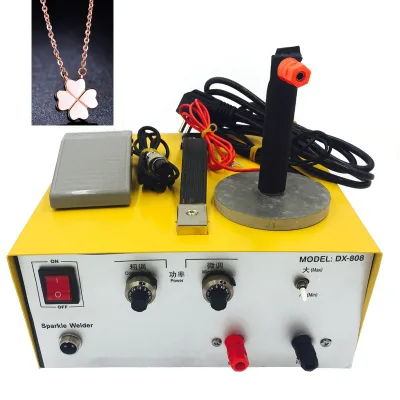


Automatic High Performance Battery Fiber Metal Jewelry Laser Welding Machine
$8429.00 - $12858.00
MOQ: 1 Pieces


Glorystar Laser Jewelry Laser Welding Machine 1500W for Gold and Silver
$3000.00 - $10000.00
MOQ: 1 Pieces


Automatic Fiber Aluminum Laser Welding Spot ≤5mm Laser Jewelry Welding Machine
$800.00 - $1600.00
MOQ: 1 Sets


Comprehensive Sourcing Guide
Strategic Sourcing Guide for Semi-Automatic Jewelry Laser Welding Machines
Understanding the Core Technology and Classification Landscape
When sourcing a semi-automatic jewelry laser welding machine, buyers must first navigate the complex landscape of laser classifications and technical architectures. The market currently presents distinct categories, primarily divided between YAG (Yttrium Aluminum Garnet) and Optical Fiber laser technologies. YAG lasers are historically significant in the jewelry sector, often characterized as pulse lasers that deliver high energy in short bursts. This classification is crucial because the pulse nature allows for precise control over heat input, which is essential when working with delicate, high-value materials like gold, silver, and platinum without damaging surrounding gemstones.
Conversely, the market also features Optical Fiber lasers, which operate on a continuous wave basis or high-frequency pulse modes. These systems often boast higher power densities and are capable of deep fusion welding. For a semi-automatic setup, the distinction matters significantly. A semi-automatic machine implies a workflow where the operator positions the workpiece, but the machine controls the laser firing, beam delivery, and potentially the motion of the welding head. Buyers should verify whether the specific unit utilizes a YAG laser source or an Optical Fiber source, as this dictates the welding speed, spot size, and the types of alloys that can be processed effectively. The observed data indicates a spot size capability as small as 0.2mm, a critical metric for jewelry applications where welds must be nearly invisible to the naked eye.
Technical Specifications and Performance Parameters
Selecting the right machine requires a deep dive into specific technical parameters that directly impact production quality. The power output is a primary driver of performance. While some units in the market are rated at 200W, others may offer significantly higher capacities, ranging up to 4000W or even 5000W for industrial-grade applications. For jewelry work, a lower wattage range is often preferred to maintain precision, but the ability to adjust power is paramount. Most reliable semi-automatic units offer a power adjustment range from 1% to 100% or 5% to 100%, allowing the operator to fine-tune the energy delivery for different metal thicknesses.
The spot size and beam quality are equally critical. A spot size of 0.2mm is observed in high-precision models, enabling the creation of micro-welds that require minimal post-processing. The repeatability of the machine, often cited with an accuracy of 0.02mm, ensures that every weld is identical, which is vital for mass production in jewelry manufacturing. The pulse width, typically adjustable between 0 and 15ms, allows for further customization of the thermal cycle. Additionally, the wavelength of the laser, commonly 1064nm for fiber and YAG systems, must be compatible with the absorption rates of the specific jewelry metals being used.
The physical dimensions and weight of the machine also play a role in the factory layout. While some portable models weigh as little as 4.5kg, larger industrial semi-automatic systems can weigh up to 520kg. The footprint, often around 720mm by 420mm by 590mm, must be accommodated within the workshop. Buyers should also consider the optical cable length, which can range from 5 to 15 meters, providing flexibility in how the machine is integrated into the production line. The core components, such as the motor and the laser source brand (e.g., Raycus), determine the longevity and reliability of the equipment.
Compliance, Certification, and Safety Standards
In the realm of industrial machinery, compliance and safety are non-negotiable. While specific certification statuses like CE are mentioned in background data, buyers must verify that any machine they purchase meets the safety standards of their local jurisdiction. The laser classification is a key indicator of safety requirements; YAG and Fiber lasers are classified based on their potential to cause eye or skin damage. A semi-automatic machine often includes safety interlocks, emergency stop buttons, and protective enclosures to mitigate these risks.
Buyers should explicitly request documentation regarding the laser classification and ensure the machine adheres to relevant international safety standards. The presence of a CE mark is a common indicator of compliance with European health, safety, and environmental protection standards, but its presence alone does not guarantee suitability for all markets. It is essential to verify that the machine's electrical components, such as the motor and power supply, are rated for the local voltage, typically 220V, and that the power consumption aligns with the facility's capacity.
Furthermore, the warranty period is a standard metric for compliance and supplier confidence. A one-year warranty is a common baseline in the industry, but buyers should scrutinize what this covers. Does it include the laser source, the optical system, or just the mechanical frame? The warranty terms often reflect the manufacturer's confidence in their core components. Additionally, the machine should come with a video outgoing inspection report, which serves as a pre-shipment quality check to ensure the unit functions correctly before leaving the factory. This documentation is a critical part of the compliance package and provides a baseline for troubleshooting if issues arise upon installation.
Cost Drivers and Pricing Dynamics
The pricing of semi-automatic jewelry laser welding machines varies widely, with observed ranges spanning from $99 to $50,000. This vast disparity is driven by several key factors, including the laser source technology, power output, automation level, and brand reputation. A basic YAG laser spot welder with manual controls may fall on the lower end of the spectrum, while a high-power optical fiber system with advanced semi-automatic features, such as robotic arms or CNC integration, will command a premium price.
The total power consumption, which can range from 5kW to 20kW for larger industrial units, significantly impacts the operational cost and the initial price of the machine. Higher power units require more robust cooling systems and electrical infrastructure, adding to the overall cost. The brand of the laser source is another major cost driver; machines utilizing reputable brands like Raycus often cost more than those with generic or unbranded sources, but they typically offer better beam quality and longer lifespans.
Buyers should also consider the cost of consumables and maintenance. While the initial purchase price is a significant factor, the long-term cost of ownership includes the cost of replacement parts, such as lenses and nozzles, and the energy consumption during operation. The warranty period and the availability of technical support are also indirect cost factors; a machine with a robust support network may have a higher upfront cost but lower long-term downtime expenses. It is crucial for buyers to evaluate the total cost of ownership rather than focusing solely on the sticker price.
Supplier Evaluation and Quality Assurance
Evaluating suppliers for semi-automatic jewelry laser welding machines requires a rigorous approach to ensure the quality and reliability of the equipment. The place of origin is a significant factor, with many manufacturers located in regions like Henan and Wuhan in China. While these regions have a high concentration of laser manufacturing capabilities, buyers must verify the specific capabilities and track record of the supplier. The presence of core components like motors and the specific laser source brand can serve as indicators of the supplier's supply chain quality.
Quality assurance should be a central part of the supplier evaluation process. Buyers should request video outgoing inspections to verify the machine's performance before shipment. This visual evidence can confirm that the machine operates as advertised, with the correct power output, spot size, and automation features. Additionally, the supplier's ability to provide customization is a key differentiator. Many suppliers offer customization options, allowing buyers to tailor the machine to their specific production needs, such as adjusting the control interface or integrating specific safety features.
The supplier's reputation for after-sales support is equally important. A semi-automatic machine is a complex piece of equipment that may require technical assistance for setup, maintenance, and troubleshooting. Buyers should inquire about the availability of technical support, the response time for service requests, and the availability of spare parts. The warranty terms, typically one year, should be clearly understood, including what is covered and what is excluded. A supplier that stands behind their product with a comprehensive warranty and support network is a more reliable partner than one that offers minimal post-sales assistance.
Applications and Long-Term Procurement Strategy
Semi-automatic jewelry laser welding machines are versatile tools used across a broad spectrum of applications, including the manufacturing industry, powder metallurgy, automotive industry, electronic industry, and biomedicine. In the jewelry sector specifically, these machines are indispensable for tasks such as ring resizing, chain repair, stone setting, and the assembly of intricate jewelry components. The ability to perform deep fusion welding with high energy density allows for strong, clean welds that maintain the aesthetic integrity of the piece.
For long-term procurement, buyers should focus on scalability and adaptability. As production demands grow, the ability to upgrade the machine or integrate it into a larger automated line becomes crucial. The power adjusting range, typically 1-100%, ensures that the machine can handle a variety of tasks, from delicate repairs to more robust manufacturing processes. The spot size and repeatability accuracy are key metrics that will determine the machine's longevity in a high-volume environment.
Buyers should also consider the future-proofing of their investment. The rapid evolution of laser technology means that a machine purchased today may become obsolete in a few years. Selecting a supplier that offers upgrade paths, such as the ability to upgrade the laser source or the control system, can extend the useful life of the equipment. Additionally, the training provided by the supplier is a critical component of long-term success. Ensuring that operators are well-trained in the use of the semi-automatic features will maximize the machine's efficiency and minimize the risk of errors.
In conclusion, sourcing a semi-automatic jewelry laser welding machine requires a balanced approach that considers technical specifications, compliance, cost, supplier reliability, and long-term strategic needs. By carefully evaluating these factors, buyers can make informed decisions that align with their production goals and ensure the successful integration of this critical technology into their operations. The observed data provides a solid foundation for understanding the market landscape, but the ultimate success of the procurement depends on the buyer's diligence in verifying these details against their specific requirements.
FAQs
What laser types are available for jewelry welding machines?
Both YAG and Optical Fiber laser classifications are available for these machines. YAG lasers operate as pulse lasers for precise heat control, while fiber lasers often provide continuous wave capabilities for deep fusion welding in manufacturing applications.
Can the power output be adjusted for different metal thicknesses?
Yes, the power adjusting range typically spans from 5% to 100% or 1% to 100%. This flexibility allows operators to fine-tune energy delivery for delicate jewelry repairs or robust industrial welding tasks depending on the specific alloy used.
What is the typical spot size for high-precision jewelry welding?
High-precision models can achieve a spot size as small as 0.2mm. This capability enables the creation of micro-welds that require minimal post-processing, ensuring the aesthetic integrity of the jewelry piece remains intact during the welding process.
How does the machine weight vary between portable and industrial units?
Portable models can weigh as little as 4.5kg, while larger industrial semi-automatic systems may weigh up to 520kg. The physical footprint and weight depend on the power capacity and automation level selected for the specific production environment.
What warranty coverage is standard for these laser welding machines?
A one-year warranty is a common baseline for these industrial machines. Buyers should verify if this coverage includes the laser source, optical system, or mechanical frame to ensure long-term reliability and support for core components.
Is customization available for specific production requirements?
Customization is available for buyers with specific production needs. Suppliers can often tailor the control interface, safety features, or integration options to match the unique workflow of a jewelry manufacturing facility or other industrial application.