Source Semi-Automatic Maamoul Cookie Making Machine for Candy, Biscuit, Donut
Explore 30 listings for a semi-automatic maamoul cookie making machine suitable for candy, biscuit, and donut production. Buyers can compare specifications like voltage, power, and capacity across multiple suppliers in China.
Key considerations
Products List


High Quality Small Maamoul Make Machine Mamoul Maamoul Biscuit Forming Machine
$18000.00 - $23000.00
MOQ: 1 Sets


Automatic Small Cookie Forming Machine Cookie Machine Maker Making Machine
$160000.00 - $180000.00
MOQ: 1 Sets


Cookie Making Machine Automatic Maamoul Cookies Machine Encrusting Machine
$10000.00 - $12000.00
MOQ: 1 Pieces


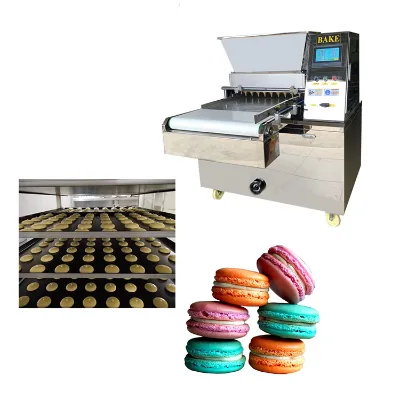

Stabilized Maamoul Cake Cookie/Biscuit Making Machine with Filled Cookie Machine
$3600.00 - $4000.00
MOQ: 1 Pieces


Semi Automatic Small Cookies Extruding Machine Cookie Making Machine
$4000.00 - $6500.00
MOQ: 1 Pieces


Original Manufacture Semi Automatic Cookies Biscuit Making Machine
$50000.00 - $80000.00
MOQ: 1 Pieces


Comprehensive Sourcing Guide
Strategic Sourcing Guide for Semi-Automatic Maamoul Cookie Making Machines
Understanding the Technical Landscape of Semi-Automatic Production
When sourcing a semi-automatic maamoul cookie making machine, buyers must first distinguish the operational characteristics that define this specific class of equipment. Unlike fully automated lines that require minimal human intervention, semi-automatic units typically integrate mechanical precision with manual loading or unloading steps. The supplied product data indicates a clear segmentation in automation levels, with specific listings noting "Semi-Automatic" as the grade, while others specify "Automatic" or "Automatic Grade." For a buyer specifically targeting the semi-automatic category, the primary technical focus should be on the interface between the machine's mechanical cycle and the operator's workflow.
The power requirements for these machines vary significantly based on the specific model and intended throughput. Observed data points reveal a range of power consumption, with some units operating at 0.75kw, others at 1.1-1.5kw, and more robust industrial models reaching 4.7kw. This variance suggests that the energy profile is not uniform across all semi-automatic maamoul machines. Buyers must verify the specific voltage compatibility of the unit they intend to purchase. The market data shows units designed for 220V, 380V, or dual-voltage configurations (220/380V) with frequencies of 50Hz or 60Hz. Selecting a machine with the wrong voltage specification can lead to immediate operational failure or safety hazards.
Physical dimensions and weight are critical logistical factors. The observed footprint for these machines ranges from compact units measuring approximately 13509001250mm to larger industrial forms like the P160 model, which measures 610011801450mm. Correspondingly, the weight varies from 700kg to as high as 6500kg. A machine weighing 6500kg requires a reinforced factory floor and specialized lifting equipment for installation, whereas a 700kg unit may be more flexible in terms of floor placement. The capacity of these machines also differs, with observed ranges indicating output rates between 80kg/H and 120kg/H, or production speeds listed as 60-99 pieces per minute. Buyers must align these capacity figures with their actual production targets to avoid bottlenecks or underutilization.
Compliance, Certification, and Safety Standards
In the global food machinery market, compliance with international standards is not merely a formality but a prerequisite for market access and operational safety. The supplied product information highlights several key certifications and standards that are frequently associated with these machines. The most prominent certifications observed include CE (Conformité Européenne) and ISO9001, with some listings specifying ISO9001:2008. The presence of "CE/ISO9001" or "CE, ISO" on product listings indicates that the manufacturer claims adherence to European safety directives and international quality management systems.
However, buyers must exercise caution when interpreting these claims. The data lists "ISOCE" as a certification attribute in some instances, which may be a shorthand or a specific listing format rather than a distinct standard. It is crucial for procurement teams to request official, verifiable certificates from the supplier rather than relying solely on the product page description. The standard "CE" implies that the machine meets the essential health and safety requirements for the European Economic Area, which is often a baseline requirement for export. Similarly, ISO9001 certification suggests that the manufacturer has a documented quality management system in place, though it does not guarantee the quality of a specific individual unit without further verification.
Material composition is another critical aspect of compliance and food safety. The data explicitly mentions "Stainless Steel" as a material attribute. For food processing equipment, the grade of stainless steel (e.g., 304 or 316) is vital to prevent corrosion and ensure hygiene. While the listing confirms the use of stainless steel, it does not specify the grade. Buyers should verify the exact grade of stainless steel used in food-contact surfaces to ensure it meets local food safety regulations. Additionally, the production process is identified as "Thermal Processing," which implies the machine involves heating elements. This necessitates strict adherence to electrical safety standards and thermal insulation protocols to prevent burns or fire hazards.
Cost Drivers and Pricing Variables
The pricing for semi-automatic maamoul cookie making machines is influenced by a complex interplay of factors, including capacity, automation level, material quality, and customization options. The observed price range in the market data spans from $3,600 to $200,000 USD. This wide disparity indicates that the "semi-automatic" label covers a broad spectrum of equipment, from entry-level manual-assist units to highly engineered, semi-automated production lines.
Several specific variables drive these costs. First, the power rating and motor specifications significantly impact the price. A machine with a 4.7kw motor and a weight of 780kg will inherently cost more than a 0.75kw unit weighing 700kg due to the cost of raw materials and energy efficiency engineering. Second, the production speed and capacity are direct cost drivers. Machines capable of higher throughput, such as those reaching 120kg/H or 99 pieces per minute, generally command a premium over slower models.
Customization is another major cost factor. The product data confirms that "Customization" and "Customized" options are available. This could involve modifying the machine's dimensions, adjusting the voltage to match local grid standards, or altering the mold configurations to produce different maamoul shapes and sizes. Customized features often require additional engineering time and specialized tooling, which increases the unit price. Furthermore, the packaging method, listed as "Wooden Case," "Wooden Packing," or "Wooden Box Package," adds to the overall cost, particularly for international shipping. Heavy machinery like the 6500kg model requires robust wooden crating to prevent damage during sea freight, which is a significant logistical expense included in the final price.
Typical Applications and Production Capabilities
The primary application of these machines is the production of maamoul, a traditional Middle Eastern shortbread cookie filled with dates, pistachios, or walnuts. The supplied data explicitly lists "Candy," "Biscuit," and "Donut" as application categories, indicating that many of these machines are versatile and can handle multiple types of baked goods. However, for a buyer specifically seeking a maamoul machine, the versatility is a secondary benefit; the primary focus should be on the machine's ability to handle the specific dough consistency and filling requirements of maamoul.
The production process involves thermal processing, which is essential for baking the cookies to the correct texture. The machine's ability to maintain consistent temperature control is crucial for product quality. The observed production speeds of 60-99 pieces per minute suggest that these machines are suitable for small to medium-sized commercial bakeries. For larger industrial operations, the capacity of 80kg/H to 120kg/H provides a baseline for planning daily output.
The versatility of the machine is further highlighted by the availability of different models, such as the P160, CK400, CK, KH-P, ST-168A, and Bcq400. Each model likely has specific capabilities tailored to different production needs. For instance, the Bcq400 model may be designed for higher volume output, while the ST-168A might be a more compact solution for smaller facilities. Buyers should evaluate which model best fits their specific product requirements, considering factors like the size of the cookie, the type of filling, and the desired production rate.
Supplier Evaluation and Verification Protocols
Evaluating suppliers for semi-automatic maamoul cookie making machines requires a rigorous due diligence process. The product data indicates that the origin of these machines is primarily "Shanghai, China" or simply "China." While this provides a geographical context, it does not guarantee the quality or reliability of the supplier. Buyers should verify the supplier's business license, export history, and financial stability.
One of the most critical aspects of supplier evaluation is the after-sales service. The data explicitly mentions that "Engineers Available to Service Machinery Overseas" is a feature of some listings. This is a vital consideration for international buyers, as machine breakdowns can halt production. Buyers should inquire about the specific terms of the after-sales service, including response times, availability of spare parts, and the cost of overseas technical support. The brand name "Tgmachine" is mentioned in the data, but buyers should not rely on a single brand name as a proxy for quality. Instead, they should assess the supplier's reputation through independent reviews, client testimonials, and industry references.
The customization capabilities of the supplier are also a key evaluation metric. Since the data confirms that customization is available, buyers should assess the supplier's ability to tailor the machine to their specific needs. This includes the ability to modify dimensions, voltage, and production speed. A supplier that offers flexible customization options is more likely to provide a solution that fits the buyer's unique operational requirements.
Quality Control and Long-Term Procurement Considerations
Quality control is paramount when investing in industrial food machinery. Buyers should implement a multi-stage quality control process that includes pre-shipment inspections, factory audits, and post-installation testing. The observed data lists various certifications like CE and ISO9001, but these should be verified through third-party audits. Buyers should request detailed test reports and performance data to ensure the machine meets the claimed specifications for power, speed, and capacity.
Long-term procurement considerations involve the total cost of ownership (TCO), which includes not only the purchase price but also maintenance, energy consumption, and spare parts. The power consumption of the machine, ranging from 0.75kw to 4.7kw, will directly impact operational costs. Buyers should calculate the energy efficiency of the machine to determine its long-term viability. Additionally, the weight and dimensions of the machine affect installation and maintenance costs. A heavier machine may require more frequent maintenance and specialized tools, increasing the TCO.
The packaging of the machine, typically in a "Wooden Case" or "Wooden Box Package," is also a long-term consideration. Proper packaging ensures the machine arrives in good condition, but it also affects shipping costs and handling requirements. Buyers should plan for the logistics of receiving and installing the machine, including the availability of cranes or forklifts for heavy units.
Finally, the availability of spare parts is a critical long-term factor. Buyers should verify the supplier's inventory of spare parts and the lead time for replacement components. A machine with a long lead time for spare parts can result in significant downtime, impacting production schedules and revenue. By carefully evaluating these factors, buyers can make informed decisions that ensure the long-term success of their maamoul cookie production operations.
Comparative Analysis of Key Machine Specifications
To assist buyers in making informed decisions, the following table summarizes the key specifications observed in the market data. This comparison highlights the diversity in power, dimensions, and capacity, which are critical factors in selecting the right machine.
| Specification | Model A (Compact) | Model B (Mid-Range) | Model C (Industrial) |
|---|---|---|---|
| Model No. | CK / CK400 | P160 | Bcq400 |
| Power Source | Electric | Electric | Electric |
| Power Rating | 0.75kw - 1.5kw | 4.7kw | Not Specified |
| Voltage | 220/380V, 50/60Hz | 380V/50Hz | 220V |
| Weight | 700kg - 800kg | 780kg | 6500kg |
| Dimensions | 13509001250mm | 610011801450mm | 61.51.8m |
| Capacity | 80kg/H - 100kg/H | 80kg/H - 120kg/H | Not Specified |
| Speed | Not Specified | 60-99 PCS/Min | Not Specified |
| Certification | CE, ISO9001 | CE, ISO9001 | CE, ISO |
| Origin | China | Shanghai, China | Shanghai, China |
This table illustrates the significant variation in machine specifications. Buyers must carefully match these specifications to their specific production needs, ensuring that the selected machine offers the right balance of capacity, power, and physical footprint for their facility.
FAQs
What certifications do semi-automatic maamoul cookie making machines typically have?
Many units carry CE and ISO9001 certifications, with some listings specifying ISO9001:2008. Buyers should verify official certificates from the supplier rather than relying solely on product descriptions to ensure compliance with safety and quality standards.
Can these machines be customized for specific production needs?
Yes, customization is available for voltage, dimensions, and mold configurations. Buyers can request adjustments to match local grid standards or specific product shapes, though these modifications may increase the unit price and require additional engineering time.
How much power do semi-automatic maamoul cookie making machines consume?
Power consumption varies significantly, ranging from 0.75kw to 4.7kw depending on the model. Buyers must verify the specific voltage compatibility, as units operate at 220V, 380V, or dual-voltage configurations to prevent operational failure.
What is the typical production capacity for these machines?
Observed capacities range from 80kg/H to 120kg/H, with speeds of 60 to 99 pieces per minute. Buyers should align these figures with their actual production targets to avoid bottlenecks or underutilization of the equipment.
Which locations are the primary origins for these machines?
The primary origins are Shanghai and other regions in China. Buyers should verify the supplier's business license and export history, as the geographical origin does not guarantee quality or reliability without further due diligence.
How are these machines packaged for international shipping?
Machines are typically packed in wooden cases, wooden packing, or wooden box packages. Heavy units require robust crating to prevent damage during sea freight, which adds to the overall shipping cost and handling requirements.
What after-sales services are available for overseas buyers?
Some suppliers provide engineers available to service machinery overseas. Buyers should inquire about specific terms, including response times, spare parts availability, and the cost of technical support to ensure minimal downtime during operation.