Source Semi-Automatic Mini CNC Press Brake for Sheet Metal, Automotive, and HVAC
Compare 30 Semi-Automatic Mini CNC Press Brake units from verified Chinese manufacturers. Buyers can evaluate specifications like Delem Da53t control systems, hydraulic components, and bending capacities for stainless steel, aluminum, and copper applications; compare the available evidence and request quotations based on your requirements.
Key considerations
Products List


Mini CNC Automatic Hydraulic Press Brake for Aluminum Metal Processing
$6530.00 - $10850.00
MOQ: 1 sets


Efficient Processing Automatic Calculation of Bending Pressure Mini Press Brake
$5380.00 - $5800.00
MOQ: 1 Pieces


Factory Mini Press Brake Small CNC Small Hydraulic Press Brake Electric Press Brake
$4500.00 - $12000.00
MOQ: 1 Pieces


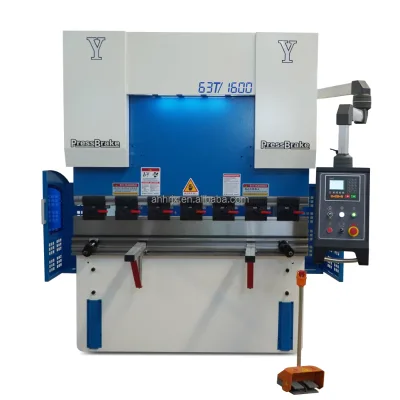


$5000.00 - $22000.00
MOQ: 1 Pieces

CNC Bending Machine Hydraulic Press Brake Machine Hydraulic Press Brake
$5000.00 - $22000.00
MOQ: 1 Pieces
Comprehensive Sourcing Guide
Semi-Automatic Mini CNC Press Brake Sourcing Guide
Procuring a semi-automatic mini CNC press brake requires balancing compact footprint with precise bending capabilities for small-batch production. Buyers must evaluate whether the machine’s automation level truly meets their throughput needs or if manual loading remains a bottleneck. The term "mini" often implies reduced tonnage and bed length, suitable for workshops with limited space. However, specifications vary widely, so verifying the actual working area and force capacity is critical before committing to a purchase.
The market offers various configurations, from basic hydraulic models to advanced servo-electric systems. While some listings advertise fully automatic features, others may only offer semi-automatic operation where the operator assists in part positioning. Understanding this distinction is vital for labor planning. Buyers should also consider the control system’s ease of use, as intuitive interfaces reduce training time and minimize programming errors during complex bending operations.
Product Scope and Observed Listing Signals
Current market listings reveal a wide price range, observed between $1 and $95,000 USD, reflecting significant differences in build quality and component sourcing. Minimum order quantities are consistently listed as one unit, indicating that these machines are typically sold as individual capital equipment rather than bulk industrial supplies. This structure allows small businesses to acquire specialized machinery without large inventory commitments, though it necessitates careful due diligence on individual supplier reliability.
Product attributes indicate that many units are designed for stainless steel, carbon steel, alloy, aluminum, and copper materials. Some listings specify models like the WC67K or YWB-50T/1600, with dimensions such as 2000x1200x1900mm or customized sizes. Buyers should note that "semi-automatic" may coexist with claims of "fully automatic" levels in different listings, requiring clarification on whether the machine includes automatic backgauge positioning or requires manual intervention for sheet feeding and removal.
Technical Specifications to Verify
Key technical parameters include the CNC control axis configuration, such as Y1-Y2-X-R-Z1-Z2-Axis with crowning functionality, which ensures uniform bending across the beam length. The control system, often Delem Da53t or similar, dictates the programming complexity and precision. Buyers must verify the throat depth, typically around 300mm, to ensure it accommodates the required bend lengths. Additionally, the main motor brand, such as Siemens Germany, and hydraulic components like Bosch-Rexroth valves, significantly impact long-term performance and maintenance costs.
Waterproof ratings vary, with some units rated IPX-5 or IPX-8, indicating suitability for different environmental conditions. The presence of core components like bearings, motors, gears, and PLCs suggests a robust mechanical design. Buyers should also check the ball screw and linear guide quality, often sourced from Taiwan brands like Hiwin or TBI, which affect positioning accuracy. Confirming the oil pump and filter brands, such as NACHI Japan or Hydac Germany, helps assess the hydraulic system’s durability and resistance to contamination.
Compliance and Safety Documentation
Safety is paramount in press brake operations, and buyers must ensure machines include essential protective features like light curtains from reputable brands such as Pilz or Fiessler Germany. These devices stop the ram immediately if an operator enters the danger zone, preventing serious injuries. The presence of CE certification is a baseline requirement for many markets, indicating adherence to European safety standards. However, buyers should also verify ISO 9001 certification for the manufacturer’s quality management system, ensuring consistent production standards.
Documentation should include detailed electrical schematics and hydraulic diagrams for maintenance purposes. Buyers must confirm that all electrical components, such as those from Schneider Electric or Siemens, meet local voltage and frequency requirements. Additionally, the machine’s noise levels and vibration characteristics should be documented to ensure compliance with workplace safety regulations. Proper labeling of all controls and emergency stops is also essential for operator safety and regulatory compliance.
Cost Drivers and Commercial Terms
The cost of a semi-automatic mini CNC press brake is influenced by the quality of its core components, such as the servo motors, hydraulic valves, and CNC controllers. Higher-end brands like Yaskawa, Panasonic, or Delem increase the initial price but offer better reliability and precision. Buyers should also consider the warranty terms, typically two years, and what specific parts are covered. Extended warranty options may be available for an additional cost, providing peace of mind for critical production equipment.
Shipping and packaging are significant cost factors, with machines often packed in wooden cases or nude for container loading. Buyers must account for freight costs, which can vary based on the machine’s weight and dimensions, such as 4500x2000x2670mm. Customs duties and import taxes also impact the total landed cost. It is advisable to request a detailed breakdown of costs, including packaging, insurance, and delivery terms, to avoid unexpected expenses upon arrival.
Supplier Qualification and Quality Control
Verifying the supplier’s manufacturing capabilities is crucial, as many producers are located in Jiangsu, China, a hub for machinery manufacturing. Buyers should request video tours of the production line to assess assembly quality and testing procedures. Checking for past export experience and customer references can provide insight into the supplier’s reliability and after-sales support. Suppliers with a strong track record in international markets are more likely to meet diverse regulatory and quality expectations.
Quality control processes should include factory acceptance tests (FAT) to verify machine performance before shipment. Buyers should specify acceptance criteria, such as bending accuracy, repeatability, and hydraulic system integrity. Engaging a third-party inspection agency can provide an unbiased assessment of the machine’s condition and compliance with specifications. This step helps mitigate the risk of receiving defective equipment and ensures that the machine meets the buyer’s operational requirements.
Long-Term Procurement Checks
Long-term success depends on the availability of spare parts and technical support. Buyers should confirm the supplier’s inventory of critical components like seals, filters, and control modules. Access to remote diagnostics and software updates for the CNC system is also valuable for minimizing downtime. Establishing a clear communication channel for technical queries ensures that operational issues can be resolved quickly, maintaining production continuity.
Training and documentation are essential for maximizing the machine’s lifespan and performance. Buyers should ensure that comprehensive operation and maintenance manuals are provided in their preferred language. On-site or virtual training sessions for operators and maintenance staff can significantly improve efficiency and reduce the risk of misuse. Regular maintenance schedules and recommended service intervals should be clearly defined to prevent premature wear and tear of critical components.
FAQs
What certifications do these press brakes hold?
These machines typically hold ISO 9001 and CE certifications. Some models also include RoHS compliance. Buyers should verify specific documentation for each unit to ensure they meet local regulatory requirements before finalizing any purchase agreement.
Which control systems are available for these units?
Common systems include the Delem Da53t and Da58t CNC controls. These options provide precise axis management for bending operations. The specific control unit depends on the model selected, such as the WC67K or YWB series configurations.
Can these machines bend stainless steel and aluminum?
Yes, they are suitable for stainless steel, aluminum, copper, and alloy materials. The hydraulic system supports bending various metal sheets effectively. This versatility makes them ideal for workshops requiring multi-material processing capabilities without changing equipment.
What is the warranty period for these machines?
The standard warranty period is two years for new units. This coverage applies to core components and general functionality. Buyers should review the specific terms provided by the manufacturer to understand what parts are included in this protection plan.
How are these machines packed for shipping?
Packing methods vary by model, including wooden cases or plastic film. Some units may be shipped nude depending on the specific configuration. Proper packaging ensures protection during transit from the Jiangsu, China origin point to the final destination.
Which electrical components are used in these systems?
Key components often include Siemens motors and Schneider electrical parts. Hydraulic valves may come from Bosch-Rexroth or Hoerbinger. These high-quality brands ensure reliable performance and longevity for industrial bending applications in various manufacturing environments.