Source Quick-Drying Quarter-Zip Football Training Suit for Rugby, Cycling, Gym
Find 30 options for a quick-drying quarter-zip football training suit suitable for soccer, rugby, and cycling. Buyers can compare custom sizes, polyester fabrics, and OEM services from verified manufacturers in China.
Key considerations
Products List


Custom Sublimated Football Jacket Shirt Jersey Soccer Training Tracksuit
$13.00 - $16.80
MOQ: 100 Sets


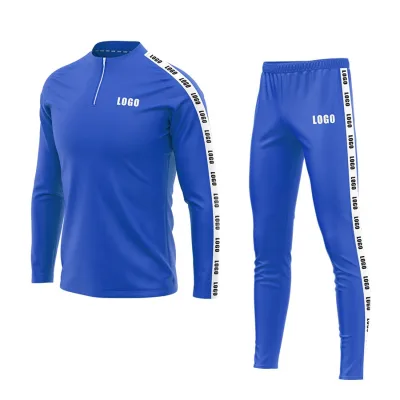
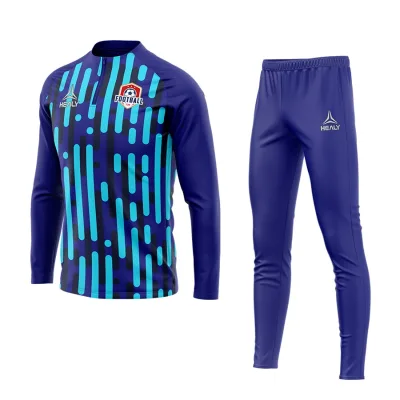


Comprehensive Sourcing Guide
Strategic Sourcing Guide for Quick-Drying Quarter-Zip Football Training Suits
Procuring specialized athletic apparel, specifically a quick-drying quarter-zip football training suit, requires a disciplined approach that balances technical performance with supply chain reliability. The modern football training environment demands gear that manages moisture effectively while providing the durability required for high-intensity drills. Based on current market observations, the target product category encompasses suits designed for both soccer and rugby/football contexts, often featuring specific model numbers such as JM7006, JM630301, and FT3-44. These items are typically manufactured from 100% polyester fabric, a material choice that directly influences the garment's ability to wick moisture and dry rapidly. Buyers must navigate a landscape where customization is a primary driver, with options for custom logos, colors, sizes, and even fabric selections available from manufacturers.
Technical Specifications and Material Composition
The core functionality of a quick-drying quarter-zip football training suit relies heavily on its material composition and construction. The supplied data indicates that the primary material for these suits is 100% polyester. This synthetic fiber is selected for its hydrophobic properties, which allow it to repel water and facilitate rapid evaporation, a critical feature for athletes training in varying weather conditions. The fabric is often described with specific functional attributes, including quick-drying capabilities, moisture-wicking properties, and breathability. These features ensure that the athlete remains comfortable and dry during intense physical exertion, preventing the heavy, water-logged feeling associated with cotton blends.
In terms of design specifications, the quarter-zip closure is a standard feature that offers versatility in temperature regulation. Unlike full-zip jackets, the quarter-zip allows for easy ventilation without fully exposing the torso, making it ideal for warm-ups and cool-downs. The product models observed, such as JM1171, JM1177, and J5028, suggest a variety of cuts and fits available in the market. Sizing is a critical technical aspect; while standard sizing exists, the market heavily favors custom sizing options. Buyers should verify that the supplier can accommodate specific measurements, as the data confirms "Custom Size" and "Customized" are standard attributes for these products. The fabric pattern is often described as "Patterned," allowing for aesthetic customization that aligns with team branding.
Customization Capabilities and Branding Options
One of the most significant advantages of sourcing this category of apparel is the extensive customization available. The market data highlights that "Customized" is a defining attribute for logos, colors, labels, and even the product standard itself. Suppliers typically accept custom logos, custom names, and custom numbers, which are essential for team identification and professional presentation. The "Custom Label" and "Custom Fabric" options indicate that buyers can tailor the visual identity of the suit to match specific team colors or corporate branding guidelines.
The flexibility extends to the production process, with many manufacturers offering OEM (Original Equipment Manufacturer) and ODM (Original Design Manufacturer) services. This means a buyer can provide a design concept, and the manufacturer will handle the production, or the buyer can select from existing designs and modify them. The "Support: Custom Logo" and "Yes: Custom Design" attributes confirm that the industry standard is high flexibility. However, buyers must understand that while "Any Color" is often advertised, the actual availability of specific Pantone matches or fabric dye lots should be verified during the sampling phase. The "Custom Number" and "Custom Name" services are particularly relevant for team kits, ensuring that every player's suit is uniquely identified.
Cost Drivers and Minimum Order Quantities
Understanding the cost structure of quick-drying football training suits is vital for budget planning. The observed price range in the market spans from $2 to $35 USD, a wide variance that reflects differences in material quality, customization complexity, and order volume. The lower end of this spectrum likely represents basic, off-the-shelf models with minimal customization, while the higher end corresponds to suits with complex patterns, advanced fabric treatments, and extensive branding work.
Minimum Order Quantity (MOQ) is another critical cost driver. The data shows a broad MOQ range from 1 to 1000 units. Some suppliers offer a single sample for evaluation, which is crucial for quality verification before committing to a larger order. However, for full production runs, the typical MOQ is often cited as 10 pieces, though some contexts suggest higher thresholds like 400 pieces for specific customizations. Buyers should be aware that lower MOQs may come with a higher unit price, while larger orders typically benefit from economies of scale. The "Business Type: Manufacturer" attribute suggests that sourcing directly from the factory can help mitigate costs, as it removes intermediary markups.
Typical Applications and Usage Scenarios
The versatility of these suits makes them suitable for a wide array of athletic activities beyond just football training. The usage data lists applications including soccer, rugby/football, racing, cycling, fitness, track and field, gym, and basketball. This broad applicability indicates that the design is optimized for high-movement sports that require a balance of flexibility and weather resistance. The "Age Group: From Child to Adult" specification further expands the potential market, allowing teams to procure matching gear for youth academies and senior squads alike.
For football specifically, the suit serves as an essential component of the training uniform. The quick-drying and moisture-wicking features are particularly beneficial for training sessions that involve heavy sweating or take place in humid environments. The quarter-zip design allows players to adjust their body temperature quickly between drills. Additionally, the "Suit" type classification suggests a coordinated set, likely including a top and bottom, which provides a cohesive look for the team. The "Feature: Quick-Drying" and "Breathable" attributes ensure that the suit performs well in dynamic conditions, making it a practical choice for year-round training regardless of the season.
Supplier Evaluation and Quality Assurance
When evaluating potential suppliers, buyers should focus on their business type and service capabilities. The data confirms that "Manufacturer" is a common business type, which generally implies greater control over the production process and quality. Buyers should verify if the supplier offers "OEM or ODM" services, as this indicates their ability to handle custom orders. The availability of samples is another key indicator of a supplier's reliability; the fact that "1 Sample Available" is a standard offering allows buyers to physically inspect the fabric quality, stitching, and zipper functionality before placing a bulk order.
Quality control should be a priority throughout the sourcing process. Buyers must verify the "prod_standard" and "prod_packing" details. While some standards are listed as "Customized," others may reference specific packaging requirements like "1 PCS/Poly Bag" or "Carton+Polybag." The packing dimensions, such as "Carton: 584237 Or custom size," are important for logistics planning. Buyers should also check for any specific certifications or test results, although the provided data does not list specific third-party certifications. Instead, buyers should request test reports for colorfastness, shrinkage, and fabric strength to ensure the product meets their internal quality standards.
Long-Term Procurement and Supply Chain Considerations
Sourcing for the long term requires a strategic approach to managing the supply chain. The "prod_origin: China" attribute indicates the primary manufacturing hub for these products. Buyers should consider the logistical implications of sourcing from this region, including lead times and shipping costs. While specific lead times are not provided in the data, the variability in MOQs suggests that production schedules can be flexible. Buyers should establish clear communication channels with the supplier to manage production timelines, especially for custom orders that may require additional time for design approval and sample creation.
Long-term relationships with manufacturers can lead to better pricing and priority production slots. Since "Customization" is a core feature, maintaining a consistent relationship with a supplier who understands the buyer's specific design requirements can streamline future orders. Buyers should also consider the scalability of the supplier; can they handle a sudden increase in order volume if the team expands or if new merchandise is required? The "Business Type: Manufacturer" status suggests that suppliers have the capacity to scale, but this should be confirmed during the initial engagement. Finally, buyers should plan for inventory management, considering the "Custom Size" and "Custom Colors" options, which may require careful forecasting to avoid overstocking of specific SKUs.
Summary of Key Sourcing Parameters
To facilitate a clear comparison of the essential parameters for sourcing a quick-drying quarter-zip football training suit, the following table summarizes the critical attributes observed in the market data. This summary serves as a checklist for buyers to ensure all necessary requirements are met during the supplier selection process.
| Parameter | Observed Market Standard | Verification Requirement |
|---|---|---|
| Material | 100% Polyester | Verify fabric weight and weave density. |
| Key Features | Quick-Drying, Moisture-Wicking, Breathable | Request performance test data for wicking speed. |
| Customization | Logo, Color, Size, Name, Number | Confirm design file formats and proofing process. |
| MOQ | 1 (Sample) to 1000 (Bulk) | Negotiate tiered pricing based on volume. |
| Usage | Soccer, Rugby, Cycling, Fitness, etc. | Ensure design meets specific sport regulations. |
| Origin | China | Verify factory audit status and compliance. |
| Packing | Poly Bag or Carton (Customizable) | Confirm packaging dimensions for shipping. |
| Service | OEM/ODM Available | Define scope of design support and IP rights. |
By adhering to these guidelines and leveraging the detailed market observations, buyers can effectively source high-quality, customized football training suits that meet the rigorous demands of modern athletic performance. The focus on technical specifications, customization flexibility, and supplier reliability ensures a procurement strategy that delivers value and performance for the end user.
FAQs
What material is used for quick-drying quarter-zip football training suits?
These suits are primarily made from 100% polyester fabric. This synthetic material ensures quick-drying, moisture-wicking, and breathable performance suitable for high-intensity sports like soccer and rugby.
Can I order custom sizes for these football training suits?
Yes, custom sizes are available for these suits. Buyers can request specific measurements rather than relying on standard sizing, ensuring a perfect fit for players from children to adults.
What is the minimum order quantity for custom football suits?
The minimum order quantity typically starts at 10 pieces for production. Some suppliers may accept single samples for evaluation, but bulk orders generally require at least ten units to proceed.
Which customization options are available for logos and colors?
Suppliers accept custom logos, custom labels, and any color options. Buyers can also request custom names and numbers, allowing full branding alignment with team identities and corporate guidelines.
How are these suits packed for shipment from China?
Items are usually packed individually in poly bags or combined in cartons. Packaging dimensions can be customized, with standard cartons measuring approximately 58 by 42 by 37 centimeters.
What features make these suits suitable for football training?
The suits feature quick-drying, moisture-wicking, and breathable properties. These attributes help manage sweat during intense drills, making them ideal for soccer, rugby, and other fitness activities.