Source Semi-Automatic Multi Color DTF Printer for Clothing, Paper, and Film
Explore 30 listings for the Semi-Automatic Multi Color DTF Printer suitable for printing on cloths, paper, and PET film. Buyers can compare models like LC-DTF602 and Sk-A3, noting features such as Epson F1080 printheads and USB interfaces.
Key considerations
Products List


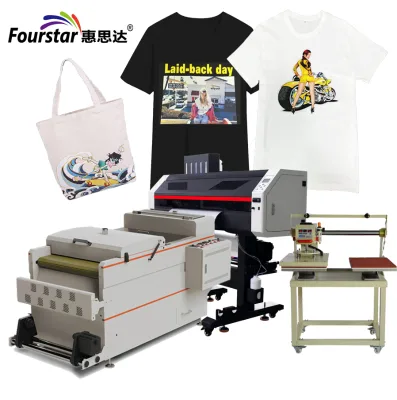
Good Price Multicolor Dtf Printer High Productivity Printing Machine for T-Shirt
$3675.00 - $5246.00
MOQ: 1 Pieces




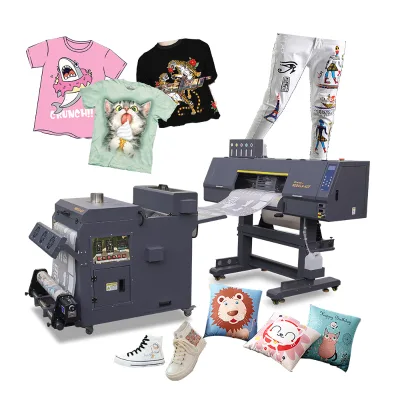
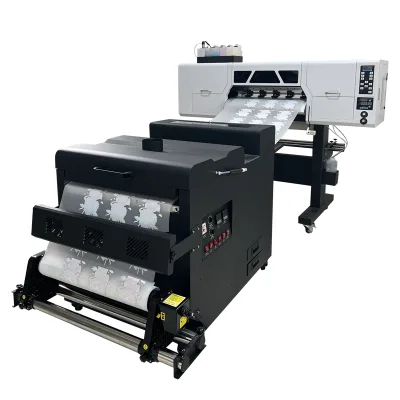
Dtf Printer 60cm Dtf Printer Printing Automatic Machine All in One Dtf Printer
$7746.00 - $7988.00
MOQ: 1 Pieces




Comprehensive Sourcing Guide
Strategic Sourcing Guide for Semi-Automatic Multi-Color DTF Printers
Understanding the Semi-Automatic Multi-Color DTF Printer Market
The Direct-to-Film (DTF) printing sector has evolved rapidly, offering versatile solutions for textile decoration. Within this landscape, the semi-automatic multi-color DTF printer represents a specific niche balancing operational flexibility with cost efficiency. Unlike fully automated industrial lines, semi-automatic models often require operator intervention for specific stages of the workflow, such as film loading, powder application, or curing, while maintaining high precision in the printing phase. The core keyword "Semi-Automatic Multi Color DTF Printer" points to machines designed to handle complex color profiles without the immediate overhead of fully integrated robotic systems.
When sourcing these units, buyers must recognize that "semi-automatic" is a functional descriptor rather than a universal standard. In the observed market data, specific configurations range from automatic grades to semi-automatic classifications. For instance, some units are explicitly labeled with an automatic grade, while others, particularly those utilizing specific printhead configurations like the XP600, I1600, or dual I3200 setups, are categorized under semi-automatic grades. This distinction is critical for procurement planning, as it dictates the labor requirements and the speed of production throughput. The multi-color capability is inherent to the technology, utilizing pigment inks to achieve vibrant, full-spectrum output on various substrates, including PET film which serves as the primary transfer medium.
Technical Specifications and Hardware Configuration
Evaluating the technical architecture of a DTF printer is the first step in ensuring the machine meets production demands. The hardware foundation typically revolves around the printhead selection, which dictates resolution, speed, and durability. Available configurations in the current market include the Epson F1080-A1, XP600, I1600, and dual I3200 setups. The choice of printhead directly influences the print resolution, with observed specifications ranging from 8-pass at 720x1440dpi to higher density outputs. Buyers should verify that the selected model supports the required print width, which typically falls within the 310mm to 330mm range for standard A3 and A3+ formats.
The printing interface and system compatibility are equally vital for integration into existing workflows. Most observed units support Windows XP, Windows 10, and Windows 11, ensuring broad software compatibility. The printing interface is frequently USB 2.0 or USB 3.0, providing the necessary bandwidth for high-resolution data transfer. The structure of the machine is often a platen press, which offers stability for rigid or semi-rigid media, though some models are designed as roll-to-roll printers to accommodate continuous film rolls.
Power consumption and environmental requirements must also be factored into the technical assessment. Units typically operate within a power range of 200W, though this can vary based on the number of printheads and auxiliary systems like curing ovens. The working environment generally requires a temperature between 15°C and 35°C, necessitating climate-controlled facilities to prevent ink viscosity issues or mechanical drift. Furthermore, the RIP software is a crucial component; standard packages often include Riin 10.5, with options for Flexiprint or Maintop, which are essential for managing color profiles and multi-color layering.
Operational Workflow and Media Compatibility
The operational workflow of a semi-automatic DTF printer involves several distinct stages, each requiring careful management. The process begins with the printing of the design onto PET film using pigment ink. The semi-automatic nature of the machine often implies that the operator must manually manage the film feed or the transfer of the printed film to the powder shaker. This manual intervention allows for greater control over the application of hot melt powder, which is essential for the adhesion of the design to the final textile substrate.
Media compatibility is a key differentiator among models. While the primary medium is PET film, the system must also support various image formats such as JPG, TIF, and PDF. The print media handling capabilities vary; some machines are optimized for specific film types, while others offer broader compatibility. The color output is typically multi-color, utilizing a standard CMYK plus White ink configuration to ensure opacity on dark fabrics. The ability to print on different substrates, such as cloths and paper, is a common feature, with some models explicitly designated as "Cloths Printer" or "Paper Printer" depending on their configuration.
The cleaning mechanism is another operational consideration. Automatic cleaning systems are standard in modern units to maintain printhead health and prevent clogging, which is a common issue in DTF printing due to the nature of pigment inks. Buyers should verify the frequency and efficiency of these cleaning cycles, as they directly impact maintenance costs and downtime. The weight of the machine, observed in some models at 143kg, indicates the need for a stable floor and potentially reinforced flooring in industrial settings.
Compliance, Certification, and Safety Standards
Navigating the compliance landscape for DTF printers requires a clear understanding of both electrical safety and environmental standards. While specific certification data for every unit may not be universally available, buyers should look for compliance with international electrical safety standards. In the observed market, certifications such as CE are mentioned as background factors, indicating that reputable manufacturers aim for these standards to ensure market access in Europe and other regions. However, buyers must verify the actual certification status of the specific unit they intend to purchase, as this can vary by batch and manufacturer.
Environmental compliance is also a growing concern. Standards such as OEKO-TEX are referenced in the industry, suggesting that the inks and materials used in the printing process should be free from harmful substances. This is particularly relevant for textile applications where the final product comes into direct contact with skin. Buyers should request documentation confirming that the pigment inks and transfer films meet relevant environmental and safety regulations.
Additionally, the physical safety of the machine is paramount. The structure of the printer, often a platen press or roll-to-roll system, must be designed to prevent operator injury. The dimensions of the machines, ranging from compact units like 700x500x300mm to larger industrial models like 1865x676x1840mm, require adequate space for operation and maintenance. The packing standards, often involving wooden boxes or plywood cases, ensure safe transportation, but the buyer must also consider the unpacking and setup process to ensure no safety hazards are introduced during installation.
Cost Drivers and Procurement Economics
The total cost of ownership for a semi-automatic DTF printer is influenced by several factors beyond the initial purchase price. The observed price range in the market spans from $885 to $11,348, reflecting the vast differences in specifications, brand reputation, and included features. Lower-priced models may offer basic functionality with fewer printheads or simpler automation, while higher-end units provide advanced features like dual printheads, enhanced RIP software, and robust build quality.
The Minimum Order Quantity (MOQ) is a critical economic factor. In the current market, the observed MOQ is consistently 1 unit, making these machines accessible to small businesses and startups. This low barrier to entry allows buyers to test the technology without significant capital commitment. However, buyers should be aware that while the unit price may be low, the cost of consumables such as pigment ink, PET film, and hot melt powder must be factored into the long-term budget.
Shipping and packaging costs are also significant. The standard packing for these machines is often wooden or plywood cases, which are heavy and bulky. The volume of the packaging, with some units occupying up to 1.48 CBM, can lead to high shipping costs, especially for international procurement. Buyers should negotiate shipping terms carefully, as the origin of the products is primarily China, with specific hubs in Zhejiang, Guangdong, and Zhengzhou. The lead time for delivery can vary based on the supplier's location and the shipping method selected.
Supplier Evaluation and Quality Assurance
Selecting the right supplier is as important as selecting the right machine. The market is populated with manufacturers from various regions in China, including Zhejiang, Guangdong, and Zhengzhou. Buyers should evaluate suppliers based on their production capacity, technical support, and after-sales service. The condition of the machines is typically listed as "New," but buyers should verify the manufacturing date and the warranty terms. A standard warranty period of 1 year is observed, but this can vary, and buyers should seek extended warranty options if available.
Quality control is a critical aspect of the procurement process. Buyers should request detailed specifications, including the exact model number, such as LC-DTF602 Splitter, LC-DTF30-2 All in one, FD70-4, Sk-A3, or A302. These model numbers often correspond to specific configurations and capabilities. It is essential to verify that the machine meets the required print speed, which can range from 1.2 square meters per hour for entry-level models to higher speeds for industrial units. The print resolution and ink type must also align with the buyer's quality standards.
Supplier reputation can be assessed through customer reviews, case studies, and industry references. While specific supplier names should not be recommended, buyers should look for manufacturers with a track record of delivering reliable machines. The compatibility of the machine with existing software and hardware is another key evaluation criterion. Ensuring that the RIP software and system configuration are compatible with the buyer's IT infrastructure can prevent costly integration issues.
Long-Term Procurement and Maintenance Considerations
Long-term success with a semi-automatic DTF printer depends on effective maintenance and a clear understanding of the machine's lifecycle. The automatic cleaning feature is a standard inclusion, but regular manual maintenance is still required to ensure optimal performance. Buyers should establish a maintenance schedule that includes cleaning the printheads, checking the ink levels, and inspecting the mechanical components for wear and tear.
The availability of spare parts is a crucial long-term consideration. Buyers should verify that the supplier offers a steady supply of consumables and replacement parts, such as printheads, ink tubes, and motors. The compatibility of the machine with different brands of printheads, such as the i3200, should also be confirmed to ensure flexibility in future upgrades or repairs.
Training and support are essential for maximizing the efficiency of the machine. Buyers should ensure that the supplier provides comprehensive training on the operation and maintenance of the printer. This includes instruction on the RIP software, ink handling, and troubleshooting common issues. The working environment requirements, such as temperature control, should be strictly adhered to to prevent premature wear and ensure consistent print quality.
In conclusion, sourcing a semi-automatic multi-color DTF printer requires a balanced approach that considers technical specifications, compliance, cost, and long-term support. By carefully evaluating the available options and verifying the specific attributes of each machine, buyers can make informed decisions that align with their production needs and budget constraints. The market offers a wide range of models, from compact units to large industrial machines, each with unique features and capabilities. With the right supplier and a clear understanding of the machine's requirements, buyers can successfully integrate DTF printing into their operations and achieve high-quality results.
FAQs
What customization options are available for these printers?
Customization is available for these semi-automatic multi-color DTF printers. Buyers can often select specific configurations such as different RIP software options like Flexiprint or Maintop, and choose between various printhead models including Epson F1080-A1 or XP600 to match production needs.
Which printing interfaces do these machines support?
These machines support USB 2.0 and USB 3.0 printing interfaces. The specific interface depends on the model, with some units utilizing USB 3.0 for faster data transfer while others rely on USB 2.0, ensuring compatibility with standard computer setups for efficient workflow integration.
How does the automatic grade affect operation?
The automatic grade varies between fully automatic and semi-automatic classifications. Semi-automatic models often require operator intervention for film loading or powder application, whereas fully automatic units handle these steps independently, directly influencing labor requirements and overall production throughput speed.
What is the standard warranty period for these units?
The standard warranty period observed for these printers is one year. This coverage typically applies to the machine condition when new, though specific terms may vary by manufacturer, so buyers should verify the exact warranty duration and scope before finalizing procurement agreements.
Can these printers handle multi-color printing on PET film?
Yes, these printers are designed for multi-color printing on PET film. They utilize pigment ink to achieve vibrant outputs and support image formats like JPG, TIF, and PDF, making them suitable for creating high-quality transfers on various textile substrates including cloths and paper.
What is the typical packaging method for shipping?
The typical packaging method involves wooden boxes or plywood cases to ensure safe transport. These robust containers protect the machine during transit, with some units occupying volumes up to 1.48 CBM, which buyers must consider when calculating international shipping costs and logistics planning.