Source semi-closed mirror and glass panel rack for bathroom, warehouse, and industrial use
Explore 30 listings for the semi-closed mirror and glass panel rack designed for bathroom, warehouse, and industrial applications. Buyers can compare specifications like material, dimensions, and tier configurations to find suitable storage solutions.
Key considerations
Products List
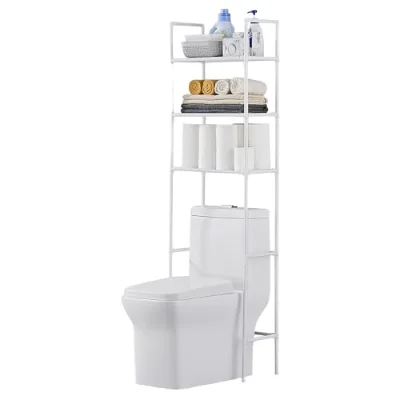


Adjustable a Frame Glass Storage Rack for Tempered and Laminated Panels
$180.00 - $270.00
MOQ: 1 Pieces


Anti-Fall Hanging Glass Rack with Multi-Color Adjustable Lighting System
$14.00 - $30.00
MOQ: 100 Pieces
Comprehensive Sourcing Guide
Strategic Sourcing Guide for Semi-Closed Mirror and Glass Panel Racks
Understanding Product Definitions and Core Attributes
When sourcing a semi-closed mirror and glass panel rack, buyers must first navigate the ambiguity often found in B2B marketplaces where product titles may not perfectly align with technical specifications. The term "semi-closed" implies a specific structural configuration where the rack offers partial enclosure, balancing visibility with containment. In the context of the available supply chain data, this configuration is distinct from fully open shelving or fully enclosed cabinets. The observed market data indicates that "semi-closed" structures are frequently categorized alongside "open" and "closed" variants, suggesting a design that utilizes vertical supports and horizontal planes to create a defined storage volume without full side or rear paneling.
The materials identified in the current supply landscape are critical for determining the suitability of these racks for specific environments. The primary materials observed include Stainless Steel, PP (Polypropylene) combined with metal, and standard Steel. While the core keyword specifies "mirror and glass panel," the supplied factual data highlights a prevalence of metal and plastic composites. This discrepancy requires the buyer to exercise extreme caution. A product listed as a "mirror and glass panel rack" must be verified to ensure the actual construction matches the aesthetic and functional requirements of the buyer. The presence of "Stainless Steel" and "Steel" in the material attributes suggests that the structural integrity relies heavily on metal framing, which may be paired with glass or mirror inserts in the final assembly. However, the data also lists "PP+metal" as a main material, which indicates that some units in this category may utilize plastic components for shelves or panels rather than glass.
The functional design of these racks varies significantly across suppliers. Some listings describe a "Foldable" functional design, while others specify a "Non-folding Rack" or "A Shape Shelf." This variation is crucial for logistics and installation. A semi-closed rack intended for a permanent warehouse installation will differ vastly from a foldable unit designed for temporary retail displays or bathroom storage. The observed "Installation Type" includes "Floor Type," which implies a freestanding structure rather than a wall-mounted unit. Buyers must verify if the specific "semi-closed" unit they are sourcing is floor-standing or wall-mounted, as this dictates the foundation requirements and load-bearing capacity of the facility.
Technical Specifications and Dimensional Standards
Technical specifications form the backbone of any procurement decision for industrial or commercial storage solutions. The dimensional data available in the current market reveals a wide range of sizes, from specific unit dimensions like 4725158 cm to larger industrial standards. The "Single package size" for certain units is recorded as 65X46X48 cm, which provides a baseline for logistics planning, though this likely refers to a smaller component or a specific model rather than the entire rack assembly. For larger industrial racks, the data mentions a "prod_standard" of 2400*2300mm, which aligns with common pallet racking heights and widths used in warehouse environments.
Tolerance levels are a critical technical parameter that affects the fit and finish of the installation. The observed "dimensional tolerance" is listed as less than ±2cm, and "weight tolerance" is specified as less than ±1%. These tolerances are acceptable for general storage applications but may require tighter controls for precision environments. Buyers should verify if the specific semi-closed rack model they are considering adheres to these tolerances or if the supplier offers custom machining to achieve tighter fits. The "Weight" attribute for certain heavy-duty units ranges from 150-500kg, indicating that the structural capacity of the rack itself is substantial. However, this weight likely refers to the maximum load capacity or the gross weight of the unit, rather than the weight of the empty rack.
The structural composition of these racks often involves a "Shelf" or "Pallet Racking" type structure. The "Number of tiers" observed is typically three-layer, but industrial models may offer more. The "Height" of these units can range from 0-5m, suggesting that suppliers offer modular systems that can be adjusted or stacked to meet specific ceiling heights. The "Structure" is described as "Combined" in some contexts, implying that the rack can be assembled from multiple components or expanded. For a semi-closed design, the integration of mirror or glass panels must be compatible with this modular structure. Buyers should request detailed engineering drawings to confirm how the glass or mirror panels are secured within the metal frame, as this is a common point of failure if not properly engineered.
Compliance, Certification, and Safety Verification
In the realm of B2B procurement, compliance and certification are non-negotiable, yet the supplied data presents a complex picture regarding standards. The only certification explicitly mentioned in the background information is "FSC" (Forest Stewardship Council), which is relevant for wood-based products. Since the primary materials identified are Stainless Steel, Steel, and PP+metal, FSC certification is likely irrelevant for the core structural components of a mirror and glass panel rack. Buyers should not assume that a supplier's product is FSC certified unless explicitly stated on the product page, as this is a low-confidence background fact that should not be used for concrete claims.
Safety compliance for glass and mirror panels is paramount. While the data does not list specific safety standards (such as ANSI Z97.1 for safety glass or EN 12150 for tempered glass), the presence of "Mirror and Glass" in the product description necessitates that the buyer verify these standards independently. The "Semi-closed" nature of the rack may reduce the risk of glass shattering compared to fully open designs, but it does not eliminate the need for impact resistance and edge finishing. Buyers must request test reports or certification documents from the supplier confirming that the glass or mirror panels meet the safety regulations of the destination country.
Furthermore, the "Origin" of the products is listed as Zhejiang, China, and Tianjin, China. These regions are known for manufacturing steel and metal products, but the quality control processes can vary significantly between factories. Buyers should verify if the supplier adheres to international quality management systems such as ISO 9001, even if not explicitly listed in the provided data. The "OEM & ODM" acceptance indicates that suppliers are willing to customize the product, which is an opportunity to specify safety features like tempered glass or reinforced edges. However, customization introduces variables that must be rigorously tested before mass production.
Cost Drivers and Pricing Dynamics
The pricing landscape for semi-closed mirror and glass panel racks is influenced by several factors, including material costs, manufacturing complexity, and logistics. The observed price range in the market spans from 0 to 100,000 USD, which is an extremely wide range and likely reflects the inclusion of both small consumer units and large industrial racking systems. This variance makes it difficult to establish a baseline cost without specific model details. Buyers should be aware that the "MOQ" (Minimum Order Quantity) ranges from 1 to 100 units, with a specific observation of 10 units for certain models. This suggests that suppliers cater to both small businesses and large enterprises, but the unit price will likely decrease as the order volume increases.
Material costs are a primary driver of price. Stainless Steel is generally more expensive than standard Steel or PP+metal composites. If the semi-closed rack requires high-grade stainless steel for the frame and tempered glass for the panels, the cost will be significantly higher than a unit made from painted steel and acrylic. The "Single gross weight" of 25.0 kg for some units and the 150-500kg range for others indicate that weight is a proxy for material volume. Heavier units typically cost more due to the raw material content and the energy required for processing.
Logistics and packaging also impact the final cost. The "Packing" is listed as "Color Box" for some items, while others have "Customized" packing. Customized packing, especially for fragile glass or mirror panels, adds to the cost but is essential for preventing damage during transit. The "Single package size" of 65X46X48 cm provides a reference for freight calculations, but larger industrial racks will require different shipping methods, such as container loading, which affects the per-unit shipping cost. Buyers should request a detailed breakdown of costs, including material, labor, packaging, and freight, to understand the true cost drivers.
Typical Applications and Functional Use Cases
The versatility of semi-closed mirror and glass panel racks allows them to be deployed in a wide array of applications. The observed "Applicable Space" includes "Bathroom," suggesting that these racks are suitable for residential or commercial hygiene facilities where moisture resistance is key. The "Waterproof" attribute supports this use case, indicating that the materials and construction are designed to withstand humid environments. In a bathroom setting, the semi-closed design provides privacy while maintaining an open, airy feel, and the mirror or glass panels can enhance the perception of space.
Beyond residential use, the data points to industrial and commercial applications. The "Usage" attributes include "Warehouse Rack," "Industrial," "Tools," "Tool Rack," "Clothing," and "Beverage." This broad range indicates that the semi-closed design is adaptable to various storage needs. In a warehouse, the semi-closed structure can protect tools or small parts from dust and debris while allowing for easy access. In a retail environment, such as a clothing or beverage store, the semi-closed rack can serve as a display unit, showcasing products while maintaining a clean, organized appearance. The "Style" is described as "Minimalist" and "Modern," which aligns well with contemporary retail and office designs.
The "Mobility" attribute is listed as "Combined," which may imply that the rack can be moved or reconfigured. This is particularly useful in dynamic environments where storage needs change frequently. However, the "Installation Type" is noted as "Floor Type," which suggests that the primary configuration is stationary. Buyers should clarify if the "Combined" mobility refers to the ability to disassemble and reassemble the rack or if it includes casters or wheels. In a warehouse setting, the ability to reconfigure the rack layout without permanent installation can save significant time and labor costs.
Supplier Evaluation and Quality Control Protocols
Evaluating suppliers for semi-closed mirror and glass panel racks requires a rigorous approach to ensure quality and reliability. The "Brand Name" observed includes "HCX" and "TNE," but buyers should not rely on brand reputation alone. Instead, they should focus on the supplier's ability to meet the specific technical and compliance requirements of the project. The "Place of Origin" is consistently listed as China, specifically Zhejiang and Tianjin. While these regions have strong manufacturing capabilities, buyers should verify the specific factory's track record and capacity.
Quality control is essential, especially for products involving glass and mirrors. The "Weight tolerance" of less than ±1% and "Dimensional tolerance" of less than ±2cm are good indicators of precision manufacturing, but they do not guarantee the quality of the glass or mirror panels. Buyers should request a quality control plan from the supplier that includes inspection points for material verification, dimensional checks, and safety testing of the glass. The "Feature" attribute lists "Stocked," which suggests that some suppliers maintain inventory, but buyers should verify the condition of the stock to ensure it has not been damaged during storage.
The "Serviceability" is described as "Common Use," which implies that the product is designed for general applications. However, for specialized uses, buyers should verify if the supplier offers additional support, such as installation guidance or after-sales service. The "Customization" availability is a positive sign, indicating that the supplier is flexible and willing to adapt the product to the buyer's needs. However, customization should be accompanied by a clear specification sheet and a prototype approval process to ensure that the final product meets expectations.
Long-Term Procurement and Maintenance Considerations
Long-term procurement considerations extend beyond the initial purchase to include maintenance, durability, and scalability. The "Design" is noted as "Modern" and "Minimalist," which suggests that the aesthetic appeal of the rack will remain relevant for a longer period. However, the "Functional Design" is listed as both "Foldable" and "Non-folding," which has implications for long-term use. Foldable racks may be more susceptible to wear and tear at the hinge points, while non-folding racks offer greater stability and longevity.
Maintenance requirements for semi-closed mirror and glass panel racks depend on the materials used. Stainless Steel and Steel require regular cleaning to prevent corrosion, especially in humid environments like bathrooms. The "Waterproof" attribute is a significant advantage in this regard, but buyers should still follow the manufacturer's cleaning guidelines to maintain the finish. Glass and mirror panels require careful handling to avoid scratches and cracks. Buyers should consider the availability of replacement parts, such as glass panels or metal brackets, to ensure that the rack can be repaired rather than replaced if damage occurs.
Scalability is another important factor. The "Type" of the rack is listed as "Storage Holders & Racks" and "Pallet Racking," indicating that the system can be expanded or modified. If the buyer anticipates growth, they should choose a supplier that offers modular components that can be added to the existing system. The "Model Number" variations, such as "TR-PS" and "TY-ALR01," suggest that there are different configurations available. Buyers should select a model that allows for future expansion without requiring a complete system overhaul.
In conclusion, sourcing a semi-closed mirror and glass panel rack requires a careful balance of technical verification, compliance checks, and supplier evaluation. By focusing on the specific attributes observed in the market data and applying rigorous quality control protocols, buyers can secure a product that meets their functional and aesthetic requirements while ensuring long-term value and reliability.
FAQs
What materials are used for semi-closed mirror and glass panel racks?
These racks are primarily constructed from Stainless Steel, Steel, or a combination of PP and metal. While the core keyword mentions glass, the available supply data highlights metal and plastic composites as the main structural materials for these units.
Can I find semi-closed mirror and glass panel racks with a waterproof feature?
Yes, specific models in this category are listed with a waterproof attribute, making them suitable for humid environments like bathrooms. This feature ensures durability in spaces where moisture exposure is a common concern for storage solutions.
Which installation types are available for these storage racks?
The available installation type is Floor Type, indicating a freestanding structure rather than a wall-mounted unit. Buyers should verify if the specific semi-closed design requires a permanent foundation or if it is designed for temporary placement.
How is the customization and OEM service handled for these racks?
OEM and ODM services are accepted, allowing for customization of the product design and specifications. Suppliers also offer customized packing options, which is essential for protecting fragile components like glass or mirror panels during transit.
What is the minimum order quantity for semi-closed mirror and glass panel racks?
The minimum order quantity ranges from 1 to 100 units, with some specific models requiring a minimum of 10 units. This flexibility allows suppliers to cater to both small businesses and large enterprises seeking storage solutions.
Where are these racks manufactured and what is the origin?
The products originate from manufacturing hubs in Zhejiang, China, and Tianjin, China. These regions are known for producing steel and metal products, though quality control processes can vary significantly between different factories in these locations.
What are the typical dimensions and weight tolerances for these racks?
Dimensional tolerance is less than ±2cm, and weight tolerance is less than ±1% for specific units. Some models have a single gross weight of 25.0 kg, while industrial versions may support weights ranging from 150 to 500 kg.