Source Semi-flexible RG316 RF Coaxial Cable for Computers, Printers, and Test Equipment
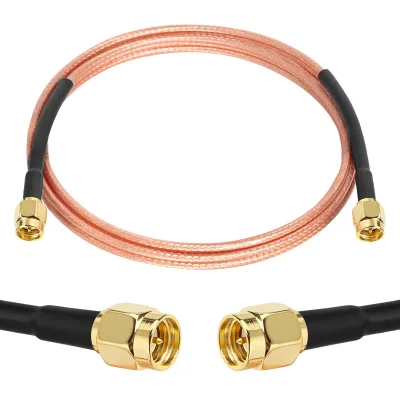
Compare 30 verified listings for semi-flexible RG316 RF coaxial cable with options for solid copper conductors, PTFE insulation, and custom lengths. Buyers can evaluate specifications like impedance, shielding, and packaging to match requirements for computer, printer, and test applications.
Key considerations
Products List




$0.06 - $0.13
MOQ: 100 Pieces

Comprehensive Sourcing Guide
Strategic Sourcing Guide for Semi-Flexible RG316 RF Coaxial Cable
Understanding the Technical Architecture of RG316 Coaxial Solutions
The semi-flexible RG316 RF coaxial cable represents a critical component in high-frequency signal transmission, particularly within compact electronic assemblies where space is at a premium. Based on observed product attributes, the core construction typically utilizes a solid copper conductor, often specified as 7-strand configurations with a diameter of 0.17mm, which may be silver-covered to enhance conductivity and signal integrity. The insulation layer is frequently composed of PTFE (Polytetrafluoroethylene), providing a dielectric constant that supports stable impedance characteristics, while the outer jacket is often made of FEP (Fluorinated Ethylene Propylene) or similar high-performance polymers to ensure flexibility and thermal resistance.
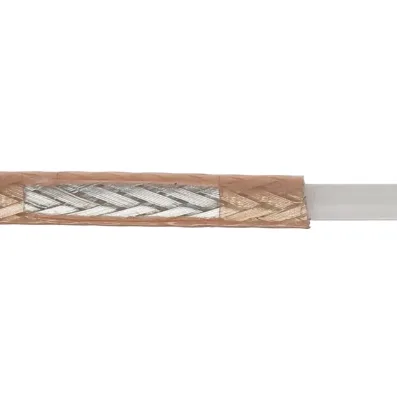
A defining characteristic of this cable category is its impedance, which is standardized at 50Ω with a tolerance often observed in the range of 50±2Ω. This impedance matching is vital for minimizing signal reflection and ensuring maximum power transfer in radio frequency applications. The cable's semi-flexible nature allows it to be routed in tight spaces without kinking, a property derived from the specific braiding and insulation geometry. Observed specifications indicate a shielding configuration that may include a wire braid of 80 strands of 0.1mm silver-covered copper, contributing to effective electromagnetic interference (EMI) shielding. The capacitance of these cables is typically around 100±5 pF/m, a parameter that influences signal delay and bandwidth capabilities. When sourcing, buyers must verify that the specific model, such as the "RF cable 002" or "RG316" variants, aligns with these physical and electrical parameters, as deviations can lead to system instability.
Compliance Verification and Certification Standards
In the global procurement of RF components, regulatory compliance is not merely a formality but a prerequisite for market access and operational safety. The supplied data highlights several critical certifications that buyers should expect to see on product documentation. RoHS (Restriction of Hazardous Substances) is a recurring certification, indicating that the cable materials comply with restrictions on lead, mercury, cadmium, and other hazardous substances. Additionally, CE marking suggests conformity with health, safety, and environmental protection standards for products sold within the European Economic Area. Some listings also reference ISO certifications, which validate the manufacturer's quality management systems, and CCC (China Compulsory Certification), which is mandatory for certain products entering the Chinese market.
When evaluating a supplier, it is essential to request current, valid certificates rather than relying on generic claims. The presence of ISO standards alongside RoHS and CE suggests a robust quality framework, but buyers must verify the scope of these certifications to ensure they cover the specific manufacturing processes for the RG316 cable. Furthermore, the "customized" standard noted in some product attributes implies that while the base cable may meet general standards, specific client requirements might necessitate additional testing or adherence to industry-specific norms. Buyers should not assume that all listed products automatically satisfy every certification mentioned in a general catalog; verification against the specific batch or production run is necessary to ensure that the delivered goods meet the required regulatory thresholds for the target market.
Cost Drivers and Pricing Dynamics in RF Cable Procurement
The pricing structure for semi-flexible RG316 cables is influenced by a complex interplay of material costs, manufacturing complexity, and order volume. The observed price range of 0.05 to 5 USD per unit suggests a significant variance based on the specific configuration and quantity. The primary cost driver is the conductor material; the use of silver-covered copper, as noted in several product attributes, inherently increases the raw material cost compared to standard bare copper or aluminum alternatives. The insulation and jacket materials, specifically PTFE and FEP, are also premium polymers that contribute to the overall unit cost due to their superior electrical and thermal properties.
Order volume plays a decisive role in the final landed cost. The observed Minimum Order Quantity (MOQ) ranges from 30 to 10,000 units, indicating that suppliers offer tiered pricing models. Small orders, likely falling within the lower end of the MOQ spectrum, will carry a higher per-unit cost due to the fixed overheads of production setup and packaging. Conversely, bulk orders approaching the 10,000-unit threshold can leverage economies of scale to reduce the unit price significantly. Packaging methods also impact cost; options such as "200pcs/bag," "100m Per Roll," or "Rolls in Carton" affect the logistics and handling expenses. Buyers must balance the need for immediate inventory against the cost benefits of larger orders, ensuring that the total cost of ownership, including storage and capital tie-up, remains within budget.
Typical Applications and Performance Environments
The versatility of the RG316 semi-flexible cable makes it suitable for a wide array of high-frequency applications, particularly where space constraints and signal integrity are paramount. Observed application data points to usage in computer systems, where data lines and parallel printer cables require reliable, low-loss transmission. The cable's ability to operate within a temperature scope of -40°C to +200°C makes it ideal for environments with extreme thermal fluctuations, such as industrial automation, aerospace systems, and outdoor telecommunications equipment. The "LSOH" (Low Smoke Zero Halogen) range of application mentioned in some attributes suggests suitability for enclosed spaces where fire safety is a critical concern, as these materials minimize toxic smoke emission during combustion.
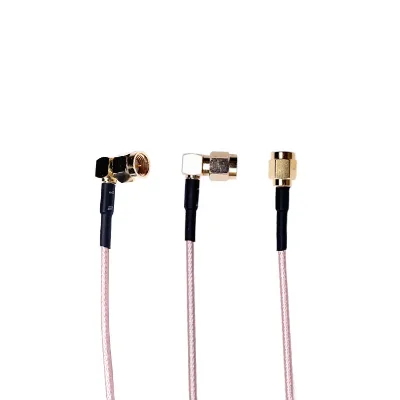
The specific connector types, such as the Fakra Female "Z" mentioned in the specifications, indicate compatibility with automotive and high-speed data interfaces. The Standing Wave Ratio (S.W.R) of 1.5 Max. ensures that the cable maintains efficient power transfer with minimal reflection, a crucial factor in RF transmission systems. Whether used as a data line in computer peripherals or as a specialized RF link in test equipment, the cable's performance is heavily dependent on the integrity of its shielding and the precision of its impedance. Buyers should match the cable's specific attributes, such as the 50Ω impedance and 100±5 pF/m capacitance, to the requirements of their specific end-use application to avoid signal degradation or system failure.
Supplier Evaluation and Geographic Sourcing Considerations
When identifying potential suppliers for RG316 cables, geographic origin is a significant factor in the supply chain strategy. The provided data indicates that manufacturers are located in various regions of China, including Hangzhou, Zhejiang, Guangdong, and Jiangsu. Each of these regions has established industrial clusters for electronics and cable manufacturing, offering different advantages in terms of supply chain maturity, labor costs, and logistical efficiency. For instance, Guangdong and Zhejiang are known for their robust export capabilities and proximity to major ports, which can facilitate faster lead times for international buyers.
Supplier evaluation should extend beyond location to include an assessment of their customization capabilities. The "Available" customization attribute suggests that many manufacturers are willing to adapt cable lengths, jacket colors, and connector types to specific client needs. However, buyers must verify the supplier's capacity to handle these customizations without compromising quality. The "ELESUN" brand name observed in the data serves as an example of a specific manufacturer, but buyers should not limit their search to named entities. Instead, they should focus on suppliers who demonstrate transparency in their production processes, offer clear documentation of their material sources, and maintain consistent quality control measures. The ability to provide samples for testing and the willingness to engage in technical discussions regarding impedance and shielding are strong indicators of a reliable partner.
Quality Control Protocols and Long-Term Procurement Strategy
Ensuring the long-term reliability of RG316 cables requires a rigorous quality control (QC) framework that addresses both incoming material inspection and final product testing. Given the critical nature of RF performance, buyers should insist on verification of key electrical parameters, including impedance consistency, capacitance values, and S.W.R limits. The observed specifications, such as the 50±2Ω impedance and 1.5 Max S.W.R, serve as benchmarks for acceptance criteria. Quality control should also encompass physical inspections of the conductor stranding, insulation thickness, and jacket integrity to ensure they match the stated dimensions, such as the 2.5±0.10 mm FEP jacket and 1.52±0.05 mm PTFE insulation.
For long-term procurement, establishing a partnership based on continuous improvement and clear communication is essential. Buyers should develop a standardized specification sheet that details all required attributes, from the conductor material (solid copper or silver-covered) to the packaging requirements (e.g., PE Bag, Outer Carton). Regular audits of the supplier's production line can help identify potential issues before they impact delivery. Additionally, maintaining a buffer stock of critical components can mitigate the risks associated with supply chain disruptions. By focusing on suppliers who offer robust customization options and adhere to strict certification standards, buyers can secure a reliable supply of high-performance RG316 cables that meet the demanding requirements of modern electronic systems.
Comparative Analysis of Cable Specifications
To facilitate informed decision-making, the following table summarizes the key technical and logistical attributes observed in the available product data. This comparison highlights the variability in specifications that buyers must navigate when selecting a supplier.
| Attribute Category | Observed Specification A | Observed Specification B | Observed Specification C |
|---|---|---|---|
| Conductor Material | Copper | Silver covered copper | Silver covered copper |
| Conductor Type | Solid | Solid | 7*0.17mm Silver covered copper |
| Insulation Material | PVC | PTFE | PTFE |
| Jacket Material | Light Brown (Color) | FEP | FEP |
| Impedance | 50Ω | 50±2Ω | 50Ω |
| Capacitance | Not specified | 100±5 pF/m | 100±5 pF/m |
| Temperature Range | Not specified | -40 ~ +200℃ | -40 ~ +200℃ |
| Certifications | RoHS, CE, ISO | RoHS, CCC, ISO | RoHS, CE |
| Packaging | 200pcs/bag | 100m Per Roll | PE Bag, Outer Carton |
| Origin | China | Hangzhou, China | Guangdong, China |
| Customization | Available | Customized | Customized |
This table illustrates that while the core impedance and application remain consistent, the material choices and packaging vary significantly. Buyers must align these specific attributes with their project requirements, ensuring that the selected cable meets the necessary thermal, electrical, and logistical criteria. The presence of different origins and certification combinations further underscores the need for due diligence in supplier selection to ensure that the final product delivers the expected performance and compliance standards.
FAQs
What certifications are available for semi-flexible rg316 rf coaxial cable?
These cables commonly carry RoHS, CE, and ISO certifications to ensure regulatory compliance. Some listings also include CCC certification for the Chinese market. Buyers must verify that specific batches hold valid certificates rather than assuming all products meet every standard automatically.
Which conductor materials are used in semi-flexible rg316 rf coaxial cable?
The conductor is typically solid copper, often specified as silver-covered copper for enhanced conductivity. Some variants use a 7-strand configuration with 0.17mm diameter wires. This material choice supports stable impedance and minimizes signal loss in high-frequency applications.
Can semi-flexible rg316 rf coaxial cable be customized for specific needs?
Yes, customization is available for length, jacket color, and connector types like Fakra Female Z. Suppliers often offer options such as 100m per roll or 200 pieces per bag. Buyers should confirm that custom orders maintain the required 50Ω impedance and shielding standards.
How does the temperature scope affect semi-flexible rg316 rf coaxial cable usage?
The cable operates effectively within a temperature range of -40 to +200 degrees Celsius. This wide scope makes it suitable for extreme environments like aerospace or industrial automation. Ensure the selected jacket material, such as FEP, matches these thermal requirements for long-term reliability.
What is the typical impedance for semi-flexible rg316 rf coaxial cable?
The standard impedance is 50Ω with a tolerance often observed as 50±2Ω. This value is critical for minimizing signal reflection and ensuring maximum power transfer. Buyers must verify that the specific model matches this impedance to avoid system instability in RF applications.
Which packaging options are offered for semi-flexible rg316 rf coaxial cable?
Packaging varies by supplier and includes options like 100m per roll, 200 pieces per bag, or rolls in cartons. Some manufacturers use PE bags with outer cartons or wooden drums for bulk shipping. The chosen method impacts logistics costs and handling efficiency for the buyer.
Where are manufacturers of semi-flexible rg316 rf coaxial cable located?
Manufacturers are primarily located in China, specifically in regions like Hangzhou, Zhejiang, Guangdong, and Jiangsu. These areas have established industrial clusters for electronics and cable manufacturing. Buyers should consider these locations when evaluating lead times and export capabilities for international orders.