Source Semi Trailers for Garden, Farm, and Transport
Explore 30 available Semi Trailer options including fuel tankers, flatbeds, and rear dump models. Buyers can compare specifications, certifications, and customization features for garden, farm, and heavy transport needs.
Key considerations
Products List




Cars Carrying Vehicle Car Transporter Trailer Car Carrier Semi Trailer
$11000.00 - $26000.00
MOQ: 1 Pieces
Comprehensive Sourcing Guide
Strategic Sourcing Guide for Semi Trailers
Navigating the global market for semi-trailers requires a disciplined approach that separates verified product attributes from marketing generalizations. The current landscape presents a diverse array of options, ranging from light-duty garden transport units to heavy-duty fuel tankers and container flatbeds. Buyers must rely on concrete data points rather than assumed specifications to ensure procurement success. This guide outlines the critical technical, compliance, and operational factors necessary for sourcing semi-trailers effectively, based on observed market data and verified product characteristics.
Technical Specifications and Configuration Variations
The first step in sourcing is understanding the vast spectrum of semi-trailer configurations available. The market data indicates a clear segmentation based on duty grade and structural design. Buyers will encounter products classified as Light Duty, Medium Duty, and Heavy Duty. These classifications are not merely marketing terms but correlate with specific material compositions and load capacities. For instance, Light Duty units are often constructed with Steel and feature specific suspension systems like four-piece leaf springs, whereas Heavy Duty variants may utilize Aluminum or reinforced Steel structures designed for 25T to 30T load capacities.
Dimensions are a critical variable that varies significantly by application. Observed specifications reveal standard dimensions such as 10390mm25003380mm for certain tanker models and 850025002600mm for other semi-trailer types. Conversely, specialized units like container flat-beds may offer extendable lengths ranging from 3000mm to 10000mm, with a standard footprint of 1300030001100mm. Tread width also varies, with observed values including 1820mm, 2240mm, and specific axle configurations. When evaluating a potential supplier, buyers must verify that the stated dimensions match their logistical constraints, particularly regarding road width limits and cargo volume requirements.
Suspension systems represent another key technical differentiator. The market offers both Air Suspension and Leaf Spring Suspension options. While some units are equipped with four-piece leaf springs, others may feature more advanced air suspension systems to enhance ride quality and cargo protection. The wheelbase is another specification that requires careful verification, with observed ranges extending from 9000mm to 10000mm in certain models. Buyers should not assume that a single specification applies to all semi-trailers; instead, they must request detailed technical sheets for each specific model to confirm the suspension type, axle count, and overall geometry.
Compliance and Certification Verification
In the international trade of heavy transport equipment, certification is the primary gatekeeper for market access. The data confirms that various certification standards are present, including CE, ISO/TSCCC, DOT, ISOCE, GCC, and ECE. However, the presence of a certification on a product listing does not guarantee universal compliance for all models within a supplier's catalog. Buyers must explicitly verify which specific certifications apply to the exact model they intend to purchase. For example, while some fuel tanker trailers list certifications such as ISO/TSCCC, CE, GCC, and ECE, other models may only carry a subset of these.
The Anti-lock Braking System (ABS) is a critical safety component that varies across the product range. Some units are listed with ABS Anti-lock Braking Systems, while others are explicitly noted as having no ABS. This distinction is vital for regulatory compliance in many jurisdictions where ABS is mandatory for heavy-duty trailers. Procurement teams must ensure that the selected semi-trailer includes the necessary braking systems for the target market. Relying on the assumption that all listed trailers include ABS could lead to significant compliance failures and safety risks.
Furthermore, the origin of the product plays a role in certification validity. Products are noted to originate from regions such as China, Shandong, and Qingdao. While these are manufacturing hubs, the specific certification bodies and the scope of their approval must be validated against the destination country's regulations. Buyers should request copies of the actual certification documents rather than accepting a list of acronyms. The distinction between a general company certification and a model-specific certification is often blurred in listings, necessitating rigorous due diligence to ensure the specific unit meets all legal requirements.
Cost Drivers and Pricing Dynamics
The pricing for semi-trailers is highly variable, with observed ranges spanning from $110 to $30,000 USD. This wide disparity reflects the differences in duty grade, material composition, and complexity of the unit. A light-duty garden trailer constructed with basic steel components will naturally fall at the lower end of the spectrum, while a heavy-duty fuel tanker with advanced suspension and specialized certifications will command a premium price.
Material costs are a primary driver of these price differences. Aluminum construction, often associated with Medium Duty or Heavy Duty applications, typically incurs higher material costs compared to standard Steel. Additionally, the inclusion of complex features such as Self-dumping mechanisms, removable gates, or specialized tire models like the 16X8-7 Low Pressure Vacuum Tyre can significantly impact the final cost. Buyers must analyze the total cost of ownership, considering not just the purchase price but also maintenance requirements associated with different materials and suspension types.
Minimum Order Quantities (MOQ) also influence the effective cost per unit. The observed MOQ range spans from 1 to 500 units. Suppliers offering an MOQ of 1 are typically catering to single-unit purchases or small fleet expansions, which may carry a higher unit price. Conversely, bulk orders meeting an MOQ of 500 may benefit from economies of scale. Buyers should negotiate based on their specific volume needs, understanding that customization options, such as custom-made designs or specific packing requirements like Iron Frame + Carton versus Bare Packaging, can alter the pricing structure and lead times.
Typical Applications and Use Cases
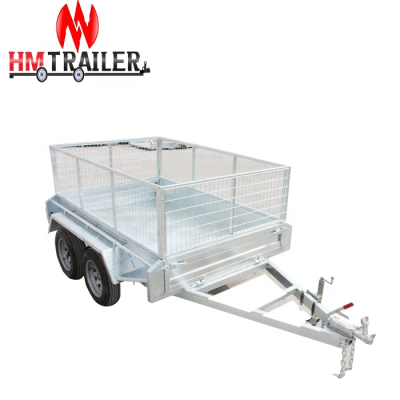
Semi-trailers are designed for specific operational environments, and selecting the wrong type can lead to premature wear or operational inefficiency. The market data highlights several distinct use cases. Light Duty trailers with a wheelbase of 9000-10000mm and four-piece leaf springs are often suited for Garden and Farm applications. These units may feature removable four-gate designs and are constructed to handle lighter loads efficiently.
For heavy industrial and logistics operations, the Full Tanker Trailer and Container Flat-Bed Trailer are the primary choices. Fuel Tanker Trailers, often with a load capacity of 25T or 30T, are essential for the transport of liquids and require robust safety features like ABS and specific certifications. Container Flat-Beds, with their flatbed shape and extendable lengths, are ideal for transporting intermodal containers or oversized cargo. The choice between a Semi-Trailer and a rear dump semi-trailer depends on the nature of the cargo; dump trailers are designed for bulk materials like gravel or sand, while flatbeds are optimized for palletized or containerized goods.
Supplier Evaluation and Origin Considerations
Evaluating suppliers requires a focus on their manufacturing capabilities and geographic origins. The data indicates that products originate from China, with specific mentions of Shandong and Qingdao as production hubs. These regions are known for their manufacturing infrastructure, but buyers must verify the specific capabilities of the supplier regarding the semi-trailer type they are sourcing. A supplier specializing in light-duty garden trailers may not have the same quality control processes for heavy-duty fuel tankers.
Customization availability is a key factor in supplier selection. Many suppliers offer Custom-Made designs and customizable sizes, allowing buyers to tailor the semi-trailer to their specific operational needs. However, this flexibility must be balanced against the supplier's ability to maintain quality standards. Buyers should inquire about the supplier's experience with custom projects and request references or case studies. Additionally, the packing method, whether it be Standard Packing, Bulk Transportation, or Iron Frame + Carton, should be evaluated to ensure the product arrives without damage during transit.
Quality Control and Inspection Protocols
Quality control is paramount when sourcing heavy transport equipment. Given the variation in product conditions, with most listed as "New," buyers must establish clear inspection protocols before shipment. The condition of the product, including the integrity of the steel or aluminum frame, the functionality of the suspension system, and the quality of the tires, must be verified. For units with specific tire models like the 16X8-7, buyers should confirm the tire brand and tread depth to ensure they meet safety standards.
Inspection should also cover the certification documents and the actual physical compliance of the unit. For example, if a trailer is advertised with ABS, a physical test should be conducted to verify the system's functionality. Similarly, the load capacity claims of 25T or 30T should be validated against the structural integrity of the chassis. Buyers should consider engaging third-party inspection agencies to conduct pre-shipment inspections, particularly for large orders or high-value units like fuel tankers. This step ensures that the product matches the provided specifications and reduces the risk of receiving substandard equipment.
Long-Term Procurement and Maintenance Strategy
Long-term procurement success depends on more than just the initial purchase; it requires a strategy for maintenance and lifecycle management. The choice of material, such as Steel versus Aluminum, will dictate the maintenance schedule and corrosion resistance. Steel units may require more frequent painting and rust prevention, while Aluminum units might offer better longevity but at a higher initial cost. The type of suspension system, whether Leaf Spring or Air Suspension, also impacts maintenance costs. Air suspension systems, while offering superior ride quality, may have higher repair costs compared to traditional leaf spring systems.
Buyers should also consider the availability of spare parts and the supplier's support network. Custom-made units or those with specialized features like self-dumping mechanisms may require specific parts that are not universally available. Establishing a relationship with a supplier who can provide ongoing support and genuine spare parts is essential for minimizing downtime. Furthermore, understanding the lead times and production capacity of the supplier is crucial for fleet expansion or replacement planning. By integrating these long-term considerations into the initial sourcing decision, buyers can ensure a reliable and cost-effective fleet operation over the lifespan of the semi-trailers.
FAQs
What certifications apply to semi trailers?
Certifications vary by model, with options including CE, ISO/TSCCC, DOT, GCC, and ECE. Buyers must verify which specific certifications apply to the exact model intended for purchase rather than assuming universal compliance.
Which suspension systems are available for semi trailers?
Semi trailers feature either Air Suspension or Leaf Spring Suspension systems. Some units utilize four-piece leaf springs while others offer advanced air suspension to enhance ride quality and cargo protection.
Can semi trailers be customized for specific needs?
Yes, customization is available for designs and sizes to meet specific operational requirements. Buyers can request custom-made dimensions and packing methods, though this may affect pricing and lead times.
What is the load capacity range for these trailers?
Load capacities range from light duty to heavy duty, with specific models supporting 25T or 30T. Heavy duty variants often utilize aluminum or reinforced steel structures designed for these high capacities.
Do all semi trailers include an Anti-lock Braking System?
No, some units are listed with ABS Anti-lock Braking Systems while others are explicitly noted as having no ABS. Procurement teams must ensure the selected trailer includes the necessary braking systems for the target market.
What materials are used to construct semi trailers?
Materials include Steel for light duty units and Aluminum for medium or heavy duty applications. Steel construction is common for garden and farm units, while aluminum is often associated with higher duty grades.
Where are these semi trailers manufactured?
Products originate from China, with specific manufacturing hubs noted in Shandong and Qingdao. Buyers should verify the specific capabilities of the supplier in these regions regarding the semi-trailer type they are sourcing.