Source Semi Truck Insect Screen Assembly for Windproof Dustproof and Heat Insulation
Compare 30 listings for Semi Truck Insect Screen Assembly featuring fiberglass and aluminum options with customizable mesh sizes. Buyers can evaluate specifications like width, weight, and certifications including ROHS and CE for windproof, dustproof, and insect-resistant applications.
Key considerations
Products List


Door Window Screen Mesh Fiberglass Window Screen Window Net Screen Mosquito Fiberglass Insect Screen
$0.30 - $0.60
MOQ: 30000 Square Meters


Heavy-Duty PVC Coated Fiberglass Insect Screen with UV Stabilization
$0.27 - $0.28
MOQ: 1000 Square Meters

Pleated Polyester Insect Screen for Sliding Door with Dustproof Design
$0.41 - $0.43
MOQ: 1000 Square Meters

Pleated Insect Screen for Sliding Door with Windproof and Dustproof Design
$0.41 - $0.43
MOQ: 1000 Square Meters




Manufacture Custom Built Insect Mosquito Screens for All Your Needs
$0.10 - $0.50
MOQ: 2000 Square Meters

Sliding Insect Screens to Protect You and Your Family Against The Bugs
$0.30 - $0.60
MOQ: 2000 Square Meters


Insect Screens Are Ideal for Keeping Mosquitos and Other Small Insects out of Your Homes.
$0.30 - $0.60
MOQ: 2000 Square Meters

About Insect Screen Split Open Split-Screen Insect Screen Retractable Mosquito Screen
$28.00 - $35.00
MOQ: 1000 Square Meters

Adjustable Mesh Door Screen for Effective Bug Protection Insect Screen Door, Mesh Door
$32.00 - $38.00
MOQ: 1000 Square Meters

Trackless Custom Size Wood Grain Transfer Single Panel Folding Insect Screen
$29.00 - $37.00
MOQ: 1000 Square Meters
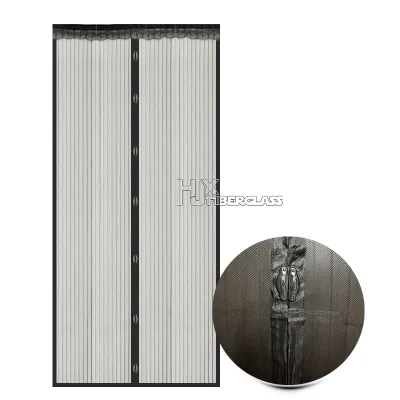


China Wholesale Invisible Insect Window Screen with High Quality
$0.20 - $0.80
MOQ: 1000 Square Meters
Comprehensive Sourcing Guide
Strategic Sourcing Guide for Semi Truck Insect Screen Assemblies
The global logistics and transportation sector increasingly relies on specialized components to maintain cargo integrity and operational efficiency. For buyers researching semi truck insect screen assemblies, the procurement landscape is defined by a specific set of technical parameters, material constraints, and compliance requirements. This guide synthesizes available product data to provide a disciplined framework for evaluating potential suppliers and defining precise technical specifications. The focus remains on the intersection of insect resistance, structural durability, and thermal management, ensuring that procurement decisions are grounded in observable product attributes rather than unverified marketing claims.
Technical Specifications and Material Composition
The foundation of a reliable Semi Truck Insect Screen Assembly lies in the precise selection of materials and mesh configurations. Based on current market offerings, the primary material utilized for these assemblies is fiberglass, specifically categorized into C-Glass and E-Glass variants. These glass types offer a balance of tensile strength and flexibility required for vehicle applications where vibration and thermal expansion are constant factors. The weaving method is predominantly plain weaving, which ensures a uniform grid structure essential for consistent insect exclusion.
Buyers must scrutinize the mesh size specifications, as these directly dictate the level of protection. Observed standard mesh configurations include 1816, 1715, 2020, 1616, and 2424. The specific choice depends on the target pest profile; for instance, finer meshes like 1816 are often cited for high-efficiency insect resistance, while coarser options may be selected for airflow optimization. The physical dimensions of the screen are equally critical. Standard width ranges from 0.5 meters to 3.0 meters, with some specific models supporting widths up to 2.2 meters. Length specifications vary significantly, with common roll lengths observed at 20 meters, 30 meters, 50 meters, and 100 meters.
The weight of the material is a key indicator of density and durability. Product data indicates a standard weight range of 85 g/m² to 145 g/m², with specific models noted at 80 g/m² or 300 g/m² depending on the application intensity. Color options typically include white, black, gray, green, and blue, allowing for aesthetic integration with vehicle interiors or specific thermal requirements. The folded height of the assembly is also a technical constraint, with observed ranges between 16mm and 20mm, which is vital for fitting into existing truck ventilation channels without modification.
Functional Performance and Application Scenarios
The functional capabilities of these assemblies extend beyond simple insect exclusion. The core attributes observed in the product data include invisibility, anti-theft properties, windproofing, dustproofing, heat insulation, and sound insulation. These functions are not merely additive; they represent a holistic approach to cargo protection. The "invisibility" feature suggests a design that minimizes visual obstruction while maintaining structural integrity, which is crucial for driver visibility and aesthetic appeal in commercial fleets.
Anti-theft functionality implies that the screen assembly may serve as a deterrent against unauthorized access or tampering with cargo, a significant concern in long-haul logistics. Windproof and dustproof attributes are essential for maintaining a clean interior environment, protecting sensitive goods from particulate contamination during transit. Heat insulation and sound insulation further enhance the cargo environment, reducing thermal load on refrigeration units and minimizing noise pollution from the road.
The primary application is explicitly defined as mosquito-proof and insect-resistant, making these assemblies ideal for transporting foodstuffs, pharmaceuticals, and other goods susceptible to pest infestation. The versatility of the product allows for customization, with support available for specific dimensions and functional requirements. This adaptability is crucial for semi-truck operators who may have varying cabin configurations or cargo hold dimensions. The product models identified, such as F17, F22, F23, PL19, PL14, and F40, suggest a modular approach to manufacturing, allowing buyers to select a model that aligns with their specific operational needs.
Compliance, Certification, and Regulatory Standards
Navigating the regulatory landscape is a critical step in the procurement process. The product data highlights several certifications that buyers should verify during supplier evaluation. The most frequently cited certifications include ROHS (Restriction of Hazardous Substances) and CE (Conformité Européenne), indicating compliance with environmental and safety standards relevant to the European market. Additionally, ISO certification is mentioned, which serves as a benchmark for quality management systems.
While specific standard numbers like ISO 9001, ISO 13485, and ISO 14001 are noted in background contexts, buyers must treat these as verification targets rather than guaranteed attributes of every listed product. The presence of ISO certification generally implies a commitment to standardized quality processes, but the specific scope (e.g., quality management vs. environmental management) must be confirmed with the supplier. The ROHS and CE marks are particularly important for exporters and importers dealing with international trade, as they ensure the materials do not contain restricted hazardous substances and meet safety requirements.
Buyers should request current certification documents to validate these claims. It is essential to distinguish between the product's inherent certification and the manufacturer's organizational certification. The product origin is consistently listed as Hebei, China, or simply China. While this provides a geographical baseline, it does not inherently dictate quality. The verification of certifications remains the primary method for ensuring that the product meets the necessary regulatory thresholds for the intended market.
Cost Drivers and Pricing Dynamics
Understanding the cost structure of semi truck insect screen assemblies requires an analysis of the variables that influence the final price. The observed price range in the market spans from $0.10 to $38.00 USD. This wide variance is not indicative of quality differences alone but reflects the complexity of the order, including material weight, mesh density, customization level, and packaging requirements.
The Minimum Order Quantity (MOQ) is a significant cost driver, with observed ranges from 2 units to 30,000 units. For small-scale procurement or prototyping, the low end of the MOQ spectrum allows for flexibility, though the unit cost may be higher. Conversely, bulk orders can leverage economies of scale, potentially reducing the per-unit cost. The material weight, ranging from 80 g/m² to 300 g/m², directly impacts the raw material cost, with heavier, denser screens commanding a premium.
Packaging methods also contribute to the overall cost. Options include cartons and woven bags, with some suppliers offering specific carton packaging for higher-value models. The choice of packaging affects shipping logistics and protection during transit. Customization is listed as available and supported, which introduces additional variables into the pricing model. Custom dimensions, specific color requirements, or unique functional integrations will typically incur setup fees and higher unit costs compared to standard off-the-shelf models. Buyers should request detailed quotations that break down these variables to understand the true cost drivers.
Supplier Evaluation and Quality Assurance
Evaluating suppliers for semi truck insect screen assemblies requires a rigorous approach to quality assurance. The product data indicates that customization is a standard offering, which necessitates a supplier capable of managing complex production workflows. Buyers should assess the supplier's ability to maintain consistency across different mesh sizes, widths, and lengths. The standard width range of 0.5m to 3.0m and length options of 20m to 100m suggest a flexible manufacturing process, but the ability to meet specific tolerances is paramount.
Quality control should focus on the verification of material composition. Ensuring that the fiberglass is indeed C-Glass or E-Glass and that the weaving is plain is essential for performance. Buyers should request samples to test the folded height, weight, and mesh density against the claimed specifications. The presence of certifications like ROHS, CE, and ISO should be validated through official documentation.
The origin of the product, primarily Hebei, China, suggests a concentration of manufacturing capabilities in this region. While this can offer competitive pricing, it also requires careful vetting of the specific factory's track record. Buyers should inquire about the supplier's quality control protocols, including in-process inspections and final testing. The ability to provide test results or performance data for specific attributes, such as windproofing or heat insulation, is a strong indicator of a reliable supplier.
Long-Term Procurement and Operational Considerations
For long-term procurement, the durability and maintenance requirements of the insect screen assembly are critical factors. The material properties, such as the fiberglass composition and the specific mesh density, determine the lifespan of the product under varying environmental conditions. Buyers should consider the thermal and mechanical stresses that the screens will endure during semi-truck operations. The heat insulation and sound insulation features suggest that these assemblies are designed to withstand temperature fluctuations and noise levels common in long-haul transport.
The availability of replacement parts and the ease of installation are also important considerations. The standard packaging in cartons or woven bags facilitates storage and handling, but the specific dimensions of the rolls (0.5m to 3.0m width) must align with the truck's ventilation system dimensions to ensure a seamless fit. Customization support allows for tailored solutions, but buyers must ensure that the customization process is robust and that the supplier can deliver consistent results over time.
Supply chain stability is another key aspect. With MOQs ranging from 2 to 30,000 units, buyers must align their ordering strategy with their inventory needs. High-volume buyers should negotiate contracts that secure consistent supply and favorable pricing, while low-volume buyers should focus on suppliers with flexible MOQs. The lead time, while not explicitly detailed in the product data, is a variable that should be clarified during the negotiation phase to ensure timely delivery and minimize operational disruptions.
Comparative Analysis of Product Attributes
To facilitate decision-making, the following table summarizes the key attributes observed in the market for semi truck insect screen assemblies. This comparison highlights the variability in specifications and helps buyers identify the most suitable options for their specific needs.
| Attribute | Standard Range / Options | Key Variations |
|---|---|---|
| Material | Fiberglass | C-Glass, E-Glass |
| Weaving | Plain Weaving | Standard grid structure |
| Mesh Size | 1816, 1715, 2020, 1616, 24*24 | Varies by pest protection level |
| Width | 0.5m - 3.0m | Some models up to 2.2m |
| Length | 20m, 30m, 50m, 100m | Roll configuration dependent |
| Weight | 80 g/m² - 300 g/m² | 85-145 g/m² standard range |
| Color | White, Black, Gray, Green, Blue | Customization available |
| Certifications | ROHS, CE, ISO | Verification required per batch |
| Origin | Hebei, China | China |
| Packing | Cartons, Woven Bag | Model dependent |
This table underscores the diversity of options available to buyers. The ability to select specific mesh sizes, widths, and materials allows for a tailored approach to procurement. However, it also emphasizes the need for precise specification definition to avoid mismatches between the ordered product and the operational requirements. By focusing on these core attributes, buyers can navigate the complex landscape of semi truck insect screen assemblies with confidence, ensuring that their procurement decisions are both technically sound and economically viable.
FAQs
What materials are used for Semi Truck Insect Screen Assembly?
The primary material used is fiberglass, specifically C-Glass and E-Glass variants. These materials provide the necessary tensile strength and flexibility for vehicle applications where vibration and thermal expansion are constant factors.
Which mesh sizes are available for Semi Truck Insect Screen Assembly?
Standard mesh configurations include 18*16, 17*15, 20*20, 16*16, and 24*24. The specific choice depends on the target pest profile, with finer meshes offering high-efficiency insect resistance while coarser options optimize airflow.
Can Semi Truck Insect Screen Assembly be customized for specific needs?
Yes, customization is available and supported for specific dimensions and functional requirements. This adaptability allows semi-truck operators to select models that align with varying cabin configurations or cargo hold dimensions.
What certifications do Semi Truck Insect Screen Assembly products typically hold?
Products typically hold ROHS, CE, and ISO certifications. These indicate compliance with environmental and safety standards, ensuring materials do not contain restricted hazardous substances and meet safety requirements for international trade.
How wide can Semi Truck Insect Screen Assembly rolls be?
Standard width ranges from 0.5 meters to 3.0 meters, with some specific models supporting widths up to 2.2 meters. This range ensures the screens can fit into existing truck ventilation channels without modification.
What is the weight range for Semi Truck Insect Screen Assembly?
The standard weight range is 85 g/m² to 145 g/m², with specific models noted at 80 g/m² or 300 g/m². Weight serves as a key indicator of density and durability for different application intensities.