Source Servo Motor Steel Wire Straightener and Cutter for Construction, Manufacturing, and Retail
Find and compare 30 Servo Motor Steel Wire Straightener and Cutter models from Chinese manufacturers. Evaluate specifications like PLC control, cutting accuracy, and wire diameter capacity to select the right equipment for your production line.
Key considerations
Products List


Servo Motor CNC Straightener Cutting Machine and Straightening Steel and Copper Tubes
$7280.00 - $7750.00
MOQ: 1 Pieces

Efficient Servo Motor Tube Straightener and Cutter Machine for Copper and Steel
$7280.00 - $7750.00
MOQ: 1 Pieces

Servo Motor Automatic Wire Cutting Straightener with Precision and 2-4mm Diameter
$4590.00 - $4650.00
MOQ: 1 Sets


CNC 1-3mm Steel Wire Straightening and Cutting Machine with Servo Motor
$4560.00 - $4892.00
MOQ: 1 Pieces

CNC Tube Straightening Machine and Servo Motor Cutting and Straight Machine
$7280.00 - $7750.00
MOQ: 1 Pieces
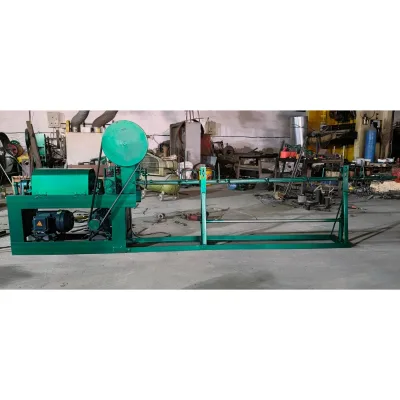

Comprehensive Sourcing Guide
Servo Motor Steel Wire Straightener and Cutter Sourcing Guide
The procurement of a Servo Motor Steel Wire Straightener and Cutter requires a precise alignment between the machine's mechanical capabilities and the specific production demands of the buyer. These machines are engineered to process carbon steel wire, transforming coiled material into precise, straight lengths through a combination of rotating straightening drums and servo-driven cutting mechanisms. The observed market data indicates that these units are designed for high-speed operations, with working speeds reaching up to 150 meters per minute, making them suitable for continuous manufacturing environments where throughput is critical.
Buyers must recognize that the "servo motor" designation in the product title often correlates with specific cutting modes and control systems, such as PLC-based automation, which ensures high precision in length accuracy. The observed listings show that cutting accuracy can be maintained within a tolerance of +/-0.3mm, a critical metric for applications requiring uniform wire lengths. Understanding the distinction between large deformation and small deformation straightening principles is essential, as the choice depends on the initial state of the wire and the required final straightness, directly influencing the machine's configuration and performance.
Product Scope and Observed Listing Signals
The product scope for these machines encompasses a variety of models, ranging from the GT2-5 to the YGTQ series and HGTQ variants, each tailored to different wire diameters and production capacities. Observed specifications reveal that these units can handle wire diameters from 1.0mm up to 5.0mm, with some models capable of processing both cold-rolled and hot-rolled round bars. The working capacity is a primary differentiator, with some machines designed for a specific range of 2.0 to 5.0mm, while others offer adjustable wire lengths from 0.1 to 6 meters or even extendable cutting lengths up to 15,000mm.
Listing signals indicate a strong emphasis on customization, with many suppliers offering adjustable wire lengths and customized configurations to meet specific client needs. The observed data shows that the total motor power can vary significantly, with configurations like 4.0kw + 3.8kw + 2.6kw suggesting a multi-stage drive system for robust performance. Buyers should note that while some listings specify a drive mode of hydraulic, others rely on automatic grades and servo motor cutting, necessitating a clear verification of the drive mechanism to ensure it matches the intended application's speed and force requirements.
Technical Specifications to Verify
Verifying the technical specifications is paramount, particularly regarding the voltage and power supply requirements, as observed listings consistently cite 380V as the standard operating voltage. The control mode is another critical specification, with PLC systems being the norm for ensuring automated operation and precise length control. Buyers must confirm the specific model number, such as GT3-8 or KB-8, as these identifiers often dictate the maximum wire diameter and the specific cutting length capabilities, which can range from 75mm to 15,000mm depending on the configuration.
The straightening mode, typically described as a rotating straightening drum, must be evaluated against the wire material, which is predominantly carbon steel wire in the observed data. The rated power and total motor power are key indicators of the machine's ability to handle the load without stalling, especially when processing thicker wires or higher volumes. Additionally, the physical dimensions, such as the disk diameter of 800mm and the overall weight of 750kg, are essential for planning factory floor layout and ensuring the machine fits within the designated installation space.
Compliance and Safety Documentation
Compliance and safety documentation for these industrial machines often include certifications such as CE and ISOTUV, which serve as indicators of adherence to specific safety and quality standards. While ISO9001 is mentioned in background contexts, buyers should prioritize verifying the presence of explicit certifications like CE on the specific unit they intend to purchase, as this confirms the machine meets European safety directives. The warranty periods observed in the market vary from 12 months to 24 months, and this duration is a significant factor in assessing the supplier's confidence in the product's reliability and durability.
Safety features are often integrated into the control mode and automation level, with PLC systems providing a layer of operational safety through programmable logic and error detection. Buyers should request documentation regarding the after-sales service provided, which frequently includes online support, to ensure that any safety-related issues can be addressed promptly. The mode of transportation, typically sea transportation, also requires proper packaging standards, such as wooden cases or plastic film and wooden boxes, to protect the machine during transit and ensure it arrives in a condition ready for safe installation.
Cost Drivers and Commercial Terms
The cost of a Servo Motor Steel Wire Straightener and Cutter is driven by several factors, including the total motor power, the complexity of the control system, and the level of customization required. Observed price ranges in the market span from 299 to 30,000 USD, reflecting the vast difference between basic models and high-capacity, fully automated units with advanced PLC controls. The minimum order quantity (MOQ) is consistently observed as 1, allowing for flexible procurement strategies, but the final price will heavily depend on the specific model, such as the HGTQ4-10 or YGTQ series, and the included accessories.
Commercial terms regarding packaging and shipping are also critical cost drivers, with options ranging from standard wooden cases to custom requirements. The observed standard of 1000KGS for some models suggests a baseline for shipping weight calculations, which impacts freight costs. Buyers should also consider the warranty period as a component of the total cost of ownership, as a 24-month warranty may justify a higher initial price compared to a 12-month warranty, provided the supplier offers reliable online support and spare parts availability.
Supplier Qualification and Quality Control
Supplier qualification should focus on the origin of the machinery, with observed listings indicating production in regions such as Hebei and Jiangsu in China. These locations are known for their manufacturing capabilities, but buyers must verify the specific factory's track record and the consistency of their quality control processes. The condition of the machines is listed as "New," but buyers should request evidence of the manufacturing process and the testing procedures used to ensure that the "New" status reflects a fully functional and tested unit ready for immediate deployment.
Quality control extends to the after-sales service provided, which is a key differentiator among suppliers. The availability of online support and the duration of the warranty, ranging from one to two years, are strong indicators of a supplier's commitment to long-term customer satisfaction. Buyers should also verify the customization capabilities, as the ability to tailor the machine to specific wire diameters and cutting lengths demonstrates a supplier's technical competence and flexibility in meeting unique production requirements.
Long-Term Procurement Checks
Long-term procurement checks involve monitoring the machine's performance over time, specifically focusing on the straightening accuracy and cutting precision. The observed cutting accuracy of +/-0.3mm is a benchmark that should be regularly verified through production runs to ensure the machine maintains its specifications as it ages. Buyers should establish a schedule for routine maintenance, particularly for the rotating straightening drums and servo motors, to prevent wear and tear from affecting the quality of the output.
The availability of spare parts and the responsiveness of the after-sales support team are critical for minimizing downtime in the long term. Since the machines are designed for continuous operation with working speeds up to 150 meters per minute, any interruption can have significant financial implications. Buyers should maintain a relationship with the supplier to ensure that technical support remains accessible and that any necessary upgrades or replacements can be sourced quickly, ensuring the longevity and efficiency of the investment.
FAQs
What is the working speed of the Servo Motor Steel Wire Straightener and Cutter?
The machine operates at a working speed of 100-130 meters per minute, with a maximum capacity of 150 meters per minute. This high-speed performance ensures efficient processing for continuous production lines. The speed is supported by a PLC control mode and servo motor cutting for precision.
Can the Servo Motor Steel Wire Straightener and Cutter handle different wire diameters?
Yes, the equipment supports various wire diameters depending on the specific model. For instance, the GT3-8 model handles 1.0-2.0mm wire, while the YGTQ series can straighten and cut 2-5mm steel wire. The wire length is adjustable from 0.1 to 6 meters.
What certifications are available for the Servo Motor Steel Wire Straightener and Cutter?
The machines are available with ISOTUV and CE certifications. These certifications ensure compliance with international safety and quality standards. Buyers can select models based on their specific regional regulatory requirements and operational safety needs.
How is the Servo Motor Steel Wire Straightener and Cutter packaged for shipping?
The equipment is packaged in plastic film and wooden boxes or wooden cases to ensure safe transit. Some models allow for custom packaging requirements. This robust packaging protects the machine from damage during sea transportation and handling.
What is the warranty period for the Servo Motor Steel Wire Straightener and Cutter?
The warranty period varies by model, typically ranging from 12 months to 24 months. Online support is provided as an after-sales service. This ensures that technical assistance is available to maintain machine performance and address operational queries.
Which models are available for the Servo Motor Steel Wire Straightener and Cutter?
Available models include GT2-5, GT3-8, KB-8, and the YGTQ series. Specific variants like HGTQ4-10 and HGTQ6-16 are also listed. These models cater to different wire diameters and production capacities, allowing for tailored selection.