Source Single Handle Herringbone Shopping Trolley for Retail, Warehouse, and Logistics
Find and compare 30 Single Handle Herringbone Shopping Trolley options for retail, warehouse, and logistics use. These wheeled carts are available in stainless steel, plastic, and iron, with capacities ranging from 60L to 240L and customizable colors.
Key considerations
Products List


Supermarket Shopping Trolley Convenience Store Shopping Cart Hand Push Trolley
$40.00 - $45.00
MOQ: 50 Pieces


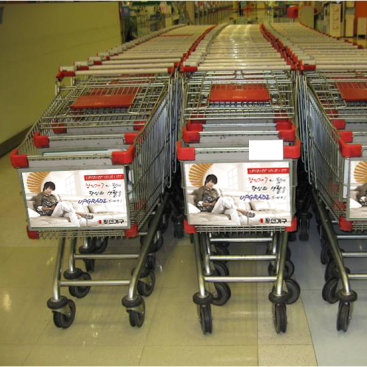


5 Inch Double Axle PU Wheel Shopping Trolley for Smooth and Quiet Movement
$50.00 - $55.00
MOQ: 200 Pieces
Comprehensive Sourcing Guide
Single Handle Herringbone Shopping Trolley Sourcing Guide
Procuring single-handle herringbone shopping trolleys requires a nuanced understanding of industrial-grade design versus consumer-grade aesthetics. These units are distinct from standard supermarket carts, often featuring a herringbone wire structure that prioritizes durability and load distribution over sleek, enclosed aesthetics. The single-handle configuration is a critical differentiator, offering enhanced maneuverability in tight warehouse aisles or logistics corridors where multi-handle carts might be cumbersome. Buyers must recognize that this specific design is frequently utilized in industrial, warehouse, and logistics environments, as well as in supermarkets that require robust, high-capacity solutions for bulk goods. The choice of material—ranging from stainless steel to plastic or iron mesh—directly impacts the trolley’s resistance to corrosion, weight capacity, and overall lifecycle cost.
The sourcing landscape for these trolleys is characterized by a high degree of customization and variability in technical specifications. Suppliers often offer models with varying capacities, such as 60L, 100L, 180L, and up to 240L, allowing buyers to match the trolley to specific operational needs. The observed market includes both non-customized and fully customized options, where buyers can specify colors, logo printing on handles, and even structural modifications. This flexibility is particularly valuable for large enterprises seeking to brand their internal logistics equipment or to standardize fleet aesthetics across multiple facilities. However, this customization capability also introduces complexity in quality control, as each variation may require distinct tooling or assembly processes.
Product Scope and Observed Listing Signals
The current market signals indicate a diverse range of product types, including herringbone, American, and Australian style shopping carts, all falling under the broader category of wheeled shopping baskets. The observed listings show a clear distinction between materials, with stainless steel, plastic, and iron being the primary construction options. Stainless steel models, such as the YD-B-100L, often emphasize hygiene and durability, making them suitable for food-grade or high-traffic environments. In contrast, plastic and iron mesh variants, like the YD-NR-90L or HSD-TAM, may offer cost advantages or specific structural benefits, such as the mesh structure which facilitates easy transportation and visibility of contents. Buyers should carefully review the material specifications for each model, as the material choice dictates the trolley’s suitability for specific industrial applications.
Listing signals also reveal significant variation in packaging and origin, which are critical for logistics planning. Products originate from key manufacturing hubs in China, including Suzhou Changshu, Jiangsu, and broader national origins. Packaging methods vary from plastic bubble film and carton boxes to air bubble films and bubble bags, indicating that suppliers have adapted their packing strategies to protect different structural designs during transit. For instance, the YD-B-100L is packed with plastic bubble film and carton, while the HSD-TAM uses a bubble bag. These differences can impact the unit’s landed cost and the risk of damage during shipping. Buyers must verify the packaging integrity for each specific model to ensure that the trolleys arrive in optimal condition, especially for delicate components like wheels or handles.
Technical Specifications to Verify
Dimensional accuracy is paramount when integrating shopping trolleys into existing warehouse or store layouts. The observed specifications show a wide range of dimensions, from compact models like the YD-B-60L at L750W455H900mm to larger units like the YD-B-210L at L1020W585H1035mm. The YD-B-180L measures 10005851020mm, while the YD-NR-90L is L830W550H910mm. These variations affect aisle clearance, storage density, and loading capacity. Buyers must verify that the selected model’s dimensions align with their facility’s door widths, elevator capacities, and shelving heights. The herringbone structure, often associated with models like the YD-B series, typically offers a robust frame, but the exact internal volume and external footprint must be confirmed to prevent operational bottlenecks.
Capacity and structural integrity are equally critical technical factors. The listings indicate capacities ranging from 60L to 240L, with specific models like the HSD-TEU and HSD-SS supporting this broad range. The YD-B-100L, for example, is designed for a 100L capacity, while the YD-B-210L handles 210L. Buyers should verify the actual load-bearing capacity of the mesh or wire structure, particularly for iron or stainless steel models. The single-handle design must be tested for stability under load, ensuring that the center of gravity remains manageable for the operator. Additionally, the folded state of the trolley, if applicable, should be assessed for storage efficiency, although many observed models are listed as unfolded, suggesting a fixed or semi-fixed structure that prioritizes immediate usability over compact storage.
Compliance and Safety Documentation
Safety compliance for industrial shopping trolleys involves verifying that the equipment meets relevant occupational health and safety standards. While specific certification statuses are not universally listed, buyers should request documentation confirming that the trolleys comply with local regulations regarding manual handling equipment. This includes checks for sharp edges, pinch points, and wheel stability. The herringbone mesh structure, particularly in iron or stainless steel models, must be free of burrs or protrusions that could injure operators or damage goods. Buyers should also verify that the wheels are made from materials that provide adequate traction and noise reduction, especially in environments with sensitive equipment or strict noise ordinances.
Documentation should also cover the structural integrity of the handles and frames. The single-handle design, often featuring printed logos, must be securely attached to withstand repeated use and lateral forces. Buyers should request stress test reports or material certificates, particularly for stainless steel and iron components, to ensure resistance to corrosion and fatigue. For plastic models, UV resistance and impact strength should be verified, especially if the trolleys are used in outdoor or semi-outdoor logistics areas. The absence of heat preservation features, as noted in some listings, is a standard characteristic, but buyers should confirm that this does not compromise the structural integrity of plastic components in extreme temperature environments.
Cost Drivers and Commercial Terms
The cost of single-handle herringbone shopping trolleys is influenced by material selection, customization levels, and order volume. Stainless steel models generally command higher prices due to material costs and manufacturing complexity, while plastic and iron mesh options offer more budget-friendly alternatives. The observed price range of 1-75.59 USD suggests significant variability, likely driven by the model’s capacity and material. Customization options, such as logo printing on handles or customized colors, may incur additional setup fees or higher unit costs, particularly for smaller orders. Buyers should evaluate the total cost of ownership, including maintenance and replacement parts, rather than focusing solely on the initial purchase price.
Commercial terms and payment structures are also key cost drivers. The observed payment term of T/T 30% Deposit + Balance Paid is common in B2B transactions, providing a balance of security for both buyer and supplier. The minimum order quantity (MOQ) varies, with some listings indicating an MOQ of 10 PCS, while others may require up to 500 units. This flexibility allows buyers to test smaller batches before committing to large-scale procurement. However, higher volumes often result in better unit pricing. Buyers should negotiate lead times and shipping terms, considering the loading port of Shanghai and the origin of the products, to optimize logistics costs and ensure timely delivery for their operational needs.
Supplier Qualification and Quality Control
Supplier qualification is essential to ensure consistent quality and reliable delivery of shopping trolleys. Buyers should verify the supplier’s manufacturing capabilities, particularly their experience with herringbone and single-handle designs. Factories in Suzhou Changshu and Jiangsu, China, are known for producing such equipment, but buyers should conduct site audits or request third-party verification reports to confirm production standards. The ability to offer customized solutions, such as specific colors or logo printing, indicates a flexible manufacturing process, but this flexibility must be balanced with rigorous quality control measures to prevent defects.
Quality control processes should include pre-shipment inspections to verify dimensional accuracy, material integrity, and functional performance. Buyers should establish clear acceptance criteria for wheel mobility, handle stability, and structural durability. For mesh structures, checks for weld quality and surface finish are critical to prevent rust and injury. The packaging method, whether bubble film, carton, or air bubble film, should be inspected to ensure that products are protected during transit. Buyers should also request samples before placing large orders to evaluate the trolley’s performance in real-world conditions, ensuring that the product meets their specific operational requirements.
Long-Term Procurement Checks
Long-term procurement success depends on establishing a robust supplier relationship and continuous performance monitoring. Buyers should track key performance indicators such as delivery reliability, defect rates, and after-sales support. Regular audits of the supplier’s quality management system can help identify potential issues before they impact production. For customized orders, maintaining clear communication regarding design specifications and changes is crucial to avoid misunderstandings and rework. Buyers should also consider the supplier’s capacity to scale production in response to fluctuating demand, ensuring that supply chain continuity is maintained.
Sustainability and lifecycle management are increasingly important factors in long-term procurement. Buyers should evaluate the recyclability of materials, such as stainless steel and plastic, and the supplier’s efforts to minimize waste during production. The ease of maintenance and repair should also be considered, as trolleys with replaceable parts can extend the product’s lifespan and reduce total cost of ownership. By focusing on these long-term factors, buyers can build a resilient supply chain that supports their operational goals while minimizing risks and costs over time.
FAQs
What is the standard size for the YD-B-100L model?
The standard size for the YD-B-100L model is L860*W530*H955mm. This dimension applies specifically to the herringbone shopping cart configuration made of stainless steel with a single handle.
Can I request customized colors for this shopping cart?
Yes, customized colors are available for this product. Buyers can specify their preferred color options when ordering, provided they meet the minimum order quantity requirements set by the manufacturer.
What is the minimum order quantity for these trolleys?
The minimum order quantity is 10 pieces for this specific product line. Some variations may allow lower quantities, but the standard requirement for the YD-B-100L model is strictly 10 units.
How are these shopping carts packed for shipping?
These carts are typically packed with plastic bubble film and cartons for protection. Some models may use air bubble film or bubble bags depending on the specific product code and material composition.
Where is the loading port for these products located?
The loading port for these products is located in Shanghai. This applies to shipments originating from the manufacturing facilities in Suzhou Changshu or other locations within Jiangsu, China.
What material is used for the YD-NR-90L model?
The YD-NR-90L model is constructed from plastic material. This distinguishes it from other models in the range that may utilize stainless steel or iron for their frame and basket structure.
Is the logo customizable on the handle of the cart?
Yes, the logo can be printed on the handle of the cart. This customization option is available for buyers who wish to brand the product, subject to the agreed customization terms.
What is the payment term for these orders?
The payment term requires a 30% deposit via T/T with the balance paid subsequently. This standard payment structure applies to the transaction process for purchasing these industrial and supermarket trolleys.