Source Single Screw Plastic Film Dryer for PET, PE, and PVC Lines
Explore 30 listings for a Single Screw Plastic Film Dryer designed for PET, PE, and PVC processing. Buyers can compare models like HD-600 and VE-Y420 based on automation levels, material types, and drying specifications to find the right equipment for industrial washing lines.
Key considerations
Products List
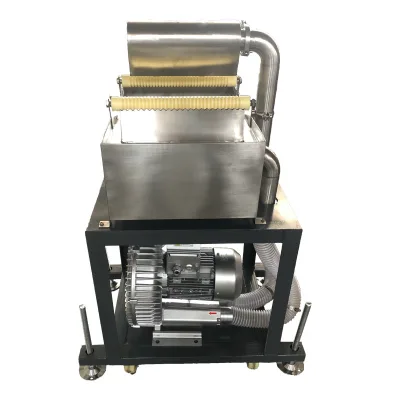


Comprehensive Sourcing Guide
Strategic Sourcing Guide for Single-Screw Plastic Film Dryers
Understanding the Core Technology and Operational Scope
When sourcing a single-screw plastic film dryer, buyers must first distinguish this equipment from general-purpose plastic washing or dewatering lines. The core keyword implies a specialized unit designed to remove moisture from plastic films, often following a washing cycle. In the current market, the term "single-screw" refers to a specific mechanical configuration where a single rotating screw conveys and processes the material. This configuration is distinct from multi-screw systems, which are often utilized for more complex extrusion or mixing tasks. The primary function of this machinery is plastic dewatering, ensuring that the final film product meets specific moisture content requirements before further processing or packaging.
The operational scope of these machines varies significantly based on the target material. While some units are designed to process plastic flakes, others are optimized for plastic bottles or specific film types like PET, PE, PP, and PVC. It is critical for buyers to verify the material compatibility before purchase. For instance, a machine listed with a single-screw configuration might be intended for PET flakes, while another unit with similar dimensions could be designed for PVC processing. The automation level is another pivotal variable; while some modern units offer automated features, others operate as non-automated or semi-automated systems. Buyers should not assume that a "single-screw" designation implies a specific level of computerization. Some observed models are explicitly non-computerized, relying on manual controls, while others may feature display alarms or automated processing capabilities.
Technical Specifications and Configuration Verification
Technical due diligence is the most critical phase in sourcing a single-screw plastic film dryer. The physical dimensions and mechanical specifications directly impact the integration of the machine into an existing production line. Buyers must scrutinize the model numbers and standard designations provided by suppliers. For example, specific models such as the HD-600, VE-Y420, or HS-600 represent distinct configurations with varying capabilities. The model number often correlates with the standard size or capacity, such as a diameter of 420mm or a standard designation of 600. However, these numbers should not be treated as universal metrics without verifying the specific product sheet.
The physical footprint of the dryer is a major consideration for facility planning. Observed specifications indicate that machine sizes can vary widely, with some units measuring approximately 2560mm in length, 1000mm in width, and 2000mm in height. Smaller, portable units may have dimensions around 75cm by 55cm by 83cm, suitable for smaller workshops or pilot lines. The screw configuration is a defining technical attribute; while the search term specifies "single-screw," the market also contains multi-screw variants. Buyers must confirm that the supplier is delivering a single-screw unit if that is the requirement, as multi-screw systems offer different shear and mixing characteristics.
Furthermore, the processing parameters for the drying phase are essential for quality assurance. In film processing applications, drying speed and temperature control are vital. Specifications for similar drying equipment often include drying speeds adjustable between 100 seconds and 280 seconds, with drying temperatures ranging from 50°C to 60°C. The tank volume, which affects the residence time of the material, can be as small as 10 liters in compact units. The washing mode, if integrated, might specify a water flow rate of 2 liters per minute. These numerical ranges are not universal guarantees for every single-screw dryer but serve as benchmarks for what to expect and what to verify during the technical review.
Compliance, Certification, and Safety Standards
In the B2B procurement of industrial machinery, compliance with international and regional standards is non-negotiable. Buyers must verify that the equipment meets the safety and quality standards of the destination market. The most common certification observed in this sector is the CE mark, which indicates conformity with health, safety, and environmental protection standards for products sold within the European Economic Area. Additionally, manufacturers may adhere to ISO9001 standards, which certify the quality management system of the production facility rather than the specific product itself.
It is important to note that certification status is not automatically granted to all listed products. Buyers should request valid certification documents for the specific model being purchased. The origin of the machine also plays a role in compliance; many units are manufactured in Guangzhou, China, or other industrial hubs in Guangdong. While the location is a factual observation of supply chain geography, it does not inherently dictate the quality or certification status. Buyers must ensure that the supplier provides proof of certification that is current and applicable to the specific machinery configuration.
Safety features are another aspect of compliance. Some units are equipped with display alarms to alert operators of potential issues, while others may lack such automated safety interlocks. The "Alarm Form" attribute suggests that visual or auditory warnings are a feature in certain models. When evaluating compliance, buyers should also consider the electrical standards of the target region. A machine designed for the Chinese market may have different voltage requirements than one intended for North America or Europe. Verifying that the electrical components meet local safety codes is a necessary step before finalizing a purchase.
Cost Drivers and Pricing Dynamics
The pricing of single-screw plastic film dryers is influenced by a complex array of factors, including material composition, automation level, and customization options. The observed price range in the market is extremely broad, spanning from approximately $220 to $500,000. This vast disparity indicates that the keyword covers a spectrum of products, from small, portable, non-automated units to large, industrial-grade systems with advanced features. A unit priced at the lower end of the spectrum is likely a basic, non-computerized model with minimal automation, possibly intended for small-scale operations or specific niche applications.
Conversely, higher-priced units typically incorporate advanced automation, robust construction materials, and specialized features such as precise temperature control or integrated washing systems. The material processed is a significant cost driver; machines designed for high-value plastics like PET or specialized PVC films may command a premium. Additionally, the level of customization available affects the final price. While some suppliers offer standard models, others provide fully customized solutions to fit specific production line requirements. The "Customization: Available" attribute suggests that buyers can request modifications, but this will inevitably increase the cost and potentially the lead time.
Packaging and logistics also contribute to the total cost of ownership. The method of packing, whether it is wrap film, stretch film, strength film, or a wooden case, impacts the shipping cost and the risk of damage during transit. For heavy industrial equipment, a wooden case is often the standard to ensure safe delivery. Buyers should clarify whether the quoted price includes packaging and shipping or if these are separate line items. The minimum order quantity (MOQ) is another factor; observed ranges suggest that some suppliers may accept orders as low as one unit, while others might have higher thresholds. Understanding the MOQ is essential for budgeting, especially for small businesses or pilot projects.
Typical Applications and Material Compatibility
The application of a single-screw plastic film dryer is diverse, ranging from industrial recycling lines to specialized film processing facilities. These machines are frequently used in plastic washing lines where the primary goal is to remove water from plastic flakes or bottles before they are re-extruded or pelletized. The "Used in: Plastic Washing Line" attribute confirms that these dryers are integral components of a larger recycling ecosystem. They are particularly effective for processing PET, PE, PP, and PVC materials, which are among the most common plastics in the recycling stream.
For film-specific applications, the dryer plays a crucial role in the development and processing of NDT (Non-Destructive Testing) films. In this context, the machine may function as a film dryer, handling all kinds of size films with automatic processing capabilities. The drying speed and temperature must be precisely controlled to ensure the quality of the developed film. The ambient temperature range of 0°C to 40°C is a critical operational constraint for these units, as extreme environmental conditions can affect the drying efficiency and the longevity of the equipment.
The versatility of the machine is also evident in its ability to handle different forms of plastic. While some units are designed for plastic flakes, others can process plastic bottles. This flexibility allows manufacturers to adapt their production lines to changing market demands without investing in entirely new machinery. However, buyers must ensure that the specific model they select is compatible with the form factor of the material they intend to process. A machine optimized for flakes may not perform well with bottles, and vice versa. Therefore, a detailed review of the material processing capabilities is essential before making a procurement decision.
Supplier Evaluation and Quality Assurance Protocols
Evaluating suppliers for single-screw plastic film dryers requires a rigorous approach to quality assurance. Buyers should prioritize suppliers who provide transparent technical documentation and clear specifications. The presence of specific model numbers, such as TQ-GH for film dryers or HS-600, indicates a level of standardization that can be beneficial for sourcing. However, buyers must verify that the supplier can consistently deliver units that match the advertised specifications. The "Product Origin" being listed as Guangzhou, China, or Guanghzou Guangdong China, is a common observation, but it does not guarantee quality. Buyers should conduct background checks on the manufacturing facility to ensure they have the necessary infrastructure and expertise.
Quality control protocols should be established early in the sourcing process. This includes requesting test results, performance data, and references from previous clients. While specific test results are not provided in the general market data, buyers should ask for evidence of the machine's performance in real-world scenarios. The "Portable" attribute suggests that some units are designed for mobility, which requires a different set of quality checks compared to fixed industrial installations. Buyers should inspect the build quality, the durability of the screw mechanism, and the reliability of the control systems.
Furthermore, the availability of after-sales support is a critical factor in supplier evaluation. A supplier that offers customization and has a robust support network is more likely to provide a satisfactory long-term partnership. Buyers should inquire about the availability of spare parts, technical support, and maintenance services. The "Customization: Available" attribute implies that the supplier is willing to work with the buyer to tailor the machine to their needs, but this requires a high level of communication and trust. Establishing clear communication channels and defining the scope of customization in the contract is essential to avoid misunderstandings and ensure the final product meets the buyer's expectations.
Long-Term Procurement and Operational Sustainability
Sourcing a single-screw plastic film dryer is not just a one-time transaction but the beginning of a long-term operational relationship. Buyers must consider the total cost of ownership, including energy consumption, maintenance costs, and the potential for future upgrades. The "Automation: Non Automation" or "Automation" attribute will significantly impact the operational efficiency and labor costs over the life of the machine. Automated units may have higher upfront costs but can offer significant savings in labor and improved consistency in production.
Sustainability is also a growing concern in the plastics industry. Buyers should evaluate the energy efficiency of the dryer and its ability to minimize waste. The drying temperature and speed settings should be optimized to reduce energy consumption while maintaining product quality. The "Standard: ISO9001" certification of the manufacturer can be an indicator of a commitment to quality and continuous improvement, which often correlates with better environmental practices.
Finally, buyers should plan for the scalability of their operations. As production volumes increase, the current machine may need to be replaced or supplemented with additional units. The "MOQ: 1-2" range suggests that buyers can start with a small order and scale up as needed, but they should verify if the supplier can handle larger orders without compromising lead times or quality. By considering these long-term factors, buyers can make informed decisions that support the growth and sustainability of their plastic processing operations.
FAQs
What plastic types can a Single Screw Plastic Film Dryer process?
These machines can process PET, PE, PP, and PVC materials. Some specific models are designed for plastic flakes or bottles, so verify the material compatibility before purchase to ensure the unit handles your specific input form.
Can I find Single Screw Plastic Film Dryer suppliers with CE certification?
Yes, CE certification is available for certain models in this category. Buyers must request valid certification documents for the specific model being purchased, as this status is not automatically granted to every listed product.
How does the automation level vary in single screw plastic film dryers?
Automation levels range from non-automated to fully automated systems. Some units feature display alarms and automatic processing, while others are non-computerized and rely on manual controls, so check the specific model attributes.
Which specifications define the size of a Single Screw Plastic Film Dryer?
Physical dimensions vary significantly, with some units measuring 2560mm by 1000mm by 2000mm. Smaller portable models may be around 75cm by 55cm by 83cm, so review the model number to confirm the exact footprint.
What is the typical price range for single screw plastic film dryers?
Prices range widely from approximately 220 to 500,000 USD depending on features. Lower costs usually cover basic non-computerized units, while higher prices reflect advanced automation, robust construction, and specialized customization options.
Can single screw plastic film dryers be customized for specific needs?
Customization is available for many models to fit specific production line requirements. However, requesting modifications will inevitably increase the cost and may extend the lead time compared to standard model purchases.
Where are Single Screw Plastic Film Dryer manufacturers typically located?
Most manufacturers are located in Guangzhou, China, or other industrial hubs in Guangdong. While this is a common supply chain geography, buyers must verify the specific origin and quality protocols for each supplier.