Source Single-Screw Wet Granulation Machine for Pharma, Food, and Chemical
Compare 30 single-screw wet granulation machines from verified Chinese suppliers. Buyers can evaluate specifications like capacity, motor type, and automation levels to find the right equipment for pharmaceutical, food, and chemical processing applications.
Key considerations
Products List
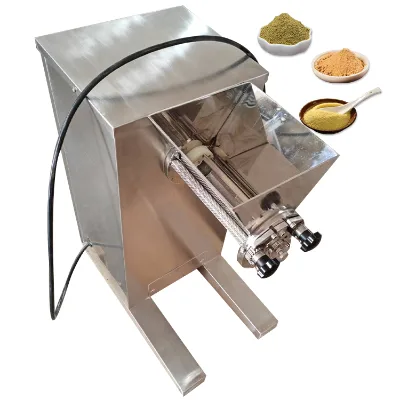


$9500.00 - $10000.00
MOQ: 1 Pieces


$6500.00 - $12000.00
MOQ: 1 Sets


Two Stage Extruder Granulation Machine/Two Stage Extruder Pelletizing Machine
$28000.00 - $50000.00
MOQ: 1 Sets


Single Screw Plastic Extruder, Granulation Equipment, Granule Production Line, Pellet Machine
$100000.00 - $1000000.00
MOQ: 1 Pieces


Comprehensive Sourcing Guide
Strategic Sourcing Guide for Single-Screw Wet Granulation Machines
Understanding the Core Technology and Operational Scope
The single-screw wet granulation machine represents a specialized class of industrial equipment designed to transform raw powder materials into uniform granules through a moistening and agglomeration process. Unlike dry granulation methods, this technology utilizes a liquid binder to facilitate particle bonding, making it particularly effective for materials that require high density or specific dissolution profiles. In the context of modern manufacturing, these machines are critical for industries ranging from pharmaceuticals to chemical processing, where particle size distribution directly impacts product quality and downstream processing efficiency.
The fundamental operation involves feeding raw powder into a hopper, where it is mixed with a binding agent. The single-screw mechanism, often constructed from high-grade alloys like 38CrMoAlA, provides the necessary shear and compression forces to form the granules. The rotation speed of the hob, typically observed in the range of ±46 revolutions per minute, is a critical parameter that influences the granule size and density. Buyers must understand that the "single-screw" designation refers to the extrusion or mixing mechanism, which differs significantly from twin-screw systems used for compounding or high-shear mixers used for rapid dispersion. The choice of a single-screw design often prioritizes simplicity, ease of maintenance, and consistent output for specific material types, such as wet powder formulations.
When evaluating the operational scope, the capacity of the machine is a primary consideration. Market observations indicate a wide variance in throughput capabilities, with some units designed for small-batch production ranging from 10 to 30 kilograms per hour, while others capable of handling larger industrial loads may reach capacities between 50 and 800 kilograms per hour. This disparity underscores the importance of matching the machine's rated capacity to the specific production volume requirements of the facility. A mismatch can lead to bottlenecks or unnecessary capital expenditure. Furthermore, the automation level of the machine is a key differentiator; modern units often feature automatic control systems, sometimes utilizing inverters to regulate motor speed precisely, ensuring consistent granulation quality regardless of minor fluctuations in feed rate.
Technical Specifications and Mechanical Configuration
Selecting the right single-screw wet granulation machine requires a deep dive into its mechanical specifications, as these parameters dictate the machine's versatility and performance limits. The physical dimensions of the equipment are often constrained by the available floor space in the production facility. Standard configurations may feature a machine size of approximately 500mm in width, 400mm in depth, and 540mm in height, though larger industrial models will naturally exceed these dimensions. The weight of the unit, typically around 53 kilograms for compact models, is a factor for installation logistics and foundation requirements.
The hopper design is another critical technical aspect. The opening size, often standardized at 200mm by 150mm for certain models, determines the ease of loading raw materials and the compatibility with upstream feeding systems. The hob diameter, frequently observed at 60mm in specific configurations, works in tandem with the screw design to determine the shear rate and mixing efficiency. The material of the screw and barrel is paramount for durability and resistance to corrosion. High-quality machines utilize 38CrMoAlA steel, a nitrogen-treated alloy known for its wear resistance and ability to maintain precision over long operational periods. This material choice is essential when processing abrasive or chemically active powders.
Power consumption and electrical requirements are also vital technical specifications. The motor power for these machines can vary, with common ratings around 0.37 kilowatts for smaller units, while larger industrial variants may require significantly higher power inputs. The voltage standard is typically 220V at 50Hz, which must align with the facility's electrical infrastructure. The inclusion of a motor from a reputable manufacturer, such as Siemens, can be a strong indicator of reliability and performance consistency. Additionally, the presence of an inverter allows for variable speed control, enabling operators to fine-tune the granulation process for different material batches. The absence of an electromagnetic heater in certain models suggests that the granulation process relies on mechanical shear and ambient or externally controlled temperatures rather than integrated heating elements, which simplifies the electrical system but requires careful temperature management of the raw materials.
Compliance, Certification, and Safety Standards
In the global B2B marketplace, compliance with international standards is not merely a regulatory formality but a critical indicator of product quality and safety. When sourcing a single-screw wet granulation machine, buyers must verify that the equipment holds valid certifications from recognized bodies. Common certifications observed in the industry include CE marking, which indicates conformity with health, safety, and environmental protection standards for products sold within the European Economic Area, and ISO 9001, which certifies that the manufacturer adheres to a quality management system.
It is important to note that certification statuses can vary between different models and manufacturers. Some listings may display certifications as "CE, ISO9001," while others might present them in a more complex format, such as "ISO9001:Computerized:Computerized," which may refer to specific software or control system certifications. Buyers should treat these labels as observations of the specific listing rather than universal guarantees for all products in the category. The verification process should involve requesting the actual certification documents and cross-referencing them with the issuing authority to ensure authenticity.
Safety standards are equally critical. The machinery test report, which is often provided by reputable suppliers, serves as independent validation of the machine's performance and safety features. This report typically includes data on pressure testing, electrical safety checks, and operational stability under load. The presence of a machinery test report is a strong positive signal, indicating that the manufacturer has subjected the unit to rigorous quality control procedures before shipment. Additionally, the warranty period, commonly offered as one year, provides a safety net for the buyer against manufacturing defects. However, the scope of the warranty should be clearly defined, covering specific components like the motor, screw, and control panel, while excluding wear-and-tear items.
Cost Drivers and Pricing Dynamics
The pricing of single-screw wet granulation machines is influenced by a complex interplay of factors, including material costs, manufacturing complexity, and market positioning. The observed price range in the market can be extremely broad, spanning from very low entry-level prices to significantly higher figures for premium, fully automated units. This wide variance, sometimes reported as 1 to over a million dollars in extreme cases, reflects the diversity of the market, which includes both basic models and highly customized industrial solutions.
One of the primary cost drivers is the quality of the core components. Machines utilizing high-grade screws made from 38CrMoAlA steel and motors from top-tier brands like Siemens will command a higher price than those with standard components. The level of automation is another significant factor; units equipped with inverters, advanced control systems, and fully automatic operation modes are more expensive than manual or semi-automatic versions. Customization also plays a crucial role in pricing. Options such as custom hopper sizes, specific motor power ratings, or tailored packing solutions (e.g., wooden cases versus plastic film) can increase the final cost.
The "competitive price" attribute often cited by suppliers is a relative term and should be interpreted with caution. It suggests that the supplier aims to offer value for money but does not guarantee the lowest price in the absolute market. Buyers should focus on the total cost of ownership, which includes not only the purchase price but also maintenance costs, energy consumption, and the potential for downtime. The capacity of the machine is another pricing determinant; higher capacity units generally cost more due to the larger materials and more powerful motors required. It is essential for buyers to request detailed quotations that break down the cost of the machine, shipping, and any optional accessories to make an informed comparison.
Typical Applications and Material Compatibility
The versatility of the single-screw wet granulation machine makes it suitable for a wide array of applications across different industries. The primary function of these machines is to process raw materials into granules, which can then be used for tableting, extrusion, or direct packaging. The specific materials processed are a key consideration when selecting a machine. Common process materials include polyethylene (PE) and polypropylene (PP), particularly in the context of plastic recycling and pelletizing. In these applications, the machine may be referred to as a waste plastic film pelletizing machine, where the goal is to convert plastic flakes or films into uniform pellets for reuse.
However, the scope of application extends beyond plastics. In the pharmaceutical and chemical industries, these machines are used to granulate wet powders, creating uniform particles that improve flowability and compressibility. The ability to handle different raw materials, such as PE, PP, and various chemical powders, depends on the machine's design and the specific configuration of the screw and barrel. The cutting mechanism is another critical factor in determining the final product quality. Options such as strand cutters or water ring cutters allow for different granule shapes and sizes, with the diameter of the granules often being customizable based on client requests.
The capacity of the machine also dictates its suitability for different production scales. Small-scale operations may utilize units with capacities of 10 to 30 kilograms per hour, ideal for R&D or small-batch production. In contrast, large-scale manufacturing facilities may require machines with capacities ranging from 50 to 800 kilograms per hour to meet high-volume demands. The choice of cutting method and granule size should align with the specific requirements of the end product. For instance, a pharmaceutical application might require precise granule sizes for consistent tablet compression, while a plastic recycling application might prioritize throughput and pellet uniformity.
Supplier Evaluation and Quality Assurance
Evaluating potential suppliers for single-screw wet granulation machines requires a systematic approach that goes beyond surface-level marketing claims. Buyers should prioritize suppliers with a proven track record, often indicated by years of factory experience. A supplier with 12 years of experience, for example, is likely to have a deeper understanding of the technical challenges and nuances of granulation machinery. This experience often translates into better after-sales support, more reliable spare parts availability, and a deeper knowledge base for troubleshooting.
The condition of the machine is another critical factor. Buyers should ensure that the equipment is listed as "New" to avoid the risks associated with refurbished or used machinery, which may have hidden wear and tear. The customization options offered by the supplier are also indicative of their flexibility and capability. A supplier that offers customized solutions, such as tailored machine sizes or specific component upgrades, demonstrates a commitment to meeting the unique needs of the buyer. The packaging method, whether plastic film and wooden box or a full wooden case, is also a reflection of the supplier's attention to detail and concern for product safety during transit.
Quality assurance should be a central part of the supplier evaluation process. Buyers should request the machinery test report and verify the authenticity of certifications like CE and ISO 9001. The presence of a warranty, typically one year, is a standard expectation, but the terms and conditions should be carefully reviewed. Additionally, the origin of the machine, such as Henan or Zhangjiagang in China, can provide insights into the manufacturing ecosystem and the availability of local support. Buyers should also consider the supplier's ability to provide a machinery test report, which serves as an independent validation of the machine's performance and safety.
Long-Term Procurement and Operational Considerations
Procuring a single-screw wet granulation machine is a long-term investment that requires careful consideration of future operational needs and scalability. The customization availability of the machine is a key factor in ensuring that the equipment can adapt to changing production requirements. As the business grows or product lines expand, the ability to modify the machine's capacity, screw configuration, or control systems can prevent the need for premature replacement. The automation level of the machine should also be evaluated in the context of future labor costs and efficiency goals. Investing in a fully automatic unit with inverter control can reduce long-term labor costs and improve consistency.
Maintenance and spare parts availability are critical for minimizing downtime and ensuring the longevity of the machine. The use of high-quality materials, such as 38CrMoAlA for the screw and barrel, reduces the frequency of replacements and extends the service life of the equipment. Buyers should also consider the availability of technical support and training from the supplier. A supplier with extensive factory experience is more likely to provide comprehensive training and ongoing support, which is essential for maximizing the machine's performance.
Finally, the environmental and safety implications of the machine should be considered. The use of inverters and efficient motors can reduce energy consumption, contributing to sustainability goals. The absence of an electromagnetic heater in some models may also simplify the thermal management requirements, reducing the risk of overheating and energy waste. By carefully evaluating these long-term factors, buyers can ensure that their investment in a single-screw wet granulation machine delivers value and reliability for years to come.
FAQs
What is the capacity range for single-screw wet granulation machines?
Capacity varies significantly by model, ranging from 10 to 30 kilograms per hour for small units up to 800 kilograms per hour for larger industrial variants. Buyers must select a machine matching their specific production volume to avoid bottlenecks.
Which certifications are commonly available for these granulation machines?
Common certifications include CE and ISO9001, indicating conformity with safety and quality management standards. Some listings may display complex certification formats, so buyers should verify the authenticity of the documents provided.
Can the machine process both PE and PP materials?
Yes, the machine is designed to process raw materials such as polyethylene and polypropylene, including waste plastic films and flakes. The screw and barrel are often made from 38CrMoAlA steel to ensure durability during processing.
What is the standard warranty period for this equipment?
The standard warranty period is typically one year, covering manufacturing defects in core components like the motor and screw. Buyers should clarify the specific scope of coverage to understand what parts are protected against failure.
How is the granule size determined for the output?
The diameter of the granules is often based on client requests and can be customized. The cutting mechanism, such as a strand cutter or water ring cutter, allows for different granule shapes and sizes to meet specific requirements.
What is the voltage requirement for the machine operation?
The standard voltage requirement is 220V at 50Hz, which must align with the facility's electrical infrastructure. Some models may have different power ratings, so checking the specific motor power is essential before installation.