Find Single-Screw Wire Stranding Machine for Data Lines, Cables, and Communication
Source 30 single-screw wire stranding machines from verified suppliers in Guangdong, China. Compare models ranging from 300 to 1250 with electric drives, Siemens or Yaskawa controllers, and customizable specifications for data lines, communication cables, and manufacturing plants.
Key considerations
Products List

CZ Wire Cable Single Twisting/Stranding Machine for Electric Wire Stranding
$16000.00 - $20000.00
MOQ: 1 Sets


High Speed Steel Wire Cable Strander Machine/Under Roller Stranding Machine
$20000.00 - $250000.00
MOQ: 1 Pieces

High Speed Wire Cable High Speed Tubular Stranding Machine / Strander Machine
$100000.00 - $200000.00
MOQ: 1 Pieces

Wire Cable Laying-up Stranding Twisting Machine, Cable Making Machine
$179999.00 - $198999.00
MOQ: 1 Sets
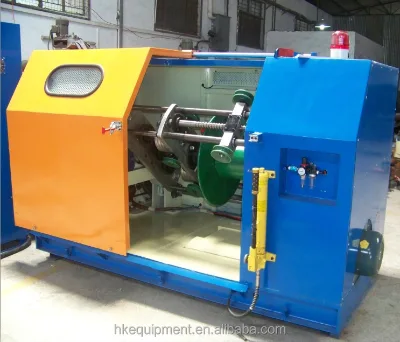


Wire and Cable Stranding Machine Tubular Strander for Twisting Wires
$25800.00 - $38800.00
MOQ: 1 Sets


Cable Stranding Machine Planetary Stranding Machine for Core Wire Twisting
$16800.00 - $17400.00
MOQ: 1 Pieces


High Speed Tubular Stranding Machine Pipe Stranding Machine Wire Twisting
$50000.00 - $200000.00
MOQ: 1 Pieces


Comprehensive Sourcing Guide
Strategic Sourcing Guide for Single-Screw Wire Stranding Machines
The global demand for high-precision wire processing equipment has elevated the single-screw wire stranding machine to a critical component in modern manufacturing lines. For procurement professionals, navigating the market requires a disciplined approach that distinguishes between generic descriptions and verified technical capabilities. This guide synthesizes observed market data and standard industry practices to provide a framework for evaluating suppliers, understanding technical parameters, and ensuring long-term operational reliability. The focus remains strictly on evidence-based attributes and verifiable specifications to mitigate procurement risk.
Technical Specifications and Operational Capabilities
When evaluating a single-screw wire stranding machine, the primary objective is to align the equipment's mechanical capabilities with the specific production requirements of the facility. The market offers a spectrum of models, ranging from semiautomatic to fully automatic grades, each serving distinct production volumes and complexity levels. A critical observation in current listings indicates that automatic grades are available, with some units classified specifically as "High-speed Stranding Machines" or "Single Stranding Machines." Buyers must verify the "Automatic Grade" attribute for each candidate unit, as this directly influences labor costs and throughput consistency.
The core performance metrics are defined by the machine's speed and tension control systems. Observed data suggests production line speeds can range from 0 to 300 meters per minute, while cantilever speeds may reach up to 1200 RPM. These figures are not universal; they vary significantly by model, such as the 300, 400, 500, 630, 800, 1000, 1250, or specific model numbers like P500. The "Twist Range" is another vital specification, with observed capabilities spanning from 3 to 600mm, allowing for flexibility in wire pitch configurations. Furthermore, the "Applicable Finished Wire Diameter Range" is a crucial constraint, with some units designed for diameters between 0.4mm and 35mm. Buyers must ensure the selected machine's physical limits match their product portfolio to avoid bottlenecks or quality issues.
Power systems also vary, with options including Siemens Motors, Siemens Servos, and Yaskawa Servos. The controller architecture is equally important, often utilizing Siemens or Yaskawa systems to ensure precision. Voltage requirements are typically adaptable to local standards, but the total capacity, observed in some contexts as 52kVA, must be accounted for in facility power planning. Air pressure requirements, noted as 0.6, and air volume of 0.5m³/Min, are specific operational parameters that must be integrated into the plant's utility infrastructure.
Compliance, Certification, and Safety Standards
In the international B2B market, compliance is not merely a formality but a prerequisite for market access and operational safety. Verified product attributes indicate that suppliers often provide certifications such as CE, ISO, RoHS, FDA, UL, PSE, and CCC. However, the presence of these certifications must be validated against the specific model and region of operation. For instance, while ISO and CE are frequently cited, the inclusion of FDA, UL, or PSE depends on the target market and the specific application of the wire being produced.
Buyers should treat certification claims as observations that require documentation. A supplier may list "CE, ISO" as a standard attribute, but for a specific high-speed unit, additional certifications like RoHS or UL might be necessary to meet regulatory requirements in North America or Europe. The "prod_standard" is often listed as "customized," which implies that the machine's compliance profile may be tailored to the buyer's specific jurisdiction. It is essential to request valid, up-to-date certification documents for the exact serial number or model being purchased, rather than relying on general marketing claims.
Safety standards are further reinforced by the "Condition" of the equipment, which is typically listed as "New." However, for used or refurbished units, the certification status must be re-verified. The "Warranty" period, observed as 12 months in some listings, serves as a baseline for post-purchase support, but the scope of this warranty regarding certification compliance and safety component replacements must be explicitly defined in the contract.
Cost Drivers and Economic Considerations
The pricing landscape for single-screw wire stranding machines is highly variable, with observed ranges spanning from $0.01 to $800,000. This vast disparity is driven by several key factors, including the level of automation, the complexity of the control system, and the specific customization required. The "Customization" attribute is a primary cost driver; machines that are "Custom Made" based on sample lines or specific customer requirements will command a premium over standard off-the-shelf models.
The "MOQ" (Minimum Order Quantity) also plays a significant role in the total cost of ownership. Observed MOQs range from 1 to 15,000 units, though in the context of heavy machinery, this often refers to the minimum order for accessories or specific components rather than the machine itself. Buyers should clarify whether the MOQ applies to the entire production line or individual units. Additionally, the "Main Motor" power, ranging from 4.7 to 37kW (AC), directly impacts energy consumption and operational costs. Higher power ratings generally correlate with higher initial purchase prices and increased electricity bills.
Packaging is another often-overlooked cost factor. Products are typically shipped in "Wooden Crates" or "Wooden Boxes," which adds to the logistics cost and requires specialized handling. The "Total Capacity" of the machine, such as 52kVA, influences the electrical infrastructure investment required at the installation site. Buyers must factor in these hidden costs, including shipping, installation, and utility upgrades, when calculating the total procurement budget.
Typical Applications and Industry Suitability
Single-screw wire stranding machines are designed for a diverse range of applications, primarily within the manufacturing sector. The "Application" attribute highlights their use in twisting data lines and communication cables. This makes them indispensable for the telecommunications, automotive, and electronics industries, where precise wire twisting is essential for signal integrity and mechanical strength. The "Applicable Industries" are broadly categorized as "Manufacturing Plant," but the specific use cases can vary from high-volume consumer electronics to specialized industrial cabling.
The "Rewinding and Unwinding" capabilities are tailored to specific wire diameters, with observed suitability for 0.5mm to 3mm wires. This range is critical for buyers producing fine-gauge communication cables. The "Twist Length" specification, which can range from 20mm to 200mm, allows for customization based on customer requirements, with the twist pitch often determined by the buyer. The "Taping Pitch" range of 2.616mm to 251mm further demonstrates the machine's versatility in handling different insulation and shielding processes.
For buyers in the data line and communication cable sectors, the ability to handle "Twisted Wire Diameter" of up to 16mm is a significant advantage. This flexibility ensures that the same machine can be adapted for different product lines, reducing the need for multiple specialized units. The "Video Outgoing-Inspection" feature, which is provided by some suppliers, adds value by allowing buyers to verify the quality of the output before the machine leaves the factory, ensuring it meets the specific application requirements.
Supplier Evaluation and OEM Services
Selecting the right supplier is as critical as selecting the right machine. The "OEM Service" is listed as "Positive" in many listings, indicating that suppliers are willing to engage in original equipment manufacturing or customization. This is a vital capability for buyers with unique production needs. The "Custom Made" attribute reinforces this, suggesting that suppliers can develop suitable equipment based on sample lines provided by the buyer.
Buyers should evaluate suppliers based on their "Trial Runing" capabilities. Some suppliers offer two trial runs after the equipment is manufactured, a practice that ensures the machine performs correctly before final delivery. This step is crucial for verifying that the "Production Line Speed," "Cantilever Speed," and "Twist Range" meet the buyer's expectations. The "Video Outgoing-Inspection" service further enhances supplier transparency, allowing buyers to conduct remote quality checks.
The "prod_origin" is frequently listed as "Guangdong, China," a region known for its manufacturing ecosystem. While this provides access to a robust supply chain, buyers should verify the specific factory location and capacity. The "Total Capacity" of 52kVA and other production metrics should be cross-referenced with the supplier's actual output capabilities. Additionally, the "Warranty" of 12 months should be scrutinized for coverage details, including parts, labor, and technical support.
Quality Control and Long-Term Procurement
Quality control is a continuous process that extends beyond the initial purchase. The "Mould Life" is a critical metric, with observed ranges from ">000 Shots" to "000-000 Shots." This ambiguity underscores the need for buyers to request specific, verified data on the expected lifespan of critical components. A higher mould life indicates better durability and lower long-term maintenance costs. The "Condition" of the machine, typically "New," should be confirmed through physical inspection or third-party verification.
Long-term procurement considerations include the availability of spare parts and the reliability of the "Controller" and "Main Motor." Brands like Siemens and Yaskawa are preferred for their global support networks, but buyers must ensure that the specific components in the machine are genuine and supported. The "Power" system, including the "Siemens Motor" or "Yaskawa Servo," should be compatible with the buyer's local voltage and frequency standards.
The "prod_packing" in "Wooden Crate" or "Wooden Box" requires careful handling to prevent damage during transit. Buyers should verify the packaging standards to ensure the machine arrives in perfect condition. Finally, the "Twist Range" and "Cantilever Speed" should be regularly monitored during operation to ensure they remain within the specified limits, preventing premature wear and tear.
Comparative Analysis of Machine Attributes
To facilitate decision-making, the following table summarizes key attributes observed in the market for single-screw wire stranding machines. This comparison highlights the variability in specifications and the importance of verifying each parameter.
| Attribute | Observed Range / Options | Verification Requirement |
|---|---|---|
| Automatic Grade | Semiautomatic, Automatic | Confirm specific grade for production needs |
| Production Line Speed | 0~300m/Min | Verify max speed under load |
| Cantilever Speed | 0~1200 Rpm | Check stability at high RPM |
| Twist Range | 3~600mm | Ensure compatibility with wire pitch |
| Wire Diameter Range | 0.4~35mm | Match with product specifications |
| Controller | Siemens, Yaskawa | Verify software version and support |
| Certification | CE, ISO, RoHS, UL, etc. | Request valid certificates for model |
| Warranty | 12 Months | Clarify coverage scope and exclusions |
| Origin | Guangdong, China | Verify factory location and capacity |
| Packaging | Wooden Crate, Wooden Box | Inspect packaging integrity |
This table serves as a checklist for buyers to ensure that all critical attributes are addressed during the procurement process. By systematically verifying each parameter, buyers can minimize risk and ensure the selected machine meets their operational requirements.
Conclusion
Sourcing a single-screw wire stranding machine requires a meticulous approach that balances technical specifications, compliance, and cost considerations. The market offers a wide array of options, from semiautomatic to fully automatic models, each with unique capabilities. Buyers must prioritize verification of certifications, such as CE and ISO, and ensure that the machine's performance metrics, including speed and twist range, align with their production needs. By leveraging the observed data and adhering to the principles of evidence-based procurement, buyers can make informed decisions that enhance operational efficiency and long-term value. The focus on customization, quality control, and supplier evaluation ensures that the selected equipment will deliver consistent results in the demanding environment of wire manufacturing.
FAQs
What certifications are available for single-screw wire stranding machines?
Certifications such as CE, ISO, RoHS, FDA, UL, PSE, and CCC are available for these machines. Buyers must verify specific documentation for the exact model, as compliance profiles may be customized to meet regional regulatory requirements.
Which automatic grades are offered for single-screw wire stranding machines?
Both semiautomatic and fully automatic grades are available for single-screw wire stranding machines. The automatic grade directly influences labor costs and throughput consistency, so buyers should verify the specific classification for their production needs.
How is customization handled for single-screw wire stranding machines?
Customization is available, with suppliers developing equipment based on sample lines provided by the buyer. This service allows for tailored specifications, but it often commands a premium over standard off-the-shelf models and requires detailed input.
What is the production line speed range for single-screw wire stranding machines?
Production line speeds range from 0 to 300 meters per minute depending on the specific model. Buyers must ensure the selected machine's speed capabilities align with their facility's throughput requirements to avoid operational bottlenecks.
Can single-screw wire stranding machines handle large wire diameters?
Yes, some models are designed for finished wire diameters ranging from 0.4mm to 35mm. Specific units may also support twisted wire diameters up to 16mm, ensuring flexibility for various communication and data line applications.
Where are single-screw wire stranding machines typically manufactured?
These machines are typically manufactured in Guangdong, China. Buyers should verify the specific factory location and capacity, as the region offers a robust supply chain but requires due diligence on individual supplier capabilities.