Source Single Temperature Ice Cream Display Freezer for Retail
Find and compare 30 single temperature ice cream display freezer models from China. Evaluate electric units with automatic defrost, glass doors, and various capacities to suit your commercial cooling needs; compare the available evidence and request quotations based on your requirements.
Key considerations
Products List


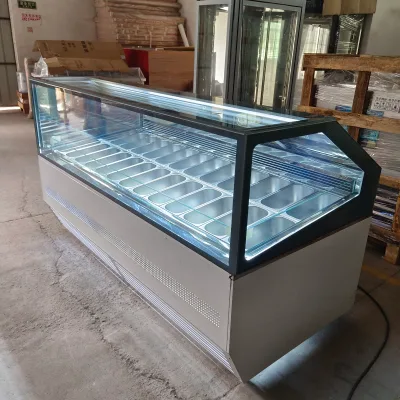


Comprehensive Sourcing Guide
Single Temperature Ice Cream Display Freezer Sourcing Guide
Procuring a single temperature ice cream display freezer requires careful alignment between the unit's thermal stability and the specific operational needs of your retail environment. The observed market data indicates a diverse range of models, from compact units with capacities between 201 and 250 liters to larger upright freezers reaching up to 500 liters. Buyers must prioritize units that explicitly support the "Frozen and Chilled" process to ensure consistent product quality for ice cream and similar frozen goods.
The selection process is further complicated by varying power source configurations, with some units operating on electricity while others utilize gas power. This distinction is critical for facilities with specific infrastructure constraints or energy cost structures. Additionally, the physical footprint varies significantly, with standard dimensions ranging from approximately 420mm in width to over 2 meters in height, necessitating precise space planning before finalizing any purchase order.
Product Scope and Observed Listing Signals
The current market listings reveal a distinct split in product customization capabilities, with some units offered as standard configurations while others are fully customized to specific buyer requirements. This variability suggests that procurement teams should clearly define their spatial and functional needs early in the inquiry process to avoid mismatches between the ordered specifications and the delivered equipment. The presence of "Customized" attributes in the data confirms that manufacturers are willing to adapt dimensions and features, but this often impacts lead times and final pricing.
Observations of the product range also highlight differences in door configurations and cooling systems, which directly influence customer interaction and energy efficiency. Units are available with single swing doors or glass doors, and cooling mechanisms range from fan cooling to specialized evaporator types like fin-type copper pipes. These structural differences determine how effectively the freezer maintains the required -18 to -22 degree Celsius range, making it essential to verify the specific door type and cooling system against your store's traffic patterns and ambient conditions.
Technical Specifications to Verify
Buyers must rigorously verify the temperature control mechanisms, as the data shows a mix of computer thermostats and smart thermostats across different models. The reliability of the temperature maintenance is paramount for ice cream products, which are highly sensitive to fluctuations. Ensuring the unit features an auto-defrost function is equally important to prevent ice buildup that can compromise cooling efficiency and increase energy consumption over time.
Dimensional accuracy and material composition are other critical technical factors that require immediate attention during the specification review. The observed standard dimensions vary widely, with some units measuring 1000mm in width while others are as narrow as 420mm, and materials range from painted steel to specific structural steel types. Confirming that the evaporator type and compressor brand match the intended load capacity will prevent premature failure and ensure the unit can handle the thermal load of a fully stocked display case without excessive strain on the cooling system.
Compliance and Safety Documentation
Navigating the certification landscape for these freezers involves verifying a complex array of safety and environmental standards, as the observed data lists multiple certifications including CE, RoHS, ISO, CB, EMC, GS, and ETL. It is imperative to request specific documentation for each claimed certification to ensure the unit meets the regulatory requirements of your target market, particularly regarding electrical safety and electromagnetic compatibility. Relying on a general claim of compliance without seeing the actual certificates can expose the buyer to significant liability and potential import rejection.
In addition to electrical certifications, the refrigerant type used in the unit must be verified against current environmental regulations and local safety codes. The data indicates the use of R600A refrigerant, which is a hydrocarbon-based option that requires specific handling and safety protocols due to its flammability. Buyers should confirm that the manufacturer has provided detailed safety data sheets and that the unit's climate type, such as the N-St classification, aligns with the ambient temperature conditions of the installation site to ensure safe and efficient operation.
Cost Drivers and Commercial Terms
The pricing structure for single temperature ice cream display freezers is influenced heavily by the level of customization and the specific power source selected. The observed price range spans from approximately 68 to 3289 USD, a variance that reflects differences in capacity, material quality, and the inclusion of advanced features like smart thermostats or specialized glass doors. Understanding these cost drivers allows buyers to allocate their budget effectively, distinguishing between basic models that meet minimum requirements and premium units that offer enhanced durability and energy efficiency.
Minimum Order Quantities (MOQ) and packaging requirements also play a significant role in the total cost of ownership and logistics planning. The data shows MOQs ranging from a single unit to over 150 units, which can drastically affect the per-unit cost and the feasibility of small-scale procurement. Furthermore, the packaging method, whether it is a fumigation-free wooden box, a standard wooden crate, or a carton box, impacts shipping costs and the risk of damage during transit, requiring careful evaluation of the supplier's packing standards against the fragility of the equipment.
Supplier Qualification and Quality Control
Evaluating supplier qualification requires a deep dive into their manufacturing origins and their ability to provide consistent quality across different product lines. The observed data points to manufacturers located in Jiangsu and Guangdong, China, regions known for their industrial output but which may vary in their adherence to international quality standards. Buyers should verify the supplier's track record in producing units with the specific certifications and materials observed, ensuring that the "Painted Steel" or "Hollow Glass Door" components meet the durability expectations for commercial use.
Quality control processes must be explicitly defined before placing an order, particularly regarding the assembly of critical components like the compressor and the evaporator. Since the data mentions "Brand Compressor" without specifying the manufacturer, buyers must insist on knowing the exact brand and model to ensure reliability and ease of future maintenance. Establishing clear acceptance criteria for the final product, including tests for temperature uniformity and door seal integrity, is essential to mitigate the risk of receiving units that do not perform as expected in a real-world retail setting.
Long-Term Procurement Checks
Sustaining a successful procurement relationship involves establishing clear protocols for after-sales support and spare parts availability. Given the mechanical complexity of units with compressors and cooling systems, buyers must ensure that the supplier can provide a steady supply of replacement parts, such as thermostats, fans, and door seals, for the expected lifespan of the equipment. This foresight prevents operational downtime and protects the investment in the freezer by ensuring that minor issues can be resolved quickly without waiting for extended lead times.
Finally, long-term procurement strategies should include regular performance audits to verify that the units continue to meet the original specifications regarding temperature control and energy consumption. Over time, factors like wear on the door seals or degradation of the insulation can impact efficiency, making it necessary to have a maintenance schedule in place. Buyers should also monitor the supplier's ability to adapt to changing regulations or technological advancements, ensuring that their fleet of freezers remains compliant and competitive in the evolving market landscape.
FAQs
What certifications do single temperature ice cream display freezers have?
These units typically hold ISO, CE, RoHS, CB, EMC, GS, and ETL certifications. The specific model MCB6 and MC12 feature ISO and CE marks. Some advanced units also include RoHS and ETL compliance for international safety standards.
Can I find single temperature ice cream display freezers with customization?
Yes, customization is available for these freezers. Buyers can request specific configurations to meet unique operational needs. The product attributes confirm that customized options exist for various industrial and commercial applications.
Which power sources are used for single temperature ice cream display freezers?
Most units operate on electric power sources, while some models support gas. The electric variants often use 220V/50Hz power supply with optional 110V/60Hz configurations. This ensures compatibility with diverse electrical infrastructure globally.
How is the temperature controlled in single temperature ice cream display freezers?
Temperature control is managed via computer thermostats or smart thermostats. These systems maintain precise cooling levels for ice cream storage. The units often feature auto defrost types to ensure consistent performance without manual intervention.
What is the typical capacity range for single temperature ice cream display freezers?
Capacity ranges from 201 to 500 liters depending on the model. Specific units offer capacities between 201-250 liters or 401-500 liters. This variety allows buyers to select the right size for their specific storage requirements.
Where are single temperature ice cream display freezers manufactured?
These freezers are manufactured in China, specifically in Jiangsu and Guangdong provinces. The origin is clearly stated as China for various models. This location supports efficient production and logistics for international buyers.
What packing methods are used for single temperature ice cream display freezers?
Packing options include fumigation-free wooden boxes, standard wooden crates, and carton boxes. The choice depends on the specific model and shipping requirements. These methods ensure safe transport and protection during international logistics.