Source Sitting Teddy Bear with Printing Logo for Gifts, Events, and Promotions
Find a Sitting Teddy Bear with Printing Logo among 30 available options from Chinese manufacturers. Buyers can compare specifications like size, material, and customization details to select suitable plush toys for various applications.
Key considerations
Products List
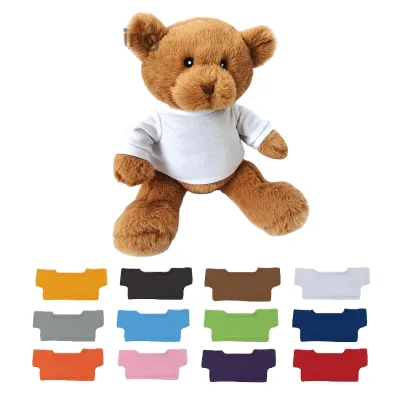


Wholesale Small Stuffed Toy Plush Sitting Teddy Bear with Custom Logo for Gift
$1.85 - $2.50
MOQ: 500 Pieces


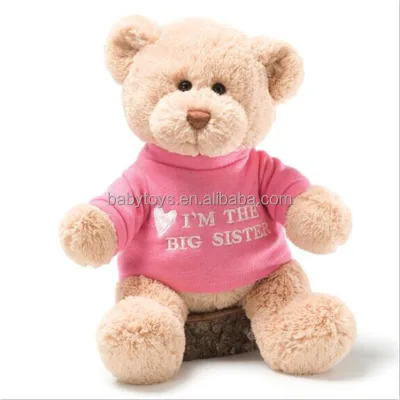
Plushy Sitting Teddy Bear in T-Shirt/ Plush Toys for Children/ Custom Pluhs Toy
$2.00 - $5.00
MOQ: 500 Pieces



Comprehensive Sourcing Guide
Sourcing Guide for Sitting Teddy Bears with Printed Logos
Understanding Product Specifications and Variability
When sourcing sitting teddy bears with printed logos, buyers must first navigate a landscape of diverse technical specifications that define the final product. The core attribute of this category is the "sitting" posture, which is explicitly listed as a style option in the available product data. This distinguishes the item from standing or lying variants and is critical for packaging and display planning. The physical dimensions of these plush figures vary significantly across the market. Observed data indicates a height range spanning from 31cm to 50cm, with specific model instances recorded at 30cm. This variance necessitates precise communication with suppliers to ensure the selected size aligns with the intended application, whether for retail display, promotional giveaways, or specific age-group targeting.
Material composition is another foundational specification. The primary material identified in the current market data is polyester, which offers durability and a soft texture suitable for plush toys. However, some listings also reference a cotton material range, suggesting that buyers should verify the exact fabric blend before ordering. The internal filling is consistently noted as PP Cotton, a standard synthetic fiber that provides the necessary loft and shape retention for the sitting posture. The product weight is a crucial logistical factor; a single unit is observed to have a gross weight of 0.250 kg. This light weight influences shipping costs and packaging density, where a standard carton may hold 40 pieces, packed individually in polybags.
The customization capabilities for these items are extensive, allowing for significant brand integration. The "Logo" attribute confirms that printing, embroidery, or fully customized branding is available. Specific technical processes mentioned include pad print and full-color imprinting. For buyers seeking unique designs, the "3D Drawing" service is available, with the option to provide artwork from the buyer or receive it from the supplier. Furthermore, the production process can involve roto casting, injection molding, or ultrasonic techniques, depending on the specific design complexity and material requirements. It is essential to note that while some models are described as "hand-made," other manufacturing technologies like injection molding are also in use, indicating a mix of traditional and automated production methods in the supply chain.
Compliance and Certification Verification
In the toy industry, particularly for items targeting children, compliance is not merely a formality but a critical risk management requirement. The observed product data lists several certifications, including CE, EN71, ASTM, CPSIA, and REACH. These represent major regulatory frameworks for toy safety in Europe and North America. However, buyers must exercise caution when interpreting these labels. The data shows variations in how certifications are listed; some entries show "CE, EN71, ASTM, CPSIA, REACH" together, while others list "ENASTM, CE." This inconsistency suggests that certification status may vary by specific model or batch rather than being a universal attribute of every listed product.
The EN71 standard is frequently cited in the background data, yet its specific application to every item in the catalog should be verified. Similarly, the CPSIA (Consumer Product Safety Improvement Act) is a US-specific regulation that mandates strict testing for lead and phthalates. For a product to be legally sold in the United States, it must comply with CPSIA requirements, regardless of whether the listing explicitly states it. The presence of REACH certification indicates compliance with European chemical regulations, which is increasingly important for global supply chains.
Buyers should not assume that a supplier's general claim of certification applies to the specific order being placed. The "Model Number" field in the data shows multiple variants (e.g., TK-Bear-2, TB-1061, TB-1048, TB-1038, TB-1073, TB-1066), implying that different models may have different compliance profiles. A robust sourcing strategy involves requesting current, third-party test reports for the specific model number and the specific batch intended for shipment. The "Age Range" data presents a notable discrepancy, with some listings specifying "0 to 24 Months" while others indicate "All Years" or "> 8 Years." This distinction is vital because toys for children under three years old face stricter safety standards regarding small parts and choking hazards. If the target market includes infants, the supplier must provide evidence that the specific model meets the rigorous requirements for that age group, including the absence of detachable small components.
Cost Drivers and Pricing Structure
The pricing for sitting teddy bears with printed logos is influenced by a complex interplay of factors, including material costs, customization complexity, and order volume. The observed price range in the market spans from $0.01 to $20.50 USD. This wide disparity reflects the difference between basic, unbranded promotional items and high-end, custom-designed collectibles. The lower end of the spectrum likely corresponds to simple polyester bears with basic pad printing and standard sizes, produced in high volumes. Conversely, the upper end may involve custom molds, premium materials, intricate embroidery, or specialized packaging.
The Minimum Order Quantity (MOQ) is a significant cost driver, with observed ranges from 10 to 10,000 units. Low MOQs, such as 10 units, allow for smaller businesses to test the market but often come with a higher unit cost due to the setup overhead. High MOQs, reaching 10,000 units, typically unlock lower per-unit pricing but require significant capital commitment. The "Mould Cost" is explicitly noted as depending on size, quantity, material, and technology. For buyers requiring a unique shape or a specific custom design that does not exist in the supplier's catalog, the cost of opening a new mold must be factored into the total budget. This cost can be substantial and is often amortized over the production run.
Sample fees are another consideration. While some suppliers offer samples free of charge, this is not a universal guarantee and should be confirmed during the negotiation phase. The "Selling Units" are typically listed as single items, but the packaging is usually bulk (e.g., 40 pieces per carton). Buyers should clarify whether the quoted price includes the polybag and carton packaging or if these are separate line items. Additionally, the "Customization" attribute indicates that logo placement and design complexity can alter the price. Full-color printing or multi-step embroidery processes will incur higher costs than simple single-color pad printing.
Typical Applications and Market Segmentation
Sitting teddy bears with printed logos serve a diverse array of applications, ranging from corporate branding to retail merchandise. The "Usage" attribute highlights categories such as "Funny," "Particular Toys," and "Promotion." This versatility makes them suitable for various procurement scenarios. In the promotional sector, these items are often used as corporate gifts, trade show giveaways, or marketing tools for brand awareness. The ability to print a company logo directly onto the bear's t-shirt or body makes them an effective medium for brand visibility.
For the retail market, the "Function" is listed as "Gift Figurine/Collection Toys." This suggests a segment of buyers who are interested in selling these items as gifts or collectibles. The "Style" is described as "Cartoon Toy" or "Sitting Animal," appealing to a broad demographic. The age range data indicates a split market: one segment targets infants and toddlers (0-24 months), where the bear serves as a comfort object or developmental toy, while another segment targets older children or collectors (> 8 Years or "All Years"). The "Gender" is listed as "Unisex," which expands the potential market reach.
The "Names of Animals" field specifies "Teddy Bear," confirming the primary appeal of this product. The "Modelling Source" is "Animals," reinforcing the naturalistic yet stylized design. Buyers should align their procurement strategy with the intended application. For example, promotional items may prioritize cost and speed, allowing for standard sizes and simple printing. In contrast, retail collectibles may require higher quality materials, unique designs, and stricter quality control to justify a higher price point. The "Customized sizes" standard mentioned in the data further supports the use of these bears for specialized applications where specific dimensions are required for display or packaging constraints.
Supplier Evaluation and Technical Capabilities
Evaluating suppliers for sitting teddy bears requires a deep dive into their technical capabilities and production transparency. The "Place of Origin" is consistently identified as China, which is a major manufacturing hub for plush toys. However, the specific location within China can impact logistics and communication. Buyers should verify the supplier's physical address and capacity to ensure they are dealing with a manufacturer rather than a trading company, although the distinction may be blurred in some cases.
The "Technical" attribute notes that products can be "Hand-made," while other processes include "Roto Casting, Injection, Ultrosonic etc." This mix of manual and automated processes suggests that the supplier has a versatile production line. For buyers seeking high consistency and volume, automated processes like injection molding or ultrasonic welding may be preferable. For unique, high-value items, hand-made techniques might be necessary. The "Mould" attribute indicates that suppliers can "Openning New Mould," which is a critical capability for custom designs. Buyers should assess the supplier's experience with mold creation and their ability to manage the associated costs and timelines.
The "Logo Print" capability is another key evaluation point. The data mentions "Full Color" and "Pad Print," but buyers should also inquire about the durability of the print. Will the logo withstand washing or rough handling? The "Imprint" method of "Pad Print" is common, but the quality of the ink and the adhesion to the polyester or cotton material must be verified. Suppliers should be able to provide samples that demonstrate the print quality and color accuracy.
Furthermore, the "Certification" status should be scrutinized. As noted earlier, the data shows varying certification lists. A reputable supplier should be able to provide valid, up-to-date test reports for the specific model being ordered. The presence of "CE, EN71, ASTM, CPSIA, REACH" in the data is a positive indicator, but buyers must ensure these certifications are current and applicable to the specific product configuration. The "Standard" attribute mentions "customized sizes," which implies flexibility, but buyers should confirm the supplier's ability to maintain quality standards across different sizes.
Quality Control and Long-Term Procurement
Implementing a robust quality control (QC) strategy is essential for mitigating risks in the sourcing of sitting teddy bears. Given the variability in materials (polyester vs. cotton) and filling (PP Cotton), QC checks should focus on material consistency, stitching integrity, and filling distribution. The "Single gross weight" of 0.250 kg serves as a baseline for weight checks, which can help identify under-filled or over-filled units. Visual inspections should verify the accuracy of the logo print, ensuring that colors match the approved artwork and that the placement is centered and straight.
For long-term procurement, buyers should consider the scalability of the supplier. The "MOQ" range of 10 to 10,000 suggests that suppliers can accommodate both small and large orders, but buyers must confirm lead times for larger volumes. The "Sample Fee" being "Free of Charge" in some cases is a favorable term, but buyers should clarify if this applies to all customization levels. Long-term partnerships often benefit from agreed-upon pricing structures that account for raw material fluctuations.
The "Product Name" and "Model Number" consistency is crucial for inventory management. With multiple model numbers like TB-1061 and TB-1048, buyers should maintain a clear database of SKUs to avoid confusion. The "Packing" specification of "1 PC/Polybag, 40 PCS/Carton" is a standard that should be adhered to, but buyers should verify if custom packaging is available for branding purposes. Finally, the "Age" range discrepancies highlight the need for clear communication regarding the target demographic. Ensuring that the product meets the safety standards for the intended age group is a non-negotiable aspect of long-term procurement to avoid regulatory issues and brand damage. By focusing on these technical and operational details, buyers can build a reliable supply chain for sitting teddy bears with printed logos.
FAQs
What certifications do sitting teddy bears with printing logo typically have?
Products often carry CE, EN71, ASTM, CPSIA, and REACH certifications. Buyers must verify that these labels apply to the specific model number and batch, as compliance status can vary between different product variants like TK-Bear-2 or TB-1061.
How can I customize the logo on a Sitting Teddy Bear with Printing Logo?
Customization is available through print, embroidery, or fully customized branding options. Specific techniques include pad print and full-color imprinting, with the option to provide 3D drawings or receive artwork from the supplier for unique designs.
Which age ranges are suitable for sitting teddy bears with printing logo?
Available age ranges vary from 0 to 24 months up to over 8 years or all years. Strict safety standards apply to items for children under three, requiring verification of small parts safety and specific model compliance for infant use.
What is the typical price range for sitting teddy bears with printing logo?
Market prices range from 0.01 to 20.5 USD depending on complexity and volume. Lower costs usually reflect basic polyester bears with simple printing, while higher prices involve custom molds, premium materials, or intricate embroidery processes.
Can I find sitting teddy bears with printing logo with specific certifications?
Yes, many listings explicitly state CE, EN71, ASTM, CPSIA, and REACH certifications. However, buyers should request current third-party test reports for the exact model number to ensure the specific batch meets regulatory requirements for their target market.
How does the MOQ affect the cost of sitting teddy bears with printing logo?
Minimum Order Quantities range from 10 to 10,000 units, directly influencing unit pricing. Lower MOQs like 10 units often incur higher per-unit costs due to setup overhead, whereas high volumes like 10,000 units unlock lower pricing tiers.
What materials are used for sitting teddy bears with printing logo?
Primary materials include polyester and a cotton material range, filled with PP Cotton. Buyers should verify the exact fabric blend before ordering, as listings may reference different material compositions for various models and customization requests.