Source Smokeless Odorless Pet Cremation Furnace for shelters, vets, and funeral homes
Find 30 listings for the Smokeless Odorless Pet Cremation Furnace to compare models like GSST and KSH with varying capacities and voltages. Buyers can evaluate automatic or semi-automatic units with ISO and CE certifications for pet cremation needs.
Key considerations
Products List


Portable Smokeless Pet Cremators, Animal Cremation Furnaces, Waste Incinerators
$1900.00 - $19000.00
MOQ: 1 Sets
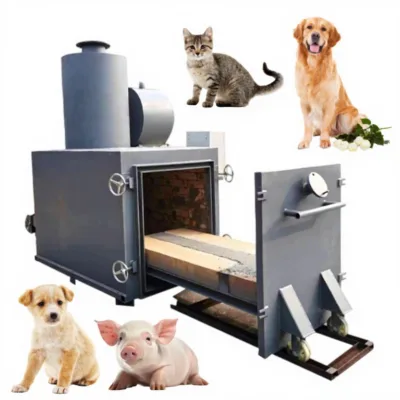


High Quality Smokeless Animal Cremation Incinerator
$2000.00 - $7000.00
MOQ: 1 Pieces
Shandong Better Environmental Protection Technology Co., Ltd.


Crematorium Animal Corpse Cremation Furnace, Visceral Cremation Furnace
$4800.00 - $10900.00
MOQ: 1 Pieces


Stainless Steel Smoke Free Human Cremation Furnace Machine Human Body Incinerator
$55999.00 - $56999.00
MOQ: 1 Sets

Dog Cat Animals Smokeless Incinerator Medical Pet Crematio Oven Machine
$8999.00 - $24999.00
MOQ: 1 Pieces

Pet Cremation Furnace Animal Incinerator for Various Animal Carcass
$3500.00 - $25000.00
MOQ: 1 Pieces


High Efficency Corpse Cremation Furnace Smokeless Oven Cremator EU Standard
$45000.00 - $200000.00
MOQ: 1 Pieces


Comprehensive Sourcing Guide
Strategic Sourcing Guide for Smokeless Odorless Pet Cremation Furnaces
Understanding the Core Technology and Operational Mechanics
When sourcing a Smokeless Odorless Pet Cremation Furnace, buyers must first distinguish between the fundamental thermal processes employed by different manufacturers. The supplied market data indicates that the primary treatment mechanisms observed in this category include Burning and Pyrolysis. Burning represents a direct combustion process, whereas Pyrolysis involves thermal decomposition in the absence of oxygen, often yielding different emission profiles and residue characteristics. Understanding which process aligns with local environmental regulations is the first step in technical evaluation.
The automation level of the unit is a critical operational variable. The observed market offers both Automatic and Semi-Automatic configurations. An Automatic system typically integrates feed mechanisms, temperature control, and exhaust management into a unified control loop, reducing manual intervention. In contrast, Semi-Automatic units may require operator input for specific stages of the cycle. For facilities with high throughput, the Automatic classification is often preferred to ensure consistency, while Semi-Automatic models may suit smaller operations with variable batch sizes.
Fuel flexibility is another significant technical consideration. The available units in the current market data support multiple fuel sources, including Diesel Oil, Nature Gas, and LPG. This versatility allows buyers to select a system based on local fuel availability and cost structures. The combustion efficiency is often tied to the specific burner design, with observed fuel consumption rates ranging from 4 to 6 kg/h for certain models. However, these figures are specific to the observed product attributes and should not be generalized as a universal standard for all units in the category. Buyers must verify the specific fuel consumption rate for the exact model under consideration, as capacity and insulation quality significantly influence energy efficiency.
Technical Specifications and Capacity Planning
Selecting the correct furnace requires a precise alignment between the unit's physical specifications and the intended operational volume. The treatment capacity is a primary metric, with observed ranges spanning from 30 kg to 500 kg per batch or per time unit. This wide variance suggests that the market serves both small veterinary clinics and larger municipal or funeral service providers. Buyers must calculate their average daily or weekly throughput to determine the appropriate batch size. A unit with a 500 kg capacity may be underutilized in a low-volume setting, leading to inefficient energy use, while a 30 kg unit may be insufficient for high-demand periods.
The physical dimensions and weight of the equipment are equally critical for facility planning. Observed dimensions for specific models include measurements such as 170 cm by 110 cm by 180 cm, with a corresponding weight of approximately 1800 kg. Other models in the same category have been observed with weights ranging from 1000 kg to 13,000 kg, and in some instances, up to 2300 kg to 13,000 kg. These substantial weight differences indicate variations in construction materials, insulation thickness, and internal chamber volume. The internal volume is also a key specification, with some units offering a chamber volume of 1.5 cubic meters. Buyers must ensure that the facility floor can support the maximum weight of the unit and that the dimensions allow for proper ventilation and maintenance access.
Voltage requirements present another logistical constraint. The market data lists units compatible with 380V, 240V, 110V, and 220V systems. This diversity necessitates a thorough review of the electrical infrastructure at the installation site. A mismatch between the unit's voltage rating and the local power supply can lead to operational failure or the need for expensive transformer upgrades. Furthermore, the power consumption of the core components, such as the motor, varies, with some units listing a power rating of 220W, while others may have significantly higher requirements depending on the fan and burner systems. The air fan specifications, observed in ranges like 0.37 kW, 0.5 kW, and 1.1 kW, also influence the overall electrical load and the efficiency of the smoke extraction system.
Compliance, Certification, and Environmental Standards
Environmental compliance is the most critical factor when sourcing a "smokeless odorless" unit. The terminology itself implies a specific performance outcome that must be verified through independent testing. The observed market data includes a variety of certifications, with ISO and CE being the most frequently cited. Some listings also mention FDA, UL, QS, and GMA certifications. While the presence of these marks suggests a commitment to quality and safety, buyers must treat them as observations of specific listings rather than universal guarantees for every product in the category.
The "smokeless" and "odorless" claims are functional assertions that require rigorous validation. Buyers should request a machinery test report, which is noted as being provided for some units in the market. This report should detail the emission levels of particulate matter, carbon monoxide, and volatile organic compounds (VOCs) during operation. Without such documentation, the "smokeless" label remains a marketing claim rather than a verified performance metric. Additionally, the chimney size is a specific technical specification, with observed dimensions such as 220 cm. The height and diameter of the chimney are directly related to the draft required to ensure complete combustion and the effective dispersion of any residual emissions, which is essential for meeting local air quality standards.
Certification status should be verified against the specific regulatory framework of the buyer's location. For instance, CE certification indicates conformity with health, safety, and environmental protection standards for products sold within the European Economic Area. ISO certification typically relates to quality management systems. However, the presence of a certification on a product page does not automatically mean the specific unit being purchased is certified, nor does it guarantee that the unit meets the specific emission limits of the buyer's jurisdiction. Buyers must explicitly request the certificate number and verify its validity with the issuing body. The "Feature: Environment Protection" attribute observed in some listings is a qualitative descriptor that must be backed by quantitative data from the machinery test report.
Cost Drivers and Financial Considerations
The pricing for pet cremation furnaces in the observed market ranges significantly, from approximately 1,900 USD to 200,000 USD. This wide disparity is driven by several key factors, including the treatment capacity, the level of automation, the quality of materials used in construction, and the extent of the certification suite. A unit priced at the lower end of the spectrum may offer a basic Semi-Automatic configuration with a smaller batch capacity and fewer advanced emission control features. Conversely, a unit at the higher end likely features a fully Automatic system, a larger treatment capacity (approaching the 500 kg limit), and comprehensive certification documentation.
Beyond the initial purchase price, buyers must consider the total cost of ownership. This includes the cost of fuel, which varies based on the type of fuel the unit is designed to use (Diesel, Nature Gas, or LPG) and the specific consumption rate of the burner. The observed fuel consumption of 4-6 kg/h provides a baseline for estimating operational costs, but actual consumption will depend on the load and the efficiency of the combustion process. Maintenance costs are also influenced by the complexity of the unit; Automatic systems with more sensors and control components may require specialized technical support.
The warranty terms are a significant indicator of the manufacturer's confidence in their product. The observed market data frequently mentions a 1-year warranty. Buyers should scrutinize the scope of this warranty, including whether it covers the combustion chamber, the burner, the control panel, and the structural integrity of the unit. A standard warranty of 1 year is common, but buyers should verify if extended warranty options are available, as this can mitigate long-term financial risks. Additionally, the packaging method, observed as either a "Wooden Package" or "Standard Exporting Packing," impacts shipping costs and the risk of damage during transit. Proper packaging is essential for heavy machinery, and the cost of specialized crating should be factored into the overall procurement budget.
Supplier Evaluation and Quality Assurance
Evaluating a supplier for a pet cremation furnace requires a focus on transparency and technical capability. The origin of the products is a key data point, with the majority of observed listings indicating a place of origin in China, specifically Henan. While this provides a geographic context, it does not inherently dictate quality. Buyers must look beyond the origin and assess the supplier's track record in manufacturing industrial incineration equipment. The presence of a machinery test report is a strong positive indicator, as it suggests the supplier has the capability to conduct and document performance testing.
The customization options available from suppliers are another vital evaluation criterion. The market data indicates that customization is available, with options for specific voltages, capacities, and even the color of the unit. A supplier that offers robust customization is likely more adaptable to the specific needs of the buyer's facility. However, buyers must ensure that any customizations do not compromise the unit's safety or compliance status. The "prod_standard" attribute, which includes values like 30/50/100/200/300/500kg, suggests that manufacturers can tailor the unit to specific batch sizes, but this must be confirmed with the supplier to ensure the customization is feasible and reliable.
Quality control during the manufacturing process is paramount. Buyers should inquire about the supplier's internal quality assurance protocols. The observation of "New" condition for all listed products is a baseline expectation, but buyers must verify the manufacturing date and the condition of the core components, such as the motor. The "Input port size" of 60*80 cm is a specific specification that affects the ease of loading; a supplier that can accommodate different input sizes may offer better flexibility. Furthermore, the "Screw" attribute, noted as "Multi-Screw" in some listings, implies a specific mechanical design for feeding or mixing, which should be evaluated for its reliability and ease of maintenance.
Long-Term Procurement and Operational Sustainability
Sourcing a pet cremation furnace is a long-term investment that requires careful consideration of future operational needs and regulatory changes. The "Treatment Capacity" of 30-500 kg per batch offers scalability, but buyers should consider whether the chosen unit can accommodate potential growth in demand. A unit that is too small may require replacement in a few years, incurring additional capital expenditure. Conversely, a unit that is too large may result in unnecessary energy costs. The "Standard" attribute, which includes various batch sizes, suggests that manufacturers can produce units to match specific growth trajectories, but this requires forward-looking planning.
The durability of the furnace is essential for long-term sustainability. The weight of the unit, ranging from 1000 kg to 13,000 kg, indicates a robust construction designed to withstand high temperatures and repeated thermal cycling. However, buyers should verify the material quality of the combustion chamber and the insulation. The "Material" attribute, listed as "Standard Export Wooden Package" for packaging, does not describe the furnace material itself; buyers must explicitly ask about the refractory materials and steel grades used in the construction. The "Warranty" of 1 year is a starting point, but the long-term reliability of the unit depends on the quality of these materials and the design of the cooling systems.
Finally, the end-of-life considerations for the furnace should be part of the procurement strategy. The "Product name" and "Keywords" such as "pet incinerator" and "smokeless odorless" highlight the environmental focus of these units. Buyers should ensure that the supplier provides guidance on the disposal of the ash and any residual byproducts. The "Feature: Environment Protection" suggests that the unit is designed to minimize environmental impact, but the management of the solid waste remains the responsibility of the operator. A supplier that offers comprehensive after-sales support, including maintenance training and spare parts availability, will be better positioned to support the buyer over the long term. The "Selling Units" being listed as "Single item" indicates that these are typically sold as complete, standalone systems, which simplifies the procurement process but requires careful integration planning.
Summary of Key Verification Points
To ensure a successful procurement of a Smokeless Odorless Pet Cremation Furnace, buyers must systematically verify the technical, regulatory, and operational details provided in the market data. The following table summarizes the critical attributes that require confirmation before finalizing a purchase:
| Attribute Category | Key Observation from Market Data | Verification Requirement for Buyer |
|---|---|---|
| Treatment Process | Burning, Pyrolysis | Confirm the specific process used and its compliance with local emission laws. |
| Capacity | 30-500 kg/Batch | Match the batch size to the facility's actual daily throughput needs. |
| Automation | Automatic, Semi-Automatic | Assess the level of automation required for the operational workflow. |
| Certifications | ISO, CE, FDA, UL, QS, GMA | Request valid certificates and verify their relevance to the buyer's jurisdiction. |
| Voltage | 110V, 220V, 240V, 380V | Ensure compatibility with the site's electrical infrastructure. |
| Fuel Type | Diesel, Nature Gas, LPG | Confirm fuel availability and calculate long-term fuel costs. |
| Dimensions/Weight | 170110180cm, 1800kg-13000kg | Verify floor load capacity and spatial requirements for installation. |
| Warranty | 1 Year | Clarify the scope of coverage and availability of extended warranty options. |
By adhering to these verification steps and relying on the specific data points observed in the market, buyers can make informed decisions that balance technical performance, regulatory compliance, and financial efficiency. The goal is to secure a unit that not only meets the immediate "smokeless odorless" requirement but also provides a reliable, sustainable solution for the long term.
FAQs
What certifications do smokeless odorless pet cremation furnaces have?
Units typically hold ISO and CE certifications, with some listings also displaying FDA, UL, QS, and GMA marks. Buyers must verify the specific certificate number for the exact model, as these marks indicate quality management or safety conformity rather than universal emission guarantees for every product.
How does the treatment capacity vary for these furnaces?
Observed treatment capacities range from 30 kg to 500 kg per batch or time unit. This variance allows selection for small veterinary clinics or larger facilities, requiring buyers to calculate their average daily throughput to ensure the chosen unit matches their operational volume without inefficiency.
Can buyers customize the voltage and capacity of the furnace?
Customization is available for voltage, including 380V, 240V, 110V, and 220V options, as well as specific batch capacities. Buyers should confirm that customizations do not compromise safety or compliance status, ensuring the unit fits the local electrical infrastructure and facility planning requirements.
What fuel types are supported by these cremation furnaces?
The units support multiple fuel sources including Diesel Oil, Nature Gas, and LPG. Fuel consumption rates vary, with some models observing rates of 4 to 6 kg per hour, so buyers must verify the specific consumption rate for the exact model to estimate operational costs accurately.
What is the typical weight and dimension of the equipment?
Weights range from 1000 kg to 13,000 kg, with specific models weighing around 1800 kg and dimensions like 170 by 110 by 180 cm. Buyers must ensure the facility floor can support the maximum weight and that dimensions allow for proper ventilation and maintenance access.
How long is the warranty period for these machines?
The observed market data frequently mentions a 1-year warranty covering core components and structural integrity. Buyers should scrutinize the scope of this warranty to understand what is covered, such as the combustion chamber or control panel, and verify if extended warranty options are available.