Source Smokeless Paraffin Wax Halloween Candle for Parties, Weddings, and Decorations
Compare 30 listings for Smokeless Paraffin Wax Halloween Candle options featuring multi-colored designs, pillar types, and flameless LED alternatives. Buyers can review customization, packaging, and usage details for weddings, parties, and holiday decorations.
Key considerations
Products List


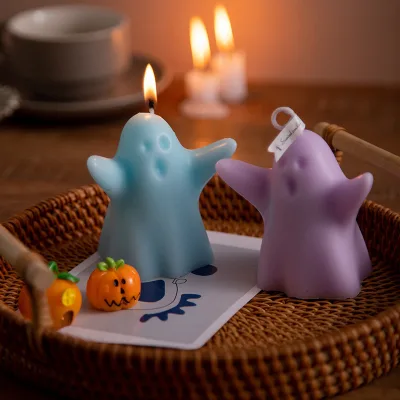


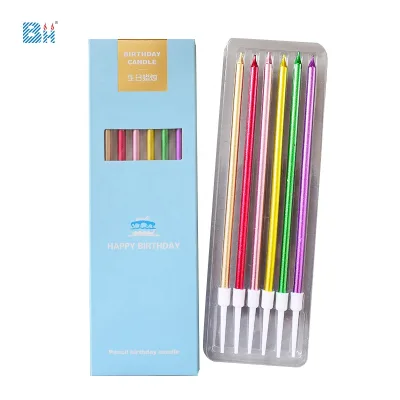


Comprehensive Sourcing Guide
Strategic Sourcing Guide for Smokeless Paraffin Wax Halloween Candles
Understanding Product Attributes and Functional Variations
When sourcing smokeless paraffin wax candles specifically for Halloween applications, buyers must first distinguish between the core material properties and the functional variations observed in the market. The fundamental material identified in current listings is paraffin wax, a petroleum byproduct known for its ability to hold shape and release fragrance, though the specific "smokeless" attribute requires careful verification against combustion physics. While the core keyword implies a traditional wax candle, the observed product data reveals a significant divergence in technology. Some listings explicitly define the product function as "Lighting" with a burning time of 2.5 to 3 hours, utilizing a "Pillar" type structure. However, other entries in the same category describe products as "Flameless" with a "LED" material composition and a "Battery" power source.
This distinction is critical for Halloween procurement. A traditional paraffin candle, even if marketed as low-smoke, relies on an open flame. The data indicates that "Smokeless" claims in this sector often correlate with specific wax formulations or wick technologies, yet the presence of "Flameless" LED alternatives suggests that many buyers are actually seeking the visual aesthetic of a candle without the combustion byproducts. The observed "Color Changing" feature and "Multi-Colored" options are highly relevant for Halloween, allowing for thematic orange, purple, and black variations. Furthermore, the "Unscented" attribute noted in several listings contrasts with the "Fragrance %" of 3% found in other entries, indicating that buyers must specify whether they require a scented product (like Tuberose or Lavender) or a neutral option to avoid conflicting with Halloween room sprays or food.
The processing methods vary significantly, ranging from "Mold" and "Machinery" to "Filling" and "Handmade" techniques. The "Handmade" designation often implies a higher perceived value and potential for unique shapes, such as the "Number 0-9" or specific "Pillar" dimensions like 8*25cm. Conversely, "Machinery" processing suggests mass production capabilities suitable for large-volume orders. Buyers must align their procurement strategy with the intended use case: a "Decoration" or "Party" setting might prioritize the visual "Colorful" or "Yellow" flame aesthetics, while a "Religion" or "Home Lighting" context might demand stricter adherence to safety and smoke reduction standards.
Technical Specifications and Dimensional Standards
Defining the precise technical specifications is essential for ensuring that the candles meet the visual and functional requirements of Halloween events. The observed product data provides a range of dimensions and physical properties that buyers should use as a baseline for their requests for quotation (RFQ). One specific model, identified as "Pillar Candles," features a size of 825cm, which is a substantial pillar suitable for centerpieces or altar decorations. Another entry specifies a smaller dimension of 7cm4cm*1.2cm, likely corresponding to a tealight or votive style. The "White Fat" and "Pink Thin" descriptions in the data suggest that the wax consistency and density can vary, which directly impacts the burn rate and smoke production.
The "Wax Weight" is listed as 120g with a "Gross Weight" of 140g for specific models, providing a clear metric for logistics planning. The "Wax Color" is often described as "Nature White," which serves as a base for dyeing into the vibrant colors required for Halloween themes. The "Flame Color" is noted as "Yellow, Colorful or OEM," indicating that manufacturers can customize the flame hue to match specific holiday palettes. For buyers seeking a truly smokeless experience, the "Burning Time" of 2.5 to 3 hours is a key performance indicator; longer burn times with minimal smoke suggest a higher quality wick and wax blend.
It is important to note that the "Standard" for these products is often listed as "different size," implying a lack of rigid industry-wide dimensional standardization for this specific niche. This variability requires buyers to verify the exact dimensions of the sample before placing a bulk order. Additionally, the "Number" attribute (0-9) suggests that custom molds for numerical designs are available, which can be a unique selling point for Halloween parties or themed events. The "Main Function" of some products includes "Remote Control" and "Timer," which are features associated with the LED alternatives rather than traditional wax candles, highlighting the need to clarify the power source (Battery vs. Wick) in all procurement communications.
Compliance, Safety, and Certification Verification
Safety is paramount when sourcing candles for Halloween, a holiday that often involves children and crowded gatherings. While the provided data mentions "Inspection by Third Party Like SGS, Its, etc.," it does not confirm that every listed product possesses these certifications. Buyers must treat these mentions as potential capabilities of the supplier rather than guaranteed attributes of every unit. The "Standard" of "100% Paraffin Wax" is explicitly stated for some items, but the "Smokeless" claim requires independent verification. Paraffin wax, when burned, can produce soot and volatile organic compounds (VOCs) if the wick is not properly treated or the wax is not refined.
Buyers should verify if the supplier adheres to international safety standards such as ASTM F2417 for candle safety or EN 15494 for candle safety in the European Union. The "Customized Logo" and "Customized" attributes indicate that suppliers are open to branding, but this customization must not compromise the safety of the wick or the stability of the wax. The "Application" field lists "Indoor,Outdoor," which is a critical distinction. Outdoor use requires candles that are wind-resistant and potentially enclosed to prevent accidental fires, whereas indoor use focuses on air quality and smoke reduction.
The "Fragrance %" of 3% is a specific data point that buyers should scrutinize. Higher fragrance loads can sometimes lead to increased soot production if the fragrance oil is not compatible with the paraffin wax or if the wick is not sized correctly for the scent load. For a "smokeless" claim to be credible, the fragrance composition must be carefully balanced. Additionally, the "Handmade" aspect of the production process may introduce variability in quality control, making third-party inspection more critical. Buyers should request test reports specifically for smoke emission and burn stability, rather than relying solely on the supplier's general inspection claims.
Cost Drivers and Pricing Dynamics
The pricing for smokeless paraffin wax candles is influenced by several factors, including material quality, customization level, and order volume. The observed price range in the market spans from $0.03 to $1200, a vast disparity that reflects the difference between a single unit and a large-scale commercial order or a specialized custom design. The "MOQ" (Minimum Order Quantity) ranges from 1 to 200,000, indicating that suppliers cater to both small boutique buyers and large retailers. For Halloween, which is a seasonal peak, buyers should anticipate higher demand and potentially tighter lead times.
The "Packing" specifications, such as "Blister Card--Inner Box--Outer Carton" or "5-Ply Carton," directly impact the cost. More robust packaging is required for candles that are fragile or for products intended for export, adding to the unit cost. The "Customization" of the logo and color adds a layer of complexity that increases the price. The "Wax Weight" and "Gross Weight" are also cost drivers, as shipping costs are often calculated based on weight and volume. Buyers should be aware that "Handmade" candles typically command a higher price per unit due to the labor-intensive nature of the "Mold" and "Filling" processes compared to fully "Machinery" driven production.
The "Feature" of "Color Changing" or "Flameless" technology also affects pricing. LED candles with "Battery" power sources involve electronic components that increase the manufacturing cost compared to traditional wax candles. However, the "Smokeless" attribute of LED candles eliminates the need for wick maintenance and reduces fire risk, which can be a value proposition for certain buyers. The "Standard" of "different size" suggests that custom sizes may incur tooling fees, which should be factored into the total cost of ownership. Buyers should request a detailed breakdown of costs, including material, labor, packaging, and logistics, to understand the true value proposition of each supplier.
Supplier Evaluation and Quality Control Protocols
Evaluating suppliers for Halloween candle procurement requires a rigorous approach to ensure consistency and safety. The "prod_origin" is listed as "China," which is a major manufacturing hub for candles, but buyers must verify the specific factory capabilities. The "Processing" methods of "Mold," "Machinery," and "Filling" suggest different production environments. A supplier that uses "Machinery" for mass production may offer better consistency for large orders, while a "Handmade" supplier may offer more unique designs but with higher variability.
Quality control should be a central part of the supplier evaluation. The mention of "Inspection by Third Party Like SGS, Its, etc." is a positive indicator, but buyers should confirm the scope of these inspections. Are they covering material safety, burn time, and smoke emission? The "Customized" nature of the products means that every order is unique, making pre-production samples essential. Buyers should request a "Prototype" or "Sample" to verify the "Color," "Burning Time," and "Smoke" characteristics before committing to a bulk order. The "Packing" method, such as "Color Box + Carton" or "PVC Display Box," should be evaluated for its ability to protect the product during transit and its appeal to the end consumer.
The "Application" of the candles in "Home Lighting, Wedding, Party, Birthday, Decoration, Holiday" suggests a diverse market. Suppliers should demonstrate experience in handling these different use cases. For Halloween, the "Decoration" and "Party" aspects are most relevant. Buyers should ask for case studies or references from previous Halloween seasons to gauge the supplier's ability to meet seasonal deadlines. The "Logo" customization capability is also a key differentiator; suppliers should be able to provide high-quality printing or molding for custom branding without compromising the structural integrity of the candle.
Long-Term Procurement and Seasonal Strategy
Procuring smokeless paraffin wax candles for Halloween requires a strategic approach that extends beyond a single transaction. The "Seasonal" nature of Halloween means that demand spikes in October, requiring suppliers to have the capacity to ramp up production quickly. The "Lead Time" is not explicitly provided in the data, but buyers should assume that custom orders may require 30 to 60 days for production and shipping. Planning ahead is crucial to avoid stockouts during the peak season.
The "Customization" options, such as "Customized Logo" and "Color" variations, allow buyers to build a unique brand identity for their Halloween products. However, these customizations should be standardized where possible to reduce complexity and cost. The "Standard" of "different size" suggests that buyers should aim to consolidate their order into a few standard sizes to optimize production efficiency. The "Wax Weight" and "Gross Weight" data can be used to optimize shipping logistics, potentially reducing freight costs by consolidating shipments.
Long-term relationships with suppliers can lead to better pricing and priority production slots. Buyers should consider the "Handmade" versus "Machinery" balance in their strategy. For a high-volume, low-margin product, "Machinery" processing may be more sustainable. For a premium, high-margin product, "Handmade" craftsmanship may be a better fit. The "Fragrance %" and "Color" options should be reviewed annually to ensure they align with current market trends and consumer preferences. Finally, the "Smokeless" claim should be re-verified annually to ensure that the supplier maintains their quality standards and does not compromise on safety or performance as they scale production.
FAQs
Can I find smokeless paraffin wax halloween candles with custom logos?
Yes, suppliers offer customized logos on these candles to match your brand identity. This feature is available alongside other customization options like color and size, allowing you to create unique Halloween decorations for your specific event needs.
What is the typical burning time for these paraffin wax candles?
The burning time typically ranges from 2.5 to 3 hours for standard pillar types. This duration depends on the specific wax weight and wick configuration, ensuring a consistent light source for your Halloween party or home decoration setup.
Which processing methods are used to make these candles?
Manufacturers use mold, machinery, and filling processes to produce these items. Some units are handmade for unique shapes, while others are machine-produced for mass orders, offering flexibility based on your volume requirements and design preferences.
How are these candles packaged for international shipping?
Products are packed in blister cards, inner boxes, and outer cartons or 5-ply cartons. This robust packaging ensures safety during transit, with options like color boxes and PVC display boxes available for retail presentation and bulk distribution.
Can I order smokeless paraffin wax halloween candles with specific dimensions?
Yes, you can request specific dimensions like 8*25cm pillars or 7cm*4cm*1.2cm votives. While standards vary, suppliers often accommodate custom sizes and shapes, including numerical designs, to fit your exact Halloween decoration layout.
What materials are used for flameless LED candle alternatives?
Flameless alternatives use LED materials powered by batteries instead of paraffin wax. These options provide a smokeless solution with features like remote control and timers, suitable for indoor and outdoor Halloween applications where open flames are unsafe.
Which certifications verify the safety of these candle products?
Third-party inspections by agencies like SGS or ITS can verify product safety and quality. While not every unit is automatically certified, buyers should request these inspection reports to ensure compliance with safety standards for Halloween events.