Source Solar Camera Street Light for Road, Garden, and Yard
Find 30 Solar Camera Street Light options for road, garden, and yard applications. Compare models with LED lighting, IP65 ratings, and integrated cameras to identify suitable suppliers for your infrastructure needs; compare the available evidence and request quotations based on your requirements.
Key considerations
Products List

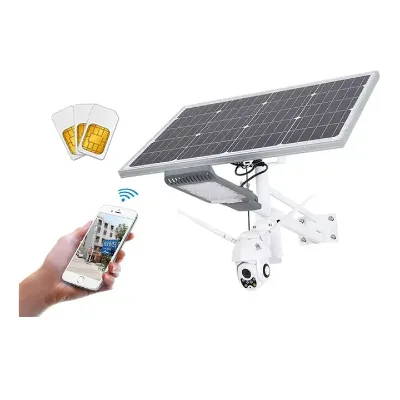
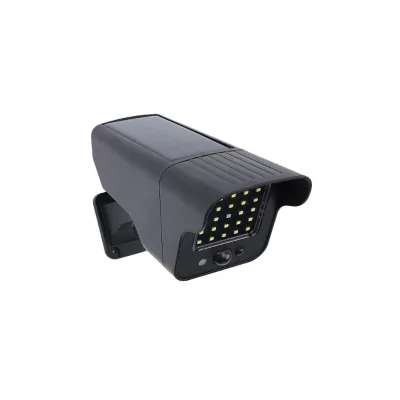


High Quality Cheap Price LED Solar Street Light with Outdoor CCTV Camera
$258.00 - $778.00
MOQ: 1 Pieces


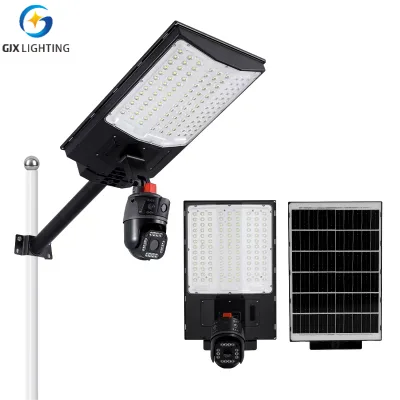


80W Integrated Outdoor LED Lamp Solar Camera Street Light with Lithium Battery
$110.00 - $198.00
MOQ: 10 Pieces


Comprehensive Sourcing Guide
Solar Camera Street Light Sourcing Guide
A Solar Camera Street Light combines off-grid LED illumination with integrated video surveillance, making it attractive for road projects, gardens, country yards, and residential settings where trenching for power cables is impractical or costly. For procurement teams, this hybrid nature means the purchase is effectively two products in one: a lighting system judged on luminous flux, battery autonomy, and weatherproofing, and a security device judged on camera resolution, connectivity, and data handling. Sourcing failures typically occur when buyers evaluate only one half of that combination.
This guide is written for B2B buyers preparing quotations, comparing listings, and qualifying suppliers for integrated solar lighting with camera functionality. It walks through the product scope visible in current listings, the technical specifications that deserve line-item verification, the compliance paperwork to collect before deposit, the commercial levers that drive landed cost, and the supplier and lifecycle checks that protect a multi-year infrastructure investment. Throughout, treat listing attributes as seller observations rather than guaranteed performance, and confirm every claim against documents, samples, or third-party inspection before committing volume.
Product Scope and Observed Listing Signals
Current listings span a wide capability range. At the upper end, listings describe models such as a 60W solar street light with a monocrystalline 60W panel, 6000 lm output at roughly 100 lm/W, a 3-megapixel 1080p HD camera, 4G and Wi-Fi connectivity, IP65 protection, die-cast aluminum housing, and a 5-year warranty. At the lower end, smaller garden-oriented units built from ABS run at 3W with about 220 lm and 1-year warranties. Observed listing prices range from a few dollars to several hundred dollars, and MOQs from a single unit to 1,000, so the market serves both pilot buyers and bulk tenders.
Buyers should read these signals as segmentation, not equivalents. A product labeled for road application with a 50,000-hour rated lifespan, 120° beam angle, and dimming-independent 6000K–6500K white output occupies a different engineering tier than decorative garden lighting, and prices will reflect that. Note the keywords sellers use—"solar street lights with camera," for example—and whether customization is offered, since that indicates a factory willing to adjust camera modules, pole fitments, or branding. Always confirm which attributes apply to the specific model number quoted, not the store's general description.
Technical Specifications to Verify
Lighting parameters deserve itemized confirmation. Ask the supplier to state, per model number: rated power (e.g., 60W), luminous flux (e.g., 6000 lm) and luminous efficiency (e.g., 100 lm/W) supported by an integrating sphere test report, color temperature range (6000K–6500K in observed listings), CRI (listed at Ra 80), and beam angle (120°). Verify the solar panel type and capacity—monocrystalline silicon at 60W is claimed in one listing, but panel grade and actual wattage are commonly overstated. Confirm the battery chemistry, capacity, and whether autonomy matches the claimed 3–4 rainy-day working time.
Camera and electrical specifications need equal rigor. Confirm camera resolution (3MP/1080p as listed), whether it is fixed or adjustable, night-vision capability, and how video is transmitted and stored—4G versus Wi-Fi models differ inSIM requirements, data plans, and coverage assumptions. Verify the input configuration: solar-powered units versus low-voltage models at 5.5V or 12/24V. Check IP65 ingress protection on both lamp head and camera housing, housing material (die-cast aluminum versus ABS), unit weight (6–10 kg in observed listings), and packaging dimensions, since these affect freight class. Request a working sample to validate camera image quality under real night conditions.
Compliance and Safety Documentation
Observed certifications include CE, EMC, and RoHS, which buyers should treat as a baseline to verify rather than assume. Request copies of the actual certificates, match the certificate holder and model number to the quoted product, and check validity dates and the issuing body's accreditation. A listing-level certification tag is not evidence; a scanned PDF with a matching test laboratory report is. If your destination market requires additional marks, identify them early and confirm which the factory already holds versus which would need new testing.
Beyond the lighting certifications, the camera and radio components introduce separate obligations. Wireless transmission modules typically require radio equipment approval in the destination market, and batteries may be subject to transport regulations that affect shipping documents and freight forwarder acceptance. Ask the supplier to declare the applicable requirements for your market and to provide the relevant declarations of conformity for the integrated wireless and battery components. Also confirm RoHS scope covers the camera electronics and not only the lamp. Buyers importing to regulated markets should retain all documentation per shipment, since customs authorities may request them years after delivery.
Cost Drivers and Commercial Terms
Observed listing prices span roughly $3.6 to $798, and MOQs from 1 to 1,000 units, so frame every quote against the configuration actually offered. Primary cost drivers include panel wattage and grade, battery capacity and chemistry, camera resolution and transmission type (4G units carry module and ongoing SIM/data considerations), housing material, and IP rating construction. A die-cast aluminum, 60W road-grade unit with a 3MP camera will not price near an ABS garden light, and unusually low quotes often signal derated panels or batteries. Customization availability may add tooling or setup charges worth clarifying upfront.
Negotiate commercial terms with the total landed cost in mind. With a 10 kg single-item gross weight and an 80×58×27 cm package for one observed model, volumetric weight will dominate freight on bulk orders—compare sea, rail, and air scenarios. Confirm incoterms, whether the quoted price includes batteries for transport purposes, packaging suitable for the chosen mode, and spare-parts availability. Clarify warranty enforcement: a listed 5-year warranty on road-grade models (versus 1 year on garden units) should specify what is covered—panel, battery, lamp, camera—and whether replacement parts or units ship freight-paid. Lock these terms in the proforma invoice before deposit.
Supplier Qualification and Quality Control
Qualify suppliers on capability evidence, not storefront presentation. Ask whether the camera and solar components are produced in-house or integrated from purchased modules, since this determines accountability when either subsystem fails. Request the factory's production workflow for this product family, examples of customization delivered for prior buyers, and—where the listing shows a Place of Origin such as Sichuan or Zhejiang—verify the actual manufacturing address through a business license and, ideally, an on-site or third-party audit. Confirm which certifications belong to the factory versus a trading entity.
Structure quality control around both subsystems. Before bulk production, approve a golden sample documenting light output, color temperature, battery runtime, and camera image quality day and night. Define an AQL-based inspection covering packaging (10 kg units need drop testing), waterproofing checks at seams and cable glands, panel and battery specification verification against the BOM, and camera focus and night-vision performance on a sample of finished units. Require pre-shipment inspection reports with photos and serial-number traceability. For orders with customization, hold first-article approval before mass production begins, and agree in writing how defects discovered after shipment are remedied.
Long-Term Procurement Checks
The procurement decision does not end at the shipment; solar street lights with cameras operate unattended for years, so plan the lifecycle. A listed 50,000-hour LED lifespan and 5-year warranty mean little if the battery degrades in year two—batteries are the usual first failure point in this category. Ask suppliers for the expected battery cycle life, replacement part availability, and the cost and procedure for battery swap in the field. Confirm spare panels, camera modules, and drivers can be ordered separately rather than forcing full-unit replacement.
Operationally, plan for monitoring and maintenance from day one. 4G-connected units require ongoing SIM and data management, so clarify who provisions and pays for connectivity and how firmware or camera settings are updated remotely. Schedule periodic cleaning of panels and camera lenses, vegetation management around pole positions, and seasonal performance reviews—rainy-day autonomy claims of 3–4 days should be validated against your site's actual solar conditions. Finally, build the warranty process into your contracts: define claim documentation (photos, serial numbers, failure description), response times, and whether the supplier sends parts, technicians, or replacement units. Buyers who formalize these checks convert a one-time purchase into a dependable infrastructure asset.
FAQs
What certifications do solar camera street lights have?
These lights typically carry RoHS, CE, and EMC certifications to ensure safety and environmental compliance. The specific models listed include products with RoHS and CE marks, confirming they meet international standards for electrical safety and material restrictions before deployment.
How long does the battery last on rainy days?
The battery system is designed to operate for three to four days during rainy weather without sunlight. This working time ensures continuous illumination even when solar charging is limited, providing reliable performance for outdoor road and garden applications throughout the season.
Which camera resolution is available for these street lights?
The integrated camera offers 3 megapixel resolution with 1080p HD video quality for clear surveillance. This high-definition capability allows for detailed monitoring of roads and yards, making the unit suitable for security applications requiring clear visual evidence of activity at night.
Can these lights be dimmed for energy saving?
No, the current product specifications indicate that these units do not support dimming functions. They operate at a fixed power level, which simplifies the circuitry design but limits the ability to adjust brightness levels dynamically based on real-time traffic or ambient conditions.
What is the expected lifespan of the LED light source?
The LED light source is rated for a lifespan of 50,000 hours of operation. This extended durability reduces maintenance frequency and total cost of ownership, making it a robust choice for long-term installation in roads, gardens, and country yards across various climates.
What material is used for the lamp housing?
The housing is constructed from die-casting aluminum to provide durability and heat dissipation. This material choice ensures the unit withstands outdoor elements while maintaining structural integrity, complementing the IP65 rating that protects internal components from dust and water ingress effectively.
Which solar panel type powers these street lights?
These lights utilize monocrystalline silicon solar panels with a 60W power rating for efficient energy capture. This high-efficiency panel type converts sunlight into electricity reliably, ensuring the battery charges sufficiently to power the 60W LED lamp and camera system during nighttime hours.