Source Spear Point Glass and Tile Drill for glass, tiles, and ceramics
Find 30 verified options for the Spear Point Glass and Tile Drill designed for drilling into glass, tiles, and ceramics. Buyers can compare specifications like hardness, material, and packing details to select the right tool for their needs.
Key considerations
Products List


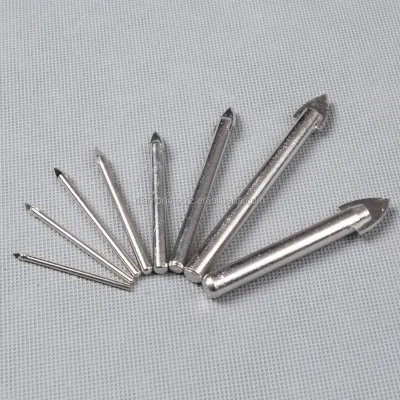
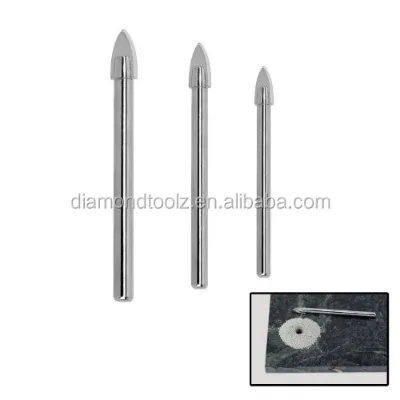


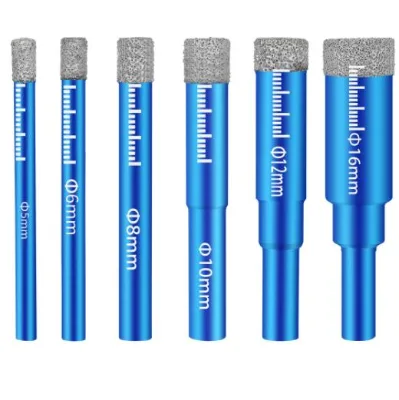
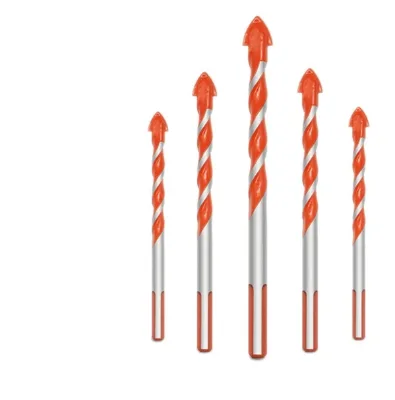
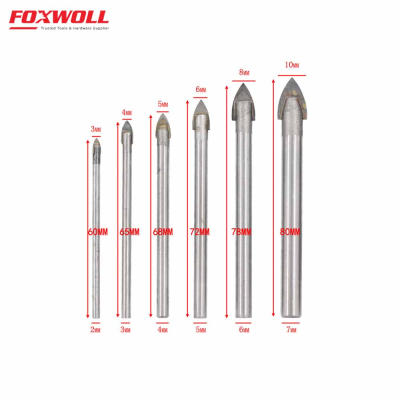


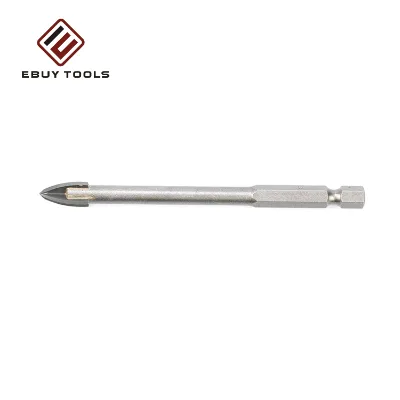
Spear Tip Cross Tip Glass Drill Bit Set for Cutting Ceramic Porcelain Tile
$0.10 - $0.15
MOQ: 500 pieces
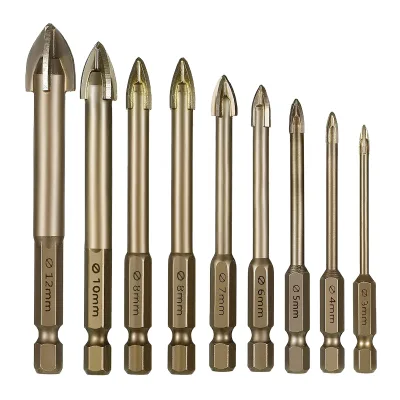

Carbide Spear Tipped Ceramic Porcelain Tile Glass Drill Bit for Glass Tile
$0.32 - $0.80
MOQ: 500 Pieces


Comprehensive Sourcing Guide
Strategic Sourcing Guide for Spear Point Glass and Tile Drill Bits
Understanding Product Variants and Technical Specifications
When sourcing Spear Point Glass and Tile Drill bits, buyers must first distinguish between the specific geometric configurations and material compositions that define performance. The core keyword "spear point" refers to a specific tip geometry designed to penetrate brittle materials like glass, tiles, ceramics, and mirrors without causing immediate cracking. Based on observed market data, these tools are frequently categorized under "Core Drill Bit" or "Carbide Tip Drill Bit" classifications, though some listings may also group them with general masonry or tile drilling solutions. The tip geometry is a critical differentiator; while some products feature a "Spear Point" or "Cross Tip," others may utilize a "Center Drill Bit" configuration with a 60° or 90° countersink angle, which serves a different function in metal preparation rather than glass drilling.
Material selection is the second pillar of technical specification. The supplied data indicates a divergence in materials used for similar-looking tools. High-performance applications for glass and tile typically rely on "Tungsten Carbide" tips, which offer the necessary hardness to abrade ceramic surfaces. The hardness for these carbide variants is observed in the range of 89-92 HRC. Conversely, some listings in the same category reference "High Speed Steel" (HSS) materials, including grades such as HSS4241, W4, M2, W9, and M35, with a hardness range of HRC60-66. Buyers must verify that the specific product intended for glass and tile applications utilizes the tungsten carbide tip rather than standard HSS, as the latter may wear too quickly or fail to penetrate hard ceramic surfaces effectively. The shank material is also a variable; while some products specify "45 # Steel" for the shank, others may use different alloy compositions depending on the manufacturing process.
Size specifications vary significantly across the market, ranging from small diameters of 3mm up to larger sizes of 20mm or even 16mm. The "Jobber-length" and "Taper-length" designations indicate the overall length of the tool, which affects reach and rigidity during drilling. Flute geometry is another technical consideration, with options including "Straight Flutes" and "Spiral Flutes." Spiral flutes are often preferred for glass and tile applications to facilitate the removal of fine dust and debris, preventing clogging and overheating. The manufacturing process, whether "ED," "Ground," or "Milled," directly impacts the precision of the cutting edge and the consistency of the spear point geometry.
Compliance, Standards, and Certification Verification
Navigating the compliance landscape for industrial drill bits requires a careful review of the standards cited in product documentation. The observed market data lists several international standards, including "API," "AISI," "JIS," and "DIN." While these are standard designations for steel and tooling, their specific application to glass and tile drill bits must be verified against the product's intended use. For instance, some listings associate the "DIN" standard with specific size ranges like 3-16mm, while others link it to the material grade. It is crucial for buyers to confirm that the cited standard (e.g., DIN) applies to the specific dimensions and hardness requirements of the drill bit being purchased, rather than being a generic reference to the steel supplier's internal standards.
Certification status is another area where buyers must exercise caution. The supplied facts do not explicitly confirm third-party certifications such as ISO 9001 or specific safety compliance marks for every listed product. Instead, the data points to "customization" as a standard feature, suggesting that many suppliers operate on a model where the product specifications are tailored to the buyer's request. This implies that compliance is often a negotiated parameter rather than a fixed attribute of a mass-produced item. Buyers should request documentation verifying that the tungsten carbide tips meet specific hardness tolerances (89-92 HRC) and that the shank material (45 # Steel) meets the required tensile strength for the intended drilling torque.
Furthermore, the "Standard" field in some listings contains size ranges (e.g., "3-16mm") rather than technical standard codes, which can lead to confusion. This suggests that some suppliers may use "Standard" to denote their available size catalog rather than a formal industry standard. To mitigate risk, procurement teams should request a technical data sheet that explicitly maps the product's physical properties to recognized standards like AISI for material composition or DIN for dimensional tolerances. Without this explicit mapping, the "compliance" of the tool for specific industrial applications remains an assumption rather than a verified fact.
Cost Drivers and Pricing Dynamics
The pricing structure for Spear Point Glass and Tile Drill bits is influenced by a complex interplay of material costs, manufacturing processes, and order volumes. The observed price range in the market is exceptionally wide, spanning from $0.08 to $13,000. This vast disparity indicates that the market includes both low-cost, single-unit consumer tools and high-value, industrial-grade bulk orders or specialized machinery components. The lower end of the spectrum likely corresponds to standard HSS bits or small quantities of carbide-tipped bits, while the upper end may reflect large bulk orders, custom-manufactured sets, or specialized core drilling systems.
Material composition is a primary cost driver. Tungsten carbide is significantly more expensive than High Speed Steel, and the hardness level (89-92 HRC vs. HRC60-66) directly correlates with the cost of the raw material and the precision required in the grinding process. Products utilizing "ED" (Electrical Discharge) machining or "Fully Ground" processes will command a higher price than those that are merely "Milled," as these processes offer superior edge retention and geometric accuracy. Additionally, surface treatments such as "Chrome Plated," "Zn-Coated," "Ni-Coated," or "Sandblasted" add to the production cost but provide essential corrosion resistance and durability, which is critical for tools used in wet drilling environments common in tile installation.
Order volume plays a decisive role in the final unit price. The observed Minimum Order Quantity (MOQ) ranges from 1 to 5,000 units. Buyers purchasing small quantities (MOQ 1) will face the highest per-unit costs, as the supplier cannot amortize setup and tooling costs over a large batch. Conversely, buyers capable of meeting higher MOQs (e.g., 5,000 units) can negotiate significantly lower prices, potentially accessing the lower end of the price spectrum. Customization is a major factor; since "Customization" is listed as available and the "prod_standard" is noted as "customization," bespoke orders will inherently carry a premium due to the non-standard tooling and production runs required.
Typical Applications and Usage Scenarios
The primary application for Spear Point Glass and Tile Drill bits is the creation of precise holes in brittle, non-metallic materials. The supplied data explicitly lists "Glass, Tiles, Ceramics, Mirror, Hard Plastic" as the target applications. The spear point geometry is specifically engineered to anchor into the smooth, hard surface of these materials, preventing the bit from "walking" or skating across the surface, which is a common issue with standard twist drills. This feature is essential for professional tile installers, glass fabricators, and construction workers who need to drill for plumbing fixtures, electrical outlets, or decorative elements.
The "use on" specification indicates that these tools are designed for use with "electric drills," ranging from handheld rotary tools to heavy-duty drill presses. The hardness of the tip (89-92 HRC) ensures that the bit can withstand the high friction and heat generated during drilling without dulling immediately. However, the material of the shank (45 # Steel) suggests that these bits are optimized for standard drilling speeds and torques; using them in high-torque industrial applications without proper cooling or speed control could lead to shank failure.
It is important to distinguish these from "Center Drill Bits," which are listed in the data with a "60°" or "90°" countersink angle and are intended for "Metal Drilling." While a buyer might encounter both types in the same supplier catalog, the spear point bit is the correct choice for glass and tile, whereas the center drill is for metal preparation. The "spade-shape" model number observed in some listings may refer to a different category of drilling tool entirely, likely for wood or softer materials, and should be avoided for glass applications.
Supplier Evaluation and Origin Analysis
Evaluating suppliers for Spear Point Glass and Tile Drill bits requires a focus on geographic origin and manufacturing capabilities. The supplied data identifies three primary locations for production: "Jiangsu, China," "Danyang City, Jiangsu Province, China," and "Shanghai, China." Jiangsu and Shanghai are major hubs for tool manufacturing in China, known for their dense supply chains and established metalworking industries. The presence of multiple locations within the same province suggests a robust regional ecosystem, but buyers should verify the specific factory location to ensure consistency in quality control.
Supplier reliability is often indicated by their "Supply Ability," with one data point citing "100000 pieces per Quarter." This metric provides a baseline for assessing a supplier's capacity to handle large orders. However, buyers must cross-reference this with the "MOQ" requirements to ensure the supplier can accommodate both small trial orders and large-scale production runs. The availability of "Customization" and "Packaging Details" that can be tailored "according to your request" indicates a flexible supplier capable of adapting to specific branding or logistical needs.
When evaluating a supplier, buyers should look for evidence of their manufacturing process capabilities. The data mentions "Milled or Fully Ground" processes and various surface treatments. A supplier that offers "Fully Ground" carbide tips and multiple coating options (Chrome, Zn, Ni) demonstrates a higher level of technical capability compared to one that only offers basic milled products. Additionally, the "brand name" "TALENTOOL" is observed in the data, suggesting that some suppliers operate under their own brand, while others may offer OEM services. Buyers should verify the brand's reputation and whether the supplier is a direct manufacturer or a trading company, as this impacts lead times and quality assurance.
Quality Control and Long-Term Procurement Considerations
Quality control for Spear Point Glass and Tile Drill bits must focus on the integrity of the carbide tip and the hardness consistency. The observed hardness range of 89-92 HRC for carbide tips is a critical quality metric. Buyers should request hardness test reports or mill certificates to verify that the product consistently meets this specification. Inconsistencies in hardness can lead to premature chipping or rapid wear, rendering the tool ineffective for its intended application. Similarly, the "Surface Treatment" options (Chrome Plated, Zn-Coated, etc.) must be verified for uniformity and adhesion, as poor coating can lead to rust and failure in humid environments.
Packaging is another aspect of quality control that affects long-term usability. The data lists various packaging methods, including "Bag," "Tube," "Box," "Blister," "Blister Card," "Skin Card," "Aluminum Box," and "Plastic Bag/Box/Tube." For high-value or precision tools, "Blister Card" or "Aluminum Box" packaging offers better protection against physical damage during transit. Buyers should specify their preferred packaging to ensure the tools arrive in perfect condition, especially when ordering in bulk.
Long-term procurement considerations involve the balance between customization and standardization. While "Customization" is available, relying too heavily on bespoke specifications can increase lead times and costs. Buyers should aim to standardize their order to a few key sizes and specifications (e.g., 3mm, 6mm, 10mm carbide tips with straight shanks) to leverage economies of scale. The "prod_model" and "model number" fields in the data suggest that standard models exist (e.g., "DM4-G," "glass and tile drill bit," "spade-shape"), which can serve as a baseline for procurement. By sticking to proven models and verified suppliers, buyers can ensure a steady supply of high-quality tools while minimizing the risk of specification errors.
| Feature | Observation from Data | Procurement Verification Step |
|---|---|---|
| Tip Geometry | Spear Point, Cross Tip, Center Drill (60°/90°) | Confirm "Spear Point" or "Carbide Tip" specifically for glass/tile. |
| Material | Tungsten Carbide (89-92 HRC), HSS (HRC60-66) | Request hardness certificate for carbide tips. |
| Shank | Straight, Hex, 45 # Steel | Verify shank diameter matches drill chuck specifications. |
| Standard | API, AISI, JIS, DIN, or Size Ranges | Ask for specific standard mapping (e.g., DIN 340). |
| Packaging | Blister, Tube, Box, Aluminum Box | Specify packaging to prevent damage during shipping. |
| Origin | Jiangsu, Danyang, Shanghai | Verify factory location for quality control audits. |
| MOQ | 1 - 5,000 | Negotiate MOQ based on trial vs. bulk order needs. |
By adhering to these technical, compliance, and supplier evaluation criteria, buyers can effectively navigate the complex market for Spear Point Glass and Tile Drill bits, ensuring they procure tools that deliver optimal performance and value for their specific industrial or construction applications.
FAQs
What material is used for Spear Point Glass and Tile Drill bits?
The tips are made of Tungsten Carbide with a hardness of 89-92HRC. Some variants use High Speed Steel with lower hardness, so verify the material before purchasing for brittle surfaces.
Which tip geometry is best for drilling glass and tiles?
Spear Point or Cross Tip geometries are designed to penetrate brittle materials without cracking. Avoid Center Drill Bits with countersink angles, as they are intended for metal drilling applications.
Can these drill bits be customized for specific orders?
Yes, customization is available for specifications and packaging. Buyers can request tailored sizes ranging from 3mm to 20mm and specific surface treatments like chrome plating or zinc coating.
What are the standard size ranges for these drill bits?
Available sizes typically range from 3mm to 16mm or up to 20mm depending on the model. Specifications include Jobber-length and Taper-length options to suit different drilling depths.
How are these drill bits packaged for shipping?
Packaging options include bags, tubes, boxes, blisters, and blister cards. Suppliers can provide individual packs or aluminum boxes according to specific buyer requests and branding needs.
What is the minimum order quantity for these drill bits?
The minimum order quantity ranges from 1 unit up to 5000 units depending on the supplier. Lower MOQs allow for trial orders, while larger volumes may reduce the per-unit price.
Where are these drill bits manufactured?
Manufacturing origins include Jiangsu, Danyang City, and Shanghai in China. These regions are known hubs for tool production with established supply chains for metalworking and drilling accessories.