Source Spear Garden Wrought Iron Fence for Garden Park Road
Find 30 verified options for Spear Garden Wrought Iron Fence suitable for residential, commercial, and outdoor security needs. Compare specifications, materials, and pricing from multiple suppliers to identify the best fit for your project requirements.
Key considerations
Products List

Chinese Garden Fence Gate Fence Spear Point Wrought Iron Fence Spearhead
$18.00 - $80.00
MOQ: 100 Square Meters

Wholesale Custom Wrought Iron Garden Wrought Iron Fence Parts Spearhead Fence Spear
$18.00 - $80.00
MOQ: 100 Square Meters

Wholesale Price Custom Wrought Iron Garden Fence Spearhead Fence Spear
$18.00 - $80.00
MOQ: 100 Pieces

Factory Custom Wholesale Gate Fence Security Fence Decoration Wrought Iron Spearhead
$18.00 - $80.00
MOQ: 100 Square Meters

China Made Custom Wrought Iron Aluminum Garden Fence Parts Fence Spear
$18.00 - $80.00
MOQ: 100 Square Meters

Custom Wholesale Decorative Cast Iron Fence Spear Metal Fence Finish Wrought Iron Fence Spear
$18.00 - $80.00
MOQ: 100 Square Meters


Decorative Security Spear Top Fencing 6FT Galvanized Wrought Iron Fence
$3.14 - $5.17
MOQ: 100 Square Meters


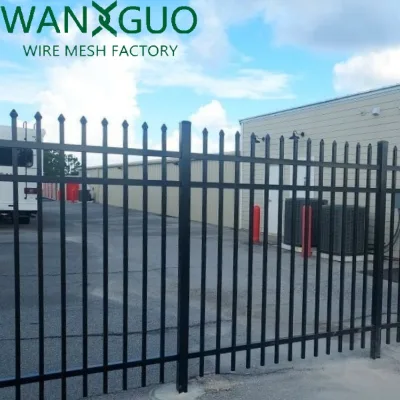


Black Metal Fence Steel Fence Panel Wrought Iron Fences for Garden
$9.10 - $9.60
MOQ: 100 Square Meters

High Quality Outdoor Customizable Weatherproof Wrought Iron Spear Top Fence for Decoration Garden
$1.99 - $4.99
MOQ: 100 Square Meters


Comprehensive Sourcing Guide
Strategic Sourcing Guide for Spear Garden Wrought Iron Fences
Understanding Material Composition and Structural Integrity
When sourcing a Spear Garden Wrought Iron Fence, the primary distinction lies in the material composition, which directly dictates the fence's longevity, aesthetic appeal, and structural capacity. The market offers products primarily constructed from iron, aluminum, or general metal alloys, each serving different environmental and budgetary needs. For a traditional "wrought iron" aesthetic, buyers often encounter products where the core material is explicitly listed as iron. This material is favored for its classic look and high tensile strength, making it suitable for heavy-duty security applications in residential and commercial gardens. However, the supply chain also presents aluminum options, which are increasingly popular for their resistance to corrosion and lighter weight. Aluminum fences often feature a "powder coated" frame finishing, which enhances durability against the elements while maintaining the visual profile of traditional ironwork.
The manufacturing process plays a critical role in the final product's quality. Observations of available inventory indicate that the weave technique can vary significantly, ranging from "satin weave" to "stamping" and "drawn" techniques. Stamping and drawn methods are often associated with the creation of the distinctive spear points and grid patterns found in garden fences. The surface treatment is equally vital; while some products are described as "galvanized" or "coated," others may feature "powder coated" finishes. Galvanization provides a sacrificial layer of zinc that protects the iron from rust, a crucial feature for outdoor garden applications exposed to rain and humidity. Conversely, powder coating offers a wide range of color options, including white, black, green, blue, and grey, allowing for customization to match specific landscape designs. Buyers must verify whether the "uncoated" or "coated" status aligns with their specific climate requirements, as uncoated metal may require immediate additional treatment to prevent oxidation.
Technical Specifications and Customization Capabilities
Technical specifications for spear garden wrought iron fences are rarely one-size-fits-all. The supply data reveals a high degree of customization, with many suppliers offering "customized size" and "customized color" options to meet specific project requirements. Standard dimensions often include height ranges such as 1000-3000mm, with post sizes varying from 5050mm to 100100mm. The model numbers associated with these products, such as M-40, 300290, or 300200, serve as internal identifiers for specific configurations rather than universal industry standards. Buyers should note that while some listings mention a standard size of 1800*1800mm, this is likely a reference to a specific panel dimension or packaging unit rather than a rigid industry norm.
The customization process is a significant value driver in this sector. Suppliers frequently offer "professional customized CAD drawing" services, allowing buyers to visualize the final installation before production begins. This is particularly useful for complex garden layouts or areas with irregular boundaries. The "spear" design itself is often a result of the "stamping" or "drawn" techniques mentioned in product attributes, creating the sharp, pointed aesthetic that defines this style. Furthermore, the "weave technique" influences the visual density and privacy level of the fence. A "satin weave" might offer a more intricate, decorative look, while a "stamping" technique could result in a more robust, industrial appearance.
Packing and shipping specifications are also technical considerations. Products are typically shipped on pallets, with packaging ranging from "plastic film" to "PE Film + Wood Pallet." This ensures that the finished fence panels and posts remain undamaged during transit. The "product packing" can often be customized, which is essential for large-scale projects where logistics efficiency is paramount. Buyers should verify the exact packing dimensions and weight to calculate shipping costs accurately, as these factors can significantly impact the total landed cost of the project.
Compliance, Certification, and Regulatory Standards
Navigating the compliance landscape is essential for international procurement, especially when sourcing from regions like China, which is a primary origin for these products. The supply data indicates that products often carry certifications such as CE and RoHS. The CE marking is a critical indicator that the product meets European Union safety, health, and environmental protection requirements, which is a prerequisite for selling in many global markets. RoHS certification ensures that the materials used are free from specific hazardous substances, aligning with modern environmental regulations.
However, buyers must exercise caution regarding the "standard" attributes listed. While some products reference "ISO" certifications, the specific standard is often listed as "customize" or "1800*1800," which refers to dimensions rather than a formal quality management standard. Background information mentions ISO9001 and Iso9001:2008, but these should be treated as general background knowledge rather than confirmed attributes of every listed product. Buyers should explicitly request proof of ISO9001 certification from the supplier if quality management system adherence is a contractual requirement. The "frame finishing" and "surface treatment" processes must also align with local building codes and environmental regulations. For instance, in areas with strict environmental controls, the "powder coated" or "galvanized" processes must be verified to ensure they do not release harmful volatiles during application.
Cost Drivers and Pricing Dynamics
The pricing for spear garden wrought iron fences is influenced by a complex interplay of material costs, customization levels, and order volume. The observed price range in the market spans from $0.98 to $300, a wide variance that reflects differences in material quality, design complexity, and unit of measurement (e.g., per meter, per panel, or per set). The Minimum Order Quantity (MOQ) also varies significantly, ranging from 1 to 20,000 units. This flexibility allows small residential projects to procure single units while large commercial developments can leverage bulk pricing.
Material choice is a primary cost driver. Iron fences generally command a higher price point than aluminum alternatives due to the raw material costs and the energy-intensive nature of the forging or stamping process. However, aluminum offers long-term savings through reduced maintenance, as it does not rust. The "surface treatment" adds another layer of cost; "galvanized" and "powder coated" finishes are more expensive than "uncoated" or basic "coated" options but provide superior protection against corrosion. Customization also impacts pricing. Orders requiring "customized size," "customized color," or "professional customized CAD drawing" will incur higher unit costs compared to standard off-the-shelf models.
Lead time is another factor affecting the total cost of ownership. The observed lead time ranges from 10-25 days after deposit, with sample times taking 10-20 days. Rush orders or highly customized designs may extend these timelines, potentially incurring expedited shipping fees. Buyers should factor in the "supply ability," which is listed as 1000 sets per week for some suppliers, to ensure that the vendor can meet project deadlines without compromising quality.
Typical Applications and Usage Scenarios
Spear garden wrought iron fences are versatile and suitable for a wide array of applications, from residential privacy to high-security industrial zones. The "application" attributes highlight usage in gardens, parks, residential areas, roads, factories, squares, and outdoor sports facilities. The "characteristic" of being "easy to assemble" makes these fences particularly attractive for DIY residential projects, while the "rodent resistant" and "sustainable" traits appeal to eco-conscious buyers.
The "usage scenarios" are diverse. In residential settings, these fences serve as "family garden privacy" barriers, often featuring "modern" styles that blend seamlessly with contemporary architecture. In commercial and public spaces, the "highway fence" and "sports fence" applications benefit from the structural integrity of the "metal" or "iron" construction. The "spear" design not only provides a deterrent to climbing but also adds an aesthetic element that enhances the visual appeal of the property. The "function" of the fence can range from simple boundary definition to robust security, depending on the post size and panel thickness selected.
Supplier Evaluation and Quality Control Protocols
Evaluating a supplier for spear garden wrought iron fences requires a rigorous assessment of their capabilities and quality control measures. Buyers should verify the "service content" offered, which may include "3D sampling," "manuals," and "installation videos." These resources are crucial for ensuring that the installation process is smooth and that the final product meets design expectations. The "design" capability, specifically the ability to provide "professional customized CAD drawing," is a strong indicator of a supplier's technical competence.
Quality control should focus on the "frame finishing" and "surface treatment" processes. Buyers must ensure that the "powder coated" or "galvanized" layers are applied uniformly and meet thickness specifications to prevent premature corrosion. The "weave technique" should be inspected for consistency, ensuring that the "stamping" or "drawn" patterns are precise and free from defects. Additionally, the "lead time" reliability is a key performance indicator; suppliers who consistently meet the 15-20 day or 10-25 day windows demonstrate operational efficiency.
Buyers should also consider the "location" of the supplier, with "Shandong, China" being a noted origin. While this region is a manufacturing hub, buyers should verify the specific factory's capacity and reputation. The "product origin" should be clearly documented to ensure compliance with any trade regulations or tariffs applicable to the buyer's region. Finally, the "advantage" of the product, such as its "shape" or "customization" options, should be validated through physical samples before committing to a large order.
Long-Term Procurement and Maintenance Considerations
Long-term procurement strategies for spear garden wrought iron fences must account for maintenance requirements and lifecycle costs. While the "characteristic" of being "sustainable" and "rodent resistant" suggests durability, the "surface treatment" is the primary defense against environmental degradation. "Galvanized" fences offer excellent rust protection, but the coating can eventually wear down, requiring touch-ups. "Powder coated" fences provide a robust barrier but may chip if impacted, necessitating repair to prevent underlying corrosion.
Buyers should plan for periodic inspections, especially in coastal or high-humidity areas where salt and moisture accelerate corrosion. The "color" options, including "white," "black," "green," "blue," and "grey," should be selected with an eye toward fading resistance. Some finishes may require more frequent cleaning or repainting to maintain their aesthetic appeal. The "easy to assemble" nature of the fence also implies that replacement parts should be readily available, making it easier to repair or expand the fence line in the future.
In conclusion, sourcing a Spear Garden Wrought Iron Fence involves a careful balance of material selection, customization, compliance, and supplier reliability. By focusing on the technical specifications, verifying certifications, and understanding the cost drivers, buyers can secure a high-quality product that meets their specific needs while ensuring long-term value and durability. The wide range of available options, from iron to aluminum and various surface treatments, allows for tailored solutions that fit diverse applications and budgets.
FAQs
What certifications do spear garden wrought iron fences typically have?
Products often carry CE and RoHS certifications to meet international safety and environmental standards. Some listings also reference ISO standards, though specific ISO9001 compliance should be verified directly with the supplier before purchase.
How long is the lead time for custom orders of these fences?
The standard lead time ranges from 10 to 25 days after deposit is received. Sample preparation typically takes 10 to 20 days, while general production cycles are often estimated at 15 to 20 days depending on order volume.
Which materials are used to construct spear garden wrought iron fences?
These fences are commonly constructed from iron, aluminum, or general metal alloys. Iron offers high tensile strength for security, while aluminum provides corrosion resistance and a lighter weight suitable for various outdoor applications.
Can the fence dimensions and colors be customized for specific projects?
Yes, customization is available for size, color, and design specifications. Buyers can request professional CAD drawings, choose from colors like white, black, green, or blue, and specify post sizes ranging from 50mm to 100mm.
What surface treatments are applied to protect the metal from corrosion?
Surface treatments include galvanization, powder coating, and general spraying or coating processes. Powder coating offers durable color options, while galvanization provides a sacrificial zinc layer to prevent rust in outdoor garden environments.
How are these fences packaged for shipping and delivery?
Products are typically shipped on pallets using plastic film or PE film combined with wood pallets. Packaging can often be customized to ensure panels and posts remain undamaged during transit to the final destination.
What is the typical supply ability for manufacturers of these fences?
Some suppliers demonstrate a supply ability of 1000 sets per week. This capacity supports both small residential orders and larger commercial projects, provided the lead time of 10 to 25 days is factored into the schedule.