Source Square Candy Tin for Food, Gifts, and Cosmetics
Compare 30 Square Candy Tin options from verified manufacturers in China. These eco-friendly packaging solutions feature customizable sizes, logo printing, and certifications like FDA and RoHS for food, jewelry, and electronics.
Key considerations
Products List


Empty Rectangle Mint Tin Can for Confectionary Candy Sweets Packaging Box
$0.12 - $0.18
MOQ: 5000 Pieces


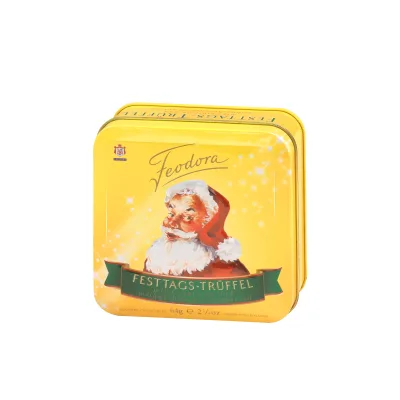


Comprehensive Sourcing Guide
Strategic Sourcing Guide for Square Candy Tin Packaging
Procuring square candy tins requires a nuanced understanding of material specifications, regulatory compliance, and manufacturing capabilities. The global market for metal packaging is robust, yet the specific segment of square-shaped confectionery containers presents unique challenges regarding structural integrity, printing quality, and regulatory adherence. This guide synthesizes verified product attributes and industry standards to assist procurement professionals in making informed decisions. The focus remains on the technical realities of tinplate construction, the verification of safety certifications, and the logistical parameters that define a successful supply chain partnership.
Material Composition and Structural Specifications
The foundation of any Square Candy Tin lies in its material composition. Based on verified product data, the industry standard for these containers utilizes 0.23mm First Grade Tinplate. This specific thickness is critical for balancing durability with cost-efficiency. A thickness of 0.23mm provides sufficient rigidity to protect delicate confectionery items during transit while maintaining the aesthetic appeal required for retail display. The material is explicitly identified as tinplate, a steel sheet coated with a thin layer of tin to prevent corrosion and ensure food safety.
Dimensions vary significantly based on the intended volume and shape. While the core keyword specifies "square," the market data indicates a diversity of geometric forms, including square, rectangular, and cylindrical options. For square configurations, specific model standards such as YYBRM-13 define dimensions of 74x74x65mmH. Other variations, such as model YYBRA-93, offer a smaller footprint at 50x50x20mmH. Buyers must verify that the selected model aligns with their product volume requirements. The weight of these containers is consistently observed to be under 0.5 kg, ensuring they remain lightweight for shipping and handling.
The manufacturing process often involves surface handling techniques such as varnishing or embossing. Varnishing provides a smooth, glossy finish that enhances print vibrancy, while embossing adds a tactile texture that can elevate the perceived value of the product. The choice of surface treatment directly impacts the final aesthetic and the durability of the printed graphics. Additionally, the presence of existing molds, as noted in supplier capabilities, allows for faster production cycles and reduced tooling costs for standard sizes. However, for custom dimensions, buyers should anticipate additional lead times for mold creation.
Compliance, Certification, and Safety Standards
Food contact safety is the paramount concern when sourcing packaging for confectionery. The supply chain for square candy tins must be validated against rigorous international standards. Verified product attributes list a comprehensive suite of certifications, including ISO, SGS, RoHS, FDA, Reach, and BPA compliance. These certifications are not merely marketing claims but essential verification points for procurement teams.
The FDA (Food and Drug Administration) certification ensures that the materials do not leach harmful substances into food products, a critical requirement for markets in North America. Similarly, Reach compliance is mandatory for entering the European Union, ensuring that chemical substances used in the tinplate coating and printing inks are safe. The BPA (Bisphenol A) certification is particularly relevant as it confirms the absence of this specific chemical, which is often scrutinized in food packaging.
For broader supply chain transparency, certifications such as BSCI, Sedex, and BRC (British Retail Consortium) are frequently observed. These standards address social responsibility and food safety management systems. A supplier holding BRC certification demonstrates a high level of commitment to food safety protocols, which is vital for major retailers. Buyers should request current, valid certificates for each specific production batch or facility to ensure ongoing compliance. The presence of testing standards like LFGB (German Food and Feed Code) and En71-3 (safety of toys) further indicates a supplier's capability to meet diverse regional regulatory requirements.
Cost Drivers and Pricing Dynamics
Understanding the cost structure of square candy tins is essential for budgeting and negotiation. The observed price range in the market spans from $0.05 to $4.50 USD per unit. This wide variance is driven by several key factors, primarily the complexity of the design, the volume of the order, and the specific customization requirements.
The Minimum Order Quantity (MOQ) is a significant cost driver. Data indicates an MOQ range of 500 to 15,000 units. Orders at the lower end of this spectrum typically command a higher unit price due to the fixed costs of setup and tooling. Conversely, orders approaching the 15,000-unit threshold benefit from economies of scale, resulting in a lower cost per unit. Buyers must align their order volume with their inventory turnover rates to optimize costs.
Customization is another major variable. While standard square tins are available with existing molds, custom sizes, shapes, or unique printing requirements (such as specific Pantone colors or complex embossing) will increase the unit cost. The "OEM/ODM" capability listed in product attributes suggests that suppliers can accommodate custom branding, but this service often incurs additional fees. Furthermore, the choice of surface handling, such as high-gloss varnishing versus standard matte finishes, can influence the final price.
Typical Applications and Usage Scenarios
Square candy tins are versatile packaging solutions utilized across a broad spectrum of industries. The verified usage categories include Food, Jewelry, Electronics, Gifts, Cosmetics, Toys, Drinks, and Health Care Products. This versatility stems from the tin's ability to provide a rigid, protective barrier while offering a premium aesthetic for branding.
In the confectionery sector, the square shape is particularly popular for premium chocolates and sweets. The flat surfaces of a square tin provide ample space for high-quality logo printing and decorative graphics, making it an ideal choice for gift sets and seasonal promotions. The "Leisure" and "Korean" style attributes observed in the market suggest that these tins are often designed with a modern, aesthetic appeal that resonates with contemporary consumer trends.
Beyond food, the durability of tinplate makes these containers suitable for non-food applications. Jewelry and cosmetics brands often utilize square tins for their compactness and reusability. The "Eco-Friendly and Durable" feature highlighted in product attributes aligns with the growing consumer demand for sustainable packaging. Unlike plastic alternatives, tinplate is infinitely recyclable, adding value to the brand's sustainability narrative.
Supplier Evaluation and Production Capabilities
Selecting the right supplier requires a thorough evaluation of their technical capabilities and operational efficiency. Key factors to assess include the availability of existing molds, sample turnaround times, and delivery lead times. The data indicates that suppliers with existing molds can offer a sample time of just 1-2 work days, whereas custom projects may require 3-5 work days for sample approval.
Delivery times are a critical logistical consideration. The standard lead time observed is 3-5 weeks after the approval of samples. This timeline includes the production run, quality control checks, and packaging. Buyers should factor in this duration when planning product launches or inventory replenishment. The location of the manufacturing facility, often cited as Guangdong or Dong Guan in China, is relevant for logistics planning, as these regions are major hubs for metal packaging production.
When evaluating suppliers, procurement teams should verify their capacity to handle the full range of customization options. This includes the ability to produce CMYK 4c, PMS, or custom color combinations. The "Square Tin Box: Without Hinge" attribute indicates that some designs are simple, open-top containers, while others may feature hinged lids. Buyers must clarify the closure mechanism required for their specific product to ensure the tin meets functional needs.
Quality Control and Packaging Standards
Maintaining product quality throughout the supply chain is essential to prevent damage and ensure customer satisfaction. The standard packaging for these tins is typically a polybag followed by an export carton. This dual-layer protection helps prevent scratches and dents during international shipping. The specific model YYBRM-13, for instance, is packed as 1PCS/Polybag/Export Carton, a standard practice that ensures individual units are protected before being grouped into master cartons.
Quality control processes should be verified against the stated standards. The presence of testing certifications like FDA, LFGB, and En71-3 implies that the supplier conducts regular internal and external testing. Buyers should request quality assurance reports that detail the results of these tests, particularly for food contact safety. The "First Grade Tinplate" specification suggests a high standard of material quality, but visual inspection of samples is necessary to confirm the absence of defects such as rust, uneven coating, or misaligned printing.
Long-Term Procurement Considerations
For buyers looking to establish long-term partnerships, the scalability and flexibility of the supplier are crucial. The "OEM/ODM: Welcome" attribute indicates that suppliers are open to collaborative development, which can be beneficial for brands seeking to differentiate their products. However, buyers should also consider the environmental impact of their packaging choices. The "Eco-Friendly" feature of tinplate aligns with global sustainability goals, and suppliers who can provide documentation on their recycling processes or carbon footprint reduction initiatives may offer a competitive advantage.
Inventory management is another long-term consideration. Given the MOQ range of 500 to 15,000 units, buyers must balance the need for stock availability with the risk of overstocking. Utilizing the existing mold inventory of suppliers can reduce lead times and costs for repeat orders, allowing for more agile responses to market demand. Finally, maintaining open communication regarding design updates and regulatory changes ensures that the packaging remains compliant and relevant in a dynamic market environment.
| Feature | Standard Observation | Verification Requirement |
|---|---|---|
| Material | 0.23mm First Grade Tinplate | Confirm grade and thickness via mill test reports. |
| Certifications | ISO, SGS, RoHS, FDA, Reach, BPA | Request valid, current certificates for specific batches. |
| MOQ Range | 500 - 15,000 Units | Negotiate based on volume and product mix. |
| Lead Time | 3-5 Weeks (post-sample approval) | Confirm timeline includes packaging and shipping. |
| Sample Time | 1-5 Work Days | Distinguish between existing mold vs. custom mold samples. |
| Packaging | Polybag + Export Carton | Verify carton strength and internal protection. |
| Surface Finish | Varnishing or Embossing | Inspect sample for print clarity and texture consistency. |
In conclusion, sourcing square candy tins involves a careful balance of technical specifications, regulatory compliance, and logistical planning. By adhering to the verified standards and understanding the cost drivers outlined in this guide, procurement professionals can secure high-quality packaging that meets both functional and aesthetic requirements. The key to success lies in rigorous supplier evaluation, clear communication of requirements, and a commitment to quality control at every stage of the production process.
FAQs
What material thickness is used for square candy tins?
The standard material thickness is 0.23mm First Grade Tinplate. This specific gauge provides sufficient rigidity to protect delicate confectionery items during transit while maintaining the aesthetic appeal required for retail display.
Which certifications ensure food safety for these metal boxes?
Verified certifications include ISO, SGS, RoHS, FDA, Reach, and BPA compliance. These standards confirm that materials do not leach harmful substances and meet international safety requirements for food contact applications.
How long does delivery take after sample approval?
Delivery typically requires 3 to 5 weeks after the approval of samples. This timeline covers the full production run, quality control checks, and final packaging into export cartons.
What is the minimum order quantity for these tins?
The minimum order quantity ranges from 500 to 15,000 units depending on the supplier and customization level. Orders at the lower end command higher unit prices due to fixed setup costs.
Can suppliers provide custom logo printing on the tins?
Yes, customization with logo printing is available using CMYK 4c, PMS, or custom colors. Suppliers also offer OEM and ODM services to accommodate specific branding and design requirements.
Where are these Square Candy Tin manufacturers located?
Manufacturing facilities are primarily located in Guangdong and Dong Guan, China. These regions are major hubs for metal packaging production and offer established supply chains for export.