Source Square Bottom Recyclable Shopping Bag for Garments, Gifts, and Food
Find 30 verified options for the Square Bottom Recyclable Shopping Bag suitable for garment, jewelry, and food packaging. Buyers can compare customization, material, and delivery times to select the right supplier for their needs.
Key considerations
Products List


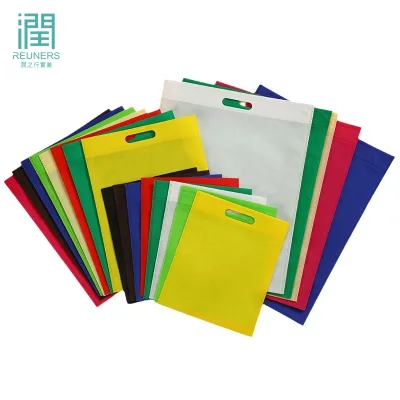


Recyclable Green Paper Bag with Custom Option for Supermarket Shopping Packaging
$0.22 - $0.38
MOQ: 1000 Pieces


Promotional Gift Shopping Bag Reusable and Foldable 190t Polyester Shopping Bag
$0.28 - $0.48
MOQ: 2000 Pieces


Comprehensive Sourcing Guide
Strategic Sourcing Guide for Square Bottom Recyclable Shopping Bags
Understanding Product Architecture and Technical Specifications
The core keyword "Square Bottom Recyclable Shopping Bag" refers to a specific packaging architecture designed to maximize shelf presence and load-bearing capacity while adhering to sustainability mandates. In the context of the available market data, these products are frequently constructed from woven or non-woven polypropylene (PP) materials, which offer a distinct balance between durability and environmental recyclability. The defining structural characteristic is the square bottom, which transforms a standard pouch into a rigid container capable of standing upright, a feature critical for retail display and efficient stacking.
Technical observations from current listings indicate that these bags often feature a "Middle" size specification, suitable for a broad range of retail applications. The material composition is a primary differentiator; while some listings specify "PP Woven" or "Non Woven" as the base material, others highlight "Kraft Paper" or "Cardboard" for specific applications, suggesting a diverse supply chain that caters to varying aesthetic and functional requirements. The weight of the finished product is a critical metric for logistics planning, with observed ranges falling between less than 0.5 kg and 0.5-1 kg per unit, depending on the thickness and layering of the material.
The manufacturing process for these bags typically involves sewing as a primary technology, ensuring the structural integrity of the square bottom gussets. Surface handling often includes hot stamping or laminating processes to enhance the visual appeal and provide a barrier against moisture. The transparency of these bags is generally opaque, which is a deliberate design choice to protect the contents from light exposure and to provide a solid canvas for branding. Color options are extensive, ranging from standard industrial hues like yellow, white, black, blue, red, and orange to fully custom color matching, allowing brands to align packaging with their corporate identity.
Compliance, Certification, and Environmental Standards
When sourcing recyclable shopping bags, the verification of environmental claims is paramount. The market data explicitly lists "Recyclable" and "Eco-Friendly" as key features, alongside specific performance attributes such as being waterproof, shrink-resistant, quick-dry, mothproof, anti-tear, anti-static, anti-pull, and anti-bacterial. These multi-functional properties suggest that the bags are engineered for heavy-duty use beyond simple carrying, making them suitable for industries ranging from garment and shoe retail to electronics and food packaging.
Buyers must approach certification claims with a disciplined verification strategy. While the provided context mentions FSC (Forest Stewardship Council) as a background concept, it is categorized as low-confidence and should not be assumed as a standard attribute for all listed products. Instead, procurement teams should request specific documentation from suppliers to validate the recyclability of the PP woven or non-woven materials used. The standard for these products is often listed as "customized" or "Custom Make," indicating that compliance requirements can be tailored to the buyer's specific regional regulations.
Safety is another critical dimension. The data identifies a "Safety Factor" as a standard attribute, implying that the bags are designed to prevent accidental tearing under load. However, the exact numerical safety factor is not provided in the general observations. Buyers should verify that the bags meet local safety standards for food contact if the intended usage includes food products, as the listings mention usage in the food sector. The "Safety" attribute serves as a general indicator of robust construction rather than a specific regulatory certification.
Cost Drivers and Economic Variables
The pricing structure for square bottom recyclable shopping bags is highly variable, with observed ranges spanning from $0.02 to $3,600. This wide disparity is not indicative of unit price volatility alone but rather reflects the difference between single-unit samples, small batch orders, and large-scale industrial procurement contracts. The "Low MOQ" (Minimum Order Quantity) of 1 allows for prototyping, while the "High MOQ" of 30,000 suggests that significant economies of scale are achieved only at volume.
Several factors drive the final cost. Material selection is the primary driver; PP woven materials generally offer a different cost profile compared to non-woven alternatives or paper-based constructions. The complexity of the printing process also impacts pricing. Options such as hot stamping and laminating add value but increase production costs compared to standard printing. Customization levels, including specific dimensions like the "453015cm" standard or custom width specifications of "42/43 inches," will influence the unit price.
Lead times are another economic variable. The data presents two distinct delivery windows: "Usually 30 days" and "5-20 Days Depending on Order Size." This variation suggests that rush orders or smaller batches may be processed faster, while larger, complex custom orders require a longer production cycle. Buyers should factor these lead times into their inventory planning to avoid stockouts. Additionally, the packing method, whether "CTN" (Carton) or "Conventional Transport Package," affects shipping costs and handling efficiency.
Typical Applications and Usage Scenarios
The versatility of square bottom recyclable shopping bags is evident in the extensive list of applications provided. These bags are designed to serve the "Garment & Shoes," "Jewelry," "Electronic Products," "Food," "Cosmetic," and "Gifts" sectors. The structural rigidity of the square bottom makes them particularly suitable for heavy items like shoes and electronics, where a flat bottom prevents tipping and maximizes shelf space.
In the retail environment, the "Shaped Bag" and "Handled" style features are crucial for the "Promotion" and "Packing" use cases. The ability to carry a logo via "With Logo Printing" and "Logo" customization allows brands to use these bags as mobile advertising tools. The "Household" and "Industrial Use" categories further expand the utility of these bags, suggesting they are suitable for general storage and transport needs beyond traditional retail.
The specific material properties align with these diverse applications. For instance, the "Waterproof" and "Anti-Tear" features are essential for food packaging, ensuring that contents remain dry and secure. The "Breathable" nature of woven PP materials makes them ideal for garment and shoe packaging, preventing moisture buildup that could damage delicate fabrics. The "Heavy Weight" thickness specification supports the "Weight Limit" of 5-10 kg, confirming their suitability for carrying substantial loads without failure.
Supplier Evaluation and Sourcing Strategy
Evaluating suppliers for square bottom recyclable shopping bags requires a focus on capability and reliability. The data indicates that the primary production origin is "Wenzhou, China," a major hub for packaging manufacturing. Buyers should verify the supplier's capacity to handle the specific customization requirements, as the "Standard" is often listed as "customized." This implies that the supplier must have flexible production lines capable of adapting to unique design specifications.
The "Brand" attribute is listed as "OEM/ODM," indicating that suppliers are equipped to manufacture private label products. This is a critical capability for brands seeking to maintain exclusivity and control over their packaging design. Buyers should assess the supplier's experience with the specific technologies mentioned, such as "Sewing" and "Laminating," to ensure they can deliver the required quality.
Sample availability is a key indicator of supplier professionalism. The data confirms that "Samples Are Free," which allows buyers to physically inspect the product before committing to a large order. The "Sample Time" of "3-5 Working Days" suggests a responsive supply chain. However, buyers should also inquire about the "Printing Handling" capabilities, which are listed as "as Your Need," to ensure the supplier can accommodate complex design requests.
Quality Control and Performance Verification
Maintaining consistent quality is essential for long-term procurement success. The "Safety Factor" and "Hardness" (listed as "Medium Soft") are qualitative attributes that require physical verification. Buyers should conduct stress tests on the bag handles and the square bottom seams to ensure they can withstand the "Weight Limit" of 5-10 kg without failure. The "Anti-Tear" and "Anti-Pull" features should be validated through tensile strength testing, especially for bags intended for heavy retail items.
The printing quality is another critical quality control point. With processes like "Hot Stamping" and "Laminating," buyers must check for adhesion, color consistency, and resistance to abrasion. The "Transparency" being "Opaque" is a standard expectation, but buyers should verify that the opacity is uniform and that the printing does not bleed through the material.
For bags intended for food or cosmetic use, verifying the "Eco-Friendly" and "Recyclable" claims is vital. Buyers should request test reports or certifications that confirm the material composition and the absence of harmful substances. The "Standard" of "Custom Make" means that quality benchmarks may vary, so establishing a clear quality agreement with the supplier is necessary.
Long-Term Procurement Considerations
Sourcing square bottom recyclable shopping bags is not just a transactional activity but a strategic decision that impacts brand image and operational efficiency. The "Delivery Time" variability and the wide range of MOQs require a flexible procurement strategy. Buyers should consider building a relationship with a supplier who can scale production up or down based on seasonal demand fluctuations.
The "Product Packing" options, such as "by Sea or by Air," offer flexibility in logistics. For large orders, sea freight is typically more cost-effective, while air freight may be necessary for urgent restocking. The "CTN" packing method is standard for bulk shipments, ensuring that the bags are protected during transit.
Finally, the "Customization" availability is a long-term asset. As market trends shift towards more sustainable and branded packaging, the ability to customize the "Color," "Shape," and "Logo" allows brands to stay competitive. Buyers should plan for a phased approach to customization, starting with standard designs and gradually introducing more complex features as the relationship with the supplier matures. This approach minimizes risk while maximizing the potential for brand differentiation.
FAQs
What materials are used for square bottom recyclable shopping bags?
These bags are typically constructed from PP woven or non-woven materials, though some listings specify Kraft Paper or Cardboard. The material choice depends on the required durability and specific application, such as garment, food, or electronic product packaging.
How much weight can these bags safely carry?
The observed weight limit for these bags ranges from 5 to 10 kg, supported by a safety factor designed to prevent tearing. This capacity makes them suitable for heavy items like shoes and electronics while maintaining structural integrity during transport.
Can I customize the logo and printing on these bags?
Yes, customization is available with options for logo printing, hot stamping, and laminating processes. Buyers can request specific color matching and design needs, as the standard is often listed as customized or custom make to align with brand identity.
What is the typical delivery time for these shopping bags?
Delivery times vary, usually taking 30 days, but can range from 5 to 20 days depending on the order size. Smaller batches may be processed faster, while larger custom orders require a longer production cycle to ensure quality and meet specifications.
Where are these bags manufactured and what is the origin?
The primary production origin for these bags is Wenzhou, China, which is a major hub for packaging manufacturing. Suppliers in this location offer OEM and ODM services, allowing for flexible production lines capable of adapting to unique design specifications.
What are the available size and shape specifications?
The bags are available in a middle size with a square bottom shape, transforming them into rigid containers for retail display. Specific dimensions can be customized, with some listings noting standards like 45*30*15cm or widths around 42/43 inches.
Are samples available for testing before placing a large order?
Samples are free and typically ready within 3 to 5 working days, allowing buyers to inspect quality before commitment. This feature helps verify attributes like hardness, transparency, and printing quality to ensure the bags meet the required safety and performance standards.