Source Square Frame Line Spacer for Transmission Lines and Substations
Find and compare 30 Square Frame Line Spacer options from verified Chinese manufacturers. Buyers can evaluate specifications for steel protection, overhead transmission lines, and substation fittings based on material and customization needs.
Key considerations
Products List


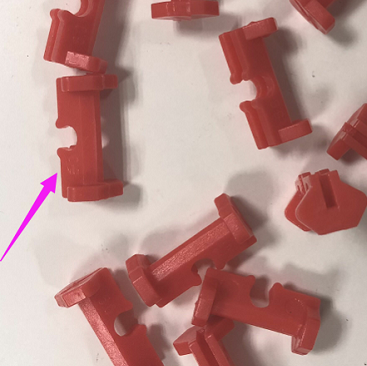


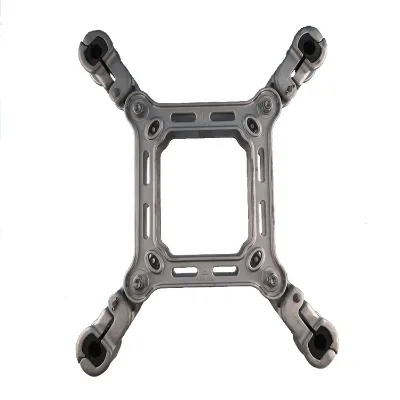
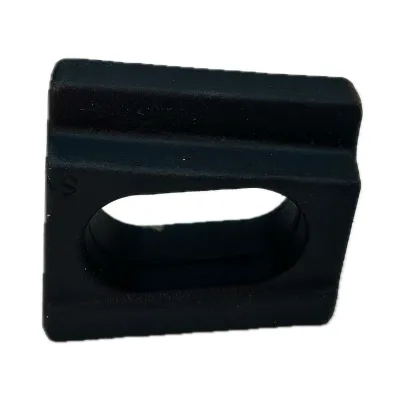
Comprehensive Sourcing Guide
Strategic Sourcing Guide for Square Frame Line Spacers
Understanding Product Definitions and Core Technical Specifications
When sourcing square frame line spacers, buyers must first distinguish between the specific functional categories often grouped under this terminology. The provided product data indicates that "square frame" components frequently appear in the context of steel protection fittings and overhead transmission line accessories. These items are not merely structural spacers but are engineered to maintain specific distances between conductors or to protect steel components within electrical infrastructure. The technical profile of these items varies significantly based on their intended application, ranging from general steel protection to specific line fitting roles.
A critical observation from the available data is the variation in dimensional compatibility. Products designated for steel protection often list a fit range for steel diameters between 6mm and 28mm, while other variants in the same category extend this range to 6mm up to 35mm. This discrepancy suggests that "square frame" designs are not monolithic; rather, they are tailored to specific conductor or structural steel sizes. Buyers must verify the exact diameter of the steel or conductor they intend to protect or space before selecting a model. The product models identified in the supply chain include the SD-series and SP series, which likely correspond to different structural capacities or mounting configurations.
Material composition is another defining technical parameter. The supply data highlights two primary material profiles: plastic and galvanized steel. Plastic variants are noted for their use in specific protection layers, while galvanized steel options are explicitly linked to overhead transmission line applications. The galvanized steel products adhere to a hot-dip galvanization process, which is essential for corrosion resistance in outdoor environments. The surface finish for these metal components is described as smooth, indicating a manufacturing process that minimizes friction or abrasion on the conductors they support. Furthermore, the protection layer thickness for certain steel fittings ranges from 15mm to 100mm, while other standards specify a range of 15mm to 270mm. These numerical ranges are not universal; they represent specific product capabilities that must be matched to the physical requirements of the installation site.
Compliance, Certification, and Galvanization Standards
In the realm of electrical infrastructure and steel protection, compliance with international standards is non-negotiable. The sourcing guide must prioritize products that adhere to recognized galvanization and material standards. For galvanized steel line spacers, the data explicitly references the ISO 1461-2009 standard for hot-dip galvanization. This standard governs the thickness and adhesion of the zinc coating, which is the primary defense against rust and corrosion in harsh weather conditions. Buyers should not assume that all galvanized products meet this threshold; verification of the specific coating thickness and adherence to ISO 1461-2009 is a mandatory step in the qualification process.
Beyond galvanization, material certifications play a pivotal role in ensuring long-term reliability. The supply data indicates that certain aluminum profile components, which may be used in conjunction with or as alternatives to steel spacers in specific framing applications, carry ISO9001 certification. While this certification specifically references the aluminum alloy products (6000 Series), it signals a manufacturing environment committed to quality management systems. For steel-based line spacers, the presence of a "protection layer" standard and specific model numbers (SD-series, SP series) serves as a proxy for standardized production. Buyers must request documentation proving that the galvanized coating thickness falls within the 15mm to 100mm or 15mm to 270mm ranges observed in the market, depending on the specific load and environmental requirements of the project.
It is also essential to verify the origin of the product, as regional manufacturing standards can vary. The data points to production origins in Putian, Fujian, and Yangzhou City, China, as well as Shandong, China. While these locations are known manufacturing hubs, the specific factory's adherence to ISO standards must be confirmed on a case-by-case basis. The "Standard" attribute for some products is listed simply as "Steel," which is a generic descriptor. In contrast, the aluminum profiles list "Customized on demand" as their standard, implying a higher degree of flexibility but requiring rigorous specification checks. Buyers should ensure that the "Standard" field in the supplier's documentation explicitly names the relevant national or international standard (e.g., ASTM, IEC, or ISO) rather than leaving it as a generic material description.
Cost Drivers and Pricing Variables in the Market
The pricing landscape for square frame line spacers is highly variable, driven by material costs, manufacturing complexity, and order volume. The observed price range in the market spans from $0.01 to $3,800. This extreme variance is not indicative of a single product type but reflects the diversity of the category, which includes small plastic fittings to large, heavy-duty galvanized steel assemblies. The lower end of the price spectrum likely corresponds to simple plastic protection fittings or small quantity orders of basic components. The upper end of the range suggests large-scale orders of complex galvanized steel assemblies, potentially including custom packaging or specialized engineering.
Material cost is a primary driver of price fluctuations. Galvanized steel, which requires hot-dip treatment to meet ISO 1461-2009, is inherently more expensive than plastic or raw steel due to the energy-intensive coating process and the cost of zinc. Similarly, aluminum profiles (6000 Series) involve extrusion and powder coating processes, which add to the unit cost compared to simple casting or plastic molding. The "Technics" attribute distinguishes between casting, extrusion, and mechanical polishing, each carrying different labor and equipment costs. Casting is noted for steel products, while extrusion is associated with aluminum profiles.
Order volume is the second significant cost driver. The Minimum Order Quantity (MOQ) ranges from 1 to 100,000 units. Suppliers offering an MOQ of 1 are likely targeting prototyping or small-scale repair needs, which typically commands a higher unit price. Conversely, bulk orders approaching the 100,000-unit range benefit from economies of scale, reducing the per-unit cost significantly. The packing quantity also influences logistics costs; options range from 20 to 5,000 pieces per bag or carton. Large packing quantities reduce the number of handling units, lowering shipping and warehousing expenses, which can be factored into the final negotiated price. Buyers should request tiered pricing structures that reflect these volume thresholds to optimize their procurement budget.
Typical Applications and Usage Scenarios
Square frame line spacers serve diverse functions across the electrical and construction sectors. The primary application identified in the data is for "Overhead Transmission Line" systems. In this context, these spacers act as line fittings or substation fittings, maintaining the necessary separation between conductors to prevent short circuits and ensure efficient power transmission. The "Usage" attribute explicitly lists "Steel Protector," indicating a secondary but critical function: protecting the structural steel of towers or poles from environmental degradation or physical damage.
The versatility of these products is further highlighted by their application in "Transportation Tools, Door & Window, Glass Wall, Heat Sink, and Decorations." While the core keyword focuses on line spacers, the data suggests that similar "square frame" geometries are utilized in architectural aluminum profiles. For instance, the 70 Series Window & Door Aluminium Profile and the 6063/6061 alloy grades are used in building facades and heat dissipation systems. Buyers must be careful not to conflate structural line spacers with architectural framing components. The former requires high tensile strength and corrosion resistance (hence the hot-dip galvanization), while the latter prioritizes aesthetic finish and thermal properties (hence the powder coating and mechanical polishing).
The fit range of 6-28mm or 6-35mm suggests these spacers are designed for medium-sized conductors or structural members. They are not intended for massive transmission towers with diameters exceeding 35mm, nor for micro-scale electronics. The "Protection Layer" standard of 15mm-100mm or 15mm-270mm implies that the spacer itself may be a component of a larger protective assembly, or that the spacer defines the clearance distance for the protection layer. In substation environments, these fittings ensure that high-voltage lines do not come into contact with grounded structures, a critical safety requirement. The "Type" attribute, listed as "Protection Fittings," reinforces their role in safeguarding infrastructure rather than merely connecting it.
Supplier Evaluation and ODM/OEM Capabilities
When evaluating potential suppliers for square frame line spacers, buyers should prioritize those with demonstrated flexibility in customization and manufacturing capabilities. The data indicates that "Customization" is available, and suppliers explicitly accept "ODM OEM" (Original Design Manufacturing/Original Equipment Manufacturing) requests. This suggests that many manufacturers are willing to adapt the SD-series or SP-series models to meet specific client requirements, such as altering the fit diameter or modifying the protection layer thickness.
The availability of free samples is a significant indicator of supplier confidence and a valuable tool for the evaluation process. Buyers should leverage this opportunity to physically inspect the product quality, verify the surface finish (smoothness), and test the fit on their specific steel or conductor diameters. The "Samples" attribute confirms that suppliers are generally open to providing these test units, which is crucial for validating the "Fit Steel" specifications before committing to a large order.
Supplier location is another factor in the evaluation matrix. The data identifies manufacturers in Putian, Fujian; Yangzhou City; and Shandong, China. These regions have established supply chains for both steel and aluminum processing. Buyers should assess the logistical implications of these locations, considering lead times and shipping costs. While the specific lead times are not provided in the data, the existence of multiple production hubs suggests a competitive market where buyers can negotiate favorable terms. The "Packing Qty" options, ranging from 20 to 5,000 pieces per bag, indicate that suppliers have the capacity to handle both small, specialized shipments and large, bulk deliveries.
Quality Control and Long-Term Procurement Considerations
Quality control for square frame line spacers must focus on the integrity of the galvanization and the dimensional accuracy of the fit. For galvanized steel products, the "Galvanization Type" is specified as Hot-DIP, and the "Surface" is described as smooth. Buyers should implement a quality assurance protocol that includes visual inspection for coating uniformity and thickness verification against the ISO 1461-2009 standard. Any signs of peeling, uneven coating, or rough surfaces could indicate a failure in the manufacturing process, leading to premature corrosion and potential infrastructure failure.
The "Warranty" attribute of 12 months provides a baseline for supplier accountability. However, given the critical nature of overhead transmission line components, buyers should consider negotiating extended warranty terms or requiring more rigorous pre-shipment testing. The "Application" in harsh outdoor environments demands that the product withstand UV exposure, temperature fluctuations, and moisture. The "Temper" range of T3 to T8 for aluminum profiles suggests that heat treatment is a critical step in the manufacturing process for certain variants, ensuring the material meets the required mechanical strength.
Long-term procurement considerations involve the stability of the supply chain and the consistency of product specifications. The "Packing" methods, including woven bags, poly bags, and wooden cases, vary by product type. For long-term storage and transport, wooden cases offer superior protection for heavy steel components, while woven bags are suitable for lighter plastic or smaller metal fittings. Buyers should ensure that the packaging aligns with their logistics capabilities to prevent damage during transit. Additionally, the "Customized on demand" standard for some products implies that future orders may require re-verification of specifications, even if the base model remains the same. Maintaining a clear record of the specific model numbers (SD-series, SP series) and the exact fit ranges (6-28mm vs. 6-35mm) is essential for ensuring consistency in future replenishment orders.
Comparative Analysis of Product Variants
To assist buyers in navigating the diverse product landscape, the following table summarizes the key distinctions between the observed product categories based on the supplied data.
| Feature | Steel Protection Fittings (SD/SP Series) | Overhead Transmission Line Fittings | Aluminum Profiles (6000 Series) |
|---|---|---|---|
| Primary Material | Plastic or Galvanized Steel | Galvanized Steel | 6000 Series Alloy (6063/6061) |
| Fit Range | 6-28mm or 6-35mm | Not explicitly defined by diameter | N/A (Profile Series: 70 Series) |
| Protection Layer | 15mm-100mm or 15mm-270mm | N/A | N/A |
| Surface Treatment | Smooth (Galvanized) | Hot-DIP Galvanized (ISO 1461-2009) | Powder Coating / Mechanical Polishing |
| Manufacturing Process | Casting | Hot-Dip Galvanizing | Extrusion |
| Typical Application | Steel Protector, Line Fittings | Overhead Transmission, Substation | Door & Window, Heat Sink, Decorations |
| Packing Options | Woven Bag, Poly Bag, Wooden Case | Wooden Case | Protective Film + Heat Shrink Film |
| Origin Locations | Putian, Fujian; Yangzhou City | Yangzhou City, China | Shandong, China |
This comparison highlights that while all products may share a "square frame" geometry, their material science and application contexts differ vastly. A buyer sourcing for a high-voltage transmission line must prioritize the galvanized steel options with ISO 1461-2009 compliance, whereas a buyer for architectural framing should focus on the extruded aluminum profiles with specific temper grades. Understanding these distinctions prevents the common error of selecting a component that is technically adequate for one application but unsuitable for another. By rigorously applying these criteria, buyers can ensure that their procurement of square frame line spacers meets the exacting demands of modern infrastructure projects.
FAQs
What materials are used for square frame line spacers?
Square frame line spacers are primarily made from plastic or galvanized steel. Plastic variants are used for specific protection layers, while galvanized steel options are designed for overhead transmission lines and substation fittings to ensure durability and corrosion resistance.
Which fit steel diameters do these spacers support?
These spacers support steel diameters ranging from 6mm to 28mm or 6mm to 35mm depending on the specific model. Buyers must verify the exact diameter of the steel or conductor they intend to protect before selecting the appropriate SD-series or SP-series model.
Can I get free samples for square frame line spacers?
Yes, suppliers generally offer free samples for evaluation. This allows buyers to physically inspect the product quality, verify the smooth surface finish, and test the fit on their specific steel diameters before committing to a larger bulk order.
What is the warranty period for these fittings?
The standard warranty period for these fittings is 12 months. This coverage applies to the protection fittings used in overhead transmission lines and substation applications to ensure long-term reliability and performance under standard operating conditions.
How are galvanized steel spacers coated for protection?
Galvanized steel spacers use a hot-dip galvanization process to apply a protective zinc coating. This process adheres to the ISO 1461-2009 standard, ensuring the coating thickness and adhesion meet requirements for corrosion resistance in harsh outdoor environments.
What packaging options are available for these products?
Packaging options include woven bags, poly bags, and wooden cases depending on the product type. Packing quantities vary significantly, ranging from 20 to 5,000 pieces per bag or carton, allowing flexibility for different order volumes and shipping requirements.
Do suppliers accept customization for these spacers?
Yes, customization is available for square frame line spacers. Suppliers accept ODM and OEM requests, allowing buyers to adapt models like the SD-series or SP-series to meet specific client requirements for dimensions, protection layer thickness, or mounting configurations.