Source Stackable Acrylic Chair with Chrome Legs for Dining, Hotel, and Office
Find and compare 30 Stackable Acrylic Chair with Chrome Legs options for dining rooms, hotels, and office spaces. These modern chairs feature waterproof plastic construction, metal frames, and foldable designs suitable for home or commercial use.
Key considerations
Products List
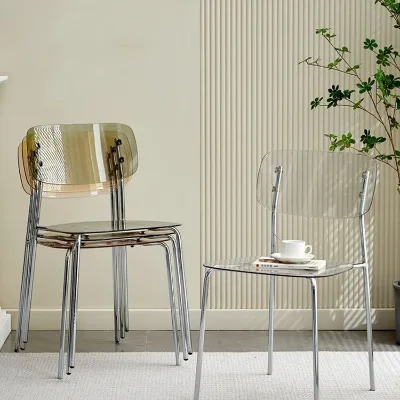


Chromed Leg Dining Living Office Conference Meeting Room Cheap Stakable Plastic Chair
$10.55 - $15.55
MOQ: 200 Pieces


Comprehensive Sourcing Guide
Stackable Acrylic Chair with Chrome Legs Sourcing Guide
Procuring stackable acrylic chairs with chrome legs requires a nuanced understanding of how material properties intersect with structural engineering in modern furniture. The core appeal of this category lies in the visual transparency of the acrylic shell, which allows for unobtrusive placement in dining, hotel, and office environments, while the chrome-plated metal frame provides the necessary rigidity for stacking stability. Buyers must recognize that while the visual aesthetic suggests a lightweight product, the actual weight and durability depend heavily on the specific thickness of the acrylic and the gauge of the steel tubing used in the leg assembly.
Sourcing decisions should be grounded in the specific application context, as the same chair model may serve different functions in a hotel lobby versus a school cafeteria. The observed market data indicates that these units are frequently marketed for high-traffic commercial settings, including meeting rooms and outdoor dining areas, where waterproofing and ease of cleaning are paramount. However, the presence of "folded" or "disassembly" attributes in some listings suggests that buyers must verify whether the product is designed for permanent installation or temporary storage, as this distinction significantly impacts the structural integrity of the stacking mechanism.
Product Scope and Observed Listing Signals
The product landscape for stackable acrylic chairs reveals a diverse range of configurations, from fixed rotary bases to disassembly-friendly knock-down frames. Listings indicate that while the primary material is often acrylic, some variations utilize plastic or other unspecified materials for the shell, and the leg construction varies between metal tubes and steel tubing with specific thicknesses like 1.2mm. This variability means that a buyer searching for a "chrome leg" chair must explicitly confirm the plating quality and the underlying metal type, as some suppliers may list "metal" legs without guaranteeing a chrome finish or corrosion resistance suitable for humid environments.
Observations of product attributes show that customization is a significant factor in this category, with options available for specific shapes, colors, and dimensions, yet some listings also offer non-customized standard models. The presence of "Modern" appearance tags and "Square" shape specifications suggests a design trend toward geometric minimalism, but buyers should be wary of inconsistent data where a chair is described as both "folded" and "unfolded" or having conflicting origin locations like Fujian versus Guangdong. These signals highlight the need for rigorous specification checks to ensure the received goods match the intended design and functional requirements.
Technical Specifications to Verify
When evaluating the technical integrity of these chairs, the dimensions and weight capacity are critical parameters that often vary between models such as DS01183, DS01218, and SA0006-3. Buyers must verify the exact size specifications, which can range from compact dining dimensions like 435044cm to larger configurations reaching 505284cm, ensuring the footprint aligns with the intended space. Additionally, the weight of the unit, noted in some contexts as 7.9 kg, serves as a proxy for material density and stacking stability; a heavier chair may offer better resistance to tipping but could be more difficult to move and stack efficiently in high-turnover environments.
The structural composition of the legs and the frame requires detailed scrutiny, particularly regarding the "Steel Tube" thickness and the "Chrome" plating quality. While some data points mention a 1.2mm thickness for steel tubes, this is not a universal standard for all acrylic chairs, and thinner gauges may compromise the chair's ability to support the weight of stacked units without buckling. Furthermore, the distinction between "Fixed" rotary bases and "Without Armrest" designs impacts the center of gravity and stacking alignment, necessitating a physical or detailed visual inspection to confirm that the stacking mechanism is robust enough for the intended frequency of use.
Compliance and Safety Documentation
Safety compliance for furniture intended for public use, such as schools, hotels, and offices, often hinges on specific certification standards that vary by region and application. While some listings mention CE and ISO certifications, the data also notes that standards can be "optional," indicating that buyers cannot assume compliance without explicit verification from the supplier. It is essential to request current test reports that validate the chair's stability, load-bearing capacity, and material safety, particularly for acrylic components that must meet fire resistance and toxicity standards in commercial settings.
The warranty period, observed in some listings as ranging from 3 to 5 years, serves as a tangible indicator of the manufacturer's confidence in their product's durability and their commitment to after-sales support. However, the validity of this warranty is contingent upon the specific usage conditions and the maintenance protocols agreed upon in the purchase agreement. Buyers should ensure that the warranty explicitly covers structural failures of the chrome legs and cracking of the acrylic shell, as these are common failure points in stackable furniture subjected to heavy daily use.
Cost Drivers and Commercial Terms
The pricing structure for stackable acrylic chairs is influenced by a complex interplay of material costs, customization levels, and order volume, with observed ranges spanning from approximately $4.68 to $59.90 per unit. The lower end of this spectrum typically corresponds to basic, non-customized models with standard dimensions and minimal packaging, while the higher end reflects custom colors, specialized finishes, or complex stacking mechanisms that require more precise manufacturing. Buyers must understand that the "Customized" attribute often carries a premium, and the decision to order custom specifications should be weighed against the potential for longer lead times and higher minimum order quantities.
Commercial terms such as Minimum Order Quantity (MOQ) and packaging methods significantly impact the total cost of ownership and logistics planning. The observed MOQ range of 1 to 500 units suggests flexibility for small buyers, but larger orders may unlock better pricing tiers and more favorable shipping terms. Packaging is another critical cost driver, with options ranging from "Carton" to "Knock Down" or "Mail Packing," each affecting the volume efficiency of shipping and the risk of damage during transit. Buyers should calculate the landed cost by factoring in the packaging type, as inefficient packing can increase freight charges and the likelihood of receiving damaged goods.
Supplier Qualification and Quality Control
Selecting a qualified supplier for acrylic chairs requires a thorough vetting process that goes beyond the basic location data provided in listings, which may include origins in Fujian, Guangdong, or general "China" designations. Buyers should verify the supplier's manufacturing capabilities, specifically their ability to maintain consistent quality in acrylic molding and chrome plating, as these processes are prone to defects like bubbles, scratches, or uneven plating if not strictly controlled. The presence of "New" condition tags and "Disassembly" features in listings indicates a focus on modern manufacturing, but buyers must confirm that the supplier has a dedicated quality control team to inspect these specific attributes before shipment.
Quality control protocols should include pre-shipment inspections that test the stacking stability, the durability of the chrome finish, and the structural integrity of the acrylic shell under load. Since the data mentions "optional" standards, buyers should not rely on the supplier's self-declared compliance but rather insist on third-party inspection reports or on-site audits to verify that the production process meets international safety and quality benchmarks. Establishing a clear communication channel for defect reporting and establishing a sample approval process before mass production are essential steps to mitigate the risk of receiving substandard inventory.
Long-Term Procurement Checks
Sustaining a successful procurement relationship for stackable acrylic chairs involves regular monitoring of product consistency and supplier performance over time. Buyers should implement a system for tracking defect rates, particularly regarding the chrome legs losing their luster or the acrylic shells developing stress cracks, which can indicate a degradation in material quality or manufacturing processes. Regular re-evaluation of the supplier's ability to meet delivery timelines and maintain the agreed-upon specifications is crucial, as the furniture market is dynamic and suppliers may change materials or processes without prior notice.
Long-term procurement strategies should also account for the evolving needs of the business, such as changes in seating capacity or design trends that may require new chair models. Maintaining a relationship with a supplier who offers flexible customization options and reliable after-sales support ensures that the procurement team can adapt to these changes without significant disruption. Additionally, buyers should periodically review the warranty terms and certification status of the products to ensure they remain compliant with any new regulations or safety standards that may be introduced in the target markets.
FAQs
What is the material composition of the stackable acrylic chair?
The chair is constructed from acrylic and plastic materials with a metal or steel tube frame. Some models feature a 1.2mm thickness steel tube for durability. The upholstery material is listed as other, indicating a focus on the acrylic shell design.
Can the Stackable Acrylic Chair with Chrome Legs be customized?
Customization is available for certain models, while others are listed as non-customized. Buyers can request specific shapes like square designs or specific dimensions such as 43*50*44/79cm. The product condition is new, and some units offer disassembly features for easier shipping.
Which certifications apply to the Stackable Acrylic Chair with Chrome Legs?
Some products carry CE and ISO certifications, though specific standards like ISO 17025 are not confirmed in the high-confidence facts. The standard size is often listed as 43*50*44/79cm. Buyers should verify specific certification documents for each supplier offering these dining or school chairs.
How does the Stackable Acrylic Chair with Chrome Legs perform in hotels?
These chairs are suitable for hotel, home, and office applications including meeting rooms and schools. They feature a fixed rotary mechanism and are designed without armrests. The waterproof feature makes them practical for various environments, and they are often packed in cartons or knock-down formats.
What is the warranty period for the Stackable Acrylic Chair with Chrome Legs?
The warranty period is typically between 3 to 5 years for specific models like the SA0006-3. This coverage applies to the structural integrity of the steel tube frame. Buyers should confirm the exact warranty terms with the supplier as conditions may vary by product model.
Can the Stackable Acrylic Chair with Chrome Legs be folded?
The product attributes indicate that the chair is folded and can be unfolded for use. It is designed as a stackable unit for efficient storage. The folded state allows for compact transport, and the dimensions vary by model, such as the 50*52*84 Cm specification.
Which locations manufacture the Stackable Acrylic Chair with Chrome Legs?
Manufacturing origins include Fujian, China, and Guangdong, China. These regions supply the acrylic and plastic dining chairs for global markets. The products are often shipped via carton packing or knock-down methods to protect the frame and acrylic shell during transit.