Source Stackable 316L Stainless Steel Bracelet for gifts, fashion, and daily wear
Explore 30 listings for the Stackable 316L Stainless Steel Bracelet, comparing options in leather, copper, and stainless steel materials. Buyers can evaluate customization, plating, and packaging details to find suitable pieces for formal or informal occasions.
Key considerations
Products List




Comprehensive Sourcing Guide
Strategic Sourcing Guide for Stackable 316L Stainless Steel Bracelets
Understanding Material Integrity and Alloy Specifications
When sourcing stackable 316L stainless steel bracelets, the primary technical focus must remain on the alloy composition and its resistance to environmental degradation. The core keyword "316L" denotes a specific grade of stainless steel known for its low carbon content, which enhances resistance to intergranular corrosion. In the context of the available product data, buyers will encounter listings that specify "Stainless Steel" or "316 Stainless Steel" as the primary material. However, the distinction between generic stainless steel and the specific 316L grade is critical for long-term durability, particularly in jewelry that is subject to frequent wear and exposure to moisture or skin oils.
The supplied product attributes indicate that "Stainless Steel" is a verified material for several listings, with specific references to "Quality Brass" and "Copper" in other entries. This variance highlights the necessity for buyers to explicitly verify the alloy grade in the product specifications. While some items in the observed dataset are plated with "Rhodium," "Rose Gold," or "18K Gold," the base material determines the structural integrity. For a stackable bracelet intended for daily wear, the base metal must be corrosion-resistant. The data mentions an advantage of "No Discoloration, No Irritation, No Deformation," which aligns with the properties of high-grade stainless steel, but these claims must be substantiated by the specific material certification provided by the supplier. Buyers should not assume that a "Gold" plated item is 316L unless the specification explicitly states the base alloy is 316L stainless steel, rather than a base of copper or brass.
Compliance Verification and Certification Standards
In the B2B procurement of jewelry, compliance with international safety and quality standards is non-negotiable. The product data explicitly lists "SGS" and "BV" (Bureau Veritas) as certifications for specific models. These third-party inspections are vital for verifying that the materials used do not contain harmful levels of nickel, lead, or cadmium, which are common allergens in jewelry. The "No Irritation" advantage noted in the specifications is a direct result of rigorous testing against these standards.
Buyers must request current certification reports that specifically address the 316L grade. While the data confirms that SGS and BV certificates are available for certain items, the presence of a certificate for one model does not automatically extend to all products from the same supplier. The verification process should include checking the scope of the certificate to ensure it covers the specific alloy grade and the plating processes used. For instance, if a bracelet is described as "Plated Black Color Custom 316 Stainless Steel," the certification must confirm that the plating process does not compromise the underlying 316L integrity or introduce toxic substances.
Furthermore, the "Standard" field in the product data shows varied entries such as "17cm+5cm," "15g," "40g," and "60g." These are likely product-specific standards rather than universal industry certifications. Buyers should not rely on these weight or dimension figures as compliance markers. Instead, they must demand independent laboratory test results that verify the material composition against ASTM or ISO standards for stainless steel jewelry. The absence of a specific standard number in the provided text means the buyer must ask the supplier for the exact standard number (e.g., ASTM A240) that the 316L steel meets.
Cost Drivers and Pricing Structure Analysis
The observed price range for the products in the dataset spans from $0.38 to $15.00 USD. This wide variance is driven by several key factors, including the base material cost, the complexity of the plating, and the customization level. The lower end of the spectrum likely corresponds to items with a base of "Quality Brass" or "Copper" with a thin plating, whereas the higher end reflects genuine 316L stainless steel with thicker, more durable plating or complex designs.
The "MOQ" (Minimum Order Quantity) range of 1 to 600 units significantly impacts the unit cost. Suppliers offering an MOQ of 2PCS or even 1 unit often charge a premium per piece to cover setup and handling costs. Conversely, bulk orders approaching the 600-unit limit typically benefit from economies of scale. The data indicates that "Competitive Factory Price" is a stated advantage, suggesting that direct factory sourcing is a primary cost driver. However, buyers must be cautious; a price that seems too low may indicate a substitution of the base material from 316L to a cheaper alloy like brass, which would fail the "No Discoloration" claim over time.
Customization is another major cost factor. The product attributes confirm that "Customization" is available, including "Logo: Customization" and "OEM/ODM: Acceptable." Customizing the design, plating color, or adding specific branding requires additional tooling and labor. The "Sample Time" of 3 days for stocks and 15 days for customized items further illustrates the cost-time trade-off. Rushing a customized order or requesting complex customizations will inevitably increase the unit price. Buyers should analyze the total cost of ownership, including the cost of samples, tooling fees, and the potential for rework if the initial customization does not meet quality expectations.
Technical Specifications and Design Variations
The technical specifications of stackable bracelets vary widely in the market, as evidenced by the diverse attributes in the product data. Dimensions are critical for stackability; the data mentions standards like "17cm+5cm," which likely refers to the length of the bracelet and an extension chain or charm length. For a stackable design, the width and thickness of the band must be uniform to ensure a cohesive look when worn in multiples. The weight specifications, ranging from "15g" to "60g," indicate a significant difference in the perceived value and material density of the bracelets. A 60g bracelet will feel more substantial and likely use more material than a 15g version, which may be a hollow or lightweight design.
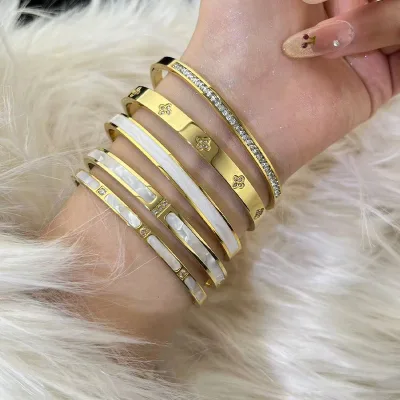
The "Style" and "Type" attributes provide insight into the design intent. Listings describe styles such as "Star Fashion," "Simple," and types like "Charm Bracelets" or "Buckle bracelet." The "Buckle bracelet" specification is particularly relevant for stackable sets, as a secure clasp mechanism is essential to prevent the loss of multiple thin bands. The "Color" options include "Black" and "Gold," with plating options like "Rhodium/Rose Gold/18K Gold." The durability of these colors depends heavily on the plating thickness and the base metal. A "Plated Black Color" on 316L stainless steel offers a modern aesthetic, but the buyer must verify the plating method to ensure it does not chip easily.
Furthermore, the "Suitable for" attribute distinguishes between "Male" and "Female" markets. While stackable bracelets are often unisex, the design nuances, such as width and clasp style, may cater to specific demographics. The "Occasion" is listed as both "Informal Occasions" and "Formal Occasions," suggesting that the design versatility of 316L bracelets allows them to transition between casual and dressy settings. Buyers should evaluate the design specifications against the intended market segment to ensure the product aligns with customer expectations for both style and function.
Supplier Evaluation and Operational Capabilities
Evaluating a supplier for 316L stainless steel bracelets requires a deep dive into their operational capabilities and logistical support. The product data reveals that the "prod_origin" is primarily "China," with specific mentions of "Guangdong, China." Guangdong is a major hub for jewelry manufacturing, but it is essential to verify the specific factory's capacity and history. The "Advantage" of "Competitive Factory Price" suggests a direct manufacturing relationship, which is preferable to trading companies for cost control and quality oversight.
Logistical capabilities are equally important. The "Shipping Method" includes "DHL, Agent of Other Expresses," and "DHL, FedEx, TNT, UPS," indicating a range of international shipping options. The "Drop Shipping: Support" attribute is a significant operational feature for B2B buyers who may be fulfilling orders directly to end consumers without holding inventory. However, drop shipping support requires a high level of coordination and reliability from the supplier to ensure packaging and shipping times are consistent.
The "Sample Time" of 3 days for stocks and 15 days for customized items provides a benchmark for lead times. Buyers should use this data to set realistic expectations for their own supply chain. A 15-day lead time for customization is standard, but any delays beyond this window should be investigated. Additionally, the "OEM/ODM: Yes" and "OEM/ODM: Acceptable" attributes confirm the supplier's flexibility in adapting to buyer requirements. Buyers should assess the supplier's communication efficiency and their ability to handle custom requests, such as specific logo placements or unique plating colors, to ensure a smooth production process.
Quality Control and Long-Term Procurement Strategy
Quality control is the cornerstone of a successful procurement strategy for stainless steel jewelry. The "Advantage" of "No Discoloration, No Irritation, No Deformation" sets a high bar for quality. To maintain this standard, buyers must implement a robust quality control protocol. This includes requesting pre-shipment inspections that verify the material grade, plating thickness, and clasp functionality. The "Certificate: SGS, BV" mentioned in the data is a good starting point, but it should be complemented by random sampling and testing of finished goods.
Long-term procurement considerations involve building a relationship with a supplier who can consistently deliver high-quality 316L products. The "Customization: Available" and "Logo: Customization" features suggest that the supplier is capable of growing with the buyer's brand. However, consistency in material quality is paramount. A supplier who occasionally substitutes brass for stainless steel to cut costs can damage the buyer's brand reputation. Therefore, buyers should establish clear contractual terms regarding material specifications and penalties for non-compliance.
The "Usage" attributes of "Decoration, Health, Gift" indicate the versatility of the product. For "Health" claims, buyers must be extremely cautious, as these claims are often unregulated. While the product data lists "Health" as a usage, it does not provide scientific evidence. Buyers should avoid making specific health claims unless they have verified medical or scientific backing. Instead, focus on the aesthetic and durability aspects of the 316L stainless steel, which are well-documented.
In conclusion, sourcing stackable 316L stainless steel bracelets requires a meticulous approach to material verification, compliance checking, and supplier evaluation. By leveraging the observed data points—such as the specific certifications, material types, and operational capabilities—buyers can navigate the market effectively. The wide price range and varied specifications demand careful due diligence to ensure that the final product meets the high standards of durability and aesthetics expected in the modern jewelry market.
FAQs
What certifications verify the material safety of these bracelets?
SGS and BV certificates are available for specific models to verify material safety. These third-party inspections confirm that harmful levels of nickel, lead, or cadmium are absent, ensuring the jewelry is safe for skin contact.
Can I customize the logo and plating on these bracelets?
Yes, customization is available including logo placement and plating options like Rhodium or Rose Gold. Customized orders typically require a sample time of 15 days, while stock items can be prepared in 3 days.
What is the minimum order quantity for these stainless steel bracelets?
The minimum order quantity ranges from 2 pieces to 600 units depending on the supplier and customization needs. Lower MOQs often carry a higher unit cost, while bulk orders benefit from competitive factory pricing.
How long does it take to receive customized orders?
Customized orders generally require a lead time of 15 days for production. Stock items are faster, with sample times of just 3 days, allowing for quicker fulfillment of immediate needs without design changes.
Which shipping methods are supported for international delivery?
Supported shipping methods include DHL, FedEx, TNT, and UPS for international delivery. Some suppliers also offer drop shipping support, allowing direct shipment to end consumers without holding inventory.
What materials are used for the base of these bracelets?
Base materials include Stainless Steel, Quality Brass, and Copper depending on the specific listing. Buyers must verify the specific alloy grade, as 316L stainless steel offers superior corrosion resistance compared to plated brass or copper.
Are these bracelets suitable for formal occasions?
Yes, certain listings specify suitability for formal occasions alongside informal ones. The design versatility allows them to transition between casual and dressy settings, often featuring styles like Simple or Star Fashion.