Source Stable Hovering Optical Flow Drone for Industrial, RC Model Boat, and Remote Applications
Compare 30 listings of Stable Hovering Optical Flow Drone units featuring electric power, carbon fiber materials, and remote control capabilities. Buyers can evaluate specifications like payload, altitude, and charging time for industrial and RC model boat uses.
Key considerations
Products List


$30.00 - $32.00
MOQ: 300 Pieces


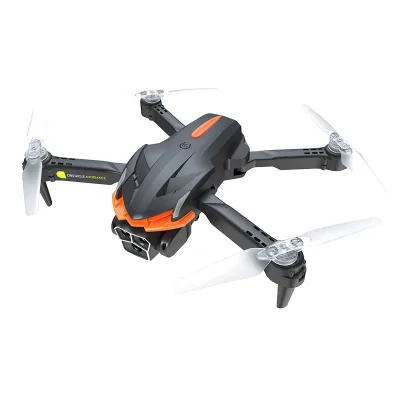
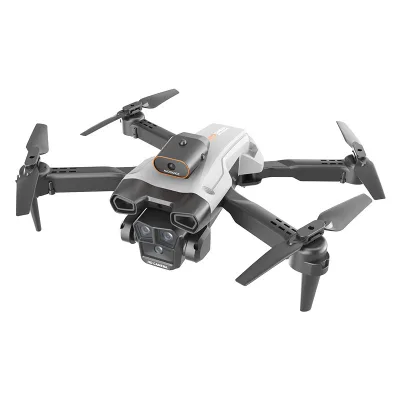
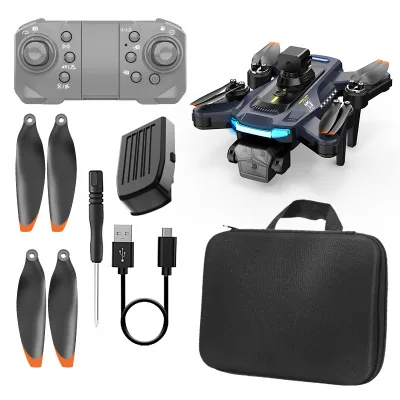
Comprehensive Sourcing Guide
Strategic Sourcing Guide for Stable Hovering Optical Flow Drones
Understanding the Technical Architecture of Optical Flow Systems
When sourcing a Stable Hovering Optical Flow Drone, buyers must first distinguish between general unmanned rotorcraft and systems specifically engineered for low-altitude precision. The core technology relies on downward-facing optical sensors that track surface texture and movement relative to the ground, allowing the flight controller to maintain a fixed position without relying solely on GPS. This capability is critical for indoor operations or areas where satellite signals are weak or unavailable.
Based on the available product attributes, the target category includes devices classified under the structure of "Unmanned Rotorcraft" with specific applications in industrial and RC model sectors. The stability of the hover is often correlated with the wind resistance class and the maximum takeoff altitude capabilities. For instance, observed specifications indicate a wind resistance rating of "Class 6," which suggests a design capable of maintaining stability in moderate to strong gusts, a vital feature for outdoor optical flow operations. Furthermore, the maximum takeoff altitude of "5000m" and operating radius of "Remote" or "Medium Range" provide context for the operational envelope, though the optical flow system specifically governs the low-altitude hold performance.
Buyers should verify that the flight controller explicitly integrates optical flow sensors alongside the standard inertial measurement units (IMU). The product attributes list "Electric" as the power source, which is standard for this class, but the specific battery capacity varies significantly across listings. Some observed units feature a "3.7V 900mAh" capacity with a charging time of about 90 minutes, while others specify a "3.7V 1800mAh Lithium Battery" with a service time of approximately 17 minutes and a charging duration of 180 minutes. These variations directly impact the duration the drone can maintain a stable hover before requiring a recharge. The remote control distance of "About 150 Meters" is another critical parameter to validate, as it defines the communication link reliability during precision hovering tasks.
Compliance, Certification, and Material Standards
In the B2B procurement of electronic accessories and industrial drones, verifying compliance with international safety and environmental standards is non-negotiable. The supply chain data indicates that products in this category often carry certifications such as "RoHS" and "ISO," though the specific ISO standard listed in the raw data appears as "ISOHeight:High Altitude," which suggests a potential data entry anomaly or a specific internal standard regarding altitude performance rather than a widely recognized ISO certification like ISO 9001. Buyers must therefore treat the "RoHS" certification as a verified baseline for hazardous substance restriction but must explicitly request the full ISO certificate documentation from the supplier to ensure compliance with quality management systems.
Material composition is another area requiring rigorous verification. The product attributes list "carbon fobre" (likely a typo for carbon fiber) and "Metal" as primary materials, alongside "Plastic" for certain components. The standard "Carbon fiber" is highlighted as a prod_standard, indicating that high-strength, lightweight frames are a common specification for maintaining the structural integrity required for stable hovering. The material "Metal" is also noted, which may refer to the motor housing or landing gear. For industrial applications, the durability of the frame is paramount. The "Eco-friendly" and "Durable" attributes suggest that suppliers are positioning these units for long-term use, but buyers should request material safety data sheets (MSDS) to confirm the specific alloys or composite layups used.
Additionally, the "Customization: Available" and "OEM: Yes" attributes indicate that many suppliers offer tailored solutions. However, customization can introduce variability in certification status. If a buyer requests a custom frame material or a modified battery configuration, the original RoHS or other certifications may no longer apply to the modified unit. It is essential to confirm that any customized version undergoes the same compliance testing as the standard model. The "Small Orders: Accepted" attribute suggests flexibility in procurement, but buyers should be aware that custom orders often have different lead times and minimum order quantities (MOQ) compared to stock items.
Cost Drivers and Pricing Variables
The pricing landscape for stable hovering optical flow drones is influenced by several distinct factors, including the complexity of the optical flow sensor suite, the battery capacity, and the degree of customization. The observed price range spans from $0.01 to $10,000, a wide spectrum that reflects the diversity of products, from simple RC toys to industrial-grade systems. The lower end of this range likely corresponds to consumer-grade units with basic plastic construction and smaller battery capacities, such as those with "3.7V 900mAh" batteries. In contrast, the higher price points are associated with industrial applications, robust metal or carbon fiber construction, and advanced features like "Remote" operating radius and "Class 6" wind resistance.
The "Max Payload" of "10kg" is a significant cost driver. Drones capable of carrying a 10kg payload require more powerful motors, larger batteries, and reinforced frames, all of which increase the manufacturing cost. Similarly, the "Operating Radius" and "Remote Control Distance" affect the cost of the communication modules. A unit with a "Remote" operating radius and a 150-meter control distance will generally cost more than a "Medium Range" unit. The "Charging Time" and "Battery Capacity" also play a role; a 1800mAh battery with a 17-minute flight time represents a higher energy density and cost than a 900mAh unit with a shorter flight duration.
MOQ (Minimum Order Quantity) is another variable affecting the unit cost. The observed MOQ range is 1 to 500 units. Buyers purchasing small quantities may face higher per-unit costs, while those ordering near the 500-unit threshold may negotiate better pricing. The "Specific Size" and "Adjustable Camera Fpv" attributes suggest that models with integrated camera systems or specific form factors may carry a premium. Buyers should also consider the "prod_packing" cost; units shipped in "Wooden Box" packaging for industrial protection will have higher logistics costs compared to those in standard "Box" packaging.
Typical Applications and Operational Use Cases
The versatility of stable hovering optical flow drones allows them to serve a wide array of industries. The primary application noted in the data is "Industrial," which encompasses tasks such as infrastructure inspection, agricultural monitoring, and security surveillance. In these scenarios, the ability to hover stably without GPS is crucial for inspecting structures like bridges, towers, or inside warehouses where signal interference is common. The "Max Paylaod" of 10kg allows these drones to carry heavy sensors, such as thermal cameras, LiDAR, or multispectral imaging systems, making them suitable for detailed industrial analysis.
Another significant application area is "RC Model Boat" and general recreational use, as indicated by the "Application" attribute. While this may seem distinct from industrial use, the underlying technology for stable hovering is similar. For hobbyists and educational purposes, the "Age: 7-14 Years" attribute suggests that some models are designed for younger users, likely with simplified controls and lower payload capacities. However, the "Function: RC" and "Mode of Charging: USB" attributes indicate that these units are accessible for a broad audience, including schools and training centers.
The "Operating Radius" and "Remote Control Service Time" define the operational scope. A service time of "About 17 Minutes" is typical for many consumer and light industrial drones, limiting the duration of a single inspection or survey mission. For extended operations, buyers may need to procure multiple units or plan for rapid battery swapping. The "Height: High Altitude" and "Medium Altitude" attributes suggest that these drones are capable of operating at various elevations, making them suitable for both low-altitude indoor inspections and outdoor surveys at moderate heights. The "Wind Resistance: Class 6" ensures that the drone can maintain stability in outdoor environments where wind conditions are unpredictable.
Supplier Evaluation and Sourcing Criteria
Evaluating suppliers for stable hovering optical flow drones requires a focus on technical capability, reliability, and compliance. The "Brand Name: BEWA" and "Brand: OEM ODM" attributes indicate that there are established brands and manufacturers capable of providing both branded and white-label solutions. Buyers should prioritize suppliers who demonstrate a clear understanding of optical flow technology and can provide detailed technical documentation regarding the sensor integration and flight controller algorithms.
The "Customization: Available" and "OEM: Yes" attributes are strong indicators of a supplier's flexibility. However, buyers must verify the supplier's ability to maintain quality standards during customization. A supplier that offers OEM services should have a robust quality control process to ensure that custom units meet the same performance criteria as standard models. The "Small Orders: Accepted" attribute suggests that the supplier is open to testing the waters with smaller quantities, which is beneficial for buyers looking to validate the product before committing to a large order.
Location is another factor to consider. The "origin: China" and "prod_origin: Chenghai" attributes indicate that the majority of these products originate from China, specifically the Chenghai region, which is known for its toy and electronics manufacturing. While this region offers competitive pricing, buyers should be vigilant about logistics and lead times. The "prod_packing: Wooden Box" for some units suggests that the supplier is experienced in shipping fragile or high-value items, which is a positive sign for handling industrial-grade drones.
Buyers should also request references or case studies from previous clients, particularly those in the industrial sector. The "Usage: Industrial" attribute implies that the supplier has experience serving this market, but verifying this through client testimonials or project portfolios is essential. Additionally, the "Certification: RoHS, ISO" status should be validated with current certificates, as the data provided may not reflect the most recent compliance updates.
Quality Control and Long-Term Procurement Considerations
Ensuring the quality of stable hovering optical flow drones requires a comprehensive quality control (QC) strategy. Buyers should implement a rigorous inspection process that includes functional testing of the optical flow sensors, battery performance verification, and structural integrity checks. The "Material: Metal" and "Carbon fiber" standards suggest that the frames are designed for durability, but buyers must verify that the materials used meet the specified standards and are free from defects.
Long-term procurement considerations include the availability of spare parts and the supplier's after-sales support. The "Charging Time" and "Battery Capacity" specifications indicate that batteries are a consumable component that will require replacement over time. Buyers should negotiate a contract that includes a supply of spare batteries and charging accessories. The "Remote Control Service Time" of "About 17 Minutes" highlights the need for efficient battery management strategies, which can be optimized through bulk purchasing of compatible batteries.
The "Standard: 120A/160A/200A" and "Standard: 34349.5cm" attributes suggest that there are specific technical standards for motor current and dimensions. Buyers should ensure that the supplier adheres to these standards consistently across all units. The "prod_model" variations, such as "ACD-1020," "XQ149391," and "XQ149285," indicate a diverse product line. Buyers should select a model that best fits their specific operational requirements and verify that the supplier can provide consistent quality across different models.
Finally, buyers should consider the scalability of their procurement strategy. The "MOQ: 1-500" range offers flexibility, but for large-scale deployments, buyers should aim to consolidate orders to leverage volume discounts. The "Customization: Available" attribute allows for tailoring the drones to specific needs, but buyers should plan for the additional time and cost associated with customization. By focusing on technical specifications, compliance, and supplier reliability, buyers can secure a steady supply of high-quality stable hovering optical flow drones for their industrial and commercial applications.
Comparison of Key Product Specifications
| Feature | Specification A (Industrial/High Spec) | Specification B (Consumer/Entry Spec) |
|---|---|---|
| Structure | Unmanned Rotorcraft | Unmanned Rotorcraft |
| Material | Carbon Fiber, Metal | Plastic |
| Max Payload | 10kg | Not Specified (Likely Lower) |
| Battery Capacity | 3.7V 1800mAh Lithium | 3.7V 900mAh |
| Flight Time | About 17 Minutes | Not Specified |
| Wind Resistance | Class 6 | Not Specified |
| Max Takeoff Altitude | 5000m | Not Specified |
| Remote Control Distance | About 150 Meters | Not Specified |
| Certification | RoHS, ISO | RoHS |
| Packing | Wooden Box | Box |
| Origin | China (Chenghai) | China |
| MOQ | 1-500 | 1-500 |
This table highlights the significant differences between high-specification industrial units and entry-level consumer models. The industrial units offer superior payload capacity, wind resistance, and battery life, making them suitable for demanding applications. In contrast, the consumer models may be more cost-effective for lighter tasks or educational purposes. Buyers should carefully evaluate their specific needs against these specifications to select the most appropriate product for their procurement strategy.
FAQs
What certifications do stable hovering optical flow drones have?
Products in this category often carry RoHS certification for hazardous substance restriction. Some listings also mention ISO standards, though specific details like ISOHeight require verification from the supplier to ensure quality management compliance.
Which materials are used for the drone frame?
Frames are commonly constructed from carbon fiber and metal to ensure structural integrity. Plastic components are also used for specific parts, with carbon fiber highlighted as a standard for maintaining lightweight durability.
Can buyers customize the drone specifications?
Yes, customization is available for many models in this category. Buyers can request tailored solutions, but they must confirm that any custom modifications undergo the same compliance testing as standard units to maintain certification validity.
How does battery capacity affect flight time?
Battery capacity directly impacts the duration the drone can maintain a stable hover. Units with 1800mAh batteries offer about 17 minutes of service time, while those with 900mAh batteries have shorter operational windows.
What is the maximum payload capacity for these drones?
The maximum payload capacity observed for these unmanned rotorcraft is 10kg. This capacity allows the drone to carry heavy sensors like thermal cameras or LiDAR for industrial inspection tasks.
Where are these drones typically manufactured?
The majority of these products originate from China, specifically the Chenghai region. This area is known for electronics and toy manufacturing, offering competitive pricing but requiring attention to logistics and lead times.
What wind resistance class do these drones support?
These drones are designed with a wind resistance rating of Class 6. This specification indicates the system can maintain stability in moderate to strong gusts, which is vital for outdoor optical flow operations.