Source Stainless Steel BBQ Skewers for Outdoor BBQ, Camping, and Party
Compare 30 listings of Stainless Steel BBQ Skewers featuring wood handles and heat resistance. Buyers can evaluate specifications like size, thickness, and customization options from suppliers in Guangdong, China.
Key considerations
Products List
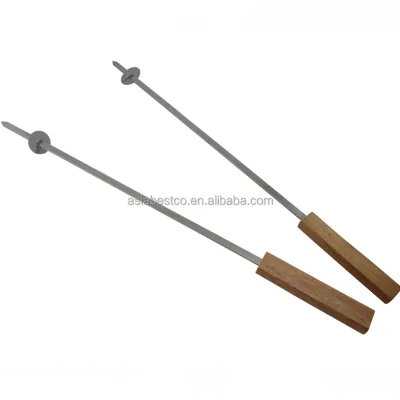


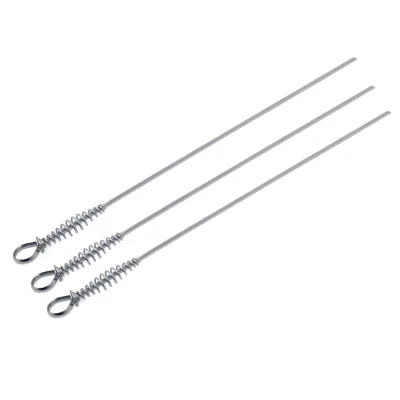
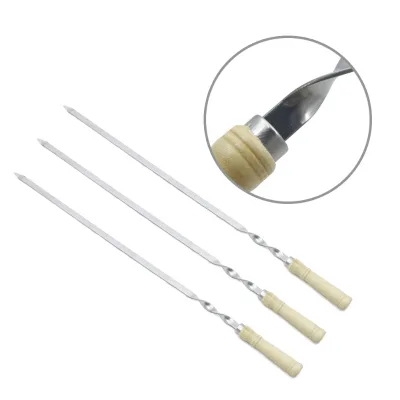
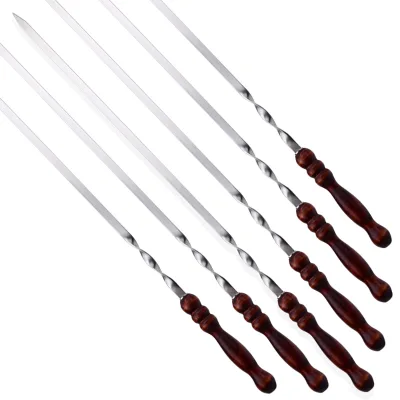
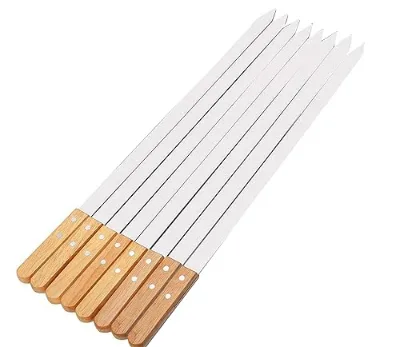
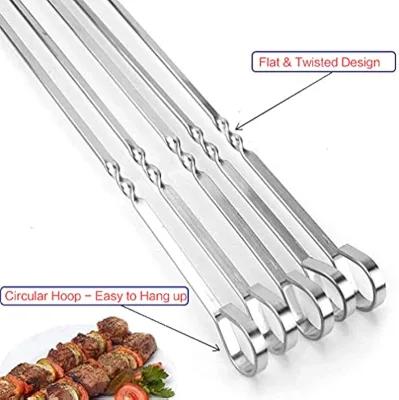
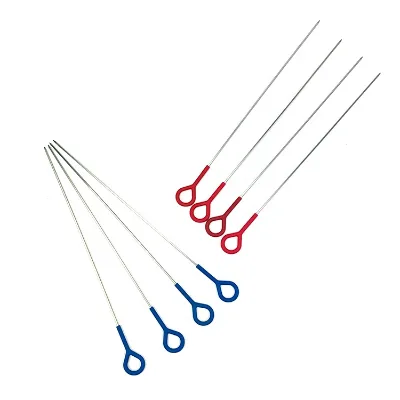
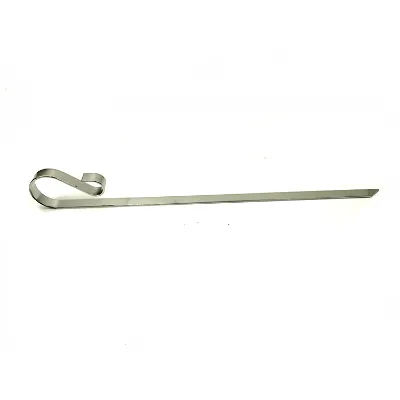
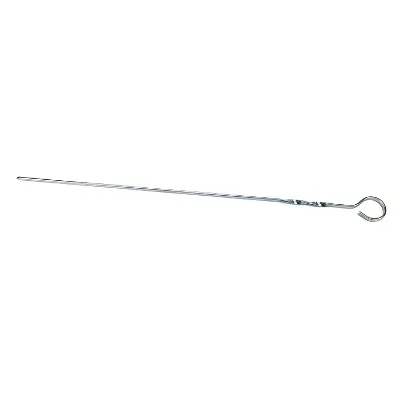
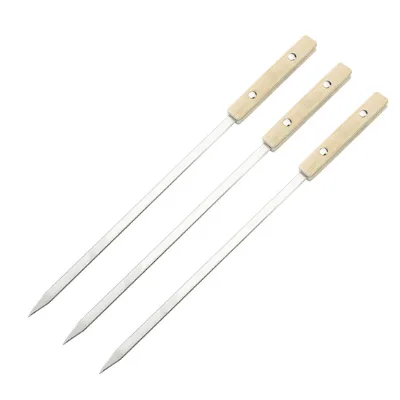


2 Stainless Steel Skewers BBQ Grilling Kabob Shawarma Meat Double Skewers
$0.88 - $1.02
MOQ: 1000 Pieces

Stainless Steel Grilling Slider Reusable Metal BBQ Kabob Sticks Barbecue Skewers
$0.75 - $0.95
MOQ: 1200 Pieces


Barbecue Wider Thicker Stainless Steel Outdoors Flat Metal Grilling Skewers
$0.81 - $1.01
MOQ: 1000 Pieces


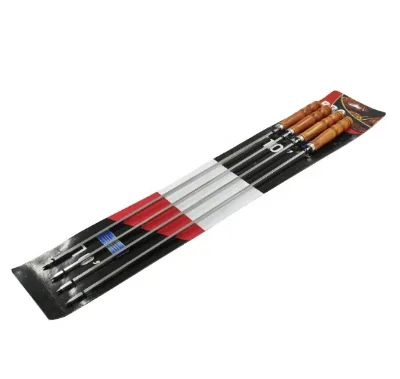
Outdoor BBQ Barbecue Roasting Sticks Stainless Steel Skewers with Wooden Handle
$0.01 - $0.03
MOQ: 200 Pieces

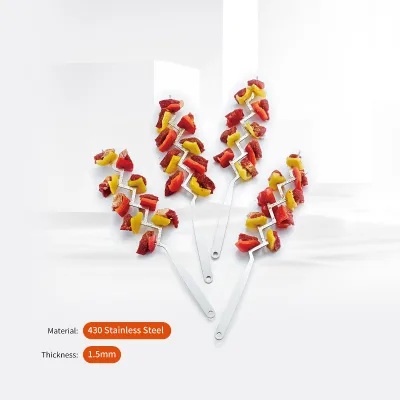

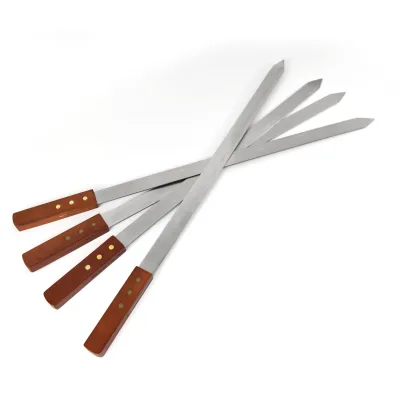
Comprehensive Sourcing Guide
Strategic Sourcing Guide for Stainless Steel BBQ Skewers
Understanding Product Specifications and Material Composition
When sourcing Stainless Steel BBQ Skewers, the primary objective is to identify products that balance structural integrity with culinary performance. Based on the available market data, these tools are fundamentally defined by their dual-material construction, typically featuring a metal shaft paired with a wood handle. The metal component is explicitly identified as stainless steel, a material chosen for its resistance to corrosion and high-temperature stability. The observed specifications indicate a thickness of 3mm for certain models, a dimension that suggests a robust build capable of supporting heavier cuts of meat without bending during rotation.
The dimensional variability in this category is significant. While one specific model is listed with a standard size of 46.5cm, other variations exist, including models with standards ranging from 30.4cm to 46cm in length. Some specifications denote a standard of 45*1.5cm, while others list 41cm or 42.5x2 cm. This variance implies that buyers must carefully align their order with the specific requirements of their target market, whether for home grilling, commercial catering, or camping scenarios. The handle material is consistently noted as wood, providing a thermal barrier that protects the user's hand from the heat conducted by the metal shaft. This combination of a stainless steel body and a wooden handle is a standard configuration for high-quality outdoor cooking tools.
The finishing process for these skewers is generally described as "Not Coated." This is a critical observation for buyers, as it indicates that the stainless steel is likely used in its natural, polished, or brushed state rather than being painted or enameled. A non-coated surface facilitates easier cleaning and reduces the risk of chemical leaching, aligning with the "Easily Cleaned" feature often highlighted in product descriptions. The color of the finished product is typically observed as Silver or Dark Grey, reflecting the natural appearance of the metal.
Compliance, Certification, and Food Safety Standards
Food safety is the paramount concern when procuring any item intended for direct contact with consumables. For Stainless Steel BBQ Skewers, the supply chain must demonstrate adherence to rigorous international food safety standards. The available data explicitly references FDA and LFGB certifications. The FDA (Food and Drug Administration) is the United States regulatory body, while LFGB (Lebensmittel- und Bedarfsgegenständegesetz) represents the German food and feed code, known for its stringent testing protocols. The presence of these certifications suggests that the products are manufactured to meet the safety requirements of major export markets.
Buyers must verify that the specific batch of skewers they are purchasing carries valid documentation for these standards. The "Food Safety Wood Handle Metal Stainless Steel BBQ Skewers" description reinforces the necessity of using materials that do not release harmful substances when exposed to high heat. The wood handles, in particular, should be treated or selected to ensure they do not splinter or release toxins during the grilling process. Furthermore, the "Reusable" attribute indicates that the product is designed for multiple uses, which necessitates durability that does not compromise safety over time.
It is important to note that while the data mentions these certifications, buyers should not assume every listed product automatically satisfies them without requesting current test reports. The verification process should include checking the scope of the certification to ensure it covers the specific product model and material composition. The "High Quality" advantage mentioned in the product attributes is often a result of meeting these strict compliance thresholds, but it remains a qualitative claim that must be backed by quantitative test data.
Cost Drivers and Pricing Dynamics
The pricing landscape for Stainless Steel BBQ Skewers is influenced by several distinct factors, including material costs, manufacturing complexity, and order volume. The observed price range in the market spans from $0.01 to $13.50 USD. This wide disparity is not indicative of quality variance alone but is heavily driven by the scale of the transaction and the specific customization level. The lower end of the spectrum typically represents bulk commodity orders with minimal customization, while the higher end likely includes specialized models, custom branding, or smaller batch sizes with higher logistical overhead.
The Minimum Order Quantity (MOQ) is a significant cost driver in this sector. Data indicates an MOQ of 3000 pieces for certain standard configurations, with a broader observed range of 1 to 5000 units. Orders falling below the standard MOQ of 3000 may incur a higher unit price due to the fixed costs of production setup and machine calibration. Conversely, orders exceeding 5000 units may benefit from economies of scale, potentially lowering the per-unit cost.
Customization is another major variable affecting the final price. The availability of OEM (Original Equipment Manufacturer) and customized logo services allows buyers to brand the skewers, but this process adds to the production time and cost. The "Sample Time" of 7 days suggests that the customization workflow is relatively streamlined, yet the initial setup for a new logo or design requires resources that are factored into the pricing structure. Additionally, the "Kit number: 2" suggests that some products are sold in sets, which can alter the effective unit price compared to single-item sales.
Typical Applications and Usage Scenarios
The versatility of Stainless Steel BBQ Skewers makes them suitable for a diverse range of applications beyond simple backyard grilling. The primary use case is outdoor barbecue, where the tools are subjected to high heat and potential exposure to the elements. The "Heat Resistance" and "Corrosion Resistance" features are specifically engineered to withstand the rigors of charcoal and gas grills, as well as the humidity of outdoor environments.
Beyond residential use, these skewers are designed for commercial and event-based applications. The "Application" field lists BBQ, Camping, Party, and outdoor barbecue cooking, indicating a broad utility. For camping scenarios, the "Dustproof" and "Waterproof" attributes are particularly valuable, ensuring the tools remain functional and clean after transport. The "Multifunctional" nature of the product allows for the skewering of various food types, from vegetables and seafood to large cuts of meat, making them essential equipment for catering services and food festivals.
The "Barbecue carbon type: Bamboo Charcoal" mention in the data hints at a synergy between the skewers and specific fuel types. Bamboo charcoal burns hotter and cleaner than traditional charcoal, and the stainless steel skewers are well-suited to handle the higher temperatures associated with this fuel source. The "Long Handle" style is a critical design feature for these applications, providing a safe distance between the user's hand and the heat source, which is essential for both safety and comfort during extended cooking sessions.
Supplier Evaluation and Sourcing Strategy
When evaluating potential suppliers for Stainless Steel BBQ Skewers, buyers should focus on a comprehensive assessment of the supplier's capabilities and reliability. The "Place of Origin" is consistently listed as Guangdong, China, a region known for its robust manufacturing infrastructure and export capabilities. However, the specific location should not be the sole determinant of supplier quality. Buyers must verify the supplier's ability to meet the specific technical requirements, such as the 3mm thickness and the specific dimensions like 46.5cm or 41cm.
The "Customization: Available" attribute indicates that the supply chain is flexible, but buyers should assess the supplier's capacity for handling custom orders. This includes their ability to manage the "Logo: customized" and "OEM" requests without compromising the lead time or quality. The "Sample Time: 7days" is a positive indicator of operational efficiency, but buyers should also inquire about the full production lead time for bulk orders to ensure it aligns with their inventory planning.
Packaging is another critical factor in supplier evaluation. The "prod_packing: Tie Card/ Clam Shell" options suggest that the supplier offers retail-ready packaging, which is beneficial for buyers targeting the consumer market. However, buyers should confirm if the packaging meets their specific branding or logistical needs, such as bulk shipping cartons for wholesale distribution. The "Environmental Protection: Reusable" claim should be supported by the supplier's manufacturing practices, ensuring that the production process itself is sustainable and that the product is indeed durable enough for repeated use.
Quality Control and Long-Term Procurement Considerations
Ensuring consistent quality in Stainless Steel BBQ Skewers requires a robust quality control (QC) framework. The "Not Coated" finishing process means that the surface quality is directly visible, making any defects like scratches, dents, or uneven polishing immediately apparent. Buyers should implement a QC protocol that checks for surface integrity, ensuring the stainless steel is free from rust or pitting, which could compromise food safety and product lifespan.
The "Thickness: 3mm" specification is a key metric for structural QC. Skewers that are too thin may bend under the weight of the food, while those that are too thick may be difficult to insert into the meat. Buyers should request samples to verify that the actual thickness matches the stated standard. Additionally, the joint between the metal shaft and the wooden handle must be secure to prevent the handle from loosening or detaching during use.
For long-term procurement, buyers should consider the "Reusable" nature of the product as a value proposition. While the initial cost may be higher than disposable alternatives, the durability of stainless steel and wood ensures a longer lifecycle. The "High Quality" advantage, when combined with proper maintenance, can lead to significant cost savings over time. However, buyers must also consider the "Test: FDA/LFGB" requirements for ongoing compliance, as regulations can change. Establishing a relationship with a supplier who can provide regular certification updates and maintain consistent quality standards is essential for a sustainable supply chain.
Comparison of Key Product Attributes
To assist in decision-making, the following table summarizes the key attributes observed in the market for Stainless Steel BBQ Skewers:
| Attribute Category | Observed Specifications | Sourcing Implication |
|---|---|---|
| Material | Metal (Stainless Steel), Wood Handle | Ensures heat resistance and user safety; verify wood treatment. |
| Dimensions | 30.4cm to 46.5cm; Thickness 3mm | Critical for food compatibility; verify specific model dimensions. |
| Certifications | FDA, LFGB | Mandatory for food contact; request current test reports. |
| Finishing | Not Coated | Easier cleaning; inspect for surface defects and rust. |
| MOQ | 1 to 5000 (Standard 3000) | Impacts unit cost; negotiate based on volume. |
| Customization | Logo (OEM/Custom), Color (Silver/Dark Grey) | Adds value but increases lead time and cost. |
| Usage | Outdoor BBQ, Camping, Party | Design features (long handle, heat resistance) must match use case. |
| Packaging | Tie Card, Clam Shell | Suitable for retail; confirm bulk shipping options. |
By adhering to these guidelines and verifying the specific attributes against the supplied data, buyers can make informed decisions that align with their operational needs and quality standards. The focus on verified specifications, compliance, and supplier capability ensures a procurement strategy that minimizes risk and maximizes value in the competitive market for Stainless Steel BBQ Skewers.
FAQs
What certifications do these Stainless Steel BBQ Skewers hold?
These skewers hold FDA and LFGB certifications for food safety. This ensures the materials meet strict international standards for direct contact with consumables. Buyers should request current test reports to verify the specific batch covers the required safety protocols before placing large orders.
How thick are the metal shafts on these skewers?
The metal shafts typically have a thickness of 3mm. This dimension provides robust structural integrity to support heavier cuts of meat without bending during rotation. Buyers should verify that actual samples match this thickness specification to ensure durability during use.
Can I customize the logo on these Stainless Steel BBQ Skewers?
Yes, customization is available for logos and OEM branding on these skewers. The production workflow allows for custom designs with a sample time of approximately 7 days. This service adds to the cost and requires clear design specifications before bulk production begins.
What is the minimum order quantity for these Stainless Steel BBQ Skewers?
The standard minimum order quantity is 3000 pieces for certain configurations. Orders below this threshold may incur higher unit prices due to setup costs, while larger volumes can benefit from economies of scale. The observed market range for MOQs spans from 1 to 5000 units depending on the supplier.
Which finish is applied to the stainless steel surface of these skewers?
The skewers generally feature a not coated finish, leaving the stainless steel in its natural state. This facilitates easier cleaning and reduces the risk of chemical leaching compared to painted or enameled surfaces. The color typically appears as silver or dark grey reflecting the metal.
How long does it take to receive samples of these Stainless Steel BBQ Skewers?
Sample delivery typically takes 7 days for customized or standard configurations. This timeframe indicates a streamlined workflow for initial product verification. Buyers should confirm the full production lead time for bulk orders to ensure it aligns with their inventory planning needs.
What materials are used for the handles of these Stainless Steel BBQ Skewers?
The handles are made from wood to provide a thermal barrier against heat. This material protects the user's hand from the high temperatures conducted by the metal shaft. The wood is selected to ensure it does not splinter or release toxins during the grilling process.