Source Stainless Steel External Washer Circlips for Furniture, Automobile, Industrial
Compare 30 listings for Stainless Steel External Washer Circlips suitable for machinery, chemical industry, and building applications. Buyers can review specifications like ISO and CE certifications, material options including carbon steel and brass, and delivery times ranging from 3 to 30 working days.
Key considerations
Products List


Cheap Price External Circlips Shaft Retaining Rings DIN 471 Circlips Washer
$0.04 - $0.06
MOQ: 20000 Pieces


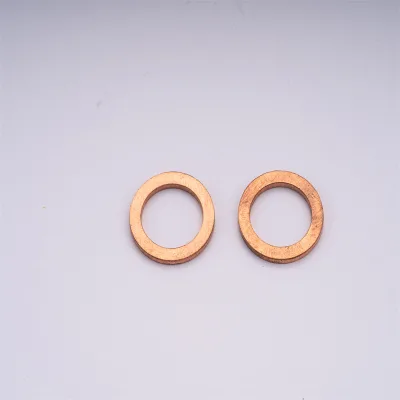


Spring Steel/ Stainless Steel Pressure Washer External Circlip DIN472 Retaining Ring
$0.01 - $0.10
MOQ: 1000 Pieces


Comprehensive Sourcing Guide
Strategic Sourcing Guide for Stainless Steel External Washer Circlips
Procuring Stainless Steel External Washer Circlips requires a nuanced understanding of material properties, dimensional standards, and supply chain reliability. These components, often referred to as retaining rings or shaft retainers, are critical for securing mechanical assemblies in environments where corrosion resistance and structural integrity are paramount. The market for these fasteners is vast, with suppliers offering a wide array of configurations ranging from standard industrial grades to highly customized solutions. Buyers must navigate a complex landscape of specifications, certifications, and logistical constraints to ensure that the selected components meet rigorous operational demands without incurring unnecessary costs or delays. This guide provides a structured approach to evaluating potential suppliers and products, grounded in observable market data and technical realities.
Technical Specifications and Dimensional Standards
The primary technical differentiator for Stainless Steel External Washer Circlips lies in their dimensional accuracy and adherence to established international or national standards. When sourcing these components, buyers must verify that the product model aligns with specific standard codes. Observed market data indicates a prevalence of models conforming to standards such as GB/T 893.1 and GB/T 894.1, which define the geometry for external and internal retaining rings respectively. Additionally, specific product models like WRC01, WCR01, and WEC01 are frequently cited in listings, suggesting a standardized nomenclature within the supply chain.
Material composition is another critical technical factor. While the core keyword specifies stainless steel, the market also frequently lists carbon steel and brass as alternative materials, often denoted by specific product attributes. For stainless steel variants, the material is explicitly identified as "Stainless Steel" or "Metal," with surface finishing options such as zinc plating available for other material types. The dimensional range is extensive, with observed standards covering sizes from M3 up to M300, and specific listings noting ranges like M4 to M32. Buyers must confirm that the supplier can provide the exact diameter and groove dimensions required for their specific application, as the fit is often a press-fit that relies on precise tolerances.
Furthermore, the shape and structure of the washer are vital. Attributes such as "External Tap Washer" and "Shaft Retaining Ring Washer" indicate the specific mechanical function. The "C Type" designation is common for shaft retainers, referring to the cross-sectional profile that allows the ring to expand and contract. Buyers should verify the "Spring Washer Type" and "Combination Washer Structure" to ensure compatibility with the assembly design. The thread type, often listed as "Full," and the color, typically "Silver" for stainless steel, are secondary but necessary verification points for quality assurance.
Compliance, Certification, and Regulatory Adherence
In the B2B procurement of mechanical fasteners, compliance with international certifications is a non-negotiable aspect of supplier evaluation. High-confidence data confirms that reputable suppliers in this sector often hold certifications including ISO, GS, RoHS, and CE. These certifications indicate adherence to quality management systems (ISO), safety standards (GS), restrictions on hazardous substances (RoHS), and European conformity (CE). However, buyers must treat these as observations of specific suppliers rather than universal guarantees for every listed product.
When evaluating a supplier, the procurement team should request valid certification documents and verify their scope. The presence of these certifications suggests that the manufacturer has established processes for quality control and material traceability. It is also essential to check for specific industry standards beyond general certifications. While some background data mentions DIN standards like DIN 471, DIN 472, and DIN 6799, these should be treated with caution unless explicitly confirmed by the supplier for the specific batch. The primary standards observed in the active market are the GB/T series, which are widely accepted in industrial applications.
Buyers must also consider the "Service" attribute, which often includes OEM (Original Equipment Manufacturer) and ODM (Original Design Manufacturer) capabilities. This indicates that the supplier can adapt products to meet specific regulatory or branding requirements. For industries such as chemical or environmental engineering, where corrosion resistance is critical, the material certification must align with the specific chemical exposure the component will face. Verifying that the stainless steel grade meets the necessary corrosion resistance standards is a crucial step in the compliance check.
Cost Drivers and Pricing Dynamics
The pricing of Stainless Steel External Washer Circlips is influenced by a complex interplay of material costs, production complexity, and order volume. The observed price range in the market spans from $0 to $900, a wide variance that reflects the difference between small, single-unit purchases and large-scale industrial orders. This range does not imply that a single unit costs $900, but rather that the total cost for a bulk order or a specialized custom configuration can reach that figure.
Material costs are the primary driver. Stainless steel is significantly more expensive than carbon steel or brass, and the specific grade of stainless steel (e.g., 304, 316) will further impact the price. The "Other Material" attribute listing carbon steel and brass suggests that buyers can often find cost-effective alternatives if the application does not strictly require stainless steel. However, for applications demanding high corrosion resistance, the premium for stainless steel is unavoidable.
Order volume is the second major cost factor. The Minimum Order Quantity (MOQ) varies drastically, ranging from 1 to 20,000 units. Suppliers with lower MOQs may charge a higher unit price to cover setup and handling costs, while those requiring high MOQs often offer more competitive per-unit pricing. The "Capacity" of the supplier, observed at 300 tons per month, indicates the scale of production and the ability to handle large orders without significant price hikes. Buyers should negotiate based on their projected volume, understanding that larger orders typically yield better unit economics.
Additionally, customization adds a layer of cost. While "Customization" is listed as available, and "Customized" is noted as an attribute for some products, non-customized items are generally more affordable. Custom features, such as specific surface finishes or unique dimensions, require additional tooling and processing time, which increases the overall cost. The "Payment Term" of T/T (Telegraphic Transfer) is standard, but buyers should be aware that payment terms can sometimes influence the final price, with discounts available for upfront payments.
Typical Applications and Industry Usage
Stainless Steel External Washer Circlips are versatile components used across a diverse range of industries. The "Used" attribute explicitly lists Machinery, Chemical Industry, Environmental sectors, and Building applications. In the machinery sector, these rings are essential for securing bearings, gears, and other rotating components on shafts, preventing axial movement. The "Application" attribute specifying "Circlip" confirms their primary function in mechanical assemblies.
The chemical industry is a significant user of stainless steel retaining rings due to the material's resistance to corrosive substances. In this environment, carbon steel components would fail rapidly, making stainless steel the only viable option. Similarly, in environmental applications, such as wastewater treatment or outdoor infrastructure, the durability of stainless steel ensures long-term performance without degradation. The "Usage" attribute listing "Industrial" reinforces the broad applicability of these components in heavy-duty settings.
In the building sector, these washers are used in structural assemblies and HVAC systems where vibration resistance and stability are required. The "Standard" attribute mentioning "Furniture, Automobile, Industrial" further highlights the cross-industry utility. In automotive applications, for instance, these rings might be used in suspension systems or engine components where weight and strength are critical. Buyers should match the specific application requirements with the material properties and certification levels of the supplier to ensure optimal performance.
Supplier Evaluation and Capacity Assessment
Selecting the right supplier involves more than just comparing prices; it requires a thorough assessment of their production capacity, logistics, and service capabilities. The "Capacity" of 300 tons per month is a key metric for evaluating a supplier's ability to meet large-scale demand. Buyers should verify if this capacity is consistent and if the supplier has the infrastructure to handle sudden spikes in orders.
The "Delivery Time" is another critical factor, with observed ranges of 3-10 working days and 7-30 working days. These variations depend on the complexity of the order, the availability of raw materials, and the current production load. Buyers must clarify the lead time for their specific order, especially if the project timeline is tight. The "Sampling Time" of 3-5 workdays is also important for quality verification before committing to a large order.
Packaging is a often-overlooked but essential aspect of supplier evaluation. Attributes such as "in Bulk," "in Small Box," "Small Box+Carton," "Pallet," and "Carton" indicate different packaging strategies. For international shipping, palletized or cartonized packaging is often necessary to prevent damage. The "Product Packing" attribute "All Inclusive" suggests a comprehensive packaging solution that may include necessary accessories or documentation.
Service capabilities, including OEM/ODM, are vital for buyers with unique requirements. The ability to customize the product, as indicated by the "Customization" attribute, allows suppliers to tailor the circlips to specific design needs. Buyers should assess the supplier's technical support and responsiveness to ensure they can provide timely assistance during the procurement process.
Quality Control and Long-Term Procurement Strategy
Ensuring consistent quality is paramount in the procurement of mechanical fasteners. The "Surface Finishing" attribute, such as "Zinc Plated," indicates the level of protection against corrosion, although stainless steel typically relies on its inherent properties. Buyers should implement a robust quality control process that includes material verification, dimensional inspection, and performance testing. The "Standard" attribute listing specific dimensions (e.g., 28cm26cm16cm, 503020) may refer to packaging dimensions or specific product variants, and buyers should ensure these align with their logistical needs.
Long-term procurement strategies should focus on building relationships with reliable suppliers who can provide consistent quality and support. The "Payment Term" of T/T is standard, but buyers should negotiate terms that protect their interests, such as partial payments upon delivery or quality acceptance. The "Location" of the supplier, with origins in China, Jiangsu, and Zhejiang, indicates a concentration of manufacturing hubs. Buyers should consider the logistical implications of sourcing from these regions, including shipping costs and potential tariffs.
Finally, buyers should maintain a flexible approach to sourcing, considering alternative materials like carbon steel or brass if the application allows. This flexibility can lead to cost savings without compromising performance. By carefully evaluating technical specifications, compliance, cost drivers, applications, supplier capabilities, and quality control measures, buyers can make informed decisions that ensure the reliability and efficiency of their mechanical assemblies. The market offers a wide range of options, and a strategic approach to procurement will yield the best results for any organization.
FAQs
What certifications do Stainless Steel External Washer Circlips suppliers typically hold?
Reputable suppliers often hold ISO, GS, RoHS, and CE certifications. These indicate adherence to quality management systems and safety standards, though buyers must verify specific documents for each batch rather than assuming universal coverage.
Which material standards apply to these retaining rings?
Products frequently conform to GB/T 893.1 and GB/T 894.1 standards for external and internal retaining rings. Specific models like WRC01 and WCR01 also align with these dimensional requirements for industrial applications.
How long is the typical delivery time for these components?
Delivery times range from 3 to 10 working days or 7 to 30 working days depending on order complexity. Buyers should confirm specific lead times as they vary based on current production loads and customization needs.
Can I find suppliers offering OEM or ODM services?
Yes, many suppliers provide OEM and ODM services to adapt products to specific design needs. This capability allows for customization of dimensions, finishes, and packaging to meet unique industrial or environmental requirements.
What is the minimum order quantity for these washers?
Minimum order quantities vary significantly from 1 to 20,000 units depending on the supplier and product type. Some listings specify an MOQ of 1000 pieces, while others may accommodate smaller trial orders with adjusted pricing.
Where are these stainless steel circlips typically manufactured?
Products originate primarily from China, with specific manufacturing hubs in Jiangsu and Zhejiang provinces. Buyers should verify the exact origin to ensure alignment with logistics plans and potential trade regulations.