Source Stainless Steel Fishing Line for Agriculture, Outdoor Gear, and Sea Use
Find 30 Stainless Steel Fishing Line options from verified Chinese manufacturers. Buyers can compare specifications like diameter, strength, and length for applications in agriculture, outdoor gear, and sea fishing.
Key considerations
Products List


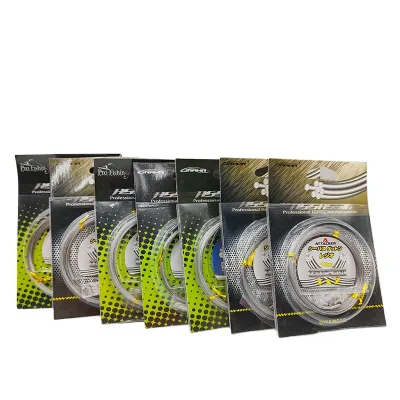


Outdoor Boat Fishing and Sea Fishing Stainless Steel Rust-Proof Fishing Line Reel
$200.00 - $450.00
MOQ: 50 Pieces


a Portable and Durable Fishing Line Reel Made of Metal for Outdoor Sea Fishing
$80.00 - $224.00
MOQ: 50 Pieces


Freshwater Fishing Line Connectors Stainless Steel Fishing Barrel Swivels
$0.01 - $1.00
MOQ: 3000 Pieces

Comprehensive Sourcing Guide
Strategic Sourcing Guide for Stainless Steel Fishing Line Procurement
Understanding Product Variants and Technical Specifications
The procurement of Stainless Steel Fishing Line requires a precise understanding of the diverse product variants available in the global market, as the term "Stainless Steel Fishing Line" often encompasses several distinct configurations tailored to specific marine environments. Based on observed product data, the market offers lines categorized by material composition, including stainless steel wire, braided wire, and PE (polyethylene) blends, each serving different functional needs. The core technical differentiator often lies in the strand construction, with specific models identified as "4 Strands" or "Stainless Steel Leader" designs. These variations directly influence the line's flexibility, abrasion resistance, and ultimate tensile strength.
Buyers must carefully evaluate the diameter specifications, which are critical for matching the line to the target fish species and the rigging system. Observed data indicates a diameter range spanning from 0.24mm to 0.9mm. This wide spectrum allows for the selection of ultra-fine lines for smaller species or heavy-duty lines for large predatory fish. Furthermore, the length of the line is a primary specification, with standard offerings including 100m lengths and other custom lengths such as 50m or 100m increments. The physical form factor is also significant; some products are designed as "Main Line" types, while others function specifically as leaders to prevent bite-offs from sharp-toothed fish. The buoyancy characteristic is another technical parameter to consider, with options available for both "Sink Line" and "Floating Line" configurations, depending on whether the fishing strategy requires the line to stay submerged or remain near the surface.
| Specification Category | Observed Variants | Procurement Consideration |
|---|---|---|
| Material Composition | Steel Wire, Braided Wire, PE | Verify if the core is pure steel or a composite for flexibility. |
| Diameter Range | 0.24mm - 0.9mm | Select based on target fish size and line visibility requirements. |
| Length Options | 100m, 50m, Custom | Ensure the length matches the reel capacity and fishing depth. |
| Strand Construction | 4 Strands, Single Strand | Multi-strand braids often offer better flexibility and knot strength. |
| Buoyancy | Sink Line, Floating Line | Choose based on the specific fishing technique and water column target. |
| Model Types | FL-1, FL-2, FL-3, SS Leader | Different models may imply different strength ratings or packaging. |
Compliance, Certification, and Material Standards
In the B2B procurement of fishing gear, verifying compliance with international standards and certifications is essential for ensuring product reliability and market access. The supplied product data highlights that many manufacturers adhere to CE and ISO9001 certifications. These certifications indicate that the supplier's production processes meet specific quality management and safety requirements, which is a strong indicator of consistency in manufacturing. However, buyers should treat these certifications as observations of the supplier's capabilities rather than automatic guarantees for every single SKU, as product attributes can vary within a supplier's catalog.
Material standards are equally critical. The core material is identified as "Steel Wire," which implies a focus on corrosion resistance and tensile strength. However, the specific grade of stainless steel (e.g., 304, 316) is not explicitly detailed in the general product attributes. Therefore, buyers must verify the specific alloy composition to ensure the line can withstand the harsh saline environments of marine fishing without premature corrosion. The product standards also reference specific configurations such as "1/4 lb" or "10mm" (likely referring to leader length or diameter in specific contexts), which serve as baseline identifiers. When sourcing, it is imperative to request the Material Safety Data Sheet (MSDS) or specific mill certificates that confirm the stainless steel grade, ensuring the product meets the environmental demands of the intended fishing location. Additionally, the origin of the product is consistently noted as China, with specific manufacturing hubs in Zhejiang. While this provides a clear supply chain map, buyers should verify that the "Place of Origin" aligns with the actual factory location to avoid discrepancies in logistics and quality control.
Cost Drivers and Pricing Dynamics
The pricing structure for Stainless Steel Fishing Line is influenced by a complex interplay of material costs, manufacturing complexity, and order volume. The observed price range in the market spans from $0.01 to $550 USD, a variance that reflects the difference between single-item retail units and bulk industrial or specialized heavy-duty orders. The lower end of the spectrum likely represents small, single-package units intended for individual anglers or sample orders, while the higher end encompasses bulk shipments, custom-branded OEM runs, or specialized high-strength leader sets.
A primary cost driver is the material composition. Stainless steel wire is inherently more expensive than synthetic alternatives, and the cost fluctuates with global steel prices. Furthermore, the manufacturing process for braided wire or multi-strand constructions (such as the "4 Strands" model) involves additional labor and machinery time compared to single-strand lines, which can increase the unit cost. The packaging method also impacts the final price; products packed in "Carton" or "Paper Box" with specific dimensions (e.g., 10x10x10 cm) and gross weights (1.0 kg) incur different logistics costs compared to those in simple "PP Bags."
Buyers should also consider the Minimum Order Quantity (MOQ) as a significant factor in unit pricing. The observed MOQ range is extensive, from 1 piece to 30,000 pieces. Suppliers typically offer tiered pricing where the unit cost decreases significantly as the order volume approaches the higher end of the MOQ spectrum. For instance, an order of 100 pieces might carry a standard unit price, whereas an order of 30,000 pieces could secure a substantial discount. Additionally, the availability of customization services, which is listed as "Available," often incurs additional tooling or setup fees, which must be factored into the total cost of ownership. Buyers must balance the desire for lower unit costs with the capital outlay required for larger MOQs and custom branding.
Typical Applications and Usage Scenarios
The versatility of Stainless Steel Fishing Line makes it suitable for a wide array of applications, primarily driven by its durability and resistance to abrasion. The primary usage category identified is "Agriculture," which may seem counterintuitive but often refers to heavy-duty lifting, securing, or agricultural fencing applications where high tensile strength is required. However, the dominant application for this product is undoubtedly in "Outdoor Gear," specifically marine fishing.
In the fishing sector, stainless steel lines are indispensable for targeting species with sharp teeth, such as sharks, groupers, and barracudas. The "Stainless Steel Leader" model is specifically designed to prevent line cuts, acting as a protective barrier between the main line and the fish's teeth. The "Main Line" variants are used for deep-sea fishing where the line must withstand high tension and the abrasive nature of the ocean floor. The "Sink Line" configuration is ideal for bottom fishing techniques, allowing the bait to reach the seabed quickly, while "Floating Line" options are better suited for surface fishing or trolling where line visibility and buoyancy are advantageous.
The "Sea" location designation in the product attributes reinforces the marine focus. These lines are engineered to resist the corrosive effects of saltwater, a critical requirement for longevity in marine environments. The strength ratings, observed to range from 5LB to 120LB, dictate the specific application; lower strength lines (5LB-20LB) are suitable for light inshore fishing, while higher strength lines (50LB-120LB) are necessary for offshore big-game fishing. The "Level" shape and "Gray" color are also functional attributes, with the gray color often chosen to blend with the water column, reducing visibility to wary fish.
Supplier Evaluation and OEM Capabilities
When evaluating potential suppliers for Stainless Steel Fishing Line, buyers should look beyond basic product listings and assess the supplier's capacity for customization and brand integration. The data indicates that "Customization" is available, and "OEM" (Original Equipment Manufacturer) services are accepted, with some suppliers explicitly stating "Accpet" or "Accept" for OEM orders. This suggests that buyers can request private labeling, custom packaging, and specific product configurations to align with their brand identity.
Key evaluation criteria should include the supplier's adherence to quality standards like ISO9001 and their ability to provide samples. The availability of samples is a critical step in the vetting process, allowing buyers to physically inspect the line's flexibility, coating quality, and knot-holding ability before committing to a large order. Buyers should verify if the supplier offers "Samples Avaliable" and understand the associated costs and lead times for sample delivery.
Furthermore, the "Brand Name" field shows entries like "SAMYEAR /OEM," indicating that some suppliers operate with their own established brands while simultaneously offering white-label services. Buyers should inquire about the supplier's production capacity and whether they can handle large-volume orders, given the observed high MOQs up to 30,000 pieces. It is also essential to verify the "Place of Origin" details, specifically the Zhejiang, China location, to ensure the supplier has the necessary infrastructure and logistics network to support international shipping. Buyers should request references or case studies from other clients who have utilized the supplier's OEM services to gauge their reliability and communication efficiency.
Quality Control and Long-Term Procurement Considerations
Ensuring consistent quality in Stainless Steel Fishing Line procurement requires a robust quality control (QC) framework. Buyers must verify that the supplier implements rigorous testing protocols for tensile strength, corrosion resistance, and diameter consistency. The observed strength range of 5LB to 120LB must be validated through independent testing or certified test reports, as even minor deviations can lead to line failure during critical fishing operations. The "Single gross weight" of 1.0 kg and "Single package size" of 10x10x10 cm are standard metrics that should be monitored to ensure packaging consistency, which affects shipping costs and product protection.
Long-term procurement considerations involve building a sustainable supply chain relationship. Buyers should assess the supplier's ability to maintain consistent quality over time, especially when scaling up orders. The "Customization" aspect allows for long-term branding strategies, but it requires clear communication of specifications to avoid production errors. Additionally, buyers should consider the environmental impact and disposal of the product, as steel lines are not biodegradable.
To mitigate risks, buyers should establish clear acceptance criteria based on the observed specifications, such as the diameter range (0.24mm-0.9mm) and length (100m). Regular audits of the supplier's production facility and quality management systems are recommended to ensure ongoing compliance with ISO9001 and other relevant standards. Finally, buyers should plan for potential supply chain disruptions by diversifying their supplier base and maintaining safety stock, particularly for high-demand models like the "FL-3" or "4 Strands" configurations. By focusing on these strategic elements, buyers can secure a reliable supply of high-quality stainless steel fishing lines that meet the demanding requirements of the marine industry.
FAQs
What certifications do Stainless Steel Fishing Line suppliers typically hold?
Many suppliers hold CE and ISO9001 certifications to ensure quality management and safety standards. These certifications indicate consistent manufacturing processes, though buyers should verify them for specific SKUs as attributes may vary within a catalog.
Which diameter range is available for Stainless Steel Fishing Line products?
The available diameter range spans from 0.24mm to 0.9mm to suit different target species. This spectrum allows selection of ultra-fine lines for smaller fish or heavy-duty options for large predatory fish requiring higher tensile strength.
Can buyers customize the packaging and branding for these fishing lines?
Yes, customization is available including OEM services and private labeling options. Buyers can request specific packaging like cartons or paper boxes, though setup fees may apply for custom branding and tooling requirements.
What are the standard length options for Stainless Steel Fishing Line orders?
Standard offerings include 100m lengths, with other options like 50m or custom increments available. Buyers should ensure the selected length matches their reel capacity and the specific fishing depth required for their target species.
How does the minimum order quantity affect the unit pricing for this product?
The MOQ ranges from 1 to 30,000 pieces, with tiered pricing reducing unit costs at higher volumes. An order of 100 pieces carries a standard price, while larger orders can secure substantial discounts compared to single-item retail units.
Where are the primary manufacturing locations for these stainless steel fishing lines?
The products originate from China, with specific manufacturing hubs located in Zhejiang. Buyers should verify that the stated place of origin aligns with the actual factory location to ensure accurate logistics and quality control processes.