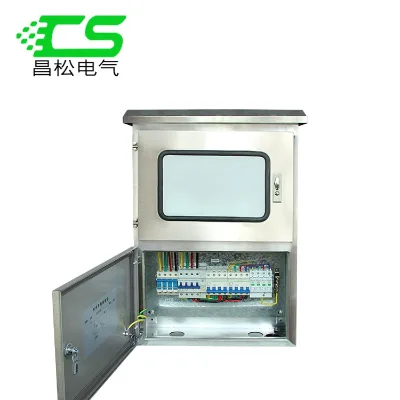
Source Stainless Steel Fixed Distribution Board for Industrial, Outdoor, High-rise
Find 30 Stainless Steel Fixed Distribution Board options with customizable sizes, IP66 protection, and CE certifications. Compare wall-mounted and open frame models from Wenzhou and Jiangsu suppliers for industrial control and power distribution needs.
Key considerations
Products List

Stainless Steel Distribution Board/Electrical Panels/Distribution Board
$10.00 - $500.00
MOQ: 10 Pieces


Distribution Board Distribution Box Low Voltage System Metal Enclosure
$100.00 - $500.00
MOQ: 1 Pieces

Certified Industrial Control & Power Distribution Board with Integrated Protection
$999.00 - $2999.00
MOQ: 1 Pieces




Comprehensive Sourcing Guide
Strategic Sourcing Guide for Stainless Steel Fixed Distribution Boards
Understanding the Technical Architecture and Material Specifications
When sourcing a Stainless Steel Fixed Distribution Board, the primary objective is to identify a unit that balances structural integrity with electrical safety in demanding environments. The core material specification for these units is typically stainless steel, with specific grades such as AISI 304L or AISI 316L being the industry standard for corrosion resistance. The choice between these grades often depends on the specific environmental conditions; AISI 316L offers superior resistance to chlorides and is preferred for coastal or chemical-heavy applications, while AISI 304L serves well for general industrial and indoor use. The physical construction of these boards often features a wall-mounted structure, designed to be securely fixed to vertical surfaces to maximize space efficiency and ensure stability.
The thickness of the steel sheet is a critical determinant of durability and load-bearing capacity. Observed specifications in the market indicate available thicknesses ranging from 1.2mm to 2.0mm. Thicker gauges, such as 2.0mm, provide enhanced rigidity and protection against physical impact, which is essential for high-traffic industrial zones. Conversely, 1.2mm sheets may be sufficient for lighter-duty applications where space and weight are primary constraints. The surface treatment process is equally vital; powder coating is frequently applied to the stainless steel base to provide an additional layer of protection against environmental degradation and to offer aesthetic customization. Furthermore, the surface finish can be specified as either a polishing surface for a clean, reflective appearance or a rolling sub-smooth finish to reduce glare and hide minor surface imperfections.
The structural design of the distribution board is not monolithic; it varies based on the intended installation and internal component requirements. Buyers may encounter units described as having a fixed board structure, an open frame, or a protection form. The open frame design allows for better ventilation and easier access to internal components, which is beneficial for maintenance-heavy facilities. In contrast, a protection form or fully packaged type offers a sealed enclosure, often necessary for outdoor usage where dust, moisture, and pests are concerns. The dimensions of these units are highly customizable, with standard ranges extending from compact sizes like 200x200x150mm up to large industrial enclosures measuring 1200x1000x300mm. Some specific models may be designated for specific applications, such as the BJS1 or BJSS series, indicating specialized configurations for different load requirements.
Compliance Verification and Certification Standards
Navigating the certification landscape is a non-negotiable step in the procurement of electrical distribution equipment. A reliable supplier must provide documentation verifying that their products meet international and regional safety standards. The most commonly cited certifications for stainless steel distribution boards include CE, IEC, RoHS, TUV, and SGS. These marks indicate compliance with European safety directives, international electrotechnical standards, and restrictions on hazardous substances. Specifically, the IEC standards, such as IEC 61439-3, are relevant for low-voltage switchgear and controlgear assemblies, ensuring that the design and construction meet rigorous safety and performance criteria.
In addition to general safety certifications, the ingress protection (IP) rating is a crucial metric for environmental resistance. For stainless steel units intended for harsh environments, an IP66 or IP68 rating is often observed. An IP66 rating ensures the enclosure is dust-tight and protected against powerful water jets, while IP68 indicates protection against continuous immersion in water. Buyers must verify that the specific unit they are purchasing carries the exact IP rating required for its installation venue. For outdoor applications, such as those found in power plants or high-rise buildings, an IP66 rating is typically the minimum requirement to prevent water ingress during heavy rain or cleaning operations.
Quality management systems also play a significant role in supplier evaluation. Certifications such as ISO 9001 are frequently associated with manufacturers who maintain consistent quality control processes. While the presence of an ISO 9001 certificate does not guarantee the performance of a specific batch, it indicates that the supplier has a documented system for managing quality. Buyers should also look for specific product certifications like CCC (China Compulsory Certification) or VDE (Verband der Elektrotechnik) if the equipment is intended for the Chinese or German markets, respectively. It is imperative to request the actual test reports and certificates for the specific model number, such as SEE-DP31 or SEE-RB31, rather than relying on general claims about the manufacturer's capabilities. The verification of these documents ensures that the product meets the legal and safety requirements of the destination country.
Cost Drivers and Pricing Dynamics
The pricing of stainless steel fixed distribution boards is influenced by a complex interplay of material costs, manufacturing complexity, and customization levels. The base price is heavily dependent on the grade of stainless steel used; AISI 316L is significantly more expensive than AISI 304L due to the higher cost of molybdenum and other alloying elements. Consequently, units specified with 316L material will command a higher price point, reflecting the increased raw material cost and the specialized processing required. The thickness of the steel also directly impacts the cost; a board constructed with 2.0mm steel will be more expensive than one made with 1.2mm steel due to the increased material volume and the additional labor required for forming and welding thicker gauges.
Customization is another major cost driver. While standard models like the BJS1 or BJSS may be available at lower price points, custom-sized units or those with specific surface treatments can increase the cost substantially. The observed price range in the market spans from approximately $5.90 to $9,999, a wide variance that reflects the difference between small, simple enclosures and large, highly customized industrial panels. The "Low Voltage" operation voltage of these units generally keeps them in a more affordable category compared to high-voltage switchgear, but the complexity of the internal layout and the inclusion of accessories can push the price upward.
Minimum Order Quantity (MOQ) requirements also affect the effective unit cost. Suppliers often offer tiered pricing based on volume, with MOQs ranging from 1 unit for custom projects to 500 units for standard stock items. Buyers purchasing small quantities may face higher per-unit costs, while those ordering in bulk can negotiate better rates. Additionally, the inclusion of accessories, such as brackets, which are often offered separately, adds to the total cost of ownership. Buyers must account for these ancillary costs when budgeting for a project. The packaging method, typically cartons, is a standard practice, but specialized packaging for long-distance shipping or export may incur additional fees. Understanding these variables allows buyers to accurately forecast their procurement budget and avoid unexpected cost overruns.
Typical Applications and Installation Environments
Stainless steel fixed distribution boards are designed to operate in a diverse range of environments, from indoor commercial buildings to harsh outdoor industrial sites. The primary application range includes high-rise buildings, where the boards must withstand vertical installation and potentially corrosive atmospheric conditions. In these settings, the wall-mounted structure is ideal for mounting on concrete or steel columns, providing a secure and space-efficient solution for power distribution. The ability to install on walls, poles, or the ground offers flexibility for different site layouts. For instance, pole mounting is common in outdoor utility areas, while ground mounting is suitable for substations or industrial yards where overhead space is limited.
Outdoor usage is a critical application area for these units. The high protection levels, such as IP66, make them suitable for exposure to rain, dust, and temperature fluctuations. Power plants are another key venue, where the robust construction of stainless steel ensures longevity in environments with high electromagnetic interference and potential chemical exposure. The "Power" type designation indicates that these boards are intended for the distribution of electrical power rather than just metering, making them essential for main distribution points in large facilities. The specific model SEE-RB31, for example, is noted for its suitability in power plants, suggesting a design optimized for high-load and high-reliability scenarios.
The versatility of these distribution boards extends to their ability to handle various voltage levels. While the observed specifications mention "Low Voltage" operation, the boards are engineered to support a wide range of loads within this category. The "Distribution Metering Box" type indicates that some units are also equipped to handle metering functions, allowing for the monitoring of energy consumption at the point of distribution. This dual functionality is valuable in commercial and industrial settings where energy management is a priority. The "All-packaged Type" and "Partly-welded Type" forms offer different levels of assembly, allowing buyers to choose between a ready-to-install unit or a kit that requires some on-site assembly, depending on the logistical constraints of the project.
Supplier Evaluation and Quality Assurance Protocols
Evaluating a supplier for stainless steel distribution boards requires a rigorous assessment of their manufacturing capabilities, quality control processes, and track record. Buyers should prioritize suppliers who can demonstrate a clear understanding of the material specifications, particularly the distinction between AISI 304L and AISI 316L. A reputable supplier will provide detailed material certificates for the stainless steel used, verifying the chemical composition and mechanical properties. The location of the supplier, such as Wenzhou or Jiangsu in China, can be an indicator of the supply chain maturity, as these regions are known for their electrical equipment manufacturing clusters. However, the physical location should not be the sole criterion; the supplier's ability to meet international standards is paramount.
Quality control should be an integral part of the supplier evaluation. Buyers should inquire about the supplier's internal testing procedures, including dielectric strength tests, mechanical strength tests, and ingress protection verification. The presence of certifications like ISO 9001 suggests a commitment to quality management, but buyers should also request specific test reports for the product model they intend to purchase. The warranty period is another key indicator of supplier confidence; a standard 2-year warranty is commonly observed, but some suppliers may offer extended coverage for critical applications. Buyers should carefully review the terms of the warranty to understand what is covered, such as material defects or workmanship issues, and what is excluded, such as damage from improper installation or misuse.
The customization capability of the supplier is also a critical factor. The ability to offer customized sizes, surface finishes, and internal configurations indicates a flexible manufacturing process. Buyers should assess the supplier's lead times for custom orders and their ability to meet tight deadlines. The availability of OEM (Original Equipment Manufacturer) services allows buyers to brand the products with their own logos, which is essential for contractors and system integrators. Additionally, the supplier's response to technical inquiries and their willingness to provide detailed drawings or 3D models before production can be a strong indicator of their professionalism and commitment to customer satisfaction.
Long-Term Procurement and Lifecycle Management
Procuring stainless steel fixed distribution boards is not merely a transactional event but a long-term investment in infrastructure reliability. Buyers must consider the lifecycle costs, including maintenance, potential replacements, and the impact of downtime. The durability of stainless steel ensures a long service life, but the longevity of the unit depends on the quality of the surface treatment and the integrity of the seals. Powder coating and polishing surfaces can degrade over time if not properly maintained, so buyers should inquire about the recommended maintenance schedule and the availability of replacement parts. The "2 Year" warranty period provides a baseline for support, but buyers should plan for long-term maintenance beyond this period.
The modularity and upgradeability of the distribution board are also important considerations. As electrical loads increase or technology evolves, the internal components of the board may need to be upgraded. An open frame design or a board with customizable internal layouts offers greater flexibility for future modifications. Buyers should ensure that the supplier can provide technical support for upgrades and that the board design allows for easy access to internal components without compromising the IP rating. The availability of accessories, such as brackets and mounting hardware, should be confirmed, as these are often sold separately and can be critical for proper installation.
Finally, buyers should establish a long-term relationship with their supplier to ensure consistent quality and supply chain stability. A reliable supplier can provide ongoing support, including technical assistance, spare parts, and updates on new standards or regulations. The ability to source additional units with the same specifications is crucial for expanding facilities or replacing failed units. By focusing on suppliers with a proven track record, robust quality control, and a commitment to customer service, buyers can ensure that their stainless steel fixed distribution boards continue to perform reliably throughout their intended lifespan. This strategic approach minimizes risks and maximizes the return on investment for electrical infrastructure projects.
FAQs
What certifications do stainless steel fixed distribution boards have?
These units typically carry CE, IEC, RoHS, TUV, SGS, IP66, and IP68 certifications. Some models also include ISO9001 and CCC marks. Buyers should verify specific certificates for the model like SEE-DP31 to ensure compliance with destination regulations.
Which stainless steel grades are used for these boards?
The boards are constructed using AISI 304L or AISI 316L stainless steel. AISI 316L offers superior corrosion resistance for coastal or chemical environments, while AISI 304L is suitable for general industrial use. The choice depends on the specific application venue.
Can I customize the size and structure of the distribution board?
Yes, customization is available for size and structure. Dimensions range from 200x200x150mm to 1200x1000x300mm. Buyers can request custom-made sizes and choose between wall-mounted, fixed board, or open frame structures to fit their installation needs.
What is the minimum order quantity for these products?
The minimum order quantity ranges from 1 to 500 units depending on the supplier and customization level. Standard stock items often have higher MOQs, while custom projects may start with a single unit. Buyers should check specific supplier terms for their required volume.
Where are these stainless steel boards manufactured?
These boards originate from manufacturing hubs in China, specifically Wenzhou and Jiangsu. Suppliers in these regions are known for electrical equipment production. Buyers should confirm the exact place of origin for their specific order to verify supply chain logistics.
What is the protection level for outdoor usage?
The protection level is rated IP66 or IP68, making them suitable for outdoor usage. This ensures they are dust-tight and protected against powerful water jets or continuous immersion. Such ratings are essential for applications in power plants or high-rise buildings.