Source Stainless Steel Horse Pendant Necklace for Fashion, Religious, and Decoration
Compare 30 Stainless Steel Horse Pendant Necklace options from verified suppliers in China. Buyers can review variations in plating, weight, and customization for fashion, religious, and decoration uses.
Key considerations
Products List


Christmas Gift Fashion Accessories Deer Stainless Steel Jewelry Necklace
$2.16 - $2.33
MOQ: 100 Pieces


Four-Leaf Clover Necklace Pendant Clavicle Chain Stainless Steel Necklace
$1.58 - $2.10
MOQ: 499 Pieces






Comprehensive Sourcing Guide
Strategic Sourcing Guide for Stainless Steel Horse Pendant Necklaces
Understanding Product Variants and Technical Specifications
When sourcing stainless steel horse pendant necklaces, buyers must first navigate the diverse technical landscape presented in the market. The core material is consistently identified as stainless steel, a choice driven by its durability, corrosion resistance, and hypoallergenic properties, making it suitable for a wide demographic including females, males, the elderly, and children. However, the specific technical attributes vary significantly between listings, requiring precise verification before procurement.
The physical dimensions and weight of these pendants are not uniform. Observed data indicates a weight variance ranging from approximately 4.2 grams to 37 grams per unit. This disparity suggests a market split between delicate, fashion-forward pieces and heavier, statement jewelry items. Length specifications for the accompanying chains also differ, with observed standards including 45cm and 60cm options. Some suppliers may offer custom sizing, requiring direct communication to finalize product dimensions, while others provide standard box gauges, such as 25 * 25 * 25CM, for packaging logistics.
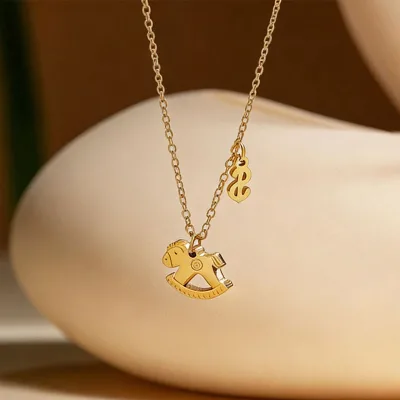
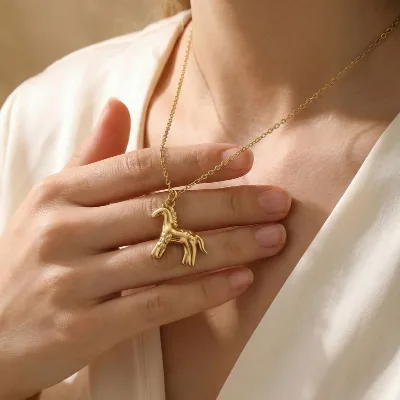
Plating and finish are critical differentiators. Listings show a range of plating options, including gold, silver, and rose-gold finishes. The manufacturing technology often involves casting, IP plating, and polishing to achieve the desired luster. For specific designs, such as the U-shaped horseshoe or feather pendant styles, the process may include inseting diamonds or utilizing specific charm shapes. Buyers should note that while some products are marketed with a "Retro" or "Fashion" style, others focus on "Religious" or "Health" usage contexts, which may influence the design aesthetics and material purity requirements.
Compliance, Certification, and Quality Assurance
In the B2B jewelry sector, compliance is not merely a formality but a fundamental requirement for market access and brand protection. When evaluating stainless steel horse pendant necklaces, buyers must verify the certification status of potential suppliers. The supply chain data indicates that certain manufacturers hold ISO9001, SGS, and BSCI certifications. These credentials suggest adherence to international quality management systems and social compliance standards, which are essential for large-scale procurement.
However, the presence of specific certifications varies by product listing. Some items are associated with CE and SGS standards, while others reference general ISO 9001 compliance. It is crucial for buyers to distinguish between a supplier's general company certification and product-specific testing results. For instance, while a supplier may claim ISO9001 status, the specific batch of necklaces must be verified for material safety and plating durability.
The manufacturing origin is another compliance factor. Most observed listings originate from Guangdong or Shenzhen, China. These regions are known for their established jewelry manufacturing clusters, but buyers must ensure that the specific factory meets export standards. The packaging standards also play a role in compliance; products are often individually packed in OPP bags or PP bags, with some utilizing export cartons. This packaging method protects the plating and prevents tangling during transit, which is vital for maintaining the product's aesthetic value upon arrival.
Cost Drivers and Pricing Dynamics
The pricing structure for stainless steel horse pendant necklaces is influenced by several variables, including material weight, plating complexity, and customization requirements. The observed price range in the market spans from $0.51 to $7.50 USD. This wide variance reflects the difference between basic stainless steel pieces and those with added value features like diamond insets or intricate rose-gold plating.
Material weight is a primary cost driver. A pendant weighing 37 grams will inherently cost more in raw materials than one weighing 4.2 grams, assuming similar processing costs. Additionally, the plating process adds significant value. IP plating and rose-gold finishes generally command higher prices than standard silver or gold plating due to the specialized equipment and chemical processes involved.
Customization is another factor that impacts the final unit cost. While customization is available for many listings, it often requires a higher Minimum Order Quantity (MOQ). The observed MOQ range is broad, starting from as low as 2 pieces up to 499 pieces, with some specific custom orders requiring 100 pieces or more. Buyers should be aware that lower MOQs may come with a higher per-unit price, while larger orders can leverage economies of scale to reduce costs.
The following table summarizes the key cost and specification variables observed in the market:
| Variable | Observed Range/Options | Impact on Cost |
|---|---|---|
| Weight | 4.2g - 37g | Higher weight increases raw material cost. |
| Plating | Gold, Silver, Rose-Gold | IP and Rose-Gold plating typically cost more. |
| MOQ | 2 - 499 PCS | Lower MOQs often have higher unit prices. |
| Customization | Available (Varies) | Custom designs may require higher MOQs. |
| Packaging | OPP Bag, PP Bag, Box | Individual packing adds to packaging costs. |
Typical Applications and Target Demographics
Stainless steel horse pendant necklaces serve a multifaceted role in the jewelry market, catering to various consumer needs and occasions. The primary usage categories observed include decoration, religious significance, and health-related marketing. The "Horse" motif is particularly versatile, often symbolizing freedom, speed, and good fortune, which appeals to a broad audience.
The target demographic is extensive. Products are marketed as suitable for females, males, children, and the elderly. This inclusivity allows buyers to source a single product line that can be sold across different customer segments. For example, a lighter, fashion-forward design might appeal to younger demographics, while a heavier, more substantial piece with religious connotations might target an older or more traditional audience.
In terms of application, these necklaces are frequently used as everyday accessories, gifts, and promotional items. The "Religious" usage category suggests that some designs may incorporate symbols or shapes intended for spiritual protection or faith-based expression. The "Health" usage claim, while requiring careful verification, indicates that some suppliers may market the material's hypoallergenic properties as a health benefit for sensitive skin. Buyers should align the product selection with their specific target market's expectations and cultural preferences.
Supplier Evaluation and Operational Logistics
Selecting the right supplier involves more than just comparing prices; it requires a thorough evaluation of operational capabilities and logistics. Lead times are a critical component of the procurement process. Observed delivery dates range from 15 to 25 days, which buyers must factor into their inventory planning. This timeline can vary based on the complexity of the order, the level of customization required, and the current production capacity of the supplier.
Shipping methods are another consideration. The supply chain data indicates that suppliers utilize major international couriers such as DHL, UPS, FedEx, and EMS. These options provide reliable tracking and faster delivery times, which are essential for time-sensitive orders. However, buyers should confirm the specific shipping terms (e.g., FOB, EXW, DDP) to understand who bears the risk and cost during transit.
Sample policies are also vital for quality assurance. Many suppliers offer samples, with some stating that the sample fee is refundable upon placing an order of 100 pieces or more. This policy allows buyers to physically inspect the product quality, plating finish, and weight before committing to a large order. Buyers should request samples early in the process to verify that the product matches the provided specifications, such as the "Stainless Steel U-Shaped Horseshoe Pendant Diamond" or "Feather Pendant Necklace" descriptions.
Quality Control and Long-Term Procurement Strategy
Implementing a robust quality control (QC) strategy is essential for maintaining brand integrity when sourcing stainless steel jewelry. Given the variance in weight and plating, buyers should establish clear acceptance criteria. For instance, a batch of necklaces with a stated weight of 37g should not deviate significantly from this figure. Similarly, the plating must be uniform and free from peeling or discoloration, which can occur if the IP plating process is not executed correctly.
Long-term procurement considerations include the potential for OEM and ODM services. Many suppliers offer these services, allowing buyers to create unique designs or brand their products. This capability is particularly valuable for buyers looking to differentiate their offerings in a competitive market. However, engaging in OEM/ODM requires a clear understanding of the design specifications and the supplier's technical capabilities.
Warranty and after-sales support are also important factors. Some listings mention a 12-month warranty, which provides a safety net for buyers against manufacturing defects. Buyers should clarify the terms of this warranty, including what constitutes a defect and the process for claims. Additionally, the packaging standard, such as individual OPP bags or export cartons, must be maintained to ensure the products arrive in pristine condition.
In conclusion, sourcing stainless steel horse pendant necklaces requires a balanced approach that considers technical specifications, compliance, cost, and logistics. By carefully evaluating the observed data and verifying claims through samples and supplier audits, buyers can build a reliable supply chain that meets their business objectives. The diversity in product attributes offers ample opportunity for strategic sourcing, provided that buyers remain diligent in their verification processes.
FAQs
What materials and plating options are available for these necklaces?
The necklaces are made of stainless steel with gold, silver, or rose-gold plating options. Some designs feature diamond insets and use casting, IP plating, and polishing technologies to ensure durability and a high-quality finish.
Which certifications do the manufacturers hold for quality assurance?
Manufacturers often hold ISO9001, SGS, BSCI, and CE certifications to ensure compliance with international standards. Buyers should verify specific product certifications like SGS or CE before placing large orders to guarantee material safety.
What is the typical lead time for delivery of these orders?
The standard delivery date ranges from 15 to 25 days depending on order complexity. This timeline applies to standard production runs, while customized orders may require additional time for design approval and manufacturing.
Can I customize the product size and packaging for my brand?
Customization is available for product dimensions and packaging, though some sizes require direct communication with customer service. Products are typically packed in OPP bags, PP bags, or export cartons to protect the plating during transit.
What is the minimum order quantity required for these stainless steel necklaces?
The minimum order quantity varies between 2 and 499 pieces depending on the specific supplier and product model. Some custom orders may require a higher MOQ of 100 pieces, while sample fees are often refundable upon meeting this threshold.
Which shipping methods are used for international delivery of these items?
Suppliers utilize major international couriers such as DHL, UPS, FedEx, and EMS for shipping. These methods provide reliable tracking and ensure that the jewelry arrives safely, with packaging designed to prevent tangling and damage.
What are the weight and length specifications for the pendant necklaces?
Weights range from 4.2 grams to 37 grams, while chain lengths include 45cm and 60cm options. Some products allow for custom sizing, requiring direct communication to finalize specific dimensions based on buyer requirements.