Source Stainless Steel Submersible Pump for Water, Sewage, and Chemical Use
Explore 30 verified listings for the Stainless Steel Submersible Pump designed for water transfer, sewage handling, and chemical processing. Buyers can compare motor power, head capacity, and casing materials to find the right fit for industrial needs.
Key considerations
Products List


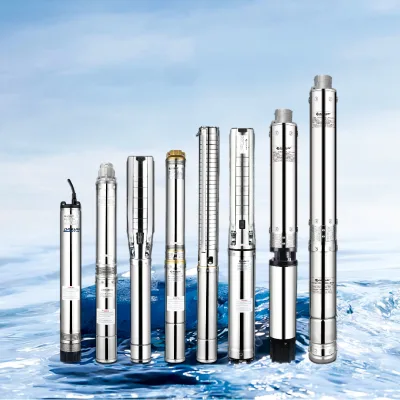


0.75 HP Water Submersible Pump High Flow Stainless Steel Submersible Pump
$40.00 - $42.00
MOQ: 100 Pieces


Comprehensive Sourcing Guide
Strategic Sourcing Guide for Stainless Steel Submersible Pumps
Understanding Technical Specifications and Core Attributes
When sourcing stainless steel submersible pumps, buyers must first distinguish between the general category of submersible pumps and the specific material requirements that define the stainless steel variant. The market presents a diverse array of configurations, ranging from single-stage to multistage designs, each serving distinct hydraulic needs. A critical observation in the current supply landscape is the variation in driving types; while many units operate on electric power, the specific motor configuration and frequency requirements must align with the target application's infrastructure. For instance, some units are designed for 50Hz operation, while others accommodate 60Hz frequencies, and voltage ratings can vary significantly, including options such as 380V, 660V, or 1140V for industrial heavy-duty applications.
The structural integrity of the pump is paramount, particularly when dealing with corrosive environments or high-pressure systems. Buyers should verify whether the pump utilizes a single-suction or double-suction impeller design, as this directly impacts flow efficiency and head pressure. The impeller type, whether closed or open, dictates the pump's ability to handle solids and slurries. In the context of stainless steel pumps, the material choice often extends to the casing and the shaft, ensuring resistance against chemical degradation. While some listings indicate a maximum head capability exceeding 150 meters, others in the broader market may reach approximately 300 meters or even higher, depending on the multistage configuration. It is essential to note that while some products are categorized as centrifugal pumps, others may be classified specifically as booster pumps or condensate pumps, requiring a precise match between the pump theory and the intended fluid dynamics.
The working pressure is another critical specification that varies across the supply base. Some units are rated for low-pressure applications, while others are engineered to withstand pressures up to 20.7 Bar or approximately 5.0 MPa. Temperature tolerance is equally vital; standard industrial pumps often operate within a range of -80 to +450 degrees Celsius, though this must be verified against the specific fluid being pumped. The mounting height and shaft position also play a role in installation logistics. While some pumps are designed for horizontal shaft positions with horizontal split casings, others may require vertical mounting configurations typical of irrigation or deep-well applications. Buyers must ensure that the selected model, whether designated as a WQ Submersible Pump or a specialized liquid pump, meets the exact hydraulic curve required for the project.
Compliance, Certification, and Standard Verification
Navigating the regulatory landscape for submersible pumps requires a rigorous approach to verifying compliance and certification. The global market for industrial pumps is governed by various international standards, and buyers must not assume that a product listing automatically satisfies all necessary regulatory requirements. In the observed supply data, specific standards such as API610 and Vdma24297 are mentioned, which are critical benchmarks for centrifugal pumps used in the oil, gas, and chemical industries. API610, in particular, is a widely recognized standard for centrifugal pumps for petroleum, petrochemical, and natural gas industries, covering design, materials, and testing requirements. Similarly, Vdma24297 provides guidelines for the design and construction of centrifugal pumps, ensuring reliability and safety in industrial settings.
However, the presence of a standard designation in a product description does not guarantee that every unit sold under that name has undergone the full certification process. Buyers must explicitly request proof of compliance, such as third-party test reports or certification documents, before finalizing a procurement order. For example, while some product listings mention CE certification, this is a mandatory conformity mark for products sold within the European Economic Area, indicating compliance with health, safety, and environmental protection standards. It is the buyer's responsibility to verify that the specific batch of pumps being purchased holds valid CE marks and that the manufacturer maintains an active quality management system.
Furthermore, the material composition of the pump must align with the intended application's corrosive environment. While "stainless steel" is a broad term, the specific grade (e.g., 304, 316, or duplex stainless steel) determines the pump's resistance to various chemicals and salinity levels. Buyers should request material certificates (MTC) that detail the chemical composition and mechanical properties of the stainless steel used in the casing, impeller, and shaft. In addition to material standards, electrical certifications are crucial, especially for pumps operating at high voltages like 1140V. The motor and control systems must comply with local electrical codes and international safety standards to prevent hazards such as short circuits or electrical fires.
Cost Drivers and Pricing Dynamics
The pricing of stainless steel submersible pumps is influenced by a complex interplay of factors, including material costs, manufacturing complexity, and customization requirements. The observed price range in the market spans from approximately $20 to $50,000, reflecting the vast diversity in pump sizes, power ratings, and performance capabilities. At the lower end of the spectrum, smaller pumps with standard configurations and lower power ratings, such as those with motor powers around 1.5kW, may be priced affordably. Conversely, high-performance units with motor powers reaching 1150kW and heads exceeding 850 meters command significantly higher prices due to the advanced engineering and premium materials required.
Material costs are a primary driver of the final price. Stainless steel is more expensive than cast iron or other common pump materials, and the grade of steel used directly impacts the cost. Pumps designed for highly corrosive environments require higher-grade stainless steel, which increases the raw material expense. Additionally, the manufacturing process for multistage pumps is more labor-intensive and requires tighter tolerances compared to single-stage pumps, further contributing to the cost. Customization is another significant factor; while many suppliers offer standard models, the ability to customize the pump for specific applications, such as unique mounting heights or specialized impeller designs, adds to the overall price.
The Minimum Order Quantity (MOQ) also affects the unit cost. The observed MOQ range varies from 1 to 100 units, with larger orders typically benefiting from economies of scale. Buyers purchasing small quantities may face higher per-unit costs, while those placing bulk orders can negotiate more favorable pricing. Packaging and logistics are additional cost considerations; pumps are often shipped in plywood cases or wooden crates to ensure safe transport, and the cost of these packaging materials, along with shipping fees, must be factored into the total procurement budget. Buyers should also consider the long-term cost of ownership, including energy efficiency and maintenance requirements, as a more expensive pump with higher efficiency may offer better value over its lifecycle.
Typical Applications and Industry Use Cases
Stainless steel submersible pumps are versatile assets deployed across a wide range of industries, each with unique operational demands. The primary application areas include water treatment, sewage management, chemical processing, and oil transfer. In the water treatment sector, these pumps are essential for moving clarified water, sludge, and sewage. Their resistance to corrosion makes them ideal for handling wastewater that may contain abrasive particles or corrosive chemicals. The ability to operate as slurry pumps allows them to manage mixtures of water and solid particles, making them suitable for mining and construction applications where slurry transport is required.
In the chemical industry, stainless steel submersible pumps are used for transferring aggressive chemicals, acids, and solvents. The material's resistance to chemical attack ensures the integrity of the pump and the safety of the operation. Similarly, in the oil and gas sector, these pumps are utilized for oil transfer and condensate removal. The high-pressure capabilities of some models, reaching up to 20.7 Bar, make them suitable for deep-well applications and high-head pumping scenarios. The versatility of these pumps extends to agricultural irrigation, where they serve as booster pumps to increase water pressure for efficient distribution.
The specific application dictates the choice of pump configuration. For instance, a clarifying water pump may require a single-stage design with a closed impeller to ensure smooth flow and minimal turbulence. In contrast, a sewage pump might need a larger impeller and a more robust casing to handle solids. The ability to customize the pump for specific applications is a key advantage, allowing buyers to tailor the pump's performance to their exact needs. Whether used as a circulating pump in industrial cooling systems or as a submersible pump in deep wells, the stainless steel variant offers a reliable solution for diverse fluid handling challenges.
Supplier Evaluation and Quality Assurance
Selecting a reliable supplier is a critical step in the procurement process, requiring a thorough evaluation of the manufacturer's capabilities and track record. Buyers should prioritize suppliers who demonstrate transparency in their manufacturing processes and provide comprehensive documentation regarding their products. The origin of the pump is a relevant factor, with major manufacturing hubs in China, such as Zhejiang and Jiangsu provinces, known for producing a wide variety of pump models. However, the location alone does not guarantee quality; buyers must assess the supplier's quality control systems and adherence to international standards.
Quality assurance should be a central component of the supplier evaluation process. Buyers should request detailed information about the supplier's quality management system, including ISO certifications and internal testing protocols. The ability to provide test results for key performance indicators, such as flow rate, head pressure, and efficiency, is a strong indicator of a supplier's commitment to quality. Additionally, buyers should verify the supplier's experience in producing stainless steel pumps and their familiarity with the specific standards required for the application, such as API610 or Vdma24297.
Communication and responsiveness are also important factors in supplier selection. A reliable supplier should be able to provide timely technical support, answer inquiries about product specifications, and assist with customization requests. The supplier's ability to meet lead times and deliver products in the specified packaging, such as plywood cases or wooden crates, is also crucial for maintaining project schedules. Buyers should consider the supplier's after-sales support, including warranty terms and availability of spare parts, to ensure long-term reliability of the equipment.
Long-Term Procurement Considerations and Maintenance
Sourcing stainless steel submersible pumps is not just a one-time transaction but a long-term investment that requires careful consideration of maintenance and lifecycle costs. Buyers should evaluate the availability of spare parts and the ease of maintenance for the selected pump model. Pumps with standardized components and widely available spare parts are generally easier to maintain, reducing downtime and operational costs. The design of the pump, including features like horizontal split casings, can facilitate easier access for inspection and repair, which is beneficial for long-term operations.
Energy efficiency is another critical long-term consideration. Pumps with higher efficiency ratings consume less electricity, leading to significant cost savings over the equipment's lifespan. Buyers should compare the power consumption of different models and select those that offer the best balance between performance and energy efficiency. The operating temperature range and pressure ratings should also be considered to ensure the pump can handle the expected operating conditions without premature failure.
Finally, buyers should plan for the eventual replacement of the pump and consider the environmental impact of the disposal process. Stainless steel is a recyclable material, and choosing suppliers who adhere to sustainable manufacturing practices can contribute to a more environmentally responsible procurement strategy. By focusing on these long-term factors, buyers can ensure that their investment in stainless steel submersible pumps delivers reliable performance and value over the years.
FAQs
What is the maximum head capacity for these pumps?
The maximum head capacity exceeds 150 meters, with some models reaching approximately 300 meters. This high head capability makes them suitable for deep-well applications and systems requiring significant pressure lift.
Can these pumps handle chemical and slurry applications?
Yes, these pumps are designed for clarified water, slurry, sewage, and chemical transfer applications. Their construction supports handling corrosive fluids and mixtures containing solid particles effectively.
Which voltage options are available for electric operation?
Available voltage options include 380V, 660V, or 1140V for industrial heavy-duty use. Some units also operate on 60Hz or 50Hz frequencies depending on the specific model and region.
How is the pump casing constructed for durability?
The casing is available in horizontal split designs and can be made of cast iron or stainless steel. This construction ensures resistance against corrosion and supports high-pressure operations up to 20.7 Bar.
What packaging is used for shipping these units?
Units are typically packed in plywood cases, wooden cases, or cartons to ensure safe transport. Custom packaging requirements can often be accommodated to meet specific logistical needs.
Which standards do these pumps comply with?
Some models comply with API610 and Vdma24297 standards for industrial centrifugal pumps. Others may carry CE certification, indicating conformity with European health and safety requirements.
What is the minimum order quantity for these pumps?
The minimum order quantity ranges from 1 to 100 units depending on the supplier and model. Bulk orders often benefit from economies of scale while small orders remain accessible.