Source Stainless Steel Trash Bin for Home Outdoor Recycling
Compare 30 Stainless Steel Trash Bin options featuring double or single layers, swing lids, and rubber rims. These units suit home, outdoor, and recycling applications with capacities from 9L to 14L and delivery times of 25-30 days.
Key considerations
Products List



Comprehensive Sourcing Guide
Strategic Sourcing Guide for Stainless Steel Trash Bins
Understanding Product Specifications and Variations
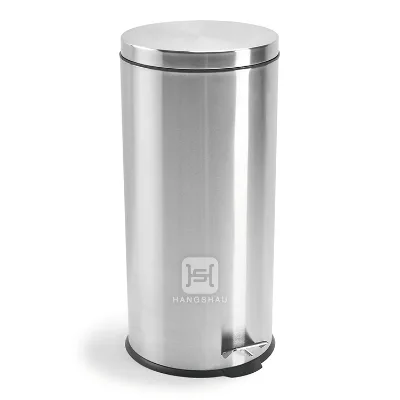
When sourcing stainless steel trash bins, buyers must first navigate a landscape of diverse technical specifications that define the utility and durability of the product. The core material is consistently identified as stainless steel, providing a foundation for resistance against corrosion and structural integrity. However, the specific application dictates the necessary variations in design. Observations from the market indicate a range of capacities, with specific models offering 9-liter, 12-liter, and 14-liter volumes. These capacity differences are directly correlated with physical dimensions; for instance, a 12-liter unit may measure approximately 200mm in diameter by 300mm in height, while larger 14-liter or 300mm diameter models can reach heights of 635mm.
The construction layering is another critical specification. Products are available in both single-layer and double-layer configurations. The double-layer variants often feature an outer layer of stainless steel combined with an inner layer described as powder-coated metal, which is noted for being durable and fire-resistant. This construction method is particularly relevant for applications requiring thermal insulation or enhanced safety. The top design varies significantly between models, with some featuring an open-top design for high-volume waste collection and others equipped with a swing lid for odor control and aesthetic integration in indoor environments. The shape is predominantly round, though the surface finish can range from brushed stainless steel to stainless steel powder coat, influencing both the visual appeal and the ease of cleaning.
Material Composition and Functional Attributes
The functional attributes of these bins extend beyond simple containment. A recurring feature in high-quality units is the inclusion of a rubber rim at the bottom. This design element serves a dual purpose: it protects the flooring from scratches and reduces noise during movement. The usage classification for these products is broad, spanning indoor home applications, outdoor recycling stations, and commercial recycling facilities. The "Eco-Friendly" attribute is frequently associated with these units, suggesting a design philosophy that supports waste management sustainability.
Customization is a significant driver in this category. The market data confirms that customization is available, allowing buyers to specify requirements for size, color, and materials. Some suppliers indicate that the product standard can be "Customized" to meet specific project needs, while others adhere to a "Hotel standard" for hospitality applications. The ability to accept OEM (Original Equipment Manufacturer) requests further expands the scope for branded procurement. The packaging details also vary, ranging from simple carton packs to more robust solutions involving bubble film, wooden cases, or foil, depending on the destination and shipping requirements.
Cost Drivers and Pricing Dynamics
The pricing for stainless steel trash bins is influenced by a complex interplay of factors, including material grade, manufacturing complexity, and customization levels. The observed price range in the market spans from $1 to $400 USD. This wide variance is not arbitrary; it reflects the difference between basic, single-layer units and complex, double-layer models with specialized finishes and custom dimensions. The minimum order quantity (MOQ) also plays a pivotal role in the unit cost, with observed ranges from 1 to 600 units. Buyers purchasing small quantities may face higher per-unit costs, whereas bulk orders often benefit from economies of scale.
Lead times are another cost consideration. Standard delivery times are observed to be between 25 and 30 days. This timeframe can fluctuate based on the complexity of the order, the availability of raw materials, and the specific production schedule of the supplier. Buyers must account for these lead times in their inventory planning to avoid stockouts. Additionally, the choice of packaging impacts logistics costs; while carton packing is standard, specialized packaging like wooden cases may incur higher shipping fees but offer better protection for high-value or fragile items.
Compliance, Certification, and Standards Verification
In the realm of B2B procurement, verifying compliance and standards is essential for risk mitigation. While specific certifications such as BSCI and ISO 9001 are often cited in the broader industry context, buyers should treat these as areas for verification rather than guaranteed attributes of every listed product. The supplied data mentions a "Hotel standard" for certain models, which implies adherence to hospitality industry requirements for durability and aesthetics. However, for other applications, the standard may be "Customized," requiring the buyer to define the specific criteria.
Buyers must actively verify the origin of the products. The data indicates that many units originate from China, specifically from the Guangdong region, which is a major manufacturing hub. While this provides access to a robust supply chain, it necessitates a thorough review of the supplier's quality management systems. The "Eco-Friendly" claim should be substantiated through material safety data sheets or specific environmental certifications provided by the manufacturer. It is crucial to request documentation that confirms the stainless steel grade and the safety of any coatings or finishes used, ensuring they meet the regulatory requirements of the destination market.
Supplier Evaluation and Selection Criteria
Selecting the right supplier requires a multi-faceted evaluation process that goes beyond price comparison. The ability to offer customization is a key differentiator. Suppliers that explicitly state "Customized" as a feature and accept OEM requests demonstrate flexibility and a customer-centric approach. Buyers should prioritize suppliers who can provide detailed specifications for their models, such as the ES8533, ES8517, or ES8033 series, as these model numbers often correspond to specific design iterations with known performance characteristics.
The supplier's location and logistics capabilities are also critical. With origins primarily in Guangdong, China, buyers should assess the supplier's experience with international shipping and their ability to manage the 25-30 day lead time reliably. The packaging details provided by the supplier, such as "10 PCS One Carton" or the use of wooden cases, should align with the buyer's logistical constraints and destination requirements. Furthermore, the supplier's track record in handling "Stocked" items versus custom orders can indicate their operational efficiency. A supplier that maintains a stock of standard models while also offering robust customization services offers the best balance of speed and flexibility.
Quality Control and Long-Term Procurement Strategy
Implementing a robust quality control (QC) strategy is vital for ensuring the longevity of stainless steel trash bins. The "Advantage" of being easy to empty and clean is a functional claim that must be validated through physical inspection. Buyers should request samples to test the durability of the rubber rim, the stability of the swing lid mechanism, and the integrity of the powder coating. For double-layer units, verifying the fire resistance of the inner layer is essential for compliance with safety regulations in public spaces.
Long-term procurement considerations involve establishing a relationship with a supplier who can maintain consistent quality over time. The "Product Standard" should be clearly defined in the contract, whether it is a specific hotel standard or a custom specification. Buyers should also consider the scalability of the supply chain; as demand grows, the supplier must be able to increase production without compromising the 25-30 day delivery window. Regular audits and quality checks during the production process can help identify issues early, ensuring that the final products meet the required specifications for size, color, and material.
Comparative Analysis of Product Models
To facilitate decision-making, buyers can utilize the following comparison table to evaluate key product attributes based on the observed data. This table highlights the differences in capacity, dimensions, and features across various models.
| Product Model | Capacity | Dimensions (Approx.) | Layer Type | Top Design | Key Feature |
|---|---|---|---|---|---|
| ES8533 | 12L | Dia 200 x H 300mm | Double | Swing Lid | Rubber Rim |
| ES8517 | 14L | D 245 x H 300mm | Double | Swing Lid | Powder Coat |
| ES8033 | 9L | Dia 200 x H 300mm | Single | Open Top | Stocked |
| ES8521 | 14L | 300 x H 635mm | Double | Swing Lid | Fire Resistant |
| ES8034 | 14L | 300 x H 635mm | Double | Swing Lid | Easy to Clean |
| HS-001 | Variable | Custom | Variable | Variable | Custom Standard |
This comparison illustrates that while some models are optimized for compact spaces with smaller capacities, others are designed for high-volume applications with larger dimensions and enhanced safety features. The variation in layer types and top designs allows buyers to select the most appropriate bin for their specific environment, whether it be a residential kitchen, a commercial recycling center, or an outdoor public space.
Final Procurement Considerations
In conclusion, sourcing stainless steel trash bins requires a meticulous approach that balances technical specifications, cost factors, and supplier reliability. The market offers a wide array of options, from standard stocked items to fully customized solutions. Buyers must carefully review the provided facts, such as capacity, dimensions, and material composition, to ensure the selected product meets their operational needs. By verifying compliance, evaluating supplier capabilities, and implementing strict quality control measures, buyers can secure a supply chain that delivers durable, functional, and cost-effective waste management solutions. The ability to customize size, color, and materials remains a powerful tool for aligning procurement with specific project requirements, ensuring that the final product not only performs well but also integrates seamlessly into the intended environment.
FAQs
What customization options are available for stainless steel trash bins?
Customization is available for size, color, and materials according to buyer requirements. Some models adhere to hotel standards while others allow fully customized specifications for unique project needs.
How does the double layer construction benefit the product?
Double layer units feature an outer stainless steel layer and an inner powder-coated metal layer that is durable and fire resistant. This design enhances safety and thermal insulation for various applications.
Which capacity sizes are offered for these stainless steel trash bins?
Available capacities include 9 liters, 12 liters, and 14 liters depending on the specific model selected. Larger capacities often correspond to increased dimensions such as a 300mm diameter or 635mm height.
Can I find stainless steel trash bins with a swing lid design?
Yes, several models feature a swing lid design suitable for indoor applications and odor control. Other options include open top designs intended for high-volume recycling or outdoor use scenarios.
What is the standard delivery time for these products?
The standard delivery time is observed to be between 25 and 30 days from order placement. This timeframe applies to standard production runs and may vary based on customization complexity.
How are these bins packaged for shipping and protection?
Packaging options range from standard carton packs to more robust solutions involving bubble film, wooden cases, or foil. Specific details like ten pieces per carton are common for standard models.