Source Glass Fiber Chopped Strand for GRC, BMC, and Concrete
Compare 30 verified Glass Fiber Chopped Strand options for GRC panel reinforcement, BMC molding, and concrete strengthening. View specifications including ZrO2 content, filament diameter, and alkaline resistance to find the right material for your manufacturing needs; compare the available evidence and request quotations based on your requirements.
Key considerations
Products List




Comprehensive Sourcing Guide
Glass Fiber Chopped Strand Sourcing Guide
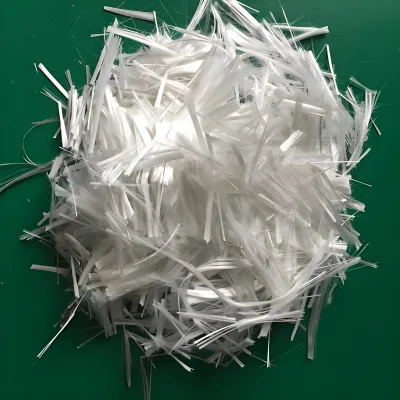
Glass Fiber Chopped Strand remains a foundational input for buyers sourcing reinforcement materials for GRC panels, BMC compounds, and surface anti-crack applications. Unlike continuous rovings or meshes, chopped strand delivers random-direction reinforcement that disperses readily in cementitious and thermoset matrices, which is why specification discipline at the procurement stage has an outsized effect on downstream performance. Listings in this category vary widely — from decorative E-glass yarn products priced under a dollar to high-zirconia alkali-resistant grades quoted in the thousands of dollars per ton — so a buyer who approaches the category without a written specification often pays for attributes they do not need or receives material unsuited to its end use.
This guide walks through the decisions that separate a smooth procurement from a costly one: defining the product scope, locking technical parameters, verifying compliance paperwork, understanding what actually drives landed cost, qualifying suppliers, and setting up long-term controls. Throughout, the emphasis is on what can be verified from listings and supplier documentation rather than assumptions, since observed attributes in this category — such as ZrO₂ content declared at 14.5% to 16.7% — should be treated as claims requiring confirmation through certificates and incoming inspection.
Product Scope and Observed Listing Signals
The listings under this keyword cluster around three recognizable product families. The first is alkali-resistant (AR) chopped strand for GRC applications, typically offered in chopped lengths of 3, 6, 12, 18, and 24mm with filament diameters around 11–13 microns, and positioned explicitly for panel surface reinforcement and anti-crack roles. The second is E-glass chopped strand for thermoset compounding, notably BMC, where silane surface treatment and single-yarn structure are common declared attributes. The third is a broader fiberglass yarn and specialty strand group, including models such as BH-ECS and ECS-45P, which illustrates how the same keyword can return products serving very different processes. Observing model nomenclature — for example, ARC13-76-12MMH or ARC15-98-12MM with a ZrO₂ 16.7% designation — gives buyers a shorthand for length and chemistry before deeper diligence.
Listed price signals span from roughly $0.50 to $2,100, which should be read as evidence of extreme category heterogeneity rather than a price range for any single product. Similarly, MOQs ranging from 1 to 50,000 units signal that the results include everything from sample quantities to full production runs. Packaging declarations also vary meaningfully: 20kg kraft paper bags palletized at 50 bags per pallet, 25kg paper-plastic bags, poly bags in carton boxes, and 780kg pallets all appear. A disciplined buyer treats these observed attributes as a screening checklist — matching length, chemistry, treatment, and packaging format against their own process before shortlisting.
Technical Specifications to Verify
The single most consequential parameter for cementitious applications is zirconia content, because alkali resistance in AR glass depends on it. Listings in this category declare ZrO₂ values of 14.5%, 16.5%, and 16.7%, and one model explicitly cites a 16.5% ZrO₂ standard. Buyers should require the actual batch certificate rather than accepting the listing value, confirm which measurement method underlies the declaration, and treat any deviation between certificate and listing as a disqualifying flag. Alongside chemistry, chopped length must match the mixing and spray-up equipment: the observed 3–24mm range means a 12mm strand intended for premix behaves very differently from a 24mm strand in a spray process, and ordering the wrong length frequently surfaces only at production trials.
Beyond chemistry and length, verify filament diameter (13 microns is a repeated declaration), dispersibility — one listing explicitly claims "good" dispersing, which should be validated in your own matrix — and surface treatment such as the silane sizing declared on E-glass BMC grades. Confirm whether the product is a true chopped strand or a continuous-fiber yarn variant, since the "Fiber Appearance: Continous Fiber" declaration in some listings shows the category boundary is not always obvious from the title. Finally, anchor every parameter to a named model (e.g., "Macro anti-crack 36mm ARG Chopped" or ARC-series codes) in the purchase contract so that substitution is contractually visible.
Compliance and Safety Documentation
Certification claims in the observed listings include ISO on its own, ISO combined with CE, and ISO paired with "Grca Fvf PCI" — the latter likely referencing GRC industry body affiliations relevant to panel reinforcement buyers. Treat these as claims to be evidenced: request current certificates, verify scope and expiry, and confirm that the certified scope actually covers glass fiber production rather than a general quality-management certificate unconnected to the product. For listings citing "ROHS, SGS approved," ask for the underlying test reports and identify which specific substances and lot they cover, since a generic approval reference without a report is not a substitute for substance-level documentation.
Safety documentation deserves equal attention. Glass fiber products generate airborne dust and filament exposure during chopping, mixing, and handling, so request the current safety data sheet and confirm handling guidance for your workers, particularly if the sizing chemistry is proprietary. Buyers exporting finished GRC or BMC articles should also map which downstream declarations they will need — the fiber supplier's certificates feed directly into the finished-goods compliance file. Finally, request declaration of origin (the observed listings point to Xiangyang, Hubei, China and China generally) early, because origin affects import duty treatment and should be consistent across the commercial invoice, certificate, and shipping documents from the first order onward.
Cost Drivers and Commercial Terms
Price in this category is driven primarily by chemistry and length precision. AR grades with higher declared ZrO₂ content command a premium over standard E-glass, and tighter length tolerances or specialty sizing packages add cost. Packaging format matters more than buyers expect: 20kg kraft bags on pallets, 25kg paper-plastic bags, and 780kg bulk pallets carry different handling, moisture-protection, and freight-efficiency profiles. Since glass fiber is low-density relative to its volume, container utilization strongly affects per-kilogram landed cost — clarify whether quoted prices are FOB, CIF, or ex-works, and calculate the true cost per kilogram at your dock rather than comparing listing prices directly.
Commercial terms show unusual breadth in this category, with MOQs from 1 to 50,000 observed across listings. A low MOQ is valuable for trial orders and qualification lots, but unit pricing at small volumes rarely reflects production economics; structure the relationship as a priced qualification lot followed by committed-volume pricing. Customization is explicitly declared as available in the listings, which means sizing, length, and packaging can be negotiated — but expect customization to affect both minimum quantities and lead time. Confirm in writing how palletization counts (e.g., 50 bags per pallet), bag weights, and moisture protection are guaranteed, because these details determine whether material arrives usable or requires re-drying and re-bagging.
Supplier Qualification and Quality Control
Qualify suppliers through a staged process rather than a single document review. Start with a desk audit: match the declared model numbers, ZrO₂ values, lengths, and certifications against your specification, and request a sample lot with its own batch certificate. Then run the sample through your actual mixing or spray process — dispersibility and strand integrity under real conditions reveal more than any datasheet. Only after a successful plant trial should you move to commercial volumes, ideally with a first-article inspection and agreed acceptance criteria covering chemistry, length distribution, filament diameter, moisture, and packaging condition. Suppliers offering customization should be asked specifically how process changes are controlled between customized and standard runs.
Ongoing quality control should rest on incoming inspection with a defined sampling plan: verify chopped length distribution, visual cleanliness (no fuzz balls or undispersed bundles), and moisture condition on each lot, and periodically send retained samples for independent ZrO₂ confirmation. Ask each supplier how they handle nonconforming lots, what traceability exists from bag to production batch, and whether certificates of analysis accompany every shipment or only on request. The declared origin details and model nomenclature should be consistent across invoices, packing lists, and certificates — inconsistencies are an early warning of trading-company sourcing rather than direct manufacture, which is not automatically disqualifying but does change how quality problems get resolved.
Long-Term Procurement Checks
Once a supplier is qualified, protect the relationship with periodic re-verification rather than assuming initial quality persists. Re-check certification validity on an annual cycle, request updated ISO certificates before expiry, and re-run independent chemistry confirmation on a scheduled basis — annually or every few lots depending on volume and criticality. Monitor batch-to-batch consistency of the parameters that matter most to your process, typically ZrO₂ content, length distribution, and dispersibility, and keep a retained-sample library so that any field performance issue in your GRC panels or BMC parts can be traced back to a specific fiber lot. Price escalation clauses should reference the actual cost drivers (chemistry grade, energy, freight) rather than being open-ended.
Diversification is the other long-term safeguard. Because the category contains visually similar products with materially different chemistry, maintain an approved alternate supplier with a completed qualification even if production currently flows to a single source. Review specifications annually against your own field performance data: if panel surface cracking or BMC flow behavior changes, the fiber spec — length, sizing, or ZrO₂ grade — is a candidate cause worth investigating before the formulation. Finally, document every agreed customization in a controlled spec sheet so that supplier personnel changes, packaging shifts (for example, from 25kg bags to palletized bulk), or model-code updates never silently alter what arrives at your facility.
FAQs
What chopped lengths are available for Glass Fiber Chopped Strand?
Common chopped lengths include 3mm, 6mm, 12mm, 18mm, and 24mm, with some products offering lengths in the 6.0-24.0mm range. The right length depends on the application; shorter lengths disperse more easily in BMC mixes, while longer strands such as 12mm or 24mm are typically chosen for GRC panel reinforcement and anti-crack performance.
Which ZrO2 content should alkaline-resistant chopped strand have for GRC work?
For GRC applications, choose an alkaline-resistant type with ZrO2 content of 14.5% or 16.5%; some products specify 16.7%. Higher zirconia levels improve resistance to cement alkalinity, which matters for panel surface reinforcement. Confirm the stated ZrO2 value on the product specification before ordering, since listings vary between grades and models.
How is Glass Fiber Chopped Strand packaged for shipment?
Packaging varies by listing: some products come in 20kg kraft paper bags with 50 bags per pallet, others use paper-plastic bags of 25kg, and some are packed in poly bags loaded into carton boxes. Palletized shipments are common, with one listing noting 780kg per pallet. Confirm packaging details with the supplier before ordering.
Can Glass Fiber Chopped Strand be customized for specific applications?
Yes, customization is available on listed products. Buyers can typically request specific chopped lengths, filament diameters around 11-13 micron, and surface treatments such as silane coating. When requesting customization, state your application, such as BMC or GRC panel reinforcement, the required length, and target dosage so suppliers can match the appropriate grade.
What dosage of chopped strand is used in GRC surface layers?
A typical dosage is 0.5% by the weight of the face layer concrete for GRC panel surface reinforcement. This ratio supports anti-crack performance without hindering dispersion, and listed products note good dispersing behavior. Adjust dosage based on your mix design and panel requirements, and verify recommendations with the specific product's technical data.
What certifications do listed Glass Fiber Chopped Strand products carry?
Listed products reference ISO certification, with some also citing CE and GRCA FVF PCI references, and one standard noting ROHS and SGS approval. Certification coverage differs across listings, so request current certificates from the supplier for the exact model you intend to buy, especially when certifications are required for your project or market compliance.
Which surface treatment is used on these chopped strands?
Silane coating is the surface treatment listed for E-glass chopped strand products with single yarn structure. Silane sizing improves bonding between the glass fibers and the resin or cement matrix, which helps strengthening performance in applications like BMC. If your matrix chemistry differs, discuss compatible sizing options with the supplier when requesting quotes.
How should buyers compare filament diameter specifications?
Filament diameters commonly fall around 13 micron, with chopped strand diameter ranges given as 11-13 micron across listings. Diameter affects flexibility, dispersion, and reinforcement efficiency in the final composite. Compare the stated diameter together with chopped length and ZrO2 content, and request samples to verify dispersion behavior in your actual mixing process.