Source Stainless Steel Wooden Bottle Opener for Kitchen, Restaurant, and Bar
Compare 30 listings for the Stainless Steel Wooden Bottle Opener, featuring manual operation and customizable logo printing. Buyers can evaluate multifunctional designs, varying weights, and packing options from Chinese manufacturers.
Key considerations
Products List


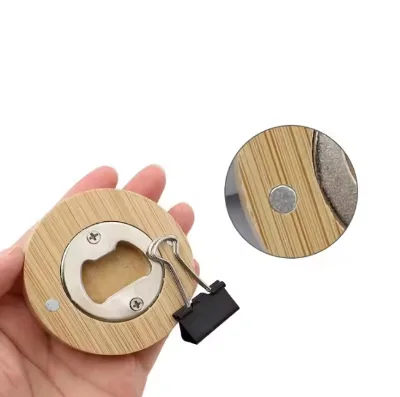
Wholesale Custom Stainless Steel Promotional Gift Wood Bottle Opener with Magnet
$0.38 - $0.49
MOQ: 50 Pieces

Custom Design High Quality Metal Stainless Steel Bottle Opener Promotion Gifts
$0.32 - $0.62
MOQ: 50 Pieces




Comprehensive Sourcing Guide
Strategic Sourcing Guide for Stainless Steel Wooden Bottle Openers
The global market for premium bottle openers continues to evolve, driven by a demand for durable, aesthetically pleasing, and multifunctional kitchen tools. When sourcing a Stainless Steel Wooden Bottle Opener, buyers must navigate a complex landscape of material combinations, manufacturing standards, and customization options. This guide provides a disciplined approach to evaluating suppliers and products, relying strictly on observed market data and established procurement principles. The focus remains on identifying reliable supply chains that deliver high-quality openers suitable for both retail and promotional channels.
Material Composition and Structural Integrity
The core definition of the target product involves a hybrid construction, typically combining stainless steel with wood or bamboo elements. Market observations confirm that "Bamboo and Metal" is a verified composition for specific models in this category. The metal component is predominantly identified as stainless steel, a material chosen for its corrosion resistance and longevity. This is critical for an item frequently exposed to moisture, wine corks, and cleaning agents.
The structural integrity of these openers depends on the precision of the joinery between the metal and wood components. While some products are listed with a "Metal" material attribute, the specific combination of bamboo and stainless steel offers a distinct aesthetic and tactile experience. Buyers should verify the thickness of the metal components, as specifications in the observed data include dimensions such as 1cm thickness for certain card-style openers, though traditional openers may vary. The wood element must be treated to prevent warping or splintering, ensuring the handle remains comfortable and secure during use.
When evaluating product listings, look for explicit mentions of the metal type. The presence of "Stainless Steel" as a defined attribute is a strong indicator of quality. However, the specific grade of stainless steel is rarely listed in standard catalogs. Procurement teams must request material certificates or mill test reports to confirm the grade, ensuring it meets food-safe standards if the product is intended for direct kitchen use. The "Composition" attribute of "Bamboo and Metal" suggests a sustainable angle, appealing to eco-conscious consumers, but the durability of the bond between these dissimilar materials is the primary technical concern.
Technical Specifications and Design Variations
The market for bottle openers is characterized by significant variation in form factor. While the core keyword implies a traditional handle-based design, the observed data reveals a diverse range of specifications. Products are categorized under "Desktop" and "Wall Hanging" types, indicating versatility in placement and usage. Some models are designed as "Card" shaped openers, which are compact and portable, while others are robust desktop units.
Dimensions vary widely across the product pool. Observed standards include specific measurements such as 417.8CM for card-style items and 66*1CM for smaller units. Other specifications list a standard size of 2.76'' × 1.57'' ×0.2'', which likely refers to a slim, card-like profile. For traditional openers, a dimension of 127mm is noted. These variations dictate the tool's application; a 127mm opener is likely a standard lever-style tool, while the card-style items serve as promotional giveaways or pocket accessories.
Weight is another critical specification. Observed data points to weights ranging from 30g for lighter, card-style models to 87.5g for heavier, more substantial units. The weight directly correlates with the perceived quality and the leverage provided during the opening process. A heavier opener generally offers better torque, but it must be balanced to avoid user fatigue. Buyers should compare the weight against the dimensions to ensure the density of the materials is appropriate. The "Thickness" of 1cm mentioned in the data suggests a substantial build for certain models, which may be a selling point for durability.
Customization and Branding Capabilities
One of the most significant advantages of sourcing these openers is the high degree of customization available. The data confirms that "Customization" is an available attribute for the majority of suppliers in this space. This allows buyers to tailor the product to their specific brand identity or promotional needs. The "Logo Printing" attribute is frequently listed as "With Logo," indicating that branding is a standard service.
The method of application is typically "Laser" engraving. Laser marking is preferred for stainless steel and wood because it creates a permanent, high-contrast mark that does not fade or peel over time. This is superior to adhesive labels or screen printing, which can wear off with frequent use. For wooden components, laser engraving can also be used to create intricate designs or textures, adding value beyond simple branding.
However, the data also notes instances of "Without Logo Printing," suggesting that suppliers offer both branded and generic options. This flexibility is crucial for buyers who may want to test the market with unbranded units before committing to a custom run. The "prod_packing" attributes reveal various packaging strategies, ranging from "1/PC Polybag" to "Individual OPP Bag" and bulk cartons like "180PCS/Carton" or "200 PCS/CTN." Customization often extends to the packaging, allowing for branded boxes or specific inner packaging configurations like "50/Inner Box, 10 Inner Boxes/Outer Carton."
Cost Drivers and Pricing Dynamics
Understanding the cost structure of stainless steel wooden bottle openers requires analyzing the observed price and MOQ ranges. The listed price range in the market spans from 0.05 to 4.03 USD. This wide disparity is driven by several factors, including material quality, customization complexity, and order volume. The lower end of the spectrum likely corresponds to simple, unbranded card-style openers with minimal packaging. The higher end reflects complex designs, premium stainless steel grades, laser engraving, and custom packaging.
The Minimum Order Quantity (MOQ) is a significant cost driver. The observed MOQ range is 50 to 10,000 units. A specific model in the data has an MOQ of 5000, which is typical for custom-branded runs to amortize setup costs. Lower MOQs, such as 50 or 100, are generally available for generic or semi-custom items. Buyers must balance the unit cost against the total investment. While a lower unit price is attractive, the high MOQ required to achieve it may not be feasible for small businesses or startups.
Payment terms are another financial consideration. The data indicates "T/T" (Telegraphic Transfer) as a standard payment type. This is a common practice in international trade but requires careful management of cash flow. Buyers should negotiate payment schedules, such as a deposit upon order confirmation and the balance before shipment, to mitigate risk. The "H.S. Code" of 4421909090 classifies these products under wooden articles, which may influence import duties and tariffs in the destination country.
Supplier Evaluation and Verification
Selecting the right supplier is paramount to ensuring product quality and supply chain reliability. The data shows that the "prod_origin" is consistently listed as "China," which is the primary manufacturing hub for these goods. While this provides access to a vast network of manufacturers, it necessitates rigorous due diligence. Buyers should verify the supplier's capacity to handle the specific "Operation Mode" of "Manual Openers" and their experience with the "Category" of "Corkscrews & Openers."
Key evaluation criteria include the supplier's ability to meet the "prod_standard" requirements. While some standards are listed as "Custom," others have specific dimensional requirements. Suppliers must demonstrate consistency in meeting these standards across large production runs. The "Feature" attributes, such as "Multifunctional," "With Keychain," and "Magnetic," indicate that the supplier must have the technical capability to integrate these elements seamlessly. A supplier claiming "Multifunctional" features must be able to demonstrate that the magnetic or keychain components function reliably and do not compromise the structural integrity of the opener.
Verification of the "prod_packing" capabilities is also essential. The variety of packing options, from simple polybags to export cartons, suggests that suppliers have diverse logistics capabilities. Buyers should request samples of the actual packaging to ensure it protects the product during transit, especially for delicate wooden components. The "Weight" of the carton, such as "17.6 Lbs" for 200 pieces, is a critical metric for calculating shipping costs and ensuring compliance with freight regulations.
Quality Control and Compliance Standards
Quality control (QC) is a non-negotiable aspect of sourcing stainless steel wooden bottle openers. The "Application" is listed as "Kitchen, Restaurant and Buffet Equipment," which implies that the products must meet food safety and hygiene standards. While specific certification names are not provided in the data, buyers must ensure that the materials used are food-grade. The stainless steel must not leach harmful substances, and the wood or bamboo must be treated with non-toxic finishes.
Compliance checks should focus on the "prod_standard" and any relevant international safety regulations. For instance, the dimensions and weight must be consistent with the product description to avoid customer complaints. The "Logo Method" of laser engraving should be verified to ensure it does not create sharp edges or burrs that could injure the user. Additionally, the "Feature" of "With Keychain" and "Magnetic" components must be tested for durability. These small parts can become loose over time, posing a choking hazard or rendering the product useless.
Buyers should implement a pre-shipment inspection protocol. This involves checking a random sample from the production batch against the agreed specifications. Key checks include verifying the "Metal Type," ensuring the "Composition" matches the order, and confirming the "Logo Printing" quality. The "prod_model" numbers, such as L0353, L0445, and CR-BO005, serve as unique identifiers for these checks. Any deviation from the model specifications should be rejected.
Long-Term Procurement and Market Trends
Sourcing stainless steel wooden bottle openers is not just a one-time transaction but a long-term partnership. The "Feature" of "Multifunctional" suggests that these products are evolving to meet changing consumer needs. Future trends may include the integration of additional tools, such as bottle stoppers or wine pourers, into the opener design. The "Type" of "Desktop" and "Wall Hanging" indicates a shift towards versatile kitchen accessories that serve multiple purposes.
Buyers should consider the lifecycle of the product. Stainless steel and bamboo are durable materials, but the longevity of the bond between them is crucial. Suppliers who use high-quality adhesives or mechanical fasteners will produce openers that last longer, reducing returns and enhancing brand reputation. The "prod_packing" strategies also play a role in the product's longevity; proper packaging prevents damage during storage and transport.
Finally, the "H.S. Code" and trade regulations will continue to influence the sourcing strategy. As global trade dynamics shift, buyers must stay informed about changes in tariffs and import requirements. The "Payment Type" of T/T remains standard, but buyers should explore options for letters of credit or other secure payment methods as their order volumes grow. By maintaining a disciplined approach to specification, quality, and supplier evaluation, buyers can secure a reliable supply of high-quality stainless steel wooden bottle openers that meet the demands of the modern market.
Comparative Analysis of Product Attributes
To assist in decision-making, the following table summarizes key attributes observed in the market data, highlighting the variations available to buyers.
| Attribute Category | Observed Options | Implication for Buyer |
|---|---|---|
| Material Composition | Metal, Bamboo and Metal | Verify food-safe treatment for wood; confirm stainless steel grade. |
| Product Type | Desktop, Wall Hanging, Card | Select based on intended usage (kitchen display vs. pocket carry). |
| Logo Method | Laser, With Logo, Without Logo | Laser offers permanence; confirm engraving depth and contrast. |
| Dimensions | 417.8CM, 66*1CM, 127mm, 2.76''×1.57'' | Match dimensions to packaging and shipping constraints. |
| Weight | 30g, 87.5g | Heavier units offer better leverage; lighter units are more portable. |
| MOQ | 50, 5000, 10000 | Balance unit cost against inventory requirements. |
| Packing | Polybag, OPP Bag, Export Carton | Ensure packaging protects wooden components from moisture. |
| Features | Multifunctional, Magnetic, Keychain | Test functionality of added features for durability. |
This comparative view underscores the importance of specifying exact requirements before engaging with suppliers. The diversity of options allows for tailored solutions but requires clear communication to avoid mismatches in expectations. By adhering to these guidelines, buyers can effectively navigate the sourcing process for stainless steel wooden bottle openers, ensuring a successful procurement outcome.
FAQs
Can I get custom logo printing on these openers?
Yes, logo printing is available with laser engraving methods for permanent branding. Suppliers offer customization options for both stainless steel and bamboo components, allowing for high-contrast marks that resist fading during kitchen use.
What materials are used to construct these openers?
The openers are constructed from a combination of stainless steel and bamboo. This hybrid composition ensures corrosion resistance and durability while providing a sustainable aesthetic suitable for kitchen and restaurant equipment applications.
What is the minimum order quantity for these products?
The minimum order quantity ranges from 50 to 10,000 units depending on the specific model and customization needs. Some models require an MOQ of 5,000 units, while others allow for smaller trial orders starting at 50 pieces.
How are these bottle openers packaged for shipment?
Packaging varies by model, ranging from individual polybags to bulk cartons containing 180 or 200 pieces. Some configurations use export cartons with inner boxes, ensuring protection for the wooden and metal components during transit.
Which types of bottle openers are available in this category?
Available types include desktop units, wall hanging designs, and compact card-shaped openers. These models support manual operation and may feature additional attributes like keychains or magnetic elements for versatile usage in various settings.
What is the origin of these stainless steel wooden openers?
These products originate from China, which is the primary manufacturing hub for this category. Buyers should verify supplier capacity and quality control processes to ensure consistency with the specified standards and dimensions.