Source Steel Support Prop for Slab, Formwork, and Building Projects
Compare 20 Steel Support Prop options from Chinese manufacturers with customizable lengths, thicknesses, and surface treatments. Buyers can evaluate heavy-duty and light-duty models for slab and formwork supporting applications.
Key considerations
Products List


$6.00 - $10.00
MOQ: 100 Pieces



Comprehensive Sourcing Guide
Strategic Sourcing Guide for Steel Support Props
Understanding Technical Specifications and Material Standards
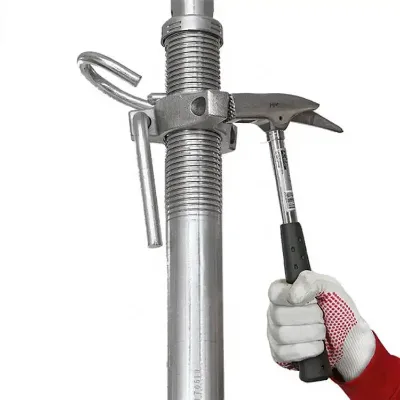
When sourcing steel support props, the primary objective is to align product specifications with the structural demands of the intended construction project. The market offers a diverse range of options, but the core material composition remains a critical starting point. Based on available market data, the predominant material used for these structural supports is steel, often supplemented by general metal alloys depending on the specific model. Buyers must verify the steel grade to ensure load-bearing capacity matches project requirements. Common steel standards observed in the supply chain include Q195, Q235, and Q345. These grades indicate varying levels of tensile strength and ductility, which directly influence the safety margin of the support system.
Dimensional consistency is equally vital. The physical attributes of the prop, specifically length and thickness, dictate its application scope. Observed specifications indicate a length range typically spanning from 1 meter to 3 meters, with some extended models reaching up to 15 meters. Thickness variations are also significant, with observed ranges falling between 2.2 mm and 4 mm for standard units, while other models may feature thicknesses between 2 mm and 3 mm. For tubular components, the inner tube diameters are frequently observed at 40 mm, 48 mm, or 60 mm, while outer tube diameters vary widely, including 48 mm, 56 mm, 60 mm, 76 mm, and 89 mm. These dimensions are not merely aesthetic; they determine the telescopic capability and the ultimate load capacity of the prop.
Buyers should also note the classification of the product type. The market distinguishes between "Heavy Duty" and "Light Duty" variants, as well as specific models labeled as "SF-Steel Props," "Supporting Prop," or generic "Prop" designations. Some listings also categorize these items under "Guard Rails" or "Stand" types, indicating versatility in their structural application. The connection mechanism is another technical differentiator, with "Snap-on Connection" being a prevalent feature that facilitates rapid assembly and disassembly on-site. Understanding these granular specifications is the first step in filtering suppliers who can deliver the exact hardware required for a specific slab or formwork supporting scenario.
Compliance, Certification, and Surface Treatment Protocols
In the realm of construction procurement, compliance with international and local standards is non-negotiable. While specific national standards may vary by region, the presence of ISO certification is a strong indicator of a manufacturer's commitment to quality management systems. Buyers should explicitly request proof of ISO certification to ensure that the production processes adhere to recognized quality benchmarks. Although some background data references EN1065, this should be treated as a potential standard rather than a guaranteed attribute of every listed product. Procurement teams must verify if the specific batch of steel props meets the relevant European or local safety codes for scaffolding and support systems.
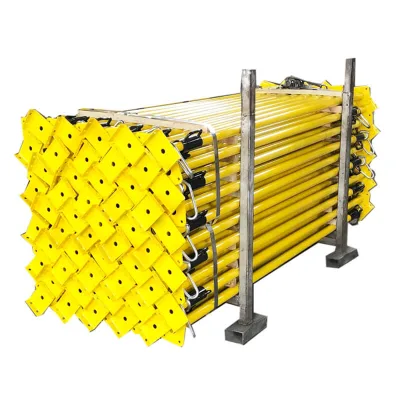
Surface treatment plays a pivotal role in the longevity and safety of steel props, particularly when used in environments prone to moisture or corrosion. The supply chain offers several finishing options, including Dip Paint, Pre-Galvanized, Dip Galvanized, and Power Coating. The term "Galvanized" appears frequently as a finish descriptor, suggesting that hot-dip galvanization is a common method to protect the steel from rust. Additionally, surface treatments may include simple paint applications in various colors such as silver, black, blue, red, yellow, orange, and purple. While color coding can assist in site organization, the underlying protective layer is the critical factor for durability.
Buyers must evaluate the surface treatment process to ensure it provides adequate protection without compromising the structural integrity of the steel. The "Surface Treatment" attribute is often listed as "Yes," but the specific method and thickness of the coating require verification. A robust surface treatment process ensures that the prop remains "Durable" and "Reusable" over multiple construction cycles, which is a key selling point for these products. When evaluating suppliers, request detailed technical data sheets that specify the coating thickness, adhesion properties, and corrosion resistance ratings. This due diligence ensures that the purchased props will withstand the rigors of the construction site without premature degradation.
Cost Drivers and Economic Considerations
The pricing of steel support props is influenced by a complex interplay of factors, including raw material costs, manufacturing complexity, surface treatment requirements, and logistics. The observed price range in the market spans from approximately 3.4 USD to 35 USD per unit. This wide variance suggests that the cost is heavily dependent on the specific model, dimensions, and finish selected. A basic light-duty prop with a standard paint finish will naturally be priced at the lower end of the spectrum, while a heavy-duty, galvanized, custom-sized prop will command a premium price.
Minimum Order Quantity (MOQ) is another significant economic factor. Suppliers typically enforce MOQs ranging from 50 to 1000 units. This threshold can impact the total landed cost, especially for smaller projects. Buyers with lower volume requirements may face higher per-unit costs or need to consolidate orders with other construction materials to meet the supplier's MOQ. Conversely, large-scale projects can leverage economies of scale to negotiate better pricing, provided they can meet the volume thresholds.
Packaging and logistics also contribute to the overall cost structure. Products are commonly shipped in pallets, bundles, or bulk containers. The choice of packaging affects the efficiency of loading and unloading, as well as the protection of the goods during transit. Some suppliers offer "by Container" shipping options, which can be more cost-effective for large orders but requires careful planning regarding storage and site logistics. Buyers should also consider the lead time, which is observed to be between 15 and 20 days for delivery. Longer lead times may necessitate earlier procurement planning, potentially affecting cash flow and project scheduling.
Typical Applications and Structural Versatility
Steel support props are engineered for a variety of construction applications, with the primary use case being slab and formwork supporting. Their ability to provide temporary vertical support makes them indispensable in concrete pouring operations. The "Heavy Duty" variants are specifically designed to handle the significant loads associated with thick concrete slabs and high-rise construction, while "Light Duty" models are suitable for lower-load scenarios such as residential formwork or temporary shoring.
Beyond slab support, these props are integral to scaffolding systems. The market data indicates their use in "Combined Scaffolding," "Installation Scaffold," and "Soffit Scaffolding" configurations. The "Cross Ring Scaffolding" and "Floor Type Scaffolding" supporting modes highlight the versatility of these props in creating stable working platforms for construction personnel. The "Snap-on Connection" feature facilitates the rapid assembly of these scaffolding structures, allowing for efficient erection and dismantling.
The "Construction Properties" of these props also include their suitability for "Internal Scaffolding" and "Integral Lifting Scaffolding" methods. This suggests that they can be adapted for various structural styles, including those requiring internal support or integrated lifting mechanisms. The "Framework" attribute, described as "Combined Scaffolding," further emphasizes their role in creating complex support structures. Buyers should assess the specific application requirements of their project, such as the height of the structure, the load distribution, and the environmental conditions, to select the most appropriate prop type. Whether for a simple residential roof or a complex commercial building, the Steel Support Prop serves as a critical component in ensuring structural stability during the construction phase.
Supplier Evaluation and Operational Reliability
Selecting the right supplier is as crucial as selecting the right product. Given that the origin of these products is predominantly China, buyers must conduct thorough due diligence to ensure the supplier's reliability and operational capacity. The "Date of Delivery" is a key performance indicator, with a typical lead time of 15 to 20 days. Buyers should verify if this lead time is consistent across different order sizes and if the supplier has a track record of meeting delivery deadlines.
Supplier evaluation should also focus on their customization capabilities. The "Customization" attribute is listed as "Available," indicating that many suppliers can tailor product dimensions, finishes, and specifications to meet unique project needs. However, buyers must confirm the extent of this customization, including the feasibility of producing non-standard lengths or thicknesses. The ability to provide "Various size" options and "customized" standards is a significant advantage for projects with non-standard requirements.
Quality control processes are another critical aspect of supplier evaluation. Buyers should inquire about the supplier's internal quality assurance protocols, including inspection procedures for material thickness, surface treatment uniformity, and load testing. The "Durable" and "Reusable" attributes suggest that the products are designed for long-term use, but this relies heavily on the quality of the manufacturing process. Requesting samples or visiting the manufacturing facility can provide valuable insights into the supplier's capabilities. Additionally, checking for certifications and compliance with relevant standards is essential to mitigate risks associated with substandard products.
Quality Control and Long-Term Procurement Strategy
Implementing a robust quality control strategy is essential for ensuring the safety and reliability of steel support props. Buyers should establish clear acceptance criteria based on the observed specifications, such as material grade, thickness, and surface treatment quality. Regular inspections during the manufacturing process and upon delivery can help identify any deviations from the agreed specifications. The "Galvanized" finish, in particular, requires careful inspection to ensure uniform coverage and absence of defects that could lead to corrosion.
Long-term procurement considerations involve building a sustainable relationship with suppliers who can consistently deliver high-quality products. This includes negotiating favorable terms for repeat orders, establishing clear communication channels for technical support, and ensuring a steady supply chain. The "Reusable" nature of the props makes them a valuable asset for multiple projects, so buyers should prioritize products that maintain their structural integrity over time. Proper storage and maintenance protocols on-site can also extend the lifespan of the props, reducing the need for frequent replacements.
In conclusion, sourcing steel support props requires a comprehensive understanding of technical specifications, compliance requirements, cost drivers, and supplier capabilities. By carefully evaluating these factors, buyers can secure high-quality products that meet the demanding requirements of modern construction projects. The observed data provides a solid foundation for making informed procurement decisions, ensuring that the selected props are safe, durable, and cost-effective for the intended application.
FAQs
What customization options are available for steel support props?
Customization is available for steel support props to meet specific project needs. Buyers can request various sizes and standards, including Q195, Q235, and Q345, along with tailored surface treatments like galvanized or painted finishes.
Which surface treatments protect steel support props from corrosion?
Surface treatments include Dip Paint, Pre-Galv, Dip Galv, and Power Coating to ensure durability. The finish is often Galvanized, and props may come in colors like silver, black, or blue to aid site organization while preventing rust.
How long is the lead time for delivering steel support props?
The typical date of delivery is between 15 and 20 days from order placement. This lead time applies to standard orders, though customization or large volume shipments may require specific scheduling confirmation with the supplier.
What are the standard thickness and length specifications for these props?
Standard thickness ranges from 2.2 to 4 mm, with some models offering 2 to 3 mm options. Lengths typically span from 1 to 3 meters, while extended models can reach up to 15 meters depending on the specific model selected.
Can steel support props be certified for international quality standards?
Yes, many products carry ISO certification to verify quality management systems. Buyers should request proof of this certification to ensure the manufacturing processes meet recognized benchmarks for safety and structural integrity in construction projects.
What packaging methods are used for shipping steel support props?
Products are commonly shipped in pallets, bundles, or bulk containers to ensure safe transit. The choice of packaging depends on the order size, with options ranging from individual bundles to full container loads for large-scale projects.
Which connection types are used for assembling steel support props?
The prevalent connection type is a Snap-on Connection for rapid assembly and disassembly. This feature facilitates efficient erection of scaffolding structures, making the props suitable for both heavy-duty and light-duty construction applications.