Source Stranded CAT6 Patch Cord for LAN, Data Centers, and Offices
Compare 30 listings of Stranded CAT6 Patch Cord from verified Chinese manufacturers. Buyers can evaluate options based on conductor material, shielding type, and length specifications to find the right solution for local communication and LAN applications.
Key considerations
Products List


Patch Cord Data Communication Cat5e CAT6 Network Cable LAN Cable Audio Cable
$0.15 - $1.50
MOQ: 300 Pieces





Comprehensive Sourcing Guide
Strategic Sourcing Guide for Stranded Cat6 Patch Cords
Understanding Technical Specifications and Conductor Construction
When sourcing stranded Cat6 patch cords, the primary technical differentiator lies in the conductor construction and the flexibility of the assembly. Unlike solid-core conductors typically found in permanent horizontal cabling runs, stranded conductors are essential for patch cords due to their superior flexibility and resistance to fatigue from repeated bending. The supplied product data confirms that the conductor material is bare copper wire, a standard for high-conductivity performance. Specifically, the observed specifications indicate a stranded conductor type, which aligns with the requirements for high-flexibility applications in data centers and office environments.
The wire gauge is a critical parameter for signal integrity and resistance. In the observed product listings, the wire gauge is specified as AWG26. This gauge represents a balance between flexibility and electrical resistance, suitable for the 100-meter distance limits of Cat6 standards, though patch cords are typically much shorter. The physical shape of the wire is noted as round wire in some contexts, while other entries mention flat wire configurations, suggesting that manufacturers may offer both round and flat stranded variants depending on the specific model number, such as the WD1B-050 or lesen series. The model numbers observed, including SFTP Cat.8 patch cords and Cat5e/Cat6 network patch cords, indicate that while the core keyword is Cat6, the market often aggregates these products with adjacent categories like Cat5e and Cat8, requiring buyers to verify the specific category rating on the jacket and packaging.
The shielding configuration is another vital technical aspect. The data explicitly identifies the product type as Shielded Twisted Pair (STP). This shielding is crucial for mitigating electromagnetic interference (EMI) in high-noise environments, such as industrial settings or areas with heavy electrical equipment. The presence of an SFTP designation in the model descriptions further suggests that some products may feature foil shielding in addition to the braided shield, offering enhanced protection. Buyers must ensure that the specific model they select matches the required shielding level, as unshielded (UTP) and shielded (STP/FTP) variants have different termination requirements and grounding protocols.
Compliance, Certification, and Regulatory Standards
Navigating the compliance landscape is a non-negotiable step in B2B procurement, particularly for products destined for international markets. The observed product attributes consistently highlight compliance with RoHS (Restriction of Hazardous Substances) and CE (Conformité Européenne) standards. These certifications indicate that the cables meet specific environmental and safety requirements regarding the use of hazardous materials and electrical safety. Furthermore, the data references REACH compliance, which is the European Union regulation concerning the Registration, Evaluation, Authorisation and Restriction of Chemicals. This is a critical check for buyers operating in or exporting to the EU, as it ensures the absence of specific restricted substances in the cable jacket and insulation materials.
In addition to environmental and safety certifications, the product listings mention SGS certification and ISO standards. SGS is a globally recognized inspection, verification, testing, and certification company, and its presence on a product listing suggests that third-party testing has been conducted to verify quality claims. The ISO reference, while not specifying a particular number in the text, generally implies adherence to international quality management systems. For Cat6 patch cords, the relevant performance standard is typically TIA/EIA-568-C.2 or ISO/IEC 11801, which define the electrical and physical performance parameters. While the supplied text does not explicitly list these specific TIA/ISO numbers, the mention of "Pass Fluk Test" is a significant indicator. Fluke testing is the industry gold standard for certifying network cabling performance, verifying parameters such as insertion loss, return loss, and crosstalk.
Buyers should verify that the "RoHS" and "CE" claims are backed by valid, current certificates from the manufacturer. It is also prudent to request a test report from a recognized laboratory like SGS or Intertek to confirm the "Pass Fluk Test" claim, as this ensures the cable meets the bandwidth and frequency requirements for 10 Gigabit Ethernet (10GBASE-T) over short distances, which is the primary use case for Cat6 patch cords. The origin of the products, listed as China (specifically Guangdong and Jiangsu provinces), is common for this category, but the location of the manufacturing facility should be verified to ensure consistent quality control processes.
Cost Drivers and Pricing Dynamics
The pricing structure for stranded Cat6 patch cords is influenced by several variable factors, including material costs, customization levels, and order volume. The observed price range in the market data spans from $0.10 to $3.00 USD. This wide variance is not indicative of a single product but rather reflects differences in length, shielding complexity, and packaging. A $0.10 unit likely represents a very short length, perhaps a custom-cut piece or a sample, whereas the $3.00 price point may correspond to longer lengths, premium shielding, or specialized packaging.
Material costs are a primary driver. The use of bare copper wire is standard, but fluctuations in global copper prices can impact the final unit cost. Additionally, the inclusion of shielding materials, such as foil and braided copper, adds to the material expense compared to unshielded variants. The length of the cable is another significant cost factor. The observed length specifications range from 0.25 meters to 30 meters, with customization options available. Longer cables naturally cost more due to the increased amount of copper and insulation required.
Order volume plays a substantial role in the final price. The observed Minimum Order Quantity (MOQ) ranges from 0 to 10,000 units. An MOQ of 0 suggests that suppliers may accept small orders or samples, which often come with a higher per-unit cost due to the lack of economies of scale. Conversely, orders approaching the 10,000-unit range will likely benefit from significant price reductions. The "Small Orders: Accepted" attribute indicates flexibility for buyers who need to test the market or fulfill immediate, low-volume needs without committing to large stock.
Packaging also influences cost. The data lists various packaging options, including PP bags, clamshell packages, cartons, and pull-boxes (305m/pull-box). Customized packaging, while adding value for branding and logistics, may incur additional setup or material costs. Buyers should evaluate whether standard packaging meets their distribution needs or if the investment in custom packaging is justified by their brand requirements.
Typical Applications and Deployment Scenarios
Stranded Cat6 patch cords are designed for specific deployment scenarios where flexibility and durability are paramount. The primary application listed is "Local Communication Cable" and "LAN Cable," which encompasses the connection between end-user devices (computers, printers, IP phones) and network switches or patch panels. The stranded construction makes these cables ideal for the frequent movement and bending associated with patch panel connections and desktop setups.
The data also mentions "Long Distance Symmetric Cable" and "Submarine Cable," though these are less common for standard Cat6 patch cords. These references likely indicate the manufacturer's broader product line capabilities rather than the specific application of the Stranded CAT6 Patch Cord itself. For the stranded Cat6 product, the focus remains on high-speed data transmission within local area networks. The "SFTP" (Shielded Foiled Twisted Pair) designation suggests suitability for environments with high electromagnetic interference, such as industrial facilities, hospitals, or data centers with dense cabling.
The "Installation" attribute lists "Aerial/Duct," which typically applies to outdoor distribution cables rather than indoor patch cords. However, this highlights the versatility of the manufacturer. For the Stranded CAT6 Patch Cord, the application is strictly indoor, connecting devices within a building. The "Fiber Count" and "Optical Fibre Cable" attributes in the data refer to the manufacturer's fiber optic products, not the copper patch cords. Buyers must distinguish between copper and fiber offerings when reviewing product catalogs to ensure they are sourcing the correct medium for their network architecture.
Supplier Evaluation and Origin Verification
Evaluating suppliers requires a careful review of their origin, certifications, and customization capabilities. The observed product origins are primarily China, with specific mentions of Guangdong and Jiangsu provinces. These regions are hubs for electronics and cable manufacturing, offering a robust supply chain. However, the specific location within China can impact logistics and lead times. Buyers should verify the exact factory location to assess proximity to ports and shipping routes.
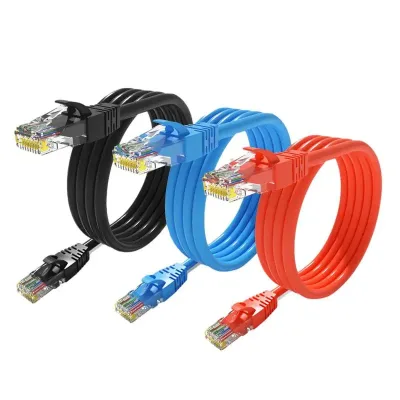
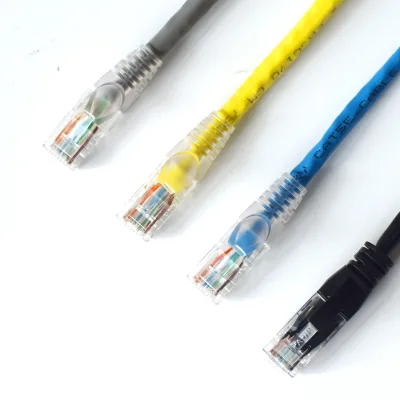
The "Customization: Available" attribute is a key differentiator. It indicates that suppliers can tailor product specifications, such as length, color, and packaging. The observed color options range from "All Color Available" to specific colors like "Dark Blue," and packaging ranges from simple PP bags to wooden drums or custom requirements. This flexibility is valuable for large enterprises that require branded cables or specific color-coding for network management.
When evaluating a supplier, buyers should request proof of the "RoHS," "CE," and "SGS" certifications mentioned in the product data. The presence of these certifications in the listing is a positive signal, but verification is necessary. Additionally, the "Warranty: 1 Years" attribute provides a baseline for product reliability. A one-year warranty is standard for this category, but buyers should clarify the terms and conditions, including what constitutes a defect and the process for claims.
The "Small Orders: Accepted" feature suggests a supplier-friendly approach for smaller buyers, but it is essential to confirm if there are any hidden fees for small quantities. The MOQ range of 0 to 10,000 units offers significant flexibility, allowing buyers to scale their orders based on demand. However, buyers should be cautious of suppliers who claim to accept small orders but have inconsistent quality control processes.
Quality Control and Long-Term Procurement Considerations
Ensuring consistent quality is critical for the long-term reliability of network infrastructure. The "Pass Fluk Test" claim is a strong indicator of quality, as Fluke testing validates the electrical performance of the cable against industry standards. Buyers should insist on seeing test reports for the specific batch of cables they are purchasing, rather than relying solely on the general claim. The "prod_standard" listing "RJ45" confirms the connector type, which must be compatible with standard networking equipment.
Long-term procurement considerations include the durability of the jacket material and the integrity of the connectors. The "Material Shape" and "Wire Core Material" specifications suggest the use of high-quality copper and appropriate insulation. Buyers should inquire about the jacket material composition (e.g., PVC, LSZH) to ensure it meets fire safety and environmental regulations for their specific deployment environment. The "Application: Communication, Medicine" attribute suggests that some products may be suitable for medical environments, which often have stricter fire safety and electromagnetic compatibility requirements.
Packaging integrity is also a long-term consideration. The observed packaging options, such as "Cartons" and "PP Bag," protect the cables during transit. For large orders, "Wooden Drums" or "Pull-Box" packaging is preferred to prevent tangling and damage. Buyers should ensure that the packaging is robust enough to withstand shipping and storage conditions.
Finally, the "Warranty" and "Customization" aspects should be integrated into the procurement strategy. A clear warranty policy provides recourse for defective products, while customization options allow for better network management and branding. Buyers should establish a long-term relationship with suppliers who can consistently meet quality standards and provide the flexibility needed for future network expansions. By focusing on these quality control and long-term factors, buyers can ensure a reliable and efficient network infrastructure.
Comparative Analysis of Product Attributes
To facilitate decision-making, the following table summarizes the key attributes observed in the product data, highlighting the variations and commonalities that buyers should consider.
| Attribute Category | Observed Value / Range | Relevance to Procurement |
|---|---|---|
| Conductor Material | Bare Copper Wire | Essential for conductivity; verify purity. |
| Conductor Type | Stranded | Required for flexibility in patch cords. |
| Wire Gauge | AWG26 | Standard for Cat6; affects flexibility/resistance. |
| Shielding | STP (Shielded Twisted Pair) | Critical for EMI protection in noisy environments. |
| Certifications | RoHS, CE, SGS, ISO, REACH | Mandatory for EU and global compliance. |
| Test Standard | Pass Fluke Test | Validates performance against TIA/ISO standards. |
| Length | 0.25m - 30m (Customizable) | Determines material cost and application fit. |
| MOQ | 0 - 10,000 Units | Indicates flexibility for small vs. bulk orders. |
| Origin | China (Guangdong, Jiangsu) | Common manufacturing hub; verify factory location. |
| Packaging | PP Bag, Cartons, Wooden Drums | Impacts logistics and cable protection. |
| Warranty | 1 Year | Standard coverage for defects. |
| Color | All Colors / Dark Blue / Various | Useful for network color-coding and branding. |
This comparison underscores the importance of verifying specific attributes against project requirements. While the core keyword is "Stranded CAT6 Patch Cord," the market offers a wide array of variations in shielding, length, and packaging. Buyers must align these attributes with their specific technical and logistical needs to ensure a successful procurement outcome.
FAQs
Can I order small quantities of stranded cat6 patch cords?
Yes, small orders are accepted for stranded cat6 patch cords. This allows buyers to test samples or fulfill immediate low-volume needs without committing to large stock, though per-unit costs may be higher than bulk orders.
What certifications do these stranded cat6 patch cords have?
These products typically hold RoHS, CE, and SGS certifications. Some listings also mention REACH compliance and ISO standards, ensuring the cables meet international environmental and safety requirements for hazardous substances and electrical safety.
Which conductor material is used in stranded cat6 patch cords?
The conductor material is bare copper wire. This standard material ensures high conductivity and signal integrity, and the conductors are stranded to provide superior flexibility and resistance to fatigue from repeated bending in patch applications.
What is the typical wire gauge for stranded cat6 patch cords?
The observed wire gauge is AWG26. This specific gauge balances flexibility with electrical resistance, making it suitable for the distance limits of Cat6 standards while maintaining the durability required for frequent movement in data centers.
How long can stranded cat6 patch cords be customized?
Lengths can be customized from 0.25 meters up to 30 meters. Suppliers offer flexible length options to match specific deployment needs, allowing buyers to select exact dimensions rather than being limited to standard fixed lengths.
Are shielded versions of stranded cat6 patch cords available?
Yes, shielded twisted pair (STP) and SFTP variants are available. These shielded options provide enhanced protection against electromagnetic interference, making them ideal for high-noise environments like industrial settings or areas with heavy electrical equipment.
What packaging options exist for stranded cat6 patch cords?
Packaging includes PP bags, clamshell packages, cartons, and pull-boxes. Some suppliers offer customized packaging or wooden drums for larger orders, allowing buyers to choose options that best fit their branding and logistics requirements.