Source Stranded Cat7 Network Cable for Data Centers
Explore 30 listings for Stranded Cat7 Network Cable suitable for data centers, office LANs, and industrial communication systems. Buyers can compare specifications like conductor material, shielding types, and certifications from verified Chinese manufacturers; compare the available evidence and request quotations based on your requirements.
Key considerations
Products List




Comprehensive Sourcing Guide
Stranded Cat7 Network Cable Sourcing Guide
Procuring stranded Cat7 network cables requires a nuanced understanding of their specific mechanical and electrical properties, which differ significantly from the more common solid-core variants. While solid conductors are typically reserved for permanent in-wall installations due to their rigidity and lower attenuation over long distances, stranded conductors offer the flexibility necessary for patch cords, horizontal runs, and environments requiring frequent movement or bending. Buyers must recognize that the "Cat7" designation often refers to a specific shielding and performance standard that may vary by region, particularly between European EN 50173-1 standards and other international benchmarks. This distinction is critical because not all stranded cables labeled as Cat7 meet the same crosstalk and return loss requirements, making precise specification verification essential before placing bulk orders.
The market landscape for stranded Cat7 cables is characterized by a wide variance in construction quality and material composition, ranging from bare copper to copper-clad aluminum or steel. Sourcing decisions should be driven by the intended application environment, whether it involves high-interference industrial settings or standard office LAN deployments. Buyers need to evaluate the trade-offs between cost and performance, as stranded conductors inherently have higher resistance than solid ones, which can impact power delivery for PoE applications if the gauge is not appropriately sized. Understanding these technical nuances allows procurement teams to avoid over-specifying for simple office links or under-specifying for demanding industrial data centers, ensuring that the selected cable meets both current needs and future scalability requirements.
Product Scope and Observed Listing Signals
Market listings for stranded Cat7 cables frequently display a broad spectrum of product models, including variations such as CAT7A SFTP, CAT7 S/FTP, and generic Cat7 designations. Observed data indicates that suppliers often bundle these with other categories like Cat5, Cat5e, and Cat6, suggesting a flexible manufacturing capability rather than a specialized focus on a single tier. Buyers should note that the term "Stranded" is explicitly listed as a conductor type in many profiles, confirming the availability of flexible variants suitable for patching and temporary setups. However, the presence of solid-core specifications in the same supplier catalogs highlights the need for careful filtering to ensure the purchased item matches the required mechanical flexibility, as mixing up conductor types can lead to installation failures or code violations.
Packing and standardization signals in the market reveal significant diversity, with options ranging from 100m/Roll and 200m/Roll to 305m/Roll configurations, often housed in wooden or plastic reels. This variability suggests that buyers must explicitly confirm the reel length and packaging type to align with their installation logistics and waste management strategies. Additionally, observed certifications such as RoHS, ISO, CE, and UL indicate that many manufacturers adhere to international quality and safety frameworks, though the specific application of these certifications to stranded Cat7 variants should be verified. The presence of customization options for color and jacket material further implies that buyers can tailor aesthetic and environmental resistance properties, provided they communicate these requirements clearly during the quoting phase to avoid generic shipments.
Technical Specifications to Verify
The conductor material is a primary technical differentiator, with observed listings specifying bare copper, copper-clad steel (CCS), copper-clad aluminum (CCA), and tinned copper. Buyers must strictly verify the conductor composition, as CCA and CCS variants offer lower initial costs but suffer from higher electrical resistance and potential corrosion issues, making them unsuitable for high-power PoE applications or long-distance runs. The wire gauge is another critical parameter, with observed models frequently citing 23AWG or 24AWG specifications. Thinner gauges like 24AWG provide greater flexibility but higher attenuation, while 23AWG offers a balance of flexibility and performance. Procurement teams should request detailed cross-section diagrams or test reports to confirm the actual copper content and diameter, ensuring that the cable meets the required bandwidth and distance capabilities for Cat7 performance.
Shielding and jacket materials are equally vital for maintaining signal integrity in Cat7 applications, which are designed to support frequencies up to 600 MHz. Observed shielding types include UTP, STP, SFTP, and S/FTP, with SFTP (Shielded Foiled Twisted Pair) being the most common for Cat7 to mitigate alien crosstalk and external interference. The jacket material is typically PVC, but LSZH (Low Smoke Zero Halogen) or LSOH options are available for fire-safe environments. Buyers should verify the dielectric material, often HDPE, and the overall cable diameter, which typically ranges from 6.0mm to 6.4mm for robust Cat7 constructions. Confirming these structural details ensures that the cable can be properly terminated with compatible RJ45 connectors and fits within the physical constraints of cable trays and conduits.
Compliance and Safety Documentation
Certification requirements for network cables vary by region and application, with observed listings frequently citing RoHS, ISO, CE, UL, VDE, CCC, ETL, BV, and SGS. Buyers must determine which certifications are mandatory for their specific project, as UL and VDE are often required for North American and European installations, respectively, while RoHS is essential for environmental compliance in many global markets. It is crucial to verify that the certifications apply specifically to the stranded Cat7 variant being purchased, as some suppliers may hold certifications for their Cat5 or Cat6 lines but not for their higher-performance Cat7 products. Requesting valid certificate numbers and checking them against the issuing body’s database is a necessary step to avoid fraudulent claims and ensure regulatory compliance.
Safety standards also encompass fire performance and environmental impact, particularly regarding the jacket material. If the installation is in a confined space or a public building, LSZH or LSOH jackets may be required to minimize smoke and toxic gas emission during a fire. Buyers should request test reports for flame retardancy and smoke density, such as those from IEC or UL standards, to verify these claims. Additionally, compliance with ISO9001-2000 or similar quality management standards indicates a manufacturer’s commitment to consistent production processes, which reduces the risk of batch-to-batch variability. Ensuring that all documentation is up-to-date and directly relevant to the stranded Cat7 cable prevents legal liabilities and ensures smooth customs clearance for international shipments.
Cost Drivers and Commercial Terms
The cost of stranded Cat7 cables is heavily influenced by the conductor material, with bare copper being the most expensive due to its superior conductivity and durability. Copper-clad variants offer a lower upfront cost but may result in higher total cost of ownership due to potential performance limitations and shorter lifespan. Buyers should analyze the total cost of ownership rather than just the unit price, considering factors like installation ease, termination reliability, and long-term maintenance. Observed price ranges in the market are wide, reflecting these material differences and the level of shielding and certification included. Negotiating based on volume and long-term partnership potential can help secure better pricing, especially when committing to larger reel sizes like 305m.
Commercial terms such as MOQ, lead time, and payment conditions are critical for supply chain planning. Observed MOQs range from 1 to 10,000 units, offering flexibility for both small pilot projects and large-scale deployments. Buyers should clarify lead times, which can vary based on customization requirements like specific colors or jacket materials. Standard items may ship quickly, while custom orders may require additional production time. Payment terms should be negotiated to balance risk, with options like LC or TT being common. Understanding these commercial dynamics allows buyers to align procurement schedules with project timelines and manage cash flow effectively, ensuring that material availability does not become a bottleneck for installation teams.
Supplier Qualification and Quality Control
Supplier qualification begins with verifying manufacturing capabilities and quality management systems. Buyers should prioritize suppliers who hold relevant certifications like ISO9001 and have a proven track record in producing high-performance network cables. Requesting factory audits or third-party inspection reports can provide insights into production consistency and quality control processes. Observing the supplier’s ability to provide detailed technical datasheets and test reports for each batch is a strong indicator of their professionalism and commitment to quality. Suppliers who are transparent about their materials and processes are more likely to deliver products that meet specified standards, reducing the risk of receiving substandard or non-compliant cables.
Quality control measures should include incoming inspection protocols and final product testing. Buyers should specify requirements for testing parameters such as insertion loss, return loss, and crosstalk, ensuring that the cables meet Cat7 performance benchmarks. Requesting sample units for pre-production testing is a prudent step to verify physical dimensions, flexibility, and termination compatibility. Establishing clear acceptance criteria and rejection protocols in the purchase agreement helps manage expectations and provides recourse if the delivered goods do not meet specifications. Building a relationship with suppliers who prioritize quality and offer responsive support ensures that any issues are resolved quickly, maintaining project momentum and minimizing disruptions.
Long-Term Procurement Checks
Long-term procurement success depends on continuous monitoring of supplier performance and market trends. Buyers should establish key performance indicators (KPIs) such as on-time delivery rate, defect rate, and responsiveness to technical queries. Regularly reviewing these metrics helps identify potential issues early and allows for corrective actions before they impact production. Staying informed about changes in cable standards and technology, such as the transition to Cat8 or advancements in fiber optics, ensures that procurement strategies remain aligned with industry developments. This proactive approach helps buyers make informed decisions about inventory levels and technology upgrades, avoiding obsolescence and ensuring that the network infrastructure remains competitive.
Sustainability and ethical sourcing are increasingly important factors in long-term procurement strategies. Buyers should assess suppliers’ environmental practices, including waste management and energy efficiency, to align with corporate sustainability goals. Verifying that materials are sourced responsibly and that the supply chain is free from labor violations is essential for maintaining brand reputation and compliance with global regulations. Building a diverse supplier base can also mitigate risks associated with single-source dependencies, ensuring continuity of supply even in the face of market disruptions. By integrating these long-term checks into the procurement process, buyers can build a resilient and responsible supply chain that supports both current operational needs and future strategic objectives.
FAQs
What conductor materials are available for Stranded Cat7 Network Cable?
Stranded Cat7 Network Cable is commonly offered with bare copper conductors, and some listings also include CCA, CCS, tinned copper, or copper-clad alloys as conductor options. Bare copper delivers the most reliable electrical performance for high-frequency networks, while alternative materials can reduce cost. Confirm the conductor material and inner conductor diameter of around 0.55-0.57mm before ordering.
Which shielding configurations can be selected for cat7 network cable?
Cat7 cable is typically available in S/FTP construction, and related listings also show UTP, STP, and SFTP options across the product range. Full shielding with individually foil-wrapped pairs supports the high crosstalk protection cat7 requires. Check whether the specific model you select uses FTP CAT7, CAT7 S/FTP, or CAT7A SFTP construction and verify jacket material options such as PVC, LSZH, or PE.
Can Stranded Cat7 Network Cable be customized for my project?
Yes, customization is available on these listings. Buyers can request jacket colors including black, white, blue, yellow, red, or other specified colors, along with conductor material choices such as bare copper or CCA. Customization options may affect minimum order quantities and lead times, so confirm your specifications, packing preference, and certification requirements with the supplier before placing an order.
What packing options are offered for cat7 network cable orders?
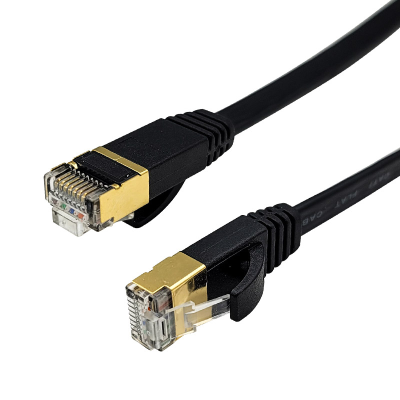
Listed packing choices include 100m rolls, 200m rolls, 305m rolls, and wooden or plastic reels, with some products packed in boxes or cartons. Patch cord style products are also offered in standard lengths such as 1M, 2M, 3M, 5M, 8M, and 10M. Choose the packing format that matches your installation workflow and confirm it in the purchase contract.
Which certifications apply to these cat7 and network cable products?
Listed certifications across the product range include RoHS, ISO, CE, and UL, with some products additionally showing VDE, CCC, ETL, BV, or SGS references and ISO9001-2000 quality system standards. Certification coverage varies by individual product and supplier. Always request valid certificate copies for the specific cat7 cable model you intend to purchase before finalizing your sourcing decision.
How do I choose between solid and stranded cat7 cable conductors?
Stranded conductors suit patch cords and flexible short runs because they tolerate repeated bending, while solid conductors suit permanent horizontal cabling in walls and ceilings. Both types appear in the listed range, with 23AWG and 24AWG models offered. For cat7 S/FTP backbone links, solid bare copper is typical, whereas stranded designs work best for network patch cords terminated with plugs.