Source Sulfide Solid State Electrolyte Powder for Batteries
Find 30 listings for Sulfide Solid State Electrolyte Powder suitable for battery applications. Compare specifications including purity, particle size, and certifications from verified suppliers in Guangdong, China.
Key considerations
Products List


Hot Sell Sulfide Solid Electrolyte Powder for Solid-State Lithium Ion Batteries Materials
$220.00 - $240.00
MOQ: 10 grams


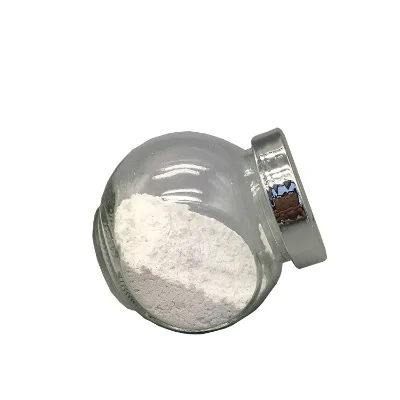


Sodium Sulphite Anhydrous Supplier, Sodium Sulfite Anhydrous Manufacturer
$400.00 - $500.00
MOQ: 1 Tons


Industrial Sulfurique Electrolyte Sulphuric 98% Sulfuric Acid Cheap Price
$120.00 - $210.00
MOQ: 25 Tons


Comprehensive Sourcing Guide
Strategic Sourcing Guide for Sulfide Solid State Electrolyte Powder
The transition toward next-generation energy storage systems has placed sulfide-based solid-state electrolytes at the forefront of battery innovation. For procurement professionals, sourcing high-purity sulfide solid-state electrolyte powder requires a nuanced understanding of material science, supply chain logistics, and rigorous quality assurance. This guide synthesizes available market data and technical attributes to provide a structured approach for evaluating suppliers and securing materials that meet the demanding specifications of modern battery applications. The focus remains on evidence-based criteria, ensuring that procurement decisions are grounded in verifiable product characteristics rather than unverified marketing claims.
Technical Specifications and Material Composition
When evaluating sulfide solid-state electrolyte powders, the primary objective is to verify the chemical composition and physical form against the specific requirements of the target battery architecture. The core material in question often involves lithium thiophosphate-based compounds. In the observed market data, specific formulations such as Li6PS5Cl and Li6PS5Br have been identified as relevant product models. These materials are critical for their high ionic conductivity, which is a prerequisite for efficient solid-state battery performance.
The physical appearance of the powder is a significant indicator of processing quality. Suppliers may list the product as "powdered," "non-caking," or specifically "grey white" in its raw form. However, processing steps such as cold pressing or heat treatment can alter the visual characteristics, resulting in shades described as "grey" or "black." Buyers must distinguish between the raw powder appearance and the final processed state. The particle size distribution is equally vital; one observed standard specifies a range of 1-10 micrometers (1-10um), which is essential for ensuring uniform packing density and optimal interfacial contact within the battery cell.
Furthermore, the structural integrity of the material is often described as "crystalline." This crystalline structure is fundamental to the ionic transport mechanisms within the electrolyte. Buyers should verify that the supplier provides data confirming the crystalline nature of the powder, as amorphous structures may exhibit different conductivity profiles. The theoretical density of these materials is another key parameter, with observed values around 2 g/cm³. This metric is crucial for calculating the volumetric energy density of the final battery pack.
Compliance, Certification, and Regulatory Standards
Navigating the regulatory landscape is a non-negotiable aspect of sourcing industrial chemical powders. The supply chain for sulfide electrolytes is heavily scrutinized for environmental safety and chemical purity. In the available data, a comprehensive suite of certifications is observed, including ISO, RoHS, CIQ, and CCIC. These certifications indicate that the supplier adheres to international quality management systems, restricts hazardous substances, and complies with inspection and quarantine protocols.
For buyers targeting specific markets, additional regulatory frameworks may apply. Some product listings reference REACH and WQA certifications, which are particularly relevant for European and water treatment-related applications, though the primary focus here is battery integration. The presence of these certifications suggests a supplier's commitment to traceability and safety. However, buyers must verify that the specific batch of sulfide powder intended for battery use carries these valid certifications, as chemical grades can vary even within the same supplier's portfolio.
Environmental protection is another critical compliance dimension. Products are frequently labeled with "Environmental Protection: Yes," indicating adherence to green manufacturing practices. This is increasingly important for companies aiming to meet sustainability goals and reduce the carbon footprint of their energy storage solutions. Additionally, the chemical formula must be strictly controlled; deviations in the stoichiometry of compounds like Li6PS5Cl1 can significantly impact performance. Buyers should demand batch-specific certificates of analysis (CoA) that confirm the chemical formula matches the ordered specification exactly.
Cost Drivers and Economic Factors
The pricing of sulfide solid-state electrolyte powder is influenced by a complex interplay of raw material costs, synthesis complexity, and purity levels. The observed price range in the market spans from $1 to $1,520 USD, a variance that reflects differences in product grade, packaging, and order volume. The lower end of this spectrum likely corresponds to bulk industrial grades or smaller sample quantities, while the higher end may reflect high-purity, custom-formulated batches with specialized packaging.
Minimum Order Quantity (MOQ) is a significant economic driver in this sector. Data indicates an MOQ range of 1 to 200 units, suggesting flexibility for R&D departments alongside requirements for mass production. The packaging format also impacts cost; options include cartons, carton cases, and bulk bags ranging from 25kg to 1000kg. Larger bulk orders typically reduce the unit cost but require significant storage capacity and handling infrastructure.
Purity is a direct cost driver. Products with a purity of ≥99% command a premium over lower-grade alternatives. Impurities such as heavy metals, which are listed with a maximum limit of 0.00005%, must be rigorously controlled. The presence of heavy metals can degrade battery performance and safety, making high-purity materials essential for commercial applications. Buyers should analyze the cost-benefit ratio of purchasing ultra-high purity materials versus standard grades, considering the specific sensitivity of their battery chemistry to impurities.
Typical Applications and Performance Integration
While the core keyword focuses on battery applications, the versatility of sulfide powders extends to other industrial sectors. The observed data lists applications ranging from "Battery" to "Chemical Reducing Agent Printing and Dyeing" and "Industrial Circulating Water Treatment Agent." This diversity highlights the need for buyers to clearly specify the intended end-use to ensure the supplier provides the correct grade. For battery applications, the material serves as the electrolyte, facilitating ion transport between the cathode and anode.
In the context of battery integration, the material is often paired with specific cathode and anode materials. The observed data mentions LFP (Lithium Iron Phosphate) as a cathode material and Natural Graphite as a negative material. The sulfide electrolyte acts as the medium connecting these components. The "Electric Energy" attribute observed is 1 Wh, which likely refers to a specific test cell configuration or a unit of measurement for a sample, rather than the total capacity of a commercial battery.
The application also dictates the required physical form. For electrode manufacturing, the powder must be non-caking and easily dispersible. The "Appearance" attribute of "Powdered, Non Caking" is critical for maintaining flowability during the coating and pressing processes. In contrast, for applications like water treatment or dyeing, the chemical reactivity and solubility properties become more relevant. Buyers must ensure that the "Type" attribute aligns with their specific process requirements, distinguishing between an "Electrode" material and a "Chemical Reducing Agent."
Supplier Evaluation and Quality Control
Selecting a reliable supplier for sulfide solid-state electrolyte powder requires a multi-faceted evaluation strategy. Geographic origin is a key factor, with Guangdong, China, identified as a primary production hub. While this location offers access to a robust supply chain, buyers must verify the specific manufacturing capabilities and quality control protocols of the facility. The "Test Result" attribute is listed as "as Attaches," indicating that suppliers provide specific test data for each batch. Buyers should insist on reviewing these attachments to verify consistency and performance.
Quality control extends beyond the final product to the raw materials and processing steps. Attributes such as "Heat treatment: Black" and "Cold pressing forming: Grey" suggest that the supplier employs specific thermal and mechanical processes to achieve the desired material properties. These processes must be standardized to ensure batch-to-batch consistency. Buyers should evaluate the supplier's ability to maintain these process parameters and their protocol for handling deviations.
The "Acid-Base Property" and "Aqueous Solution" characteristics are also vital for quality assurance. Some products are described as having an "Alkaline Surface Disposal Agent" property or a "Weakly Alkaline" aqueous solution. These chemical properties affect the material's stability and compatibility with other battery components. Buyers must verify that the supplier's quality control includes testing for these specific chemical attributes to prevent issues such as corrosion or unwanted side reactions within the battery cell.
Long-Term Procurement Considerations
Sourcing sulfide solid-state electrolyte powder is not merely a transactional activity but a strategic partnership that requires long-term planning. The "Customization: Available" attribute indicates that suppliers are willing to tailor products to specific needs, such as adjusting particle size or chemical stoichiometry. This flexibility is essential for R&D phases and for scaling up to commercial production where specific performance metrics are required.
Supply chain resilience is another critical consideration. The "prod_packing" options, ranging from small cartons to 1000kg bags, suggest that suppliers can accommodate various logistical needs. However, buyers must assess the supplier's ability to maintain consistent supply during periods of high demand. The "Execution Standard" and "Grade Standard" (e.g., Industrial Grade National Standard, Food Grade) provide a framework for quality consistency, but buyers should verify that these standards are actively enforced throughout the production cycle.
Finally, the "Theoretical Density" and "Standard" attributes (such as 80mesh or 90%-97% purity) serve as benchmarks for long-term performance. As battery technology evolves, the requirements for electrolyte materials may shift. Buyers should engage with suppliers who demonstrate a commitment to continuous improvement and innovation. This includes staying updated on new standards and adapting their production processes to meet emerging industry demands. By focusing on these long-term factors, buyers can secure a reliable supply of high-quality sulfide solid-state electrolyte powder that supports the growth and stability of their battery manufacturing operations.
Comparative Analysis of Product Attributes
To facilitate decision-making, the following table summarizes key observed attributes relevant to the sourcing of sulfide solid-state electrolyte powder. This comparison highlights the diversity in specifications and helps buyers identify the most suitable product variants for their specific needs.
| Attribute Category | Observed Specification A | Observed Specification B | Observed Specification C |
|---|---|---|---|
| Chemical Formula | Li6PS5Cl1 | Li6PS5Br | Li6PS5 (General) |
| Appearance | Grey white | Powdered, Non Caking | Grey / Black (Processed) |
| Particle Size | 1-10um | 80mesh | Not Specified |
| Purity | ≥99% | 90%-97% | Not Specified |
| Application | Battery | Chemical Reducing Agent | Industrial Water Treatment |
| Packaging | Carton | 25kg/50kg/1000kg Bags | 25kg/Bag |
| Certification | ISO, RoHS, CIQ, CCIC | REACH, WQA | Not Specified |
| Origin | Guangdong, China | China | Not Specified |
This table illustrates that while the core chemical family remains consistent, the specific application and physical properties vary significantly. Buyers must carefully match these attributes to their technical requirements to ensure optimal performance. For instance, a battery manufacturer requiring high purity and specific particle sizes should prioritize products with ≥99% purity and 1-10um standards, whereas a chemical processing application might prioritize different attributes such as acid-base properties or specific grade standards. By systematically evaluating these parameters, buyers can make informed decisions that align with their strategic objectives and technical constraints.
FAQs
What is the chemical formula for the Sulfide Solid State Electrolyte Powder?
The chemical formula is Li6PS5Cl1 or Li6PS5Br. These specific formulations are critical for high ionic conductivity in solid-state battery applications, ensuring efficient ion transport between electrodes.
Which certifications do the manufacturers typically hold for this powder?
Manufacturers typically hold ISO, RoHS, CIQ, and CCIC certifications. Some listings also reference REACH and WQA, indicating adherence to international quality management and safety protocols for industrial chemical powders.
How is the particle size specification defined for this electrolyte material?
The particle size standard is specified as 1-10 micrometers. This range ensures uniform packing density and optimal interfacial contact within the battery cell structure for consistent performance.
Can the product be customized for specific battery requirements?
Yes, customization is available for this electrolyte powder. Suppliers offer tailored options to meet specific needs, allowing adjustments to parameters like particle size or chemical stoichiometry for different battery architectures.
What is the minimum order quantity for purchasing this material?
The minimum order quantity ranges from 1 to 200 units. This flexibility accommodates both small-scale research and development needs as well as larger mass production requirements for commercial battery manufacturing.
Where are the primary manufacturing locations for this powder?
The primary production origin is Guangdong, China. This region serves as a key hub for sourcing high-purity sulfide solid-state electrolyte powders with established supply chain logistics.