Source Supermarket Display Rack for Retail, Warehouse, and Store Use
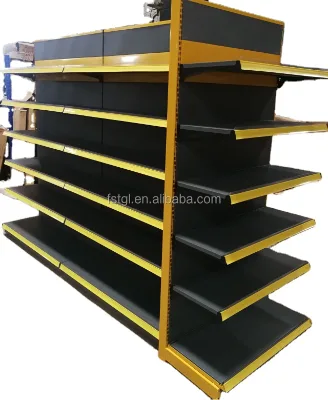
Find and compare 30 Supermarket Display Rack options for retail stores, warehouses, and convenience shops. These units feature steel or metal construction, customizable sizes, and powder-coated finishes to suit various inventory needs.
Key considerations
Products List


High Quality Steel and Wood Display Rack Supermarket Retail Store Display Rack
$52.30 - $55.10
MOQ: 100 Pieces


Slatwall Back Display Rack with Quick Installation for Supermarket Grocery Store
$3.00 - $5.00
MOQ: 100 Square Meters


Hot Sale storage Display Supermarket Hypermarket Retail Shop Wire Racks
$35.00 - $45.00
MOQ: 100 Pieces



Comprehensive Sourcing Guide
Supermarket Display Rack Sourcing Guide
Navigating the procurement of supermarket display racks requires a clear understanding of the diverse configurations available in the current market, ranging from heavy-duty steel shelving to lightweight paper-based solutions. Buyers must recognize that while the core keyword implies a specific retail application, the actual product landscape includes variations such as floor-type racks, double-sided units, and rotary displays designed for specific store layouts. The observed product count of 30 distinct listings indicates a competitive environment where differentiation is often driven by customization options, material composition, and specific structural features like height adjustability or foldability.
Successful sourcing begins with aligning the procurement strategy with the intended operational environment, whether it is a large warehouse, a food processing facility, or a compact convenience store. The available data highlights that these units are frequently designed for common use in industrial, food, and beverage sectors, suggesting that durability and load-bearing capacity are primary concerns. Buyers should prioritize suppliers who offer standard export packing to ensure safe transit, while also evaluating the feasibility of flat packing or box packaging based on their specific logistics constraints and storage capabilities at the destination.
Product Scope and Observed Listing Signals
The product scope for supermarket display racks spans a wide spectrum of materials, with steel and metal being the dominant choices for heavy-duty applications, while paper-based models appear for lighter, temporary, or promotional uses. The observed listings reveal a mix of fixed mobility units and foldable designs, indicating that buyers must carefully select between permanent installations and flexible storage solutions that can be reconfigured as inventory needs change. The presence of "New Type" development attributes suggests that the market is evolving with innovative designs, such as the QIFEI-Supermarket Rack and XT03176 models, which may offer distinct advantages in space utilization or aesthetic appeal.
Listing signals also point to significant variability in dimensions, with standard sizes ranging from compact 400mm widths to large 1000mm lengths and heights extending up to 5 meters. Buyers should note that while some models come in fixed standard dimensions like 9004502100mm, others explicitly support customized sizes, allowing for tailored solutions that fit unique store footprints. The color customization option is a critical signal for branding alignment, enabling retailers to match the rack finish to their store's interior design, while the availability of recycled materials offers an opportunity to meet sustainability goals without compromising structural integrity.
Technical Specifications to Verify
When evaluating technical specifications, the primary focus must be on the raw material composition and surface treatment processes that determine long-term durability. The supplied facts confirm that Q235 steel is a common raw material, often subjected to powder coating to enhance resistance against corrosion and wear in high-traffic retail environments. Buyers should verify that the surface treatment is consistent across the entire unit, particularly for racks intended for food or beverage storage where hygiene and cleanability are paramount, and ensure that the "Heavy Weight" or "Middle Weight" classifications align with the expected load requirements of the merchandise.
Structural integrity and assembly methods are equally critical, with observed listings indicating a preference for connect-based build methods and floor-type styles that provide stability without requiring permanent anchoring in all cases. The distinction between single-sided and double-sided configurations directly impacts aisle width and product visibility, requiring buyers to calculate the optimal layout for their specific floor plan. Additionally, the verification of height adjustability and the "L Stand" type features ensures that the rack can accommodate varying product heights and maximize vertical storage space, which is essential for maintaining high inventory density in modern supermarkets.
Compliance and Safety Documentation
While specific certification statuses like FSC are noted in background data, buyers must treat these as potential attributes rather than guaranteed standards for every listed product. It is essential to request explicit documentation regarding the structural safety of the racks, particularly for units designed to hold heavy loads in public retail spaces. The absence of specific test results in the provided facts means that procurement teams must independently verify that the racks meet local building codes and safety regulations regarding load limits, stability, and fire resistance before finalizing any purchase order.
Documentation should also cover the manufacturing standards and origin verification to ensure that the products comply with international trade requirements. The listed origin of China is a common source for these goods, but buyers must confirm that the specific batch adheres to the declared standards, such as the 9004502100mm or 4003501700mm specifications, to avoid discrepancies in delivery. Ensuring that the "New" condition of the products is verified through inspection reports or third-party quality checks is vital to prevent the receipt of damaged or substandard units that could pose safety risks to customers and staff.
Cost Drivers and Commercial Terms
Cost drivers for supermarket display racks are heavily influenced by material selection, customization levels, and the complexity of the surface treatment process. The observed price range of 0.5 to 2000 USD reflects the vast difference between simple paper-based units and robust, custom-engineered steel racks, requiring buyers to clearly define their budget constraints against their functional requirements. The availability of small batch production support suggests that flexibility in order volume can impact unit pricing, with larger orders likely benefiting from economies of scale while custom designs may incur higher per-unit costs due to specialized tooling or finishing.
Commercial terms must be scrutinized regarding lead times and packaging requirements, as the standard 15-day lead time observed in the data may vary based on the level of customization requested. Buyers should negotiate clear terms for "Standard Export Packing" or "Flat Packing" to minimize shipping costs and reduce the risk of damage during transit, while also clarifying the Minimum Order Quantity (MOQ) which ranges from 1 to 500 units. Understanding the payment terms and the implications of "Support Small Batch Production" is crucial for managing cash flow, especially for retailers who need to test new rack designs before committing to large-scale inventory.
Supplier Qualification and Quality Control
Supplier qualification should prioritize manufacturers who demonstrate a proven track record in producing racks for diverse applications, including warehouses, supermarkets, and drug stores. The presence of multiple product models like HBE-SR-01 and XT2503126 indicates that capable suppliers often maintain a broad portfolio, but buyers must verify that the specific supplier has the capacity to meet the required production attributes, such as size customization and color matching. It is advisable to request samples or detailed product specifications to confirm that the "Connect" build method and "Folded" features function as described, ensuring that the supplier can deliver on their design promises.
Quality control protocols must be established to verify that the final products meet the "Common Use" serviceability standards and are free from defects in the powder coating or structural connections. Buyers should implement a rigorous inspection process that checks for consistency in dimensions, such as the 10005001800mm specifications, and ensures that the "Rotary" or "Backplane Style" features operate smoothly. Establishing a clear communication channel for addressing any deviations from the agreed-upon standards, such as the "Regular Carton Box" packaging or the "Heavy Weight" classification, is essential for maintaining quality assurance throughout the production and delivery lifecycle.
Long-Term Procurement Checks
Long-term procurement success depends on the ability to maintain consistent supply and adapt to changing retail needs through flexible supplier relationships. Buyers should regularly review the supplier's capacity to support "Customizable Development" and "Design Features" that allow for future modifications to the rack designs as store layouts or product lines evolve. The observation that sizes can be customized suggests that a strong partnership with a supplier who can scale production up or down is vital for managing inventory fluctuations and seasonal demand spikes without compromising on quality or delivery timelines.
Continuous monitoring of product performance in the field is necessary to validate the initial specifications and ensure that the racks continue to meet safety and durability standards over time. Buyers should establish a feedback loop to track issues related to the "Side Number" configurations, such as double-sided units becoming unstable, or the "Folded" mechanisms failing after repeated use. By maintaining a proactive approach to supplier management and regularly auditing the "Production Attribute" of small batch support, retailers can ensure a resilient supply chain that supports their long-term operational efficiency and customer satisfaction goals.
FAQs
What materials are used for supermarket display racks?
Supermarket display racks are primarily constructed from steel and metal, with Q235 being a common raw material choice. Some specialized units may utilize paper for lightweight applications. The structural integrity relies on steel frameworks, ensuring durability for heavy retail environments while allowing for powder coating surface treatments for aesthetic customization.
Can I customize the size and color of the rack?
Yes, customization is available for both size and color. Buyers can request specific dimensions, such as 900*450*2100mm or 400*100*1380mm, depending on the model. Colors can be tailored to match brand identities, and the design features support customized development to meet unique retail layout requirements and functional attributes like height adjustability.
What is the typical lead time for production?
The standard lead time for production is 15 days. This timeframe applies to most standard and customized orders, supporting small batch production capabilities. Buyers should account for this duration when planning inventory replenishment or store openings, ensuring that logistics and installation schedules align with the manufacturing completion date for timely deployment.
How are the racks packaged for shipping?
Racks are packaged using standard export packing methods, which may include flat packing or regular carton boxes depending on the specific model. Each set is typically packed in one box to ensure safe transit. This packaging approach protects the powder-coated surfaces and structural components during international shipping, minimizing damage risks upon arrival at the destination.
What types of supermarkets can use these racks?
These racks are suitable for various retail environments including supermarkets, drug stores, convenience stores, and shops. They support diverse usage scenarios such as displaying food, beverages, clothing, and tools. The designs range from single-sided to double-sided configurations, accommodating different floor-space constraints and customer traffic patterns in modern retail settings.
Are the racks foldable or fixed in structure?
The structural type varies, with some models being fixed and others designed as foldable L stands. Floor-type styles are common, offering stability for heavy loads. The build method typically involves connecting components, allowing for assembly flexibility. Buyers can choose between fixed rack systems for permanent installations or foldable options for space-efficient storage and transport.