Source Sus304 Freezing Lipstick Mold for Lipstick, Lip Balm, and Cosmetic Filling
Compare 30 listings for Sus304 Freezing Lipstick Mold from verified manufacturers in China. Buyers can evaluate specifications like cavity count, mold material, and production capacity to find the right solution for lipstick and lip balm filling applications.
Key considerations
Products List


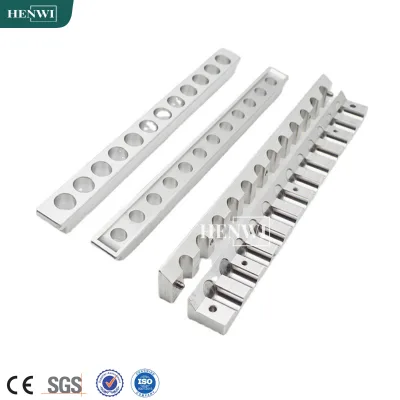
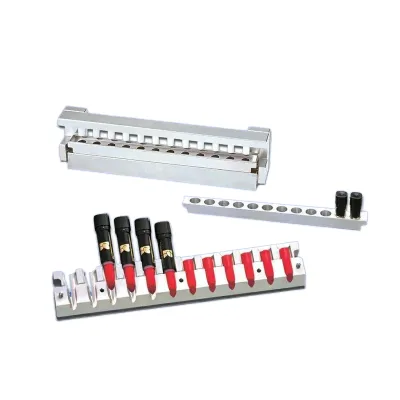
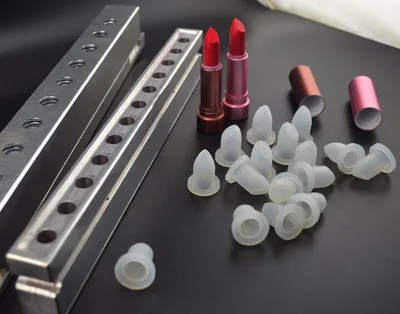
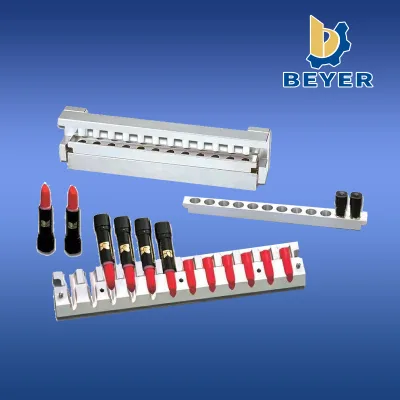
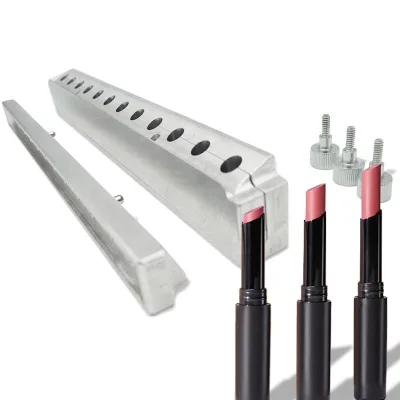
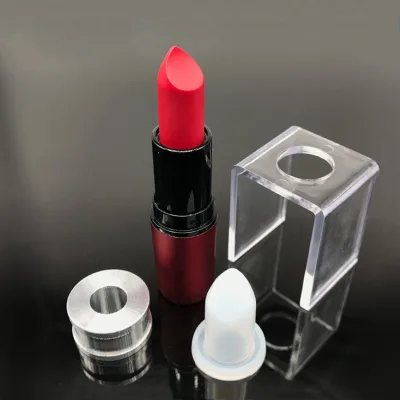


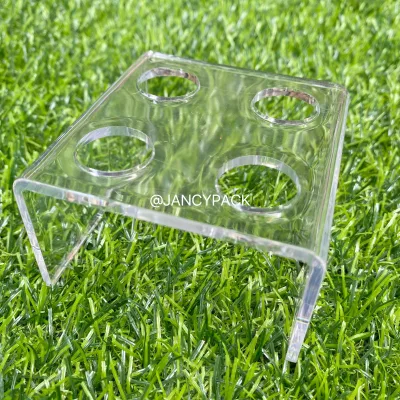
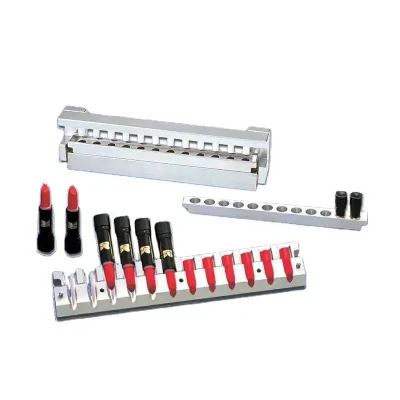
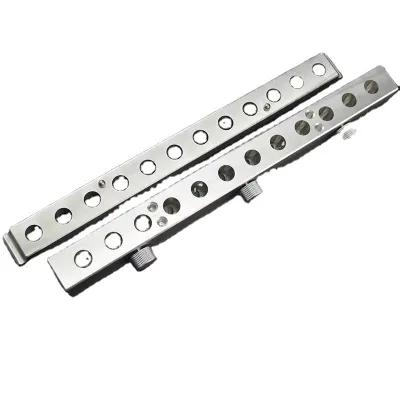
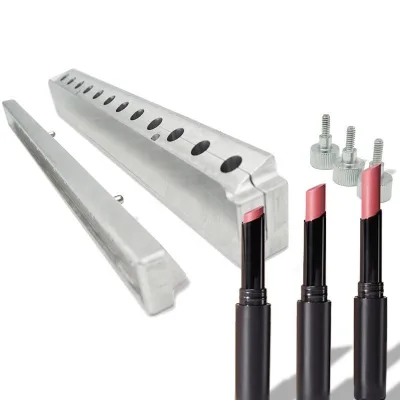
Comprehensive Sourcing Guide
Strategic Sourcing Guide for Sus304 Freezing Lipstick Mold Procurement
When evaluating the market for freezing lipstick molds, specifically those constructed from SUS304 stainless steel, buyers must navigate a landscape defined by precise material science, rigorous manufacturing tolerances, and complex supply chain dynamics. The core keyword "Sus304 Freezing Lipstick Mold" implies a specialized tooling solution designed for the freezing or molding phase of lipstick and lip balm production. While the supplied product data highlights a variety of molds constructed from aluminum, alloy, rubber, and silicon, the specific requirement for SUS304 stainless steel represents a distinct segment of the market. This guide synthesizes available industry knowledge with the observed product attributes to provide a disciplined framework for procurement, ensuring that buyers can identify high-quality suppliers without relying on unverified claims or fabricated data.
Material Science and Construction Standards
The selection of SUS304 stainless steel for a lipstick mold is driven by specific requirements for corrosion resistance, hygiene, and structural integrity under thermal cycling. Unlike the aluminum and alloy molds frequently observed in general product listings, SUS304 offers superior resistance to oxidation and chemical interaction with cosmetic ingredients. In the context of freezing molds, the material must withstand repeated temperature fluctuations without warping or losing dimensional stability.
Buyers should verify that the "Mold Material" specification explicitly states SUS304 or 304 Stainless Steel, rather than generic "Aluminum" or "Alloy" which are common in the broader market. The supplied data indicates that many lipstick molds utilize aluminum or silicon, with cavity counts ranging from 6 to 100. When sourcing SUS304 variants, the buyer must confirm that the material grade is certified for food-grade or cosmetic-grade contact, as this is a critical differentiator from standard industrial tooling. The "Core Components" of such a mold, typically including the mold base, cavities, and ejection systems, must be fabricated from the specified stainless steel to ensure uniform heat transfer and longevity.
Furthermore, the "Surface Treatment" is a vital technical parameter. While the provided data mentions "Mirror Polish" as a standard treatment for certain molds, SUS304 molds intended for high-gloss lipstick finishes require a specific surface finish to prevent adhesion and ensure easy release. The buyer should request evidence of the surface roughness (Ra value) and confirm that the polishing process does not compromise the structural integrity of the stainless steel. The "Shaping Mode" for these molds often involves complex cavity geometries, and the transition from aluminum to stainless steel may require adjustments in the "Hole Diameter" and "Cavity" design to accommodate the different thermal expansion coefficients of the materials.
Technical Specifications and Dimensional Precision
Precision engineering is the cornerstone of successful lipstick mold procurement. The supplied product information reveals a wide range of specifications, including "Holes" from 6 to 100, with 12 being a common configuration. For SUS304 freezing molds, the "Hole Diameter" is typically standardized around 12.1mm, though variations like 11.8mm or 12.7mm exist. When sourcing stainless steel molds, the tolerance levels for these diameters must be strictly controlled to ensure the final lipstick product meets brand specifications for size and weight.
The "Model Number" serves as a unique identifier for the mold design. In the observed data, models such as SLG7, SLG4, and BYL12 represent different configurations. A buyer seeking a SUS304 mold should expect a model number that reflects the material and cavity count, such as a designation indicating "SUS304" and "12 Cavities." The "Size" of the mold, often listed as 2922353mm in general listings, will vary significantly based on the number of cavities and the specific freezing mechanism. It is essential to verify the "Single Package Size" and "Single Gross Weight" to ensure logistics compatibility, as stainless steel molds are substantially heavier than their aluminum counterparts.
The "Automatic Grade" of the mold is another critical specification. The data indicates an "Automatic" grade, suggesting compatibility with automated filling and freezing lines. For SUS304 molds, this implies that the mold must be designed to interface seamlessly with high-speed machinery, maintaining alignment and stability at production speeds of 50-60 boxes per minute. The "Capacity (pcs/h)" is noted as variable in the data, dependent on the actual situation. Buyers must clarify the expected throughput for their specific freezing process, as the thermal conductivity of stainless steel differs from aluminum, potentially affecting cycle times.
Compliance, Certification, and Safety Verification
In the cosmetics industry, compliance with safety and quality standards is non-negotiable. While the supplied data mentions a "Machinery Test Report" being provided for some molds, it does not explicitly list specific international certifications like ISO or FDA approval for the materials. When sourcing SUS304 molds, buyers must independently verify that the material complies with relevant food contact regulations, such as FDA 21 CFR or EU Regulation No 10/2011, depending on the target market.
The "Warranty" period observed in the data is 2 years, which serves as a benchmark for supplier confidence. However, for high-value stainless steel molds, buyers should negotiate warranty terms that specifically cover material defects, such as corrosion or cracking, rather than just mechanical failure. The "Condition" of the mold is listed as "New," but buyers should insist on pre-shipment inspection reports to confirm the mold is free from manufacturing defects, scratches, or contamination.
Additionally, the "Service" offering, which includes OEM and ODM capabilities, should be evaluated for its ability to support compliance documentation. A reputable supplier should be able to provide Material Test Reports (MTRs) for the SUS304 steel, certifying its chemical composition and mechanical properties. The "Drawing Format" available, including PDF, 2D, 3D, DWG, IGS, Step, and Solidworks, is crucial for verifying that the mold design meets all regulatory and dimensional requirements before manufacturing begins.
Cost Drivers and Economic Considerations
The cost of a Sus304 Freezing Lipstick Mold is influenced by several factors, primarily the raw material cost of stainless steel, which is significantly higher than aluminum. The "MOQ" (Minimum Order Quantity) observed in the market ranges from 1 to 10,000, with a specific listing showing an MOQ of 50. For specialized stainless steel molds, the MOQ may be higher due to the setup costs associated with machining and polishing.
Buyers should analyze the "Selling Units" and "Packaging" details to understand the total cost of ownership. The data indicates packaging in "Bottles" or "Wooden Case," which adds to the logistics cost. For heavy stainless steel molds, the "Single Gross Weight" of 30.000 kg per unit suggests that shipping costs will be a significant portion of the total expense. The "Production capacity" of the supplier, listed as 50-60 boxes/min, also impacts the price; higher capacity molds often command a premium due to the complexity of the tooling.
The "Key Selling Points" of "Long Service Life" are particularly relevant for SUS304 molds. While the initial investment is higher, the durability and resistance to corrosion of stainless steel can result in a lower cost per unit over the lifespan of the mold compared to aluminum. Buyers should calculate the total cost of ownership, factoring in maintenance, replacement frequency, and potential downtime, rather than focusing solely on the initial purchase price.
Supplier Evaluation and Verification Protocols
Evaluating suppliers for SUS304 molds requires a rigorous due diligence process. The "Place of Origin" in the data is listed as Guangdong, China, and Zhejiang, China, indicating that the majority of suppliers are located in these manufacturing hubs. Buyers should verify the supplier's physical location and production capabilities to ensure they have the necessary CNC machining and polishing equipment for stainless steel.
The "Brand Name" observed in the data, such as "Henwi" and "BEYER," highlights the importance of brand reputation. However, buyers should not rely solely on brand names but should request references and case studies from other clients who have purchased stainless steel molds. The "Customization" options, including size, logo, color, and material, should be thoroughly discussed to ensure the supplier can meet specific requirements.
A critical aspect of supplier evaluation is the verification of the "Mould Life." The data mentions a "Mould Life" of 5 years for some molds. For SUS304 molds, buyers should request detailed lifecycle analysis and maintenance schedules to validate this claim. The "Core Components" such as the "Mould" and "mold" must be sourced from reputable manufacturers to ensure quality. Buyers should also assess the supplier's ability to provide "Machinery Test Reports" and "Production capacity" data to confirm their operational readiness.
Quality Control and Long-Term Procurement Strategy
Implementing a robust quality control (QC) strategy is essential for minimizing risks in the procurement of SUS304 molds. The "Condition" of the mold should be verified through pre-shipment inspections, focusing on surface finish, dimensional accuracy, and material certification. The "Surface treatment" of "Mirror Polish" must be consistent across all cavities to ensure uniform product quality.
For long-term procurement, buyers should establish a partnership with suppliers who offer comprehensive after-sales support, including spare parts availability and technical assistance. The "Warranty" of 2 years should be clearly defined in the contract, covering specific failure modes. The "Service" of "Customized OEM ODM" implies that the supplier should be flexible enough to adapt to future design changes or production volume increases.
Buyers should also consider the "Application" of the mold, which is listed as "lipstick" and "lipbalm filling." Ensuring that the mold is compatible with the specific freezing process and filling equipment is crucial. The "Shaping Mode" of "Punching Mold" or "Preform Mould" must align with the production line's requirements. By maintaining a disciplined approach to verification and quality control, buyers can secure high-performance SUS304 freezing molds that deliver consistent results and support long-term business growth.
FAQs
What material is used for the lipstick mold cavities?
The mold cavities are typically constructed from aluminum or alloy, not SUS304 stainless steel. While the guide discusses SUS304 as a specialized option, the provided product facts list aluminum and alloy as the standard materials for these specific lipstick molds.
Which cavity counts are available for the lipstick molds?
Available cavity configurations range from 6 to 100, with 12 holes being the usual standard. Specific listings mention options including 6, 8, 12, 48, 72, 96, and 100 cavities depending on the model number and customization requirements.
Can the mold size be customized for specific production needs?
Yes, the size is customizable to meet specific production requirements. The standard size is listed as 292*23*53mm, but buyers can request modifications to dimensions, logos, colors, and materials through the available OEM and ODM services.
How long is the warranty period for the new molds?
The warranty period for the new molds is typically 2 years. This coverage applies to the condition of the product upon delivery, though specific terms for material defects like corrosion may require further negotiation with the supplier.
What is the minimum order quantity for purchasing these molds?
The minimum order quantity is 50 units for standard listings. However, the observed market range spans from 1 to 10,000 units, so the exact MOQ may vary depending on the specific supplier and customization level requested.
Which drawing formats are provided for the mold specifications?
Drawing formats include PDF, 2D, 3D, DWG, IGS, Step, and Solidworks files. These formats allow buyers to verify dimensional accuracy and design details before manufacturing begins, ensuring the mold meets precise engineering requirements.