Source Taiwan Gear Parts for Agricultural Machinery, Cars, and Conveyors
Compare 30 verified Taiwan Gear Parts options including cast steel spur gears and alloy steel forged gears for agricultural machinery, cars, and conveyors. Review specifications like module sizes and hardness levels to find suitable components for your industrial needs.
Key considerations
Products List

Asian Precision Gear Manufacturer Spur Gears Planetary Gear Transmission Parts
$500.00 - $1000.00
MOQ: 1 Pieces


$100.00 - $8900.00
MOQ: 1 Pieces


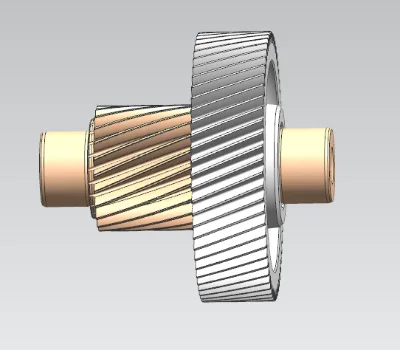


$150.00 - $15000.00
MOQ: 1 Sets


Comprehensive Sourcing Guide
Strategic Sourcing Guide for Industrial Gear Components
Understanding the Technical Landscape of Gear Manufacturing
When sourcing gear parts, particularly under the broad category of industrial transmission components, buyers must first navigate a complex matrix of technical specifications that define product suitability. The market for these components is not monolithic; it encompasses a wide spectrum of manufacturing methods, material compositions, and geometric configurations. A critical observation in the current supply landscape is the divergence between cast and cut manufacturing processes. Buyers will encounter products explicitly defined by their Cast Gear methodology, which often utilizes Cast Steel as the primary material. This approach is distinct from Cut Gear variants, which may utilize Alloy Steel to achieve different mechanical properties. The distinction is vital because the manufacturing method directly influences the internal grain structure, dimensional accuracy, and load-bearing capacity of the final component.
Furthermore, the physical geometry of the gear is a primary selection criterion. The supply chain offers Spur Gears characterized by their External Gear position, which are standard for parallel shaft applications. However, the market also presents Circular Gear types that may serve different kinematic purposes. The tooth surface hardness is another variable that requires careful verification. Listings indicate the availability of both Soft Tooth Surface and Hardened Tooth Surface variants. The choice between these two depends entirely on the operational environment; soft surfaces are often suitable for lower-load, high-speed applications, while hardened surfaces are essential for heavy-duty machinery requiring resistance to pitting and wear. The module, a fundamental parameter defining the size of the gear teeth, ranges significantly in the market, with observed specifications covering Module 1-10 and extending up to a Max. Module of 45. This wide range suggests that suppliers cater to both miniature precision mechanisms and massive industrial drives.
Compliance, Certification, and Standard Verification
In the realm of industrial procurement, compliance is not merely a bureaucratic hurdle but a fundamental indicator of quality assurance and supply chain reliability. When evaluating potential suppliers for gear parts, buyers must scrutinize the certification status of the manufacturer. The available data points to a prevalence of ISO 9001:2008 certification, alongside third-party verification from organizations such as BV (Bureau Veritas) and SGS. These certifications are critical because they validate that the manufacturer operates under a documented quality management system. However, buyers should not assume that every listed product automatically meets these standards without verification. The presence of a certification on a supplier's profile indicates the company's commitment to quality, but the specific batch of goods must still be verified against the relevant standards.
Standardization is equally important. While some products are manufactured to ISO standards, a significant portion of the market operates on a Customized basis, adhering strictly to according to the customer's drawing or according to the customer's requirement. This flexibility is a double-edged sword; it allows for highly specialized components but requires the buyer to provide precise technical drawings and tolerances. The distinction between Standard and Nonstandard products is also a key factor in lead times and cost. Standard items, which may conform to generic industry norms, are often easier to source and ship, whereas nonstandard items require dedicated tooling and engineering validation. Buyers must explicitly confirm whether a supplier's "Standard" claim refers to ISO standards or internal proprietary standards, as this affects the interchangeability of the parts.
Cost Drivers and Pricing Variables
The pricing structure for industrial gear parts is highly variable, driven by a combination of material costs, manufacturing complexity, and order volume. The observed price range in the market is extensive, spanning from 0.1 USD to 50,000 USD. This vast disparity is not indicative of inconsistent quality alone but reflects the diversity of the products, from small, mass-produced spur gears to large, custom-forged assemblies. The Minimum Order Quantity (MOQ) is another significant cost driver, with observed ranges between 1 unit and 500 units. Suppliers with lower MOQs may charge a premium per unit to cover setup costs, while those requiring higher volumes often offer tiered pricing structures.
Material composition is a primary determinant of cost. Alloy Steel and Cast Steel are premium materials compared to standard carbon steels, and their inclusion in the product specification will naturally elevate the price. Additionally, the manufacturing method plays a role; Forged Gear processes, which involve shaping metal under high pressure, generally incur higher costs than casting but offer superior tensile strength and structural integrity. The Max. Diameter and Length of the component also influence pricing, with larger components requiring more material and specialized handling equipment. For instance, products with a Max. Diameter of 15m or a Length of Max. 20m represent a different cost category entirely compared to standard 1m-2m shafts. Buyers must request detailed cost breakdowns that separate material, machining, and finishing costs to understand the true value proposition of a supplier.
Typical Applications and Operational Environments
The versatility of gear parts is evident in their diverse application across various industries. The supply data highlights a strong presence in Agricultural Machinery and general Machinery, where reliability under heavy loads is paramount. However, the scope extends significantly into the automotive sector, with specific mentions of applications in Cars, Motorcycles, and Electric Cars. This indicates that the supply chain supports both traditional internal combustion engine vehicles and the emerging electric mobility sector, which often requires different gear ratios and noise reduction characteristics.
Beyond transportation, the data points to applications in Conveyer Equipment, suggesting a robust market for industrial automation and material handling systems. In these environments, the Feature set of the gear becomes critical. Products are often engineered with specific resistances, including Acid-Resistant, Alkali-Resistant, Heat-Resistant, and Corrosion-Resistant properties. For rubber-based components, such as Toothed Belts, additional features like Skid-Resistance, Oil-Resistant, and Anti-Static capabilities are essential for safety and performance in hazardous or high-friction environments. The Load capacity is another key consideration, with some components designed specifically for Drive Shaft applications, requiring high Stiffness and a Rigid Axle structure. Understanding the specific operational stresses of the buyer's application is necessary to match the correct gear type, whether it is a Stepped Shaft or a Straight Shaft configuration.
Supplier Evaluation and Geographic Considerations
When evaluating suppliers, geographic origin is a significant factor that influences logistics, communication, and cultural alignment with business practices. The supply data indicates a concentration of manufacturing in China, with specific hubs identified in Jiangsu and Luoyang. These regions are known for their established industrial bases and specialized manufacturing clusters. Suppliers from these locations may offer competitive pricing due to local supply chain efficiencies, but buyers must also consider the implications of international shipping and potential trade barriers. The prod_origin field is a critical data point for verifying the authenticity of the supply chain and ensuring that the goods are not mislabeled.
Supplier evaluation should also focus on the Manipulate Way and Changes Way of the manufacturing process. Some suppliers offer Forced Manipulation techniques, while others utilize Stepped changes in design or production. These details reflect the engineering philosophy of the supplier and their ability to handle complex customizations. The Structure of the gear, such as Half to Half or More Pieces configurations, also indicates the supplier's capability in assembling complex units. Buyers should verify the supplier's capacity for Cast and Forged Manfacturing Process integration, as this suggests a comprehensive approach to production that can handle both casting and precision machining in-house.
Quality Control and Packaging Standards
Quality control in the gear industry extends beyond the final inspection of the product to include the entire packaging and shipping process. The prod_packing specifications reveal a variety of methods designed to protect the integrity of the gears during transit. Common practices include Standard Sea Worthy Package, Cartons, and Wooden Case for Sea Transportation. For large or delicate components, specialized packaging such as Packing Can Prevent The Deformation of Gear is essential. This is particularly important for large diameter gears or long shafts that are susceptible to bending or warping if not properly supported.
The Appearance Shape of the gear, typically Round, must be maintained throughout the shipping process. Buyers should verify that the supplier's packaging standards align with the specific requirements of their logistics chain. For international shipments, the Suitable for Shipping designation is a baseline requirement, but buyers should request detailed packing lists and photos of the packaging to ensure that the Wooden Case or Cartons are robust enough to withstand rough handling. Additionally, the Tensile Strength of the material, noted as Common in some listings, should be verified against the specific load requirements of the application. Buyers must ensure that the supplier provides test reports or material certificates that confirm the tensile strength and hardness values match the product specifications.
Long-Term Procurement and Strategic Planning
Sourcing gear parts is not a one-time transaction but a strategic partnership that requires long-term planning. The availability of Customization options, including Customized colours and according to the customer's drawing specifications, suggests that buyers should plan for ongoing collaboration with their suppliers. As the buyer's product evolves, the gear components may need to be modified, and a supplier with a flexible manufacturing process is essential. The Module range of 1-10 to Max. 45 indicates that the supply chain can scale with the buyer's needs, from small prototypes to large production runs.
Buyers should also consider the Lead Time implications of custom orders versus standard stock items. While standard items may be available for immediate shipment, custom orders involving Forged Gear or Cast Gear processes may require longer production cycles. The Length specifications, ranging from 1m-2m to Max. 20m, also impact the logistics and storage requirements. A strategic approach involves building a relationship with suppliers who can offer consistent quality, reliable lead times, and the flexibility to adapt to changing design requirements. By focusing on suppliers with ISO 9001:2008 certification and a proven track record in Agricultural Machinery or Automotive sectors, buyers can mitigate risks and ensure a steady supply of high-quality gear components.
FAQs
What customization options are available for Taiwan Gear Parts?
Customization is available for Taiwan Gear Parts, allowing buyers to specify colors and dimensions. Suppliers can produce gears according to customer drawings or requirements rather than just standard sizes.
Which materials are used to manufacture Taiwan Gear Parts?
Taiwan Gear Parts are manufactured using cast steel, alloy steel, and rubber materials. The choice depends on the specific application, such as agricultural machinery or conveyor equipment requiring corrosion resistance.
Can Taiwan Gear Parts meet ISO certification standards?
Yes, many Taiwan Gear Parts are certified under ISO 9001:2008 standards. Some products also carry BV and SGS certifications to ensure quality management and compliance with international industrial requirements.
What is the maximum module size for Taiwan Gear Parts?
The maximum module size for Taiwan Gear Parts reaches up to 45. Standard modules typically range from 1 to 10, accommodating both small precision mechanisms and large industrial drive systems.
How are Taiwan Gear Parts packaged for sea transportation?
Taiwan Gear Parts are packed in standard sea-worthy packages, wooden cases, or cartons to prevent deformation. This packaging ensures the integrity of the gears during long-distance shipping and handling.
What are the typical lead times for Taiwan Gear Parts?
Lead times vary based on customization and order volume, with MOQs ranging from 1 to 500 units. Custom orders requiring specific drawings may take longer than standard stock items.
Which applications are suitable for Taiwan Gear Parts?
Taiwan Gear Parts are suitable for agricultural machinery, cars, motorcycles, and electric vehicles. They are also used in conveyor equipment where acid, heat, or oil resistance is required.